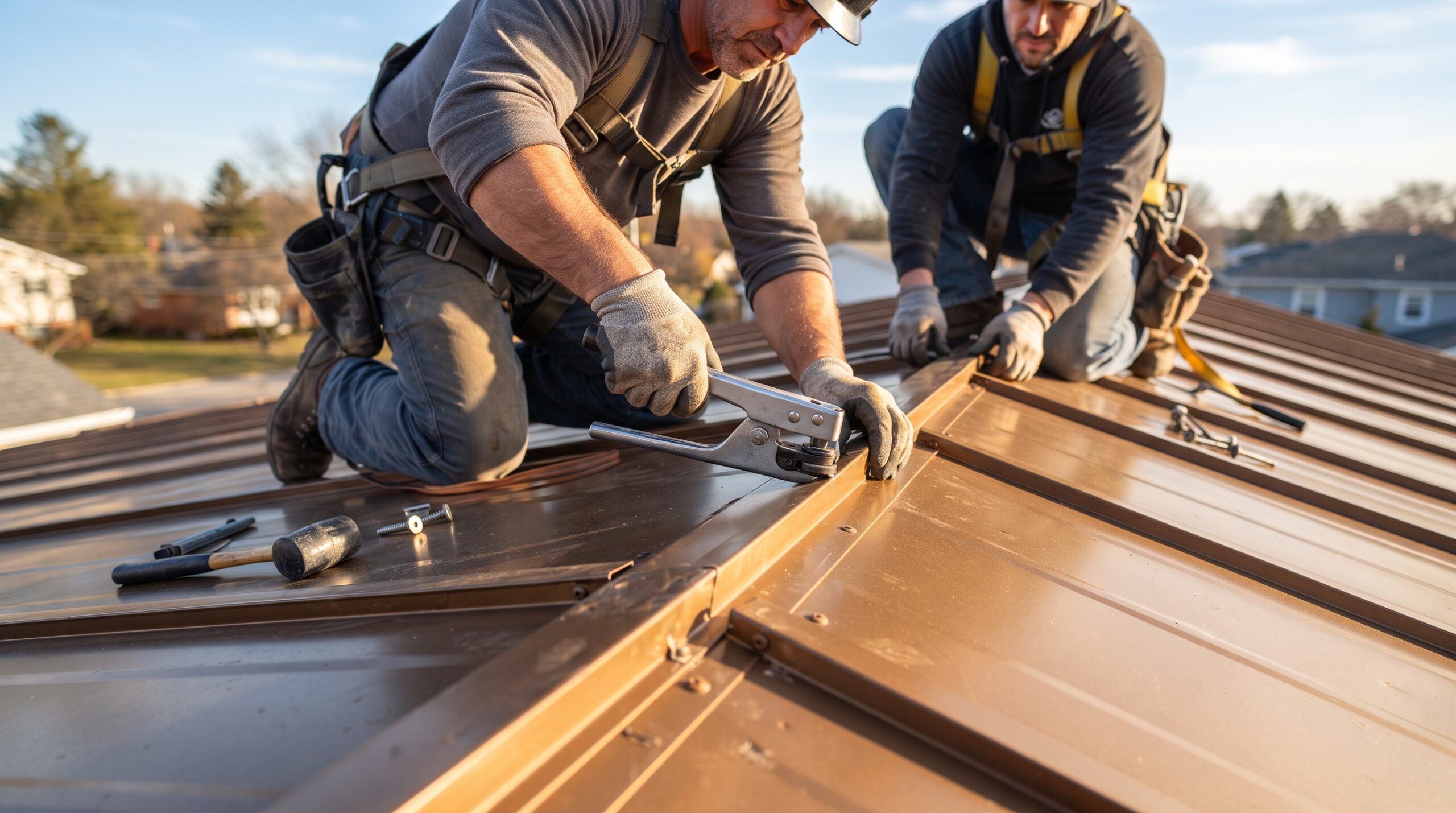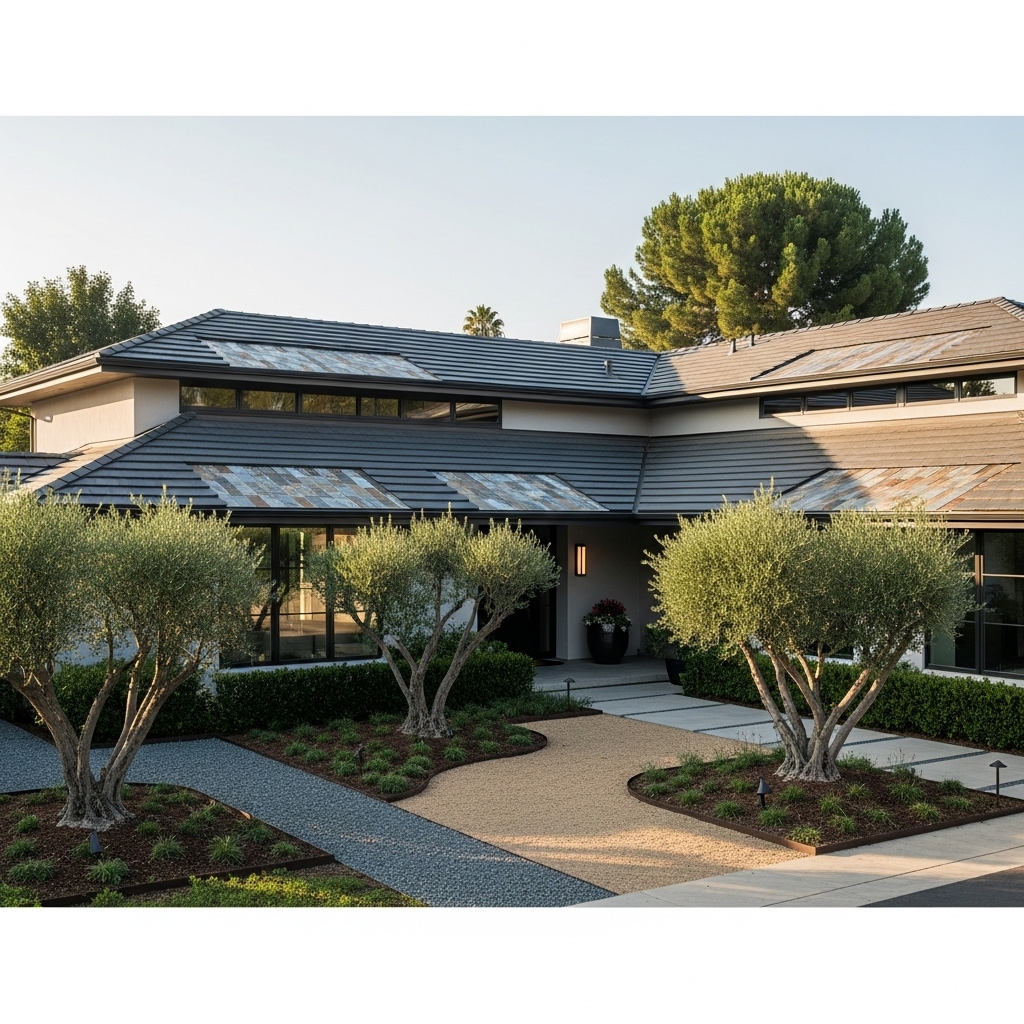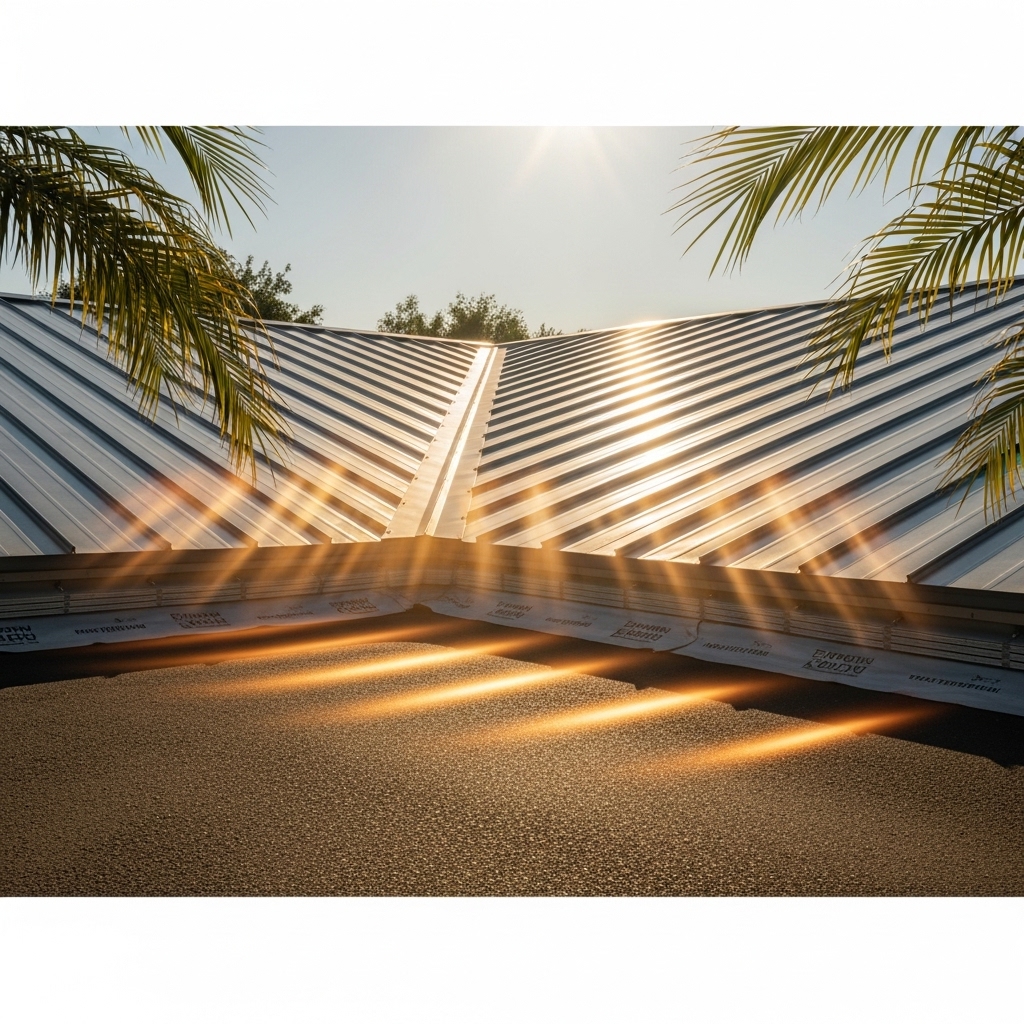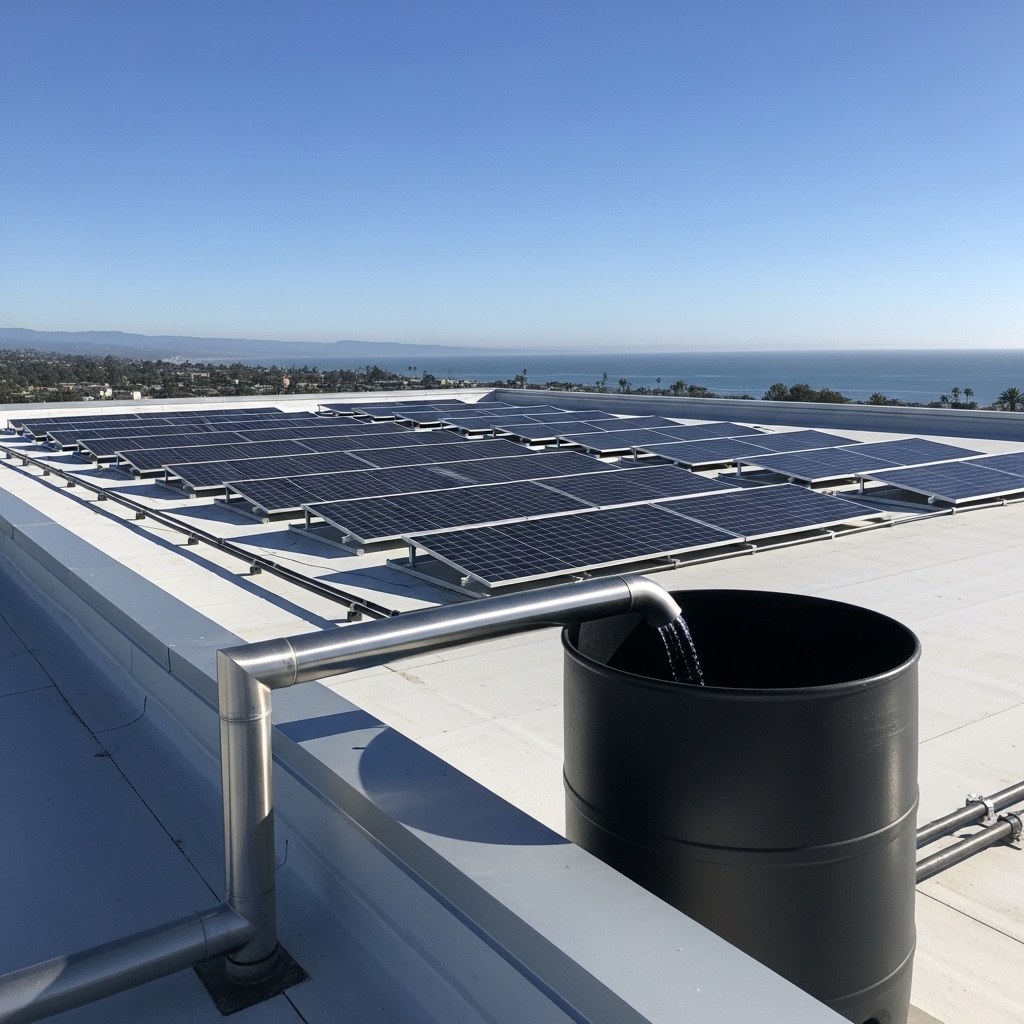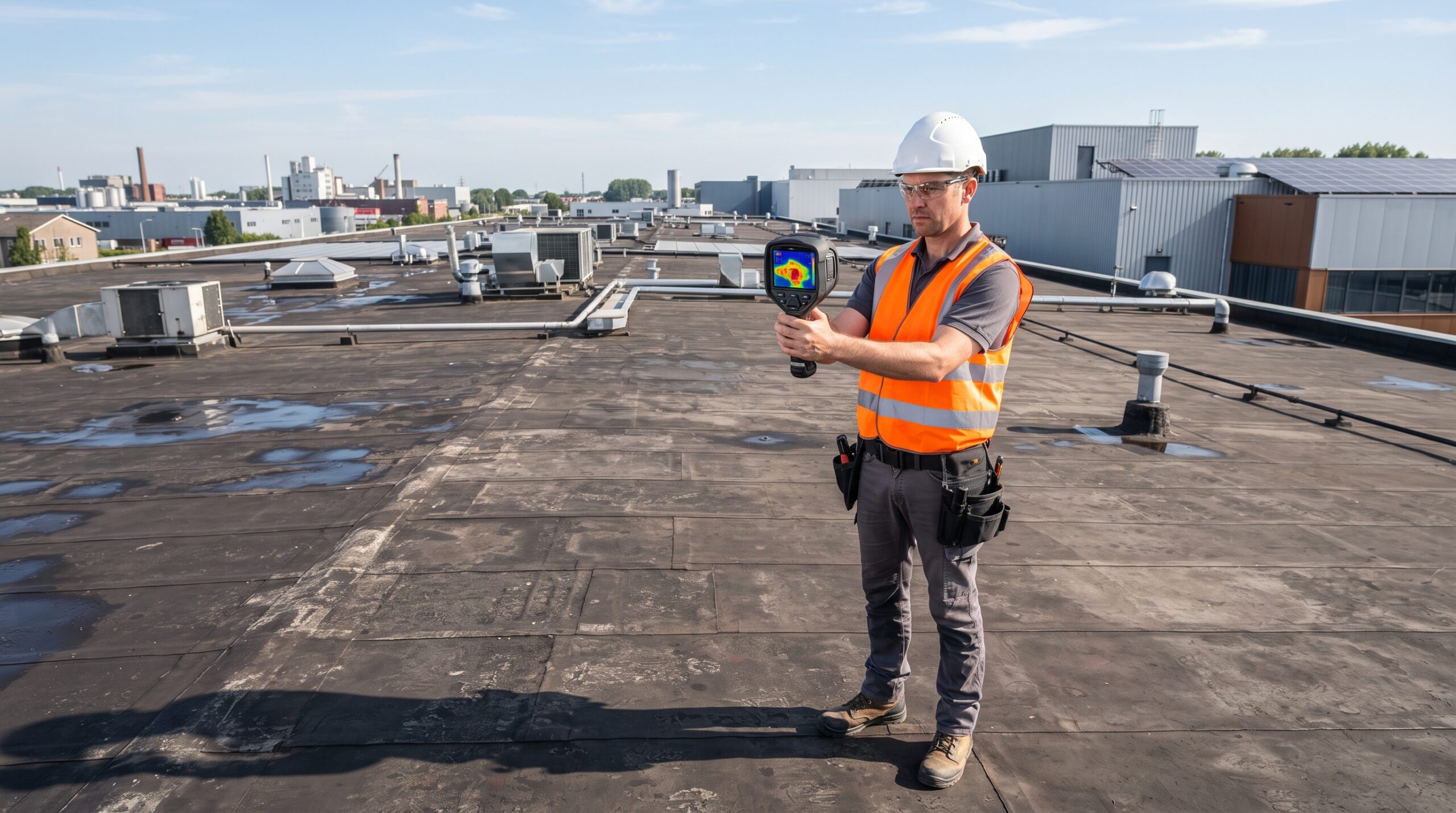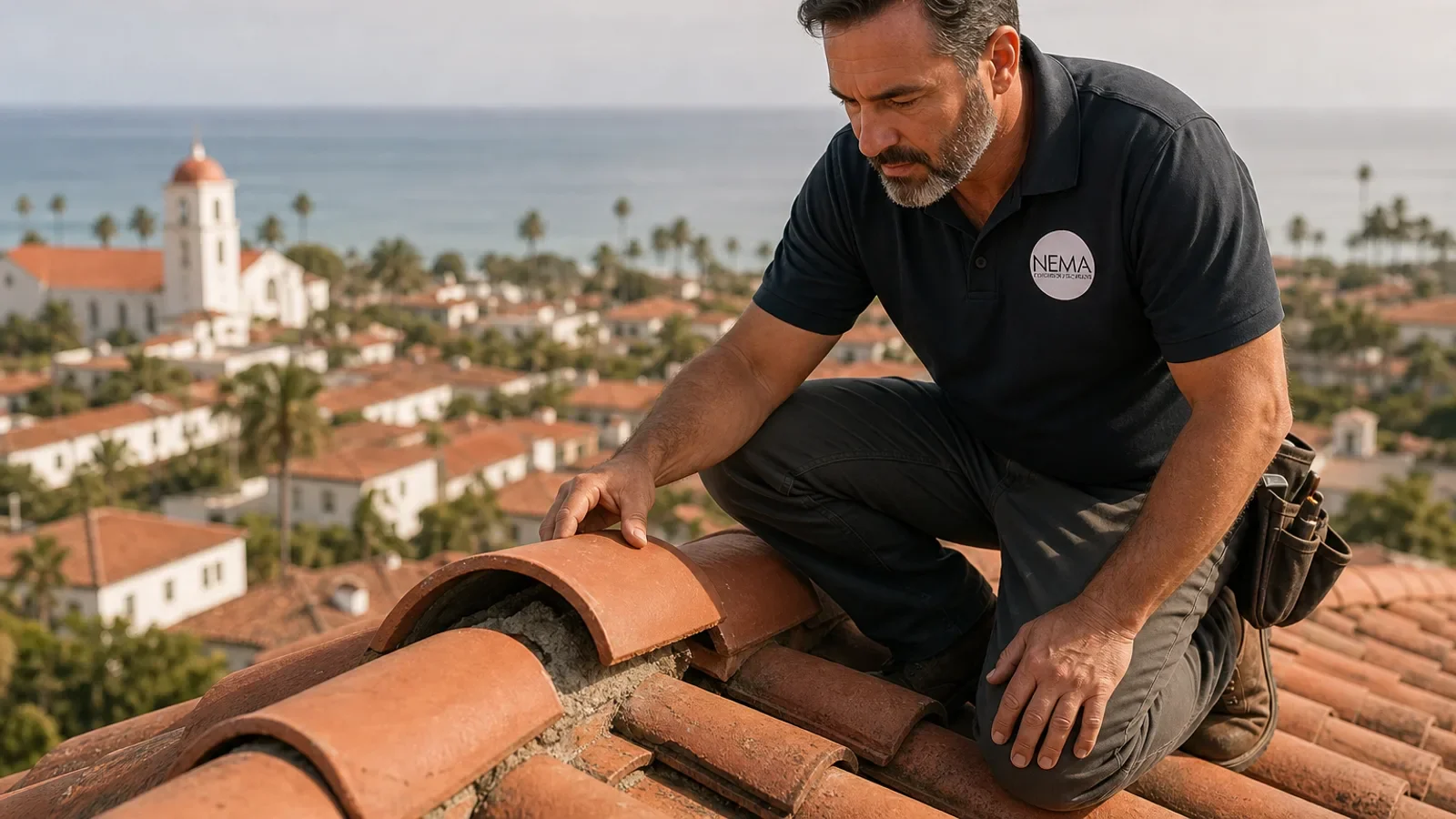
Roof damage from Sundowner winds and winter storms in Santa Barbara usually shows up in the same places: ridge and hip tiles whose mortar lets go, cracked or slipped field tiles, flashings pulled loose at chimneys and walls, and lifted edges, open seams and blocked drains on flat roofs. After a wind or rain event, check the roofline from the ground and the attic from inside, photograph what you find, and call a roofer right away if water is coming in. The steps below walk through each check. To book a post-storm inspection, call NEMA Roofing at 805-977-5949.
Evaluating Roof Damage After Santa Barbara Ocean Winds and Storms
That faint scraping sound from the roof after a night of Sundowner winds is worth taking seriously. Santa Barbara homeowners know the feeling: a storm rolls through, palm fronds scatter across the driveway, and you find yourself squinting up at the roofline wondering what shifted. This guide walks you through exactly how to evaluate roof damage after coastal weather events in Santa Barbara, what warning signs matter most, and when it is time to call a professional roofing company.
Why Santa Barbara’s Coastal Climate Is Hard on Roofs
Santa Barbara sits at a unique intersection of weather forces that few California cities share. The Pacific Ocean sits directly to the south and west, delivering persistent salt-laden air that accelerates corrosion of metal flashings, fasteners, and underlayment membranes. Marine layer moisture cycles through most mornings, keeping roof surfaces damp for hours before the sun burns it off. Then come the Sundowner winds, gusty downslope winds off the Santa Ynez Mountains that, according to the National Center for Atmospheric Research’s study of them, peak from early evening to mid-morning and can push strong gusts through the foothills and down into the city with little warning.
These are not just strong winds in the generic sense. Sundowners blow down from the mountains to the north, the opposite direction from the usual ocean breeze, so a roof section that is sheltered from the sea breeze can still take a direct hit. That combination of salt corrosion, daily moisture cycles, and unpredictable high-velocity winds creates wear patterns that are genuinely different from what you would see on a roof in the inland valleys or the high desert.
For more on how daily marine exposure ages roofing materials, that companion article covers the long-term chemistry in detail.
The Santa Barbara Housing Stock: What’s Actually on These Roofs
Understanding storm damage in Santa Barbara means understanding what roofing materials are actually common here. The city’s architectural character, shaped heavily by the 1925 earthquake rebuild and subsequent Spanish Colonial Revival codes, means a large share of the housing stock carries clay or concrete tile roofs. The historic district and the hillside neighborhoods above State Street are particularly dense with these systems.
Clay tile is beautiful and long-lived, but it has a specific vulnerability in wind events: individual tiles can lift, crack, or shift when wind gets underneath the leading edge. The mortar ridge caps at the roof peak are especially susceptible. In Santa Barbara’s older homes, many of these ridge caps were set with original lime mortar that has softened and cracked over decades of thermal cycling and salt exposure.
Flat and low-slope roofs are the other dominant type, found across the city’s many mid-century commercial buildings and a significant number of residential additions and garage conversions. Modified bitumen and built-up roofing membranes on these surfaces can develop blisters, seam separations, and ponding-water issues after storm events, problems that are not always visible from the ground.
The age of the roof matters too. Underlayment under tile ages faster than the tiles themselves, so an older tile roof can be at or past the end of its underlayment’s service life even if the surface tiles look intact.
Immediate Steps After a Wind or Rain Event
The 24 to 48 hours after a storm are the most important window for catching damage before it compounds. Here is a practical sequence to follow from the ground and inside the home.
Ground-Level Visual Inspection
Walk the perimeter of the house and scan the roofline from several angles. Look for:
- Displaced or missing ridge cap tiles along the peak
- Cracked or shifted field tiles, which often appear as a color break or a visible gap in the otherwise uniform surface
- Debris accumulation in valleys, where two roof planes meet, since blockage there causes water to back up under tiles
- Dislodged or bent metal flashing at chimneys, skylights, and parapet walls
- Granule deposits in gutters or on the ground below downspouts, a sign that asphalt shingles or modified bitumen surfaces have lost protective coating
- Sagging gutters or downspout separations that indicate significant water and debris load
Interior Attic Check
On a sunny day, go into the attic with a flashlight and look for pinpoints of daylight coming through the decking. Also check the underside of the roof sheathing for dark water stains or soft spots. These interior signs often reveal leaks that have been active for longer than the most recent storm, meaning the storm exposed a vulnerability that already existed.
Ceiling and Wall Inspection Indoors
Water stains on ceilings, paint bubbling near exterior walls, or a musty smell in upper rooms after rain are all indicators worth documenting with photos before they dry out. The stain location rarely corresponds directly to the leak source above, since water travels along framing members before it drips, but the documentation helps a roofing contractor trace the path.
Common Damage Patterns on Santa Barbara Tile Roofs
Tile roof repair in Santa Barbara follows predictable patterns after storm events. Knowing what to look for helps you communicate clearly with a contractor and understand the scope of what a professional inspection will cover.
Cracked and Slipped Field Tiles
Individual clay or concrete tiles that crack from wind-thrown debris or thermal shock from rapid temperature changes after a storm can allow water to reach the underlayment. A single cracked tile is a repair, not a replacement project, but cracked tiles that go unaddressed concentrate water flow in one spot and accelerate underlayment deterioration beneath them.
For flat sections and low-slope additions, our Polyglass flat roofing page for Santa Barbara explains the systems we install.
Failed Ridge and Hip Mortar
The mortar bedding that holds ridge caps and hip tiles in place is the most storm-vulnerable part of a Santa Barbara tile roof. When Sundowner winds push under the leading edges of ridge caps, the mortar bond is the only thing holding them. Aged, salt-eroded mortar often fails in sections, and the caps can shift or blow off entirely, which is why ridge caps are among the first things to check after a storm.
Flashing Separations
Metal flashings at chimneys, skylights, and where roof planes meet walls are sealed with caulk and sometimes mortar. Wind vibration and thermal expansion work those seals loose over time, and a significant storm can be the event that finally opens a gap. Flashing failures are a leading cause of interior water intrusion and are often missed in a basic visual scan because the gap may be only a few millimeters wide.
For a more detailed walkthrough of what a professional assessment covers on tile systems, see the Santa Barbara tile roof inspection guide.
Flat Roof Damage: What to Look for After Storms
Santa Barbara’s flat and low-slope roofs present a different set of post-storm concerns. Because these surfaces rely on proper drainage rather than gravity runoff, any debris accumulation or membrane disruption can create standing water that stresses the system for days after a storm clears.
Membrane Blisters and Seam Lifts
Wind can get under the edges of a flat roof membrane, particularly at perimeter termination bars and around penetrations. After a storm, walk the perimeter of any accessible flat roof area and look for lifted edges, open seams, or bubble-like blisters in the membrane surface. Blisters indicate moisture trapped between membrane layers, a condition that worsens with each wet-dry cycle.
Drain and Scupper Blockage
Santa Barbara storms often bring significant leaf and debris loads from the city’s mature tree canopy. Clogged roof drains on flat surfaces can cause water to pond and eventually find its way through any existing weakness in the membrane. After any storm, clearing debris from roof drains is a safe, simple maintenance step a homeowner can do from a ladder at the roof edge without walking on the membrane itself.
Parapet Wall Damage
The short walls that surround many flat roofs in Santa Barbara’s commercial and residential stock take direct wind pressure. Coping caps (the flat pieces that cap the top of a parapet wall) can shift or crack, and the caulked joints where coping sections meet are a common entry point for water after a storm loosens them.
Storm Damage vs. Pre-Existing Wear: How to Tell the Difference
One of the most practical questions after a storm is whether the damage you are seeing was caused by the storm or was already developing. This matters for insurance purposes and for understanding the urgency of repairs.
| Indicator | Likely Storm Damage | Likely Pre-Existing Wear |
|---|---|---|
| Tile displacement | Multiple tiles shifted in the same wind direction | Isolated tiles settling out of alignment over time |
| Crack pattern | Sharp, clean fracture from impact or sudden stress | Hairline crazing across the tile surface from UV and thermal cycling |
| Water stain in attic | Fresh, wet stain with no discoloration ring around it | Older stain with a dried, discolored halo indicating repeated wetting |
| Mortar condition | Mortar present but cracked through from wind force | Mortar missing, powdery, or heavily eroded before the storm |
| Flashing | Bent or torn flashing with fresh metal exposure | Corroded, rust-stained flashing with old caulk shrinkage |
| Granule loss | Concentrated granule deposits in gutters right after storm | Gradual granule thinning visible as bare spots on shingle surface |
A professional roof damage inspection can document both categories clearly, which matters if you are filing an insurance claim. Carriers distinguish between storm damage (covered) and deferred maintenance (typically not covered), so having a written inspection report from a qualified roofing contractor is worth the step.
When to Call a Santa Barbara Roofing Company Right Away
Some post-storm situations call for a same-day or next-day professional response rather than a scheduled inspection. Contact a roofing contractor immediately if you observe any of the following:
- Active water intrusion into living spaces during or after rain
- A large section of ridge cap, multiple field tiles, or any portion of flat roof membrane that is visibly displaced or missing
- A tree limb or large debris item that has made contact with the roof surface
- Visible daylight through the roof deck from inside the attic
- Ceiling drywall that is bulging, indicating water pooling above it
These are emergency repair situations. NEMA Roofing handles urgent post-storm calls in Santa Barbara and the surrounding areas. If you are in one of these situations, reach out directly rather than waiting for a routine inspection slot. Our emergency roof repair service is available for exactly these circumstances.
What a Professional Roof Damage Inspection Covers
Owners with a flat roof section can also read about our Polyglass flat roof systems in Santa Barbara.
A thorough post-storm roof inspection goes well beyond what is visible from the ground. A qualified roofing contractor will access the roof surface directly, check the condition of the underlayment where tiles are lifted, probe mortar and flashing joints, and assess the decking beneath for soft spots or delamination. On flat roofs, they will check membrane seams, drainage paths, and penetration seals.
The inspection should produce a written report with photos documenting each area of concern, distinguishing between items that need immediate repair and items to monitor. That documentation is useful for your own records, for insurance claims, and for planning any larger repair or replacement project.
NEMA Roofing provides detailed roof inspections for both residential and commercial properties across Santa Barbara. If you want to understand the full scope of what we look at, the signs your coastal roof needs repair article covers the broader indicators we assess beyond storm-specific damage.
Ready to schedule an inspection? Contact NEMA Roofing to book a post-storm roof assessment with one of our Santa Barbara roofing specialists.
Maintaining Your Roof Between Storms
The best way to reduce storm damage is to keep the roof in sound condition before the weather arrives. A few maintenance habits make a meaningful difference in Santa Barbara’s coastal environment:
- Clear gutters and roof drains at least twice a year, and after any significant debris event
- Have ridge cap mortar inspected every few years, particularly on older homes
- Check caulked flashing joints at chimneys and skylights annually, since salt air breaks down sealants faster here than in inland areas
- After any strong wind event, do a ground-level visual scan before the next rain arrives
For a seasonal maintenance checklist for Santa Barbara conditions, the post-storm roof maintenance guide is a practical companion to this article.
Frequently Asked Questions
How soon after a Santa Barbara storm should I have my roof inspected?
Ideally within 48 to 72 hours of a significant wind or rain event. That window lets a contractor assess fresh damage before a follow-on storm compounds it and before insurance adjusters get backed up. If you see active leaking or obvious structural damage, call the same day.
Can I walk on my tile roof to check it myself?
Walking on clay or concrete tile without knowing the proper foot placement risks cracking tiles that were otherwise undamaged. A ground-level inspection with binoculars and an interior attic check covers most of what you need to assess safely. Leave surface access to a roofing professional who knows how to distribute weight on tile systems.
Does homeowners insurance cover Sundowner wind damage to a Santa Barbara roof?
Most standard homeowners policies cover sudden wind damage, but coverage specifics vary by policy and carrier. The key is documenting damage promptly with photos and a contractor’s written inspection report. Deferred maintenance items that contributed to the damage may be excluded, which is why keeping up with routine repairs matters. Consult your insurance carrier directly for your policy’s specific terms.
How long does tile roof repair typically take in Santa Barbara?
Scope determines timeline. Replacing a handful of cracked field tiles and re-mortaring ridge caps is a small job. More extensive repairs involving underlayment replacement beneath multiple tile sections, or flashing work at multiple penetrations, take longer. A contractor can give you a realistic timeline after the inspection is complete.
What is the difference between a repair and a full roof replacement?
A repair addresses specific damaged areas while the surrounding roof system remains structurally sound. A replacement makes sense when the underlayment across most of the roof has degraded, when the decking shows widespread deterioration, or when the cumulative cost of repeated repairs approaches the cost of starting fresh. An honest inspection report will tell you which side of that line your roof is on.
Do Santa Barbara roofing companies handle both tile and flat roofs?
NEMA Roofing works on both tile and flat roof systems, which is important in Santa Barbara where many properties have one of each, a tile main roof and a flat addition or garage roof. Having one contractor who can assess and repair both systems simplifies the process and avoids gaps in coverage between two separate scopes of work.
Get a Roofing Assessment After Your Next Santa Barbara Storm
Santa Barbara’s coastal winds and storms are a consistent reality, not a rare exception. The roofs that hold up well over time are the ones that get prompt attention after weather events and steady maintenance between them. If you are dealing with shifted ridge caps on a Spanish Colonial tile roof in the Riviera or a flat roof membrane issue on an Eastside commercial building, or simply want a professional set of eyes after a rough Sundowner season, NEMA Roofing is ready to help.
Our team knows Santa Barbara’s specific roofing conditions, from the salt air off the harbor to the wind patterns in the foothills, and we provide written inspections, honest assessments, and quality repairs across all roof types. Contact us to schedule your post-storm roof damage inspection, or explore our full roofing services in Santa Barbara to see the complete range of what we offer.
With five locations, in Downey, Tarzana, Woodland Hills, Oxnard and Santa Barbara, NEMA Roofing brings the same storm response to properties across all of Santa Barbara, Ventura, Los Angeles, Riverside and San Bernardino counties (see our service areas). For flat and low-slope commercial roofs, visit our commercial roofing service page, or call 805-977-5949 after your next storm.