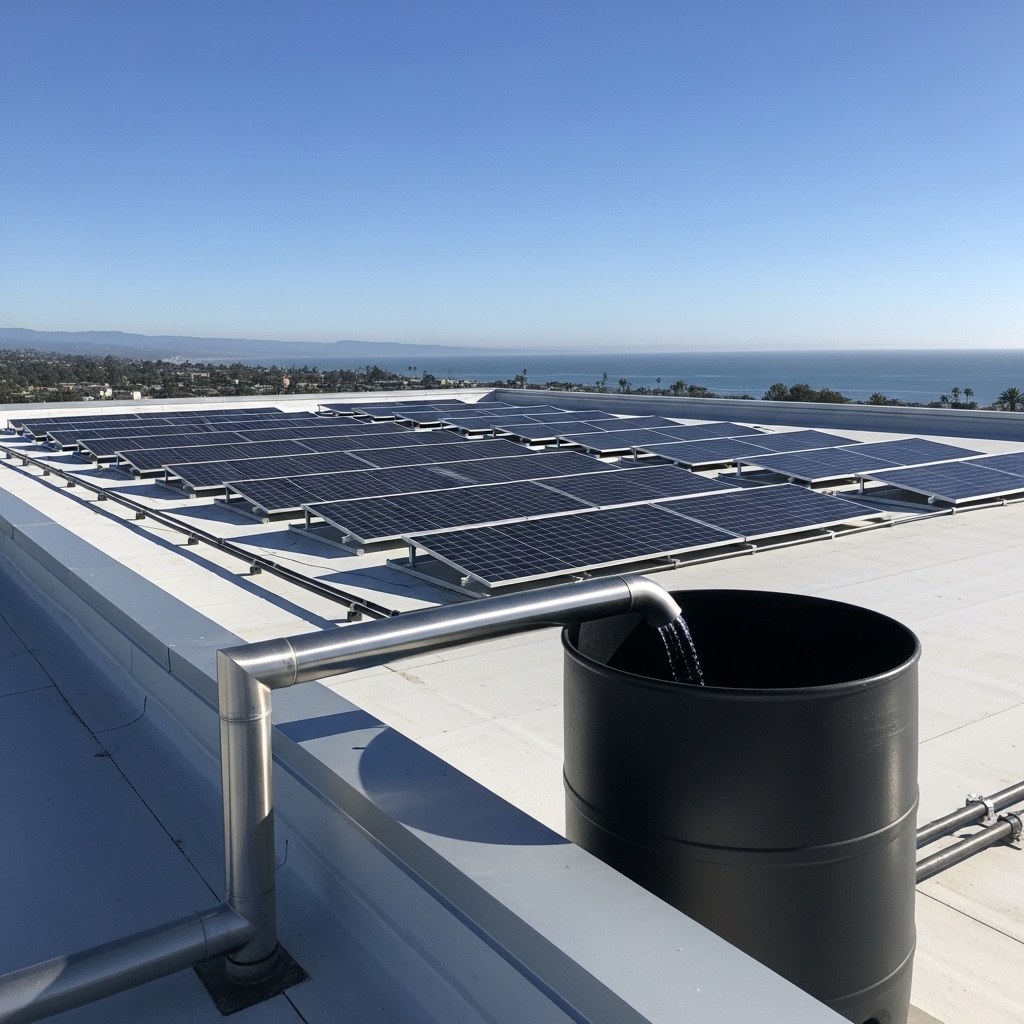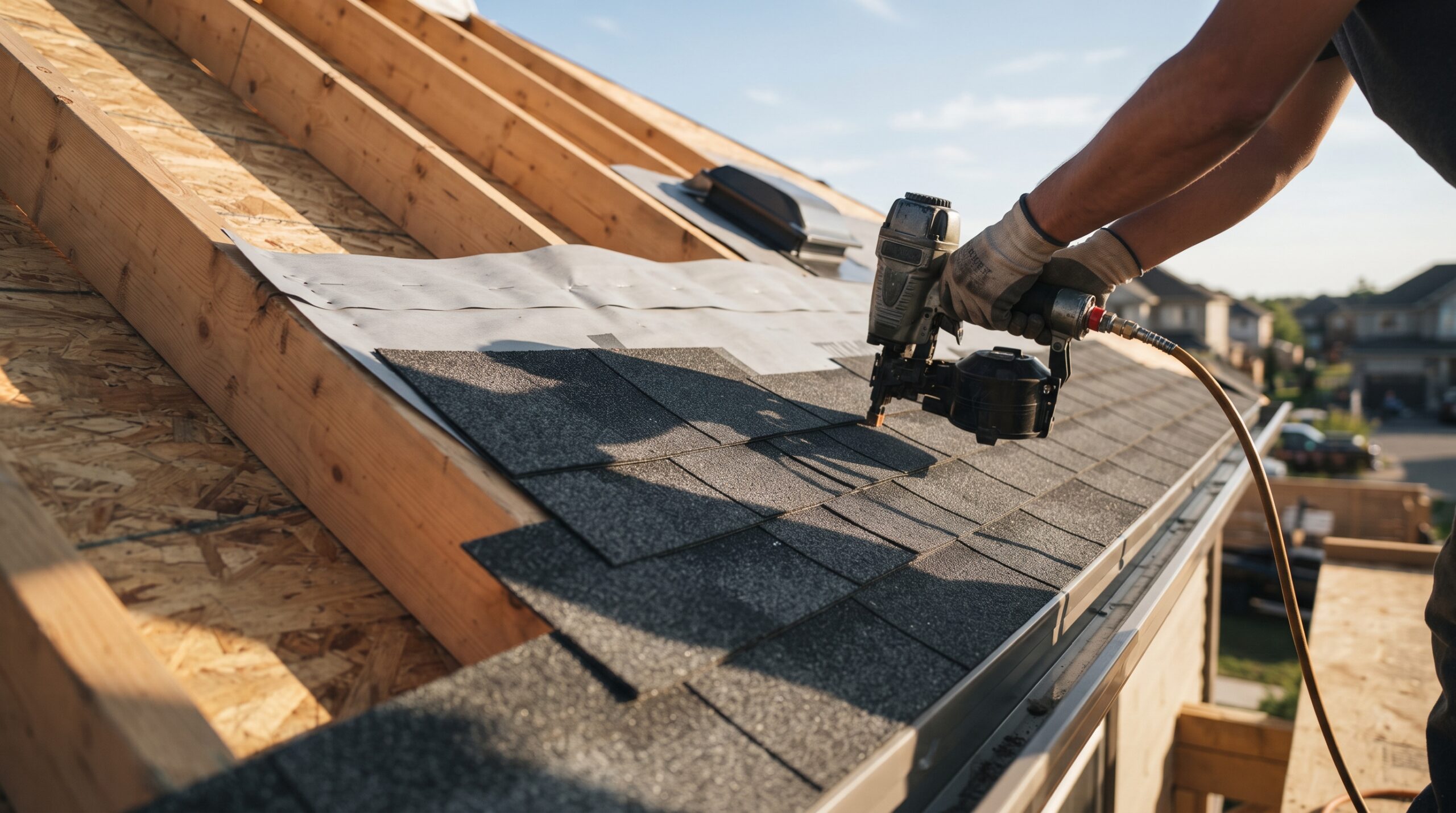
Residential and commercial roofing installation share the same basics (a permit, a sound deck, correct flashing and the manufacturer’s instructions), but they differ in almost everything else: homes are mostly steep roofs covered with shingles, tile or metal under the California Residential Code, while commercial buildings are mostly low-slope membrane roofs under the California Building Code, with their own drainage, cool-roof and scheduling rules. Knowing which kind of roof you have tells you which questions to ask. To plan an installation on any property, call NEMA Roofing at 866-631-3366.
How does the roof’s slope decide what can be installed?
Slope is measured as rise in inches per 12 inches of run. The code sets a minimum slope for each covering, because a covering that sheds water on a steep roof can leak on a flatter one.
| Covering | Minimum slope in the code | Extra rule on the lower end |
|---|---|---|
| Asphalt shingles | 2 in 12 | Double underlayment from 2 in 12 up to 4 in 12 (CRC R905.2.2) |
| Clay or concrete tile | 2 1/2 in 12 | Double underlayment from 2 1/2 in 12 up to 4 in 12 (CRC R905.3.2) |
| Metal shingles | 3 in 12 | (CRC R905.4.2) |
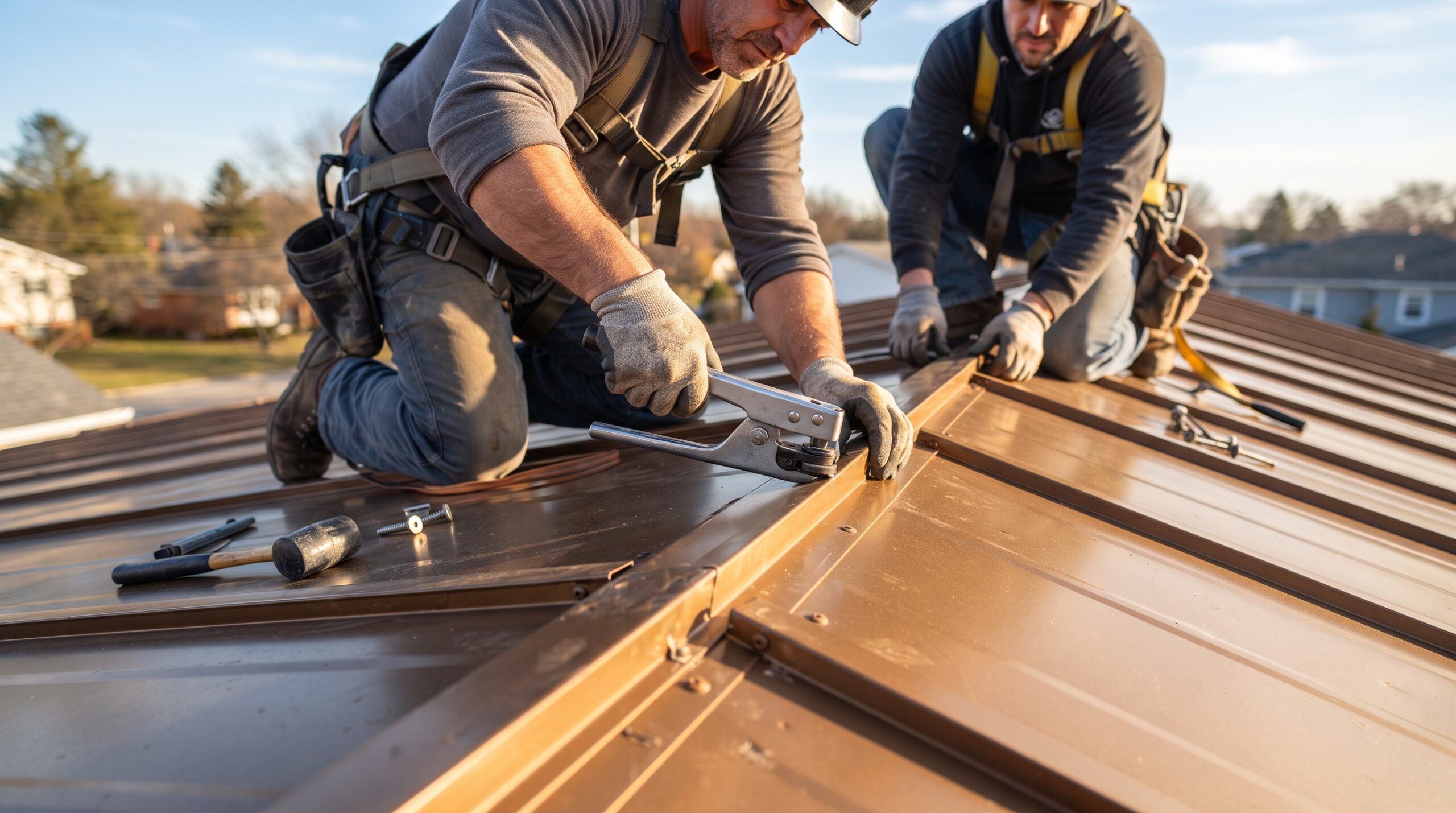
| Lapped metal panels | 3 in 12 without lap sealant; 1/2 in 12 with applied lap sealant | (CRC R905.10.2) |
| Single-ply membranes (TPO, PVC) and built-up roofs | A design slope of 1/4 in 12 for drainage | (CBC 1507.12.1 and 1507.10.1) |
A reroof on an existing low-slope building does not have to reach the 1/4 in 12 design slope if the roof still drains positively (CRC R908.1 exception), which is why tapered insulation and crickets are often added to move water rather than rebuilding the framing.
What is different when the property is a single-family home?
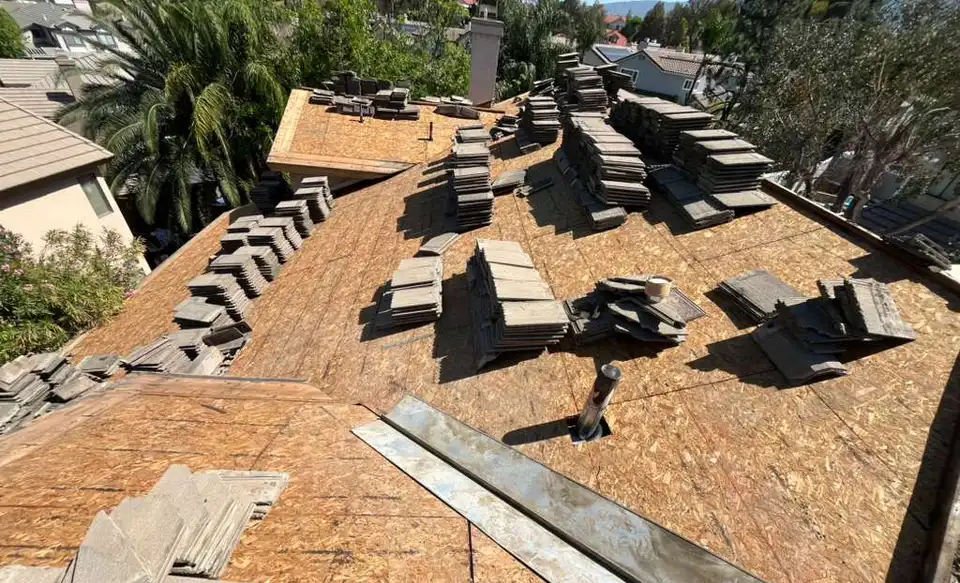
- Tear-off or recover. A roof replacement means removing the old layers down to the deck (CRC R908.3). Laying a new covering over the old one is not allowed when the old roof is water soaked or deteriorated, when it is slate, clay, cement or asbestos-cement tile, or when it already has two or more layers.
- The deck. Once the old roof is off, soft or delaminated sheathing is replaced before underlayment goes down; this is the one line in a home estimate that cannot be known until the tear-off.
- Cool roof rules. Replacing more than half of a steep-slope roof in California climate zones 4 and 8 through 15 calls for a rated cool-roof product (0.20 aged reflectance paired with 0.75 emittance, or an SRI of 16 instead) unless an exception such as enough ceiling insulation or a radiant barrier applies.
- Fire zones. In a Fire Hazard Severity Zone or wildland-urban interface area, the roof must also meet the California Wildland-Urban Interface Code (CRC R902.1.1), which calls for a roof assembly with a Class A fire classification (CWUIC 504.2).
- Living in the house. Expect noise, debris falling into the attic through old boards, and a driveway used for the dumpster and deliveries; move cars, cover attic storage and plan around pets and children for the working days.
What is different on a commercial building?
- The system. Most commercial roofs are single-ply membranes, built-up or modified bitumen roofs, or spray foam, installed over rigid insulation. The choice depends on the deck, foot traffic, rooftop equipment and how the building is used. The commercial roofing service covers these systems.
- Drainage. Drains, scuppers, gutters and overflow paths are part of the design, and water left standing on a membrane after rain wears it out early.
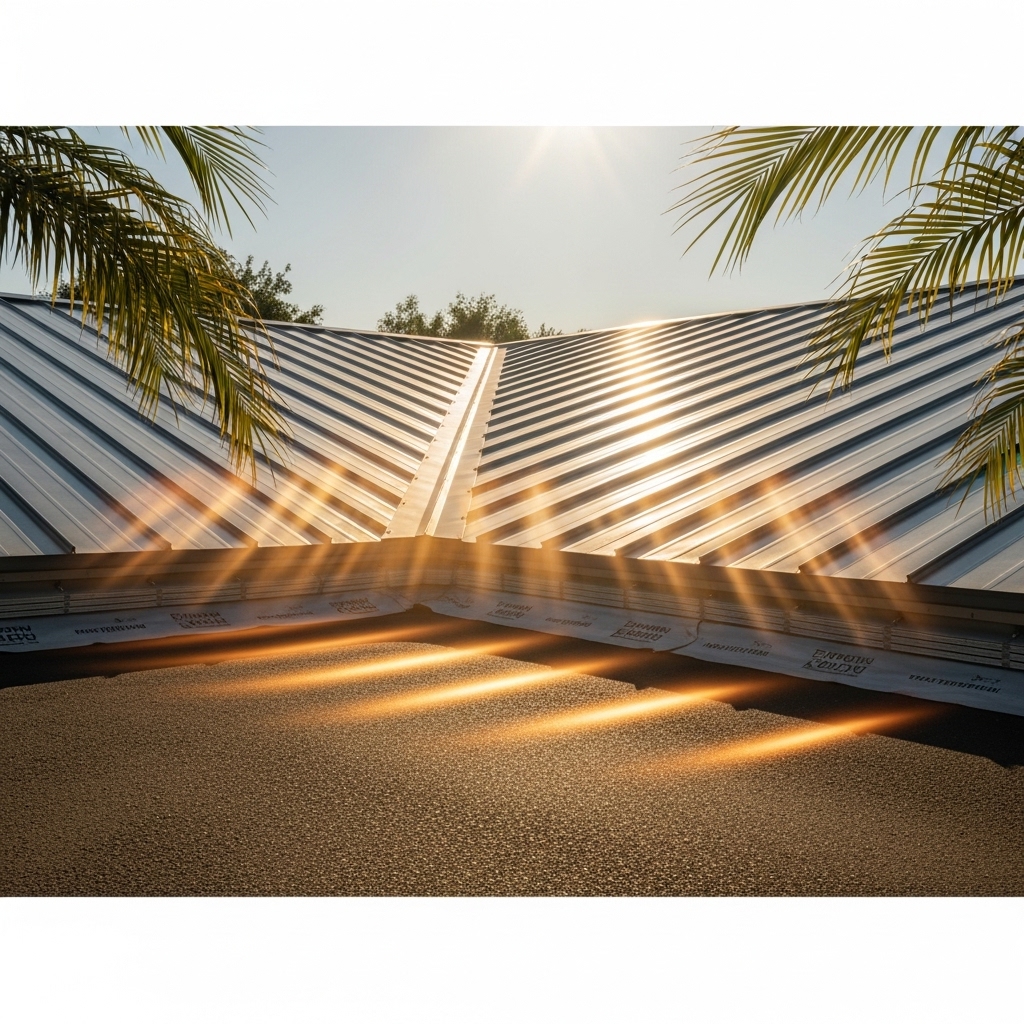
- Cool roof rules for every climate zone. On a nonresidential low-slope roof, the 2025 California Energy Code applies when more than 50 percent of the roof, or more than 2,000 square feet, whichever is less, is being replaced, recovered or recoated: the new product needs an aged solar reflectance of 0.63, thermal emittance of 0.75 and a solar reflectance index of at least 75.
- Rooftop equipment. HVAC units, curbs, vents, conduit and solar need to be disconnected, raised or flashed; that coordination with other trades belongs in the schedule and the scope.
- Operations. Businesses stay open, so the work is usually phased by section, with each section watertight at the end of the day and access, parking and noise agreed with the owner or tenants.
What about apartments, condominiums and mixed-use buildings?
These often combine both worlds: pitched roofs over the units and flat sections over garages, corridors or shops. The steep and low-slope parts are installed to different code sections and usually with different materials, so the estimate should price them separately. Who signs the contract matters too: a homeowners’ association board, a property manager or a building owner, each with its own approval process for colors, materials and schedules. Residents need notice about access, parking and noise before work starts.
What stays the same on every property?
- A permit from the local building department and a final inspection once the work is done.
- Installation to the code and the manufacturer’s instructions, which is also what manufacturer warranties depend on.
- Flashing wherever a roof meets a wall, changes slope or direction, and around every opening (CRC R903.2.1).
- A licensed contractor: check the license on the Contractors State License Board website. NEMA Roofing holds CSLB license #1083283, as a licensed roofing (C-39) and general building (B) contractor.
For the order of work on a typical house, read roofing installation: a step-by-step guide for homeowners; for a low-slope roof, what to expect from a flat roof installation.
What should you have ready before asking for an estimate?
- How the building is used (owner-occupied home, rental, HOA, office, retail, warehouse) and who approves the work.
- The roof’s age, the number of layers if known, and any past leaks or repairs.
- Rooftop equipment and solar, and whether they stay, move or come off.
- Access limits: steep driveways, narrow lots, business hours, tenants.
- Whether the address is in a fire hazard zone, and any association rules on colors and materials.
With six locations (Santa Barbara, Oxnard, Woodland Hills, Tarzana, Downey and San Bernardino), NEMA Roofing installs roofs on homes and commercial buildings everywhere in Santa Barbara, Ventura, Los Angeles, Riverside and San Bernardino counties; see the service areas and our roof installation service. For a written estimate on your property, call 866-631-3366.