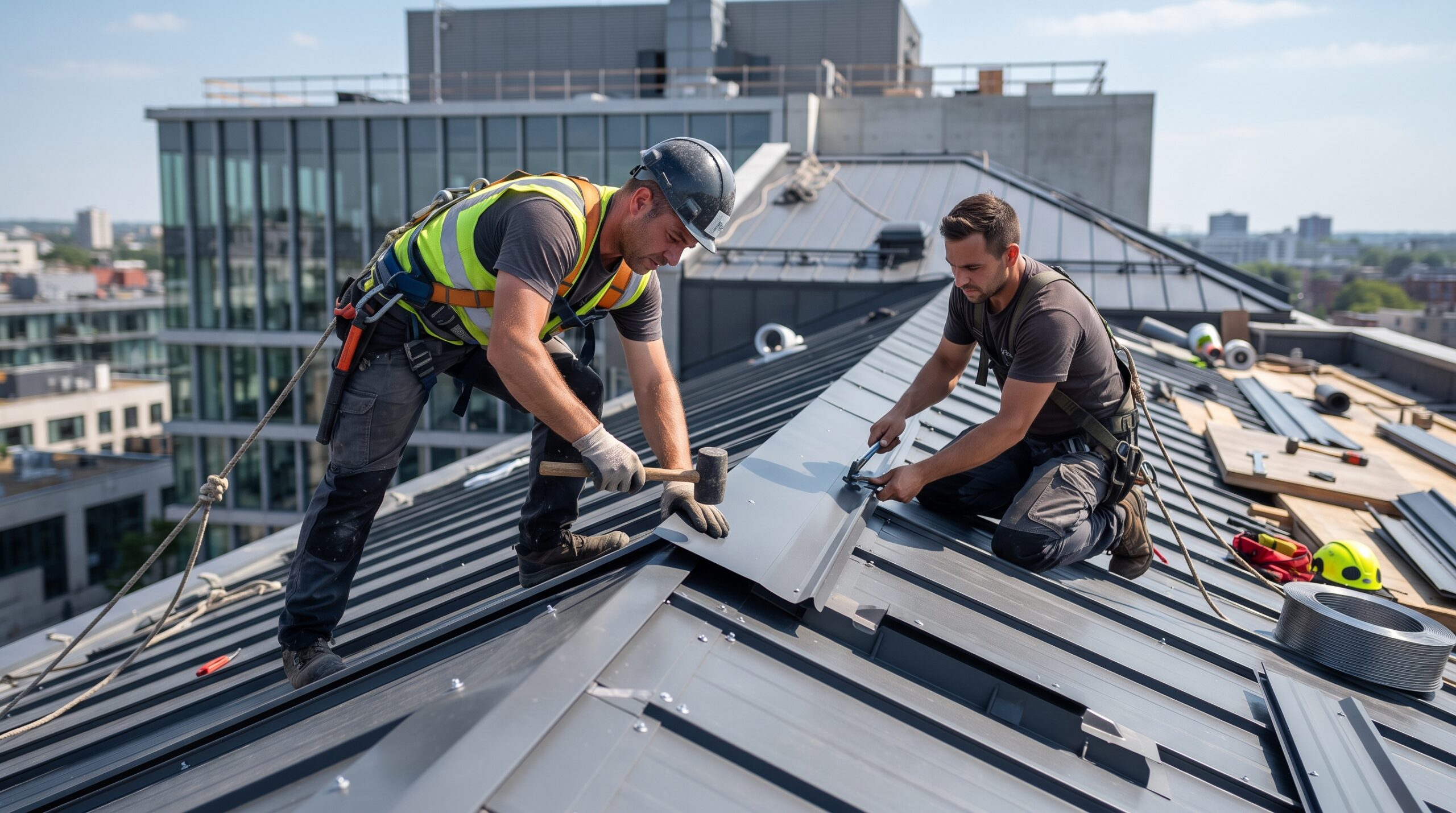
Roof installation safety in California is set by Cal/OSHA: on a house with a roof slope of up to 7 in 12, roofers must be protected from falling wherever the drop is 6 feet or more, and on steeper roofs at any height, using harnesses and anchors, scaffolding, safety nets or guardrails. For the homeowner, a safe job also means a contractor that carries workers’ compensation, covered skylights and roof openings, materials placed with care, and a yard left free of nails. To plan a safe, well-run installation, call NEMA Roofing at 866-631-3366.
What fall protection must a roofing crew use?
California’s rule for residential roofing (Title 8, section 1731) covers roofing and re-roofing on single-family homes, townhouses and duplexes, including tear-off, loading materials and the sheet metal that is part of the roof system.
| Roof slope | When protection is required | Accepted methods |
|---|---|---|
| Flat up to 7 in 12 | When the fall to the ground or level below is 6 feet or more | Personal fall protection (harness and anchor), scaffolding, safety nets or guardrails |
| Steeper than 7 in 12 | At any height | The same methods |
Only when the employer shows those methods are not feasible may it use a written fall protection plan with safety monitors and controlled access zones. The height is measured from the surface the roofer stands on to the ground or level below; parapets do not count toward it.
The same section requires training on the hazards particular to roofing: working near gable ends, slipping, roof holes and openings, skylights, ladders and scaffolds, getting onto the roof, where materials are placed on the roof, impalement, and the care and use of fall protection equipment.
What does a safe setup look like on your house?
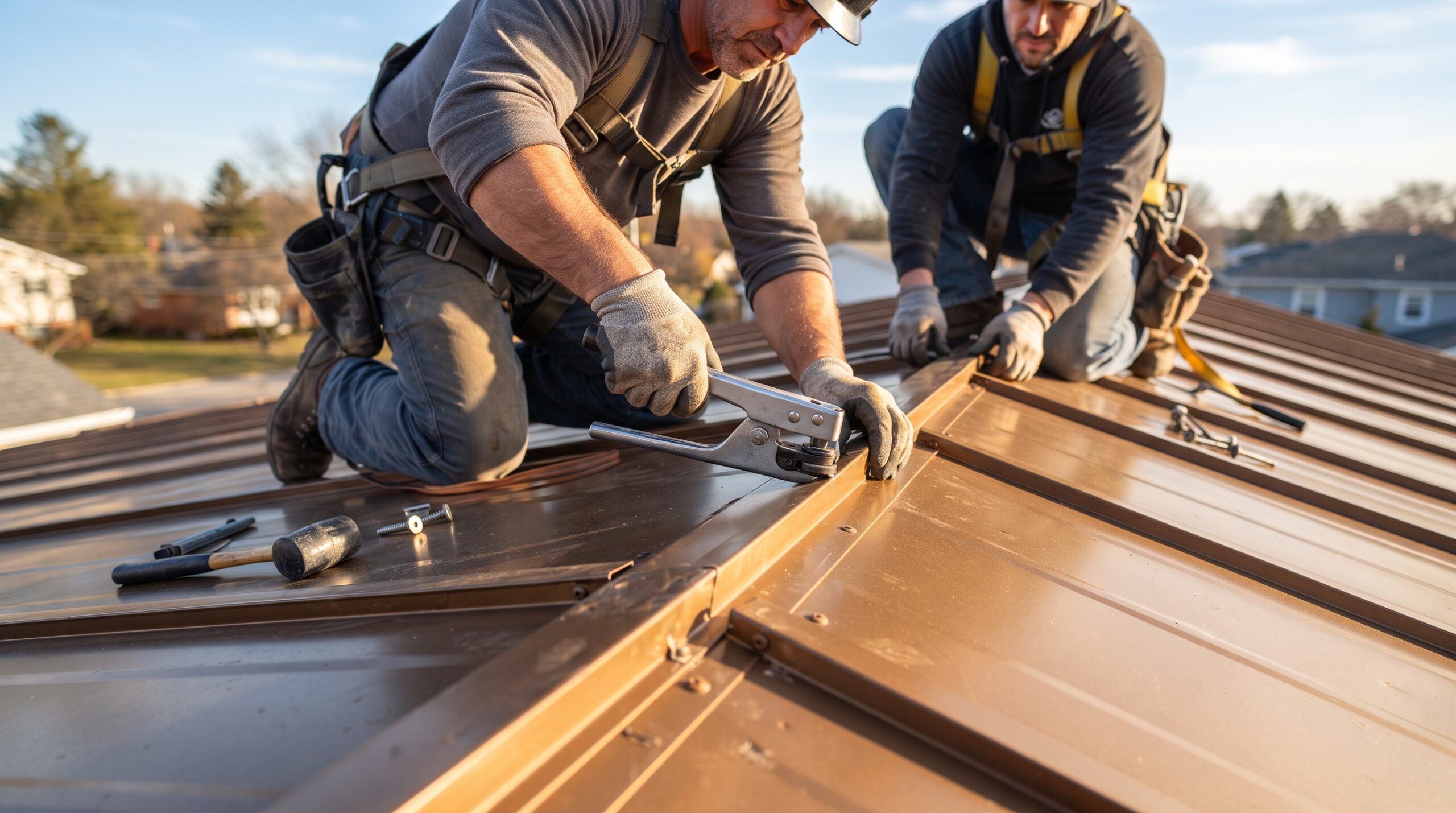
- Anchors. Roof anchors fastened into the framing, with lines to each roofer’s harness. Anchors are usually placed before the new covering goes on, and their fastener holes are covered or sealed by the new roof.
- Ladders. Under the federal OSHA ladder rule, a ladder used to reach a roof extends at least 3 feet above the roof edge, or is secured at the top with a handhold.
- Openings. Skylights and holes cut for vents are covered or guarded, since a skylight can give way under a person’s weight.
- Edges and drop zones. On some roofs, scaffolding or guardrails at the eaves; below, a marked area where no one walks while tear-off debris comes down.
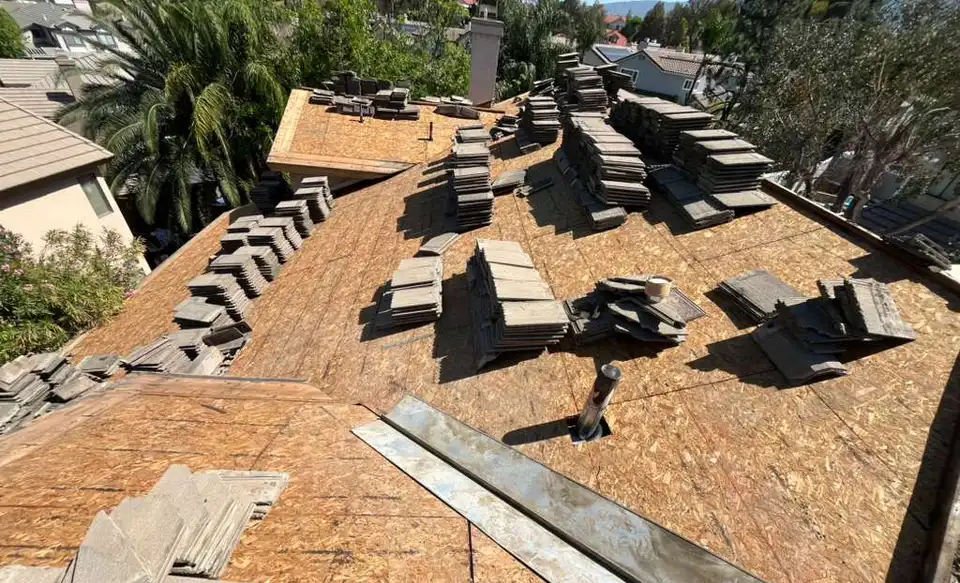
- Loading. Bundles and tiles set on the roof in spread-out stacks near the ridge or over framing, not piled in one spot or near the edge.
Why does crew safety matter to you as a homeowner?
Beyond the obvious, it is a matter of liability. When an uninsured contractor’s worker gets hurt on your property, the state license board cautions that the bills for treatment and rehabilitation can land on you, and your own homeowner’s coverage might not pay them. Check the contractor’s workers’ compensation on its license page before you sign. NEMA Roofing is a licensed roofing (C-39) and general building (B) contractor under CSLB license #1083283, bonded and insured, with its workers’ compensation policy on file with the state board.
How is the property kept safe during the job?
On a well-run job, expect these to be settled before tear-off starts:
- Landscaping, pool areas and outdoor units are covered before tear-off.
- The dumpster or trailer sits where it will not block access or damage the driveway, with its placement agreed in advance.
- Loose nails are picked up with a magnetic sweeper around the house and driveway, daily and again at the end of the job.
- Overhead power and service lines near the roof edge are identified before material is lifted.
- Family members, visitors and pets stay clear of the drop zones while the crew works; our guide on how to prepare for a roof installation covers the household side.
How does safe work make the roof last longer?
Much of what keeps a crew safe also protects the roof. Walking only where the roof can take it avoids cracked tiles and scuffed shingles; the tile industry recommends keeping foot traffic on tile to a minimum and stepping where each tile is supported by the one below. Keeping the open deck covered at the end of each day protects the underlayment and the house from overnight moisture. Stacking material over framing keeps the deck from being overloaded. For the installation details that decide a roof’s life, read roofing installation designed to improve durability and performance.
What should you ask before work starts?
- What fall protection will the crew use on your roof, and where will anchors go?
- Is the crew covered by the contractor’s workers’ compensation policy, and can you see the certificate?
- Where will the dumpster and material deliveries go?
- How will skylights, landscaping and outdoor equipment be protected?
- How will the roof be covered overnight and if rain is forecast?
NEMA Roofing teams work out of six locations (Santa Barbara, Oxnard, Woodland Hills, Tarzana, Downey and San Bernardino) and install roofs in every part of Santa Barbara, Ventura, Los Angeles, Riverside and San Bernardino counties; see our service areas and our roof installation service, or call 866-631-3366.