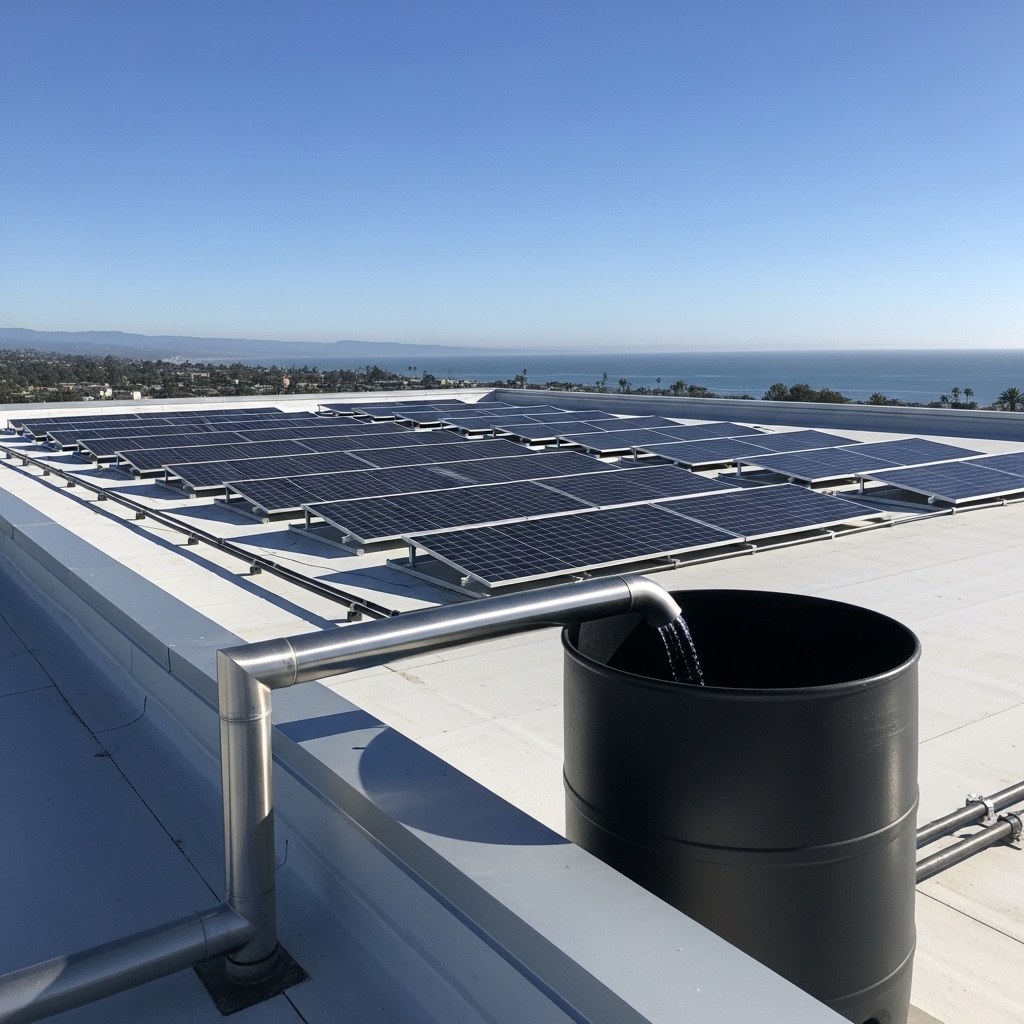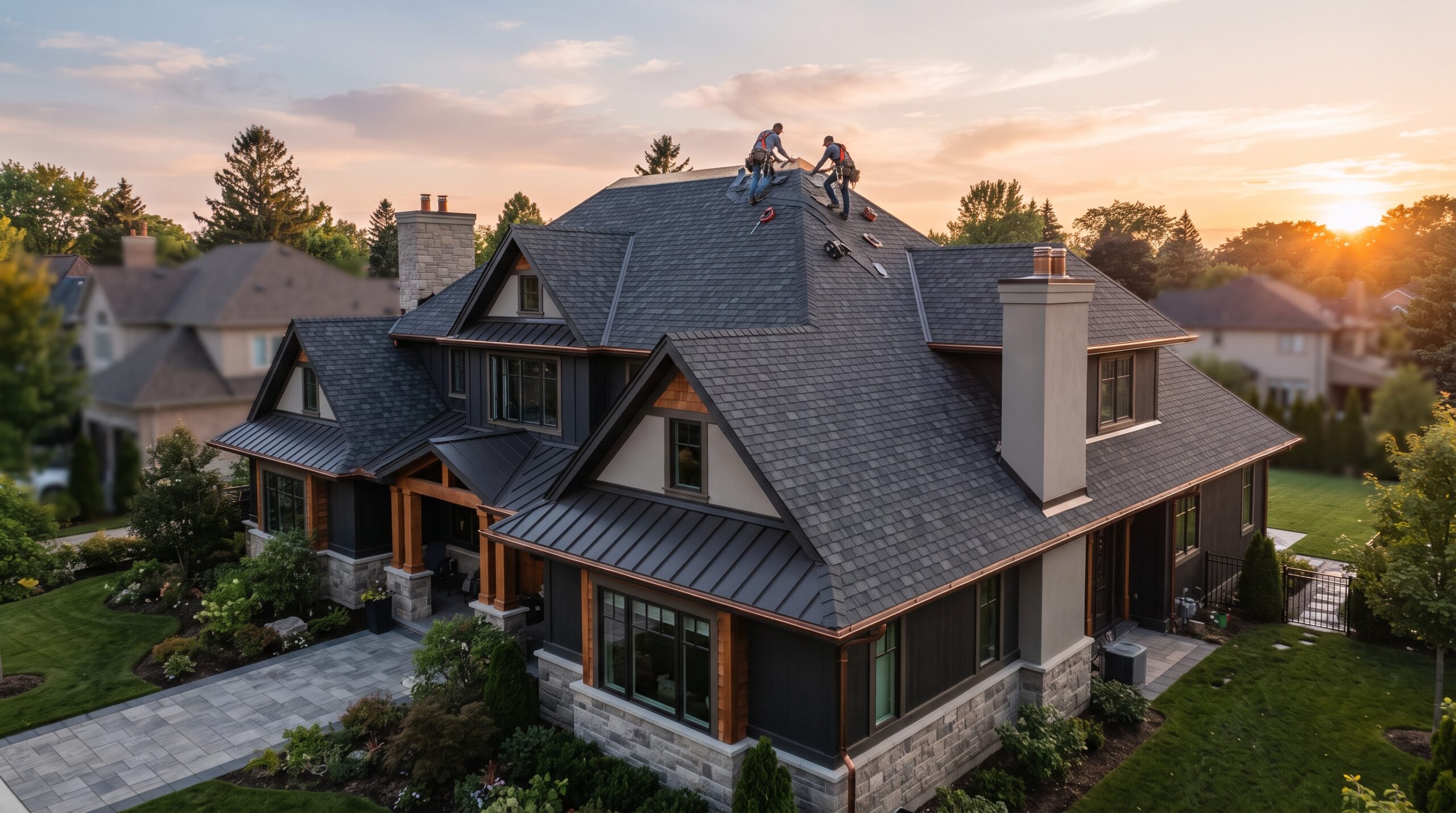
Roof flashing installation means fitting metal (and in some places membrane) pieces wherever the roof meets a wall, changes slope or direction, or is cut open for a chimney, pipe, vent or skylight, so that water is turned back onto the roof instead of into the house. California’s residential code requires flashing at each of those places, and because those joints are the weak points of any roof, careful flashing is much of what lets an installation stand the test of time. To plan a new roof with new flashing, call NEMA Roofing at 866-631-3366.
Where does a roof need flashing?
| Location | What goes there | Code reference |
|---|---|---|
| Roof slope meeting a side wall | Step flashing (one piece per shingle course) or continuous base flashing, at least 4 inches up the wall and 4 inches onto the roof, tucked under the siding | CRC R905.2.8.3 |
| Bottom of a side wall at the eave | A kickout (diverter) that throws water away from the wall and into the gutter | CRC R903.2.1 |
| Wall above the roof (headwall) | Apron flashing, installed to the shingle maker’s instructions | CRC R905.2.8.4 |
| Chimney | Base flashing and counterflashing; a cricket (saddle) on the uphill side of any chimney or penetration more than 30 inches wide | CRC R903.2.2 |
| Valleys | Metal at least 24 inches wide for an open valley, or a 36-inch lining of roll roofing or self-adhered membrane | CRC R905.2.8.2 |
| Plumbing vents and exhaust pipes | Pipe flashings (boots) to the shingle maker’s instructions | CRC R905.2.8.4 |
| Eaves and rakes | Drip edge, lapped 2 inches and nailed at most 12 inches apart; underlayment over it at the eaves and under it at the rakes | CRC R905.2.8.5 |
Skylights are flashed with the kit their maker specifies; a unit skylight flashed that way does not need a cricket.
What should flashing be made of?
Where flashing is metal, the code calls for corrosion-resistant metal at least 0.019 inch thick (No. 26 galvanized sheet). For valley linings it lists minimums by metal, for example aluminum at 0.024 inch, G90 galvanized steel at 26 gauge and copper at 16 ounces per square foot. Base flashing may also be mineral-surfaced roll roofing of at least 77 pounds per 100 square feet; cap flashing must be metal.
Near the ocean, the metal choice matters more. Salt air corrodes coated steel faster, and the Department of Defense’s roofing criteria advise against mixing dissimilar metals, which corrode where they touch. Match the flashing metal to the roofing and fasteners, and ask what the installer uses on a coastal house.
Should old flashing be reused on a new roof?
As a rule, no. Step flashing is woven into the old shingle courses and is bent or torn when those come off; its spacing rarely lines up with a new product’s exposure. Pipe boots have rubber collars that crack in the sun. Rusted or pitted metal will fail long before the new covering. New flashing is a small part of a roof job, and it is hard to reach once the new roof is on.
The one place that takes planning is counterflashing set into stucco or masonry. Where a wall has exterior plaster, the code sends the base flashing to the plaster section as well (CRC R905.2.8.3 and R703.7.3), so replacing it can mean opening and patching the plaster above the roof line. The estimate should say how this is handled.
How is flashing handled on tile roofs and around solar?
On clay and concrete tile, the Tile Roofing Industry Alliance’s guidance is that every penetration needs two flashings: one at the deck and underlayment level, and one at the tile surface. Accessories such as solar mounts must never be fastened to an individual tile. Metal flashing at walls and valleys under tile follows the same 0.019-inch minimum, and valley metal extends at least 11 inches each side of the center line with a raised splash rib at least 1 inch high (CRC R905.3.9). For more on tile systems, see our tile roofing service.
Why is sealant not a substitute for flashing?
Good flashing sheds water by overlap, the way shingles do: each upper piece laps over the one below, so gravity carries water down and out. Caulk only closes a gap until it dries, shrinks and cracks. A roof that relies on sealant at the chimney or wall will leak again. Warning signs of failing flashing:
- Ceiling or wall stains next to a chimney, skylight or where a lower roof meets a two-story wall.
- Stucco stains or rot at the bottom of a wall where a kickout is missing.
- Rust streaks below metal pieces.
- Thick caulk lines where metal should be.
What should you ask your installer about flashing?
- Will all step, apron, chimney and pipe flashing be new?
- What metal and thickness will be used, and is it suited to the salt exposure at your address?
- Where will kickouts and crickets go?
- How will counterflashing at stucco or masonry be handled, and who patches the wall?
- Can you get photos of the flashing before the covering and siding hide it?
Flashing is one of several details covered in what makes a roofing installation durable; the step-by-step installation guide shows where it fits in the job, and flat roofs are covered in flat roof flashing.
From six locations (Santa Barbara, Oxnard, Woodland Hills, Tarzana, Downey and San Bernardino), NEMA Roofing handles roof installations throughout Santa Barbara, Ventura, Los Angeles, Riverside and San Bernardino counties; find your area on our service areas page. Read about our roof installation service, or call 866-631-3366 for an estimate.