The signs your coastal roof needs repair in Santa Barbara are cracked, lifted or missing tiles, worn or blistered flat roof membranes, rust at flashing and fasteners, ceiling stains or soft roof sheathing, sagging or clogged gutters, loose ridge caps on crumbling mortar, and daylight or drafts at the roofline. Salt air, marine layer moisture and Sundowner winds drive most of them. If you see one, book an inspection before the next storm: call NEMA Roofing at 805-977-5949.
What does roof damage actually look like after a season of Santa Barbara ocean winds and salt-laden marine layers? The answer is rarely a dramatic collapse. More often, it is a slow accumulation of subtle clues that most homeowners miss until water is already inside. This guide walks through seven concrete warning signs specific to Santa Barbara’s coastal environment so you can act before a small repair becomes a full replacement.
1. Cracked, Lifted, or Missing Clay and Concrete Tiles
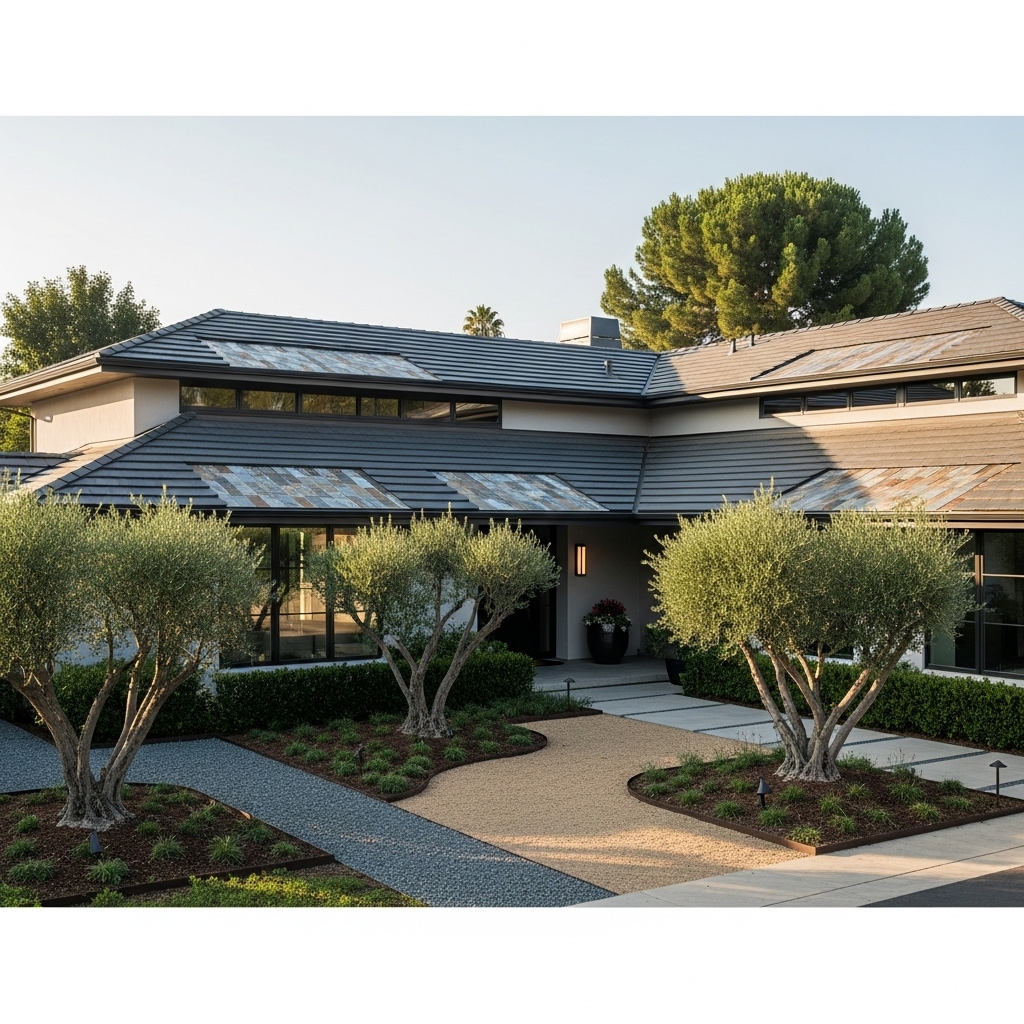
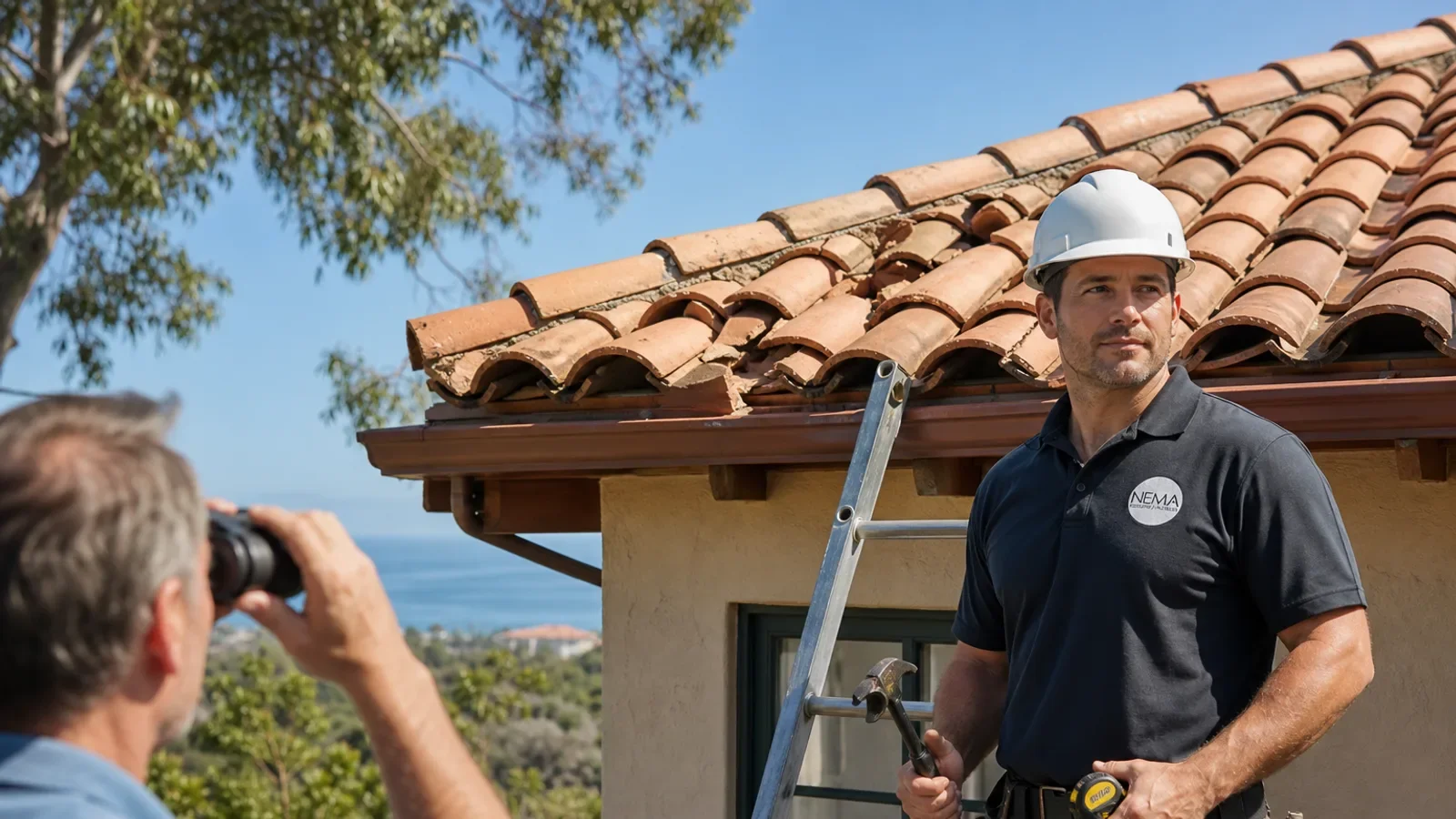
Santa Barbara’s Spanish Colonial and Mission Revival architecture means many residential roofs in the area are covered in clay or concrete tile. These materials are durable, but they are not immune to the gusts that funnel through the Santa Ynez Mountains or roll in off the Pacific. A single lifted tile breaks the interlocking water-shedding system the entire roof depends on. After any notable wind event, scan the roofline from the ground with binoculars. Look for tiles that sit at an angle compared to their neighbors, tiles with visible cracks running across their face, or bare patches where a tile has slid or blown off entirely. Even one missing tile leaves the underlayment below exposed to direct rain and sun. For a deeper look at what those tiles reveal about long-term coastal wear, the tile roof inspection guide covers the full evaluation process in detail.
2. Granule Loss and Blistering on Flat Roof Membranes
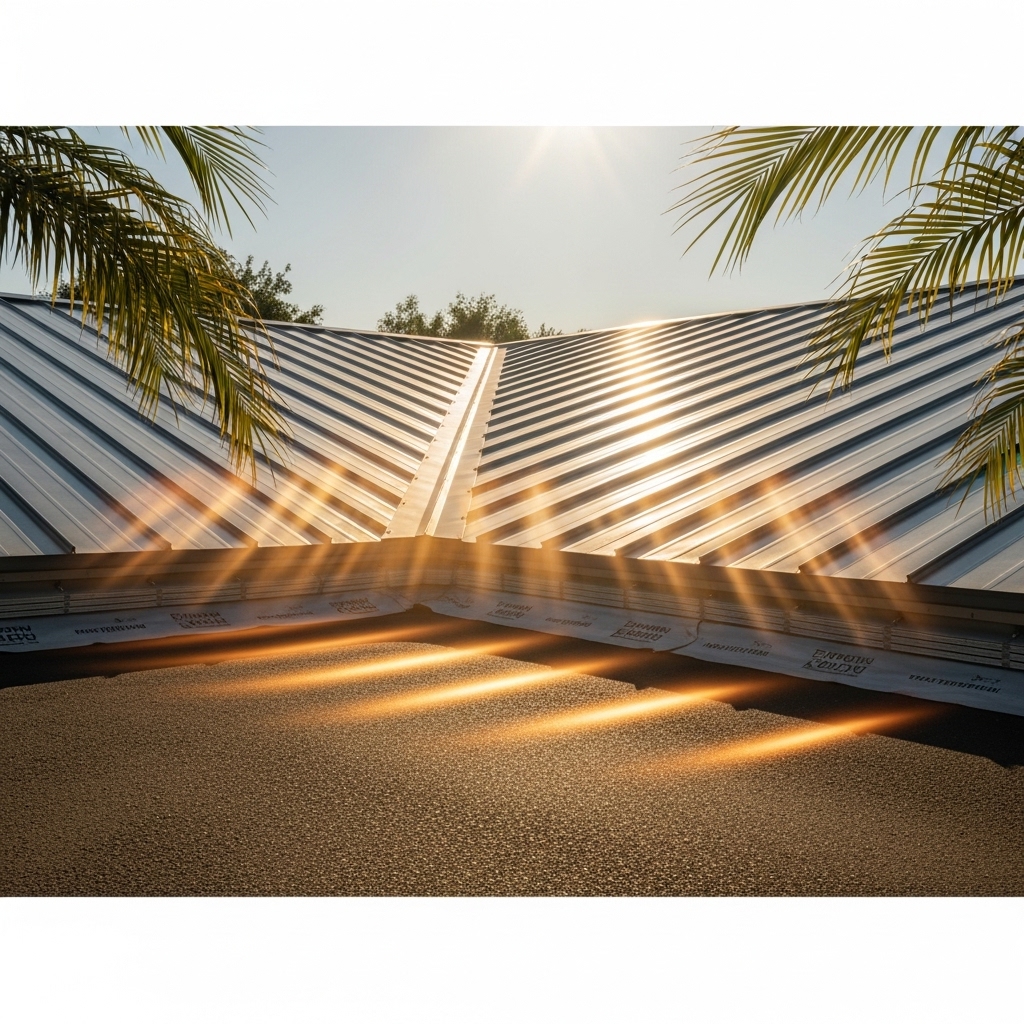
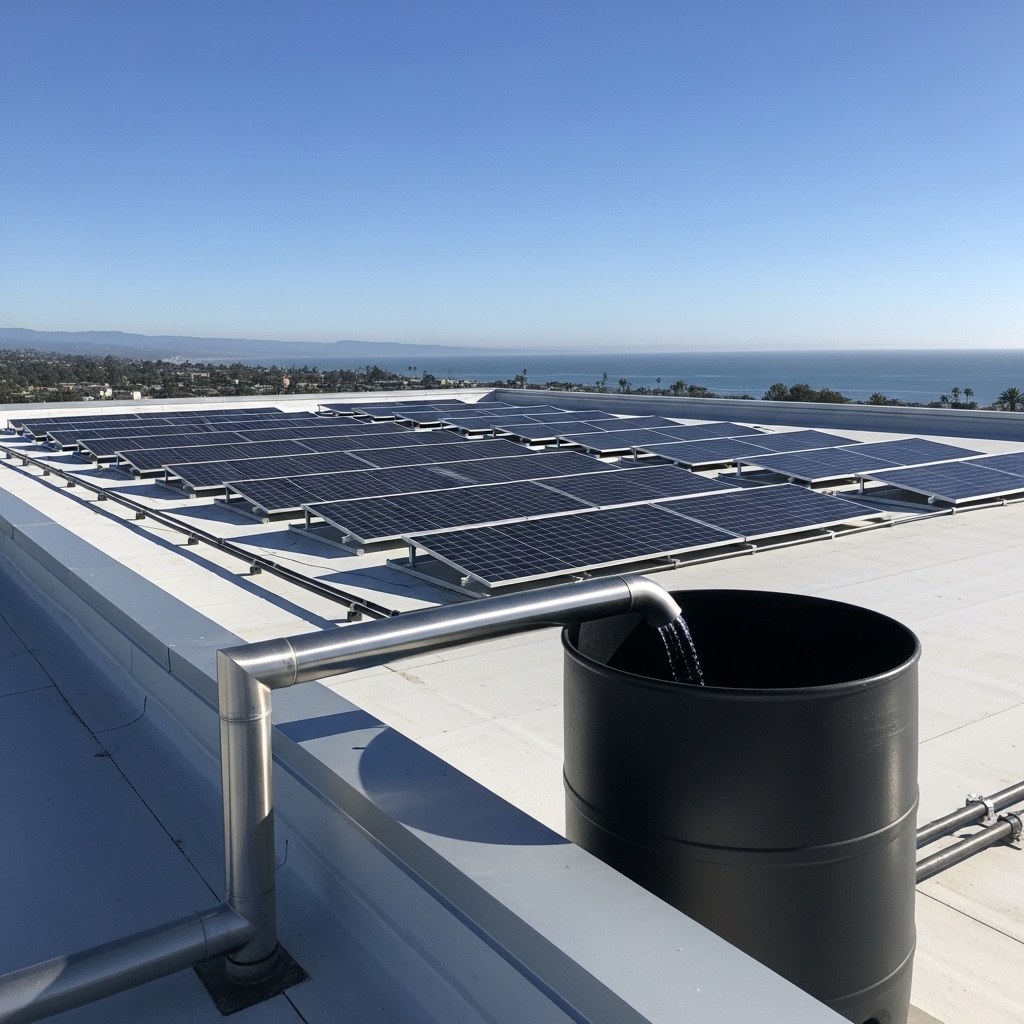
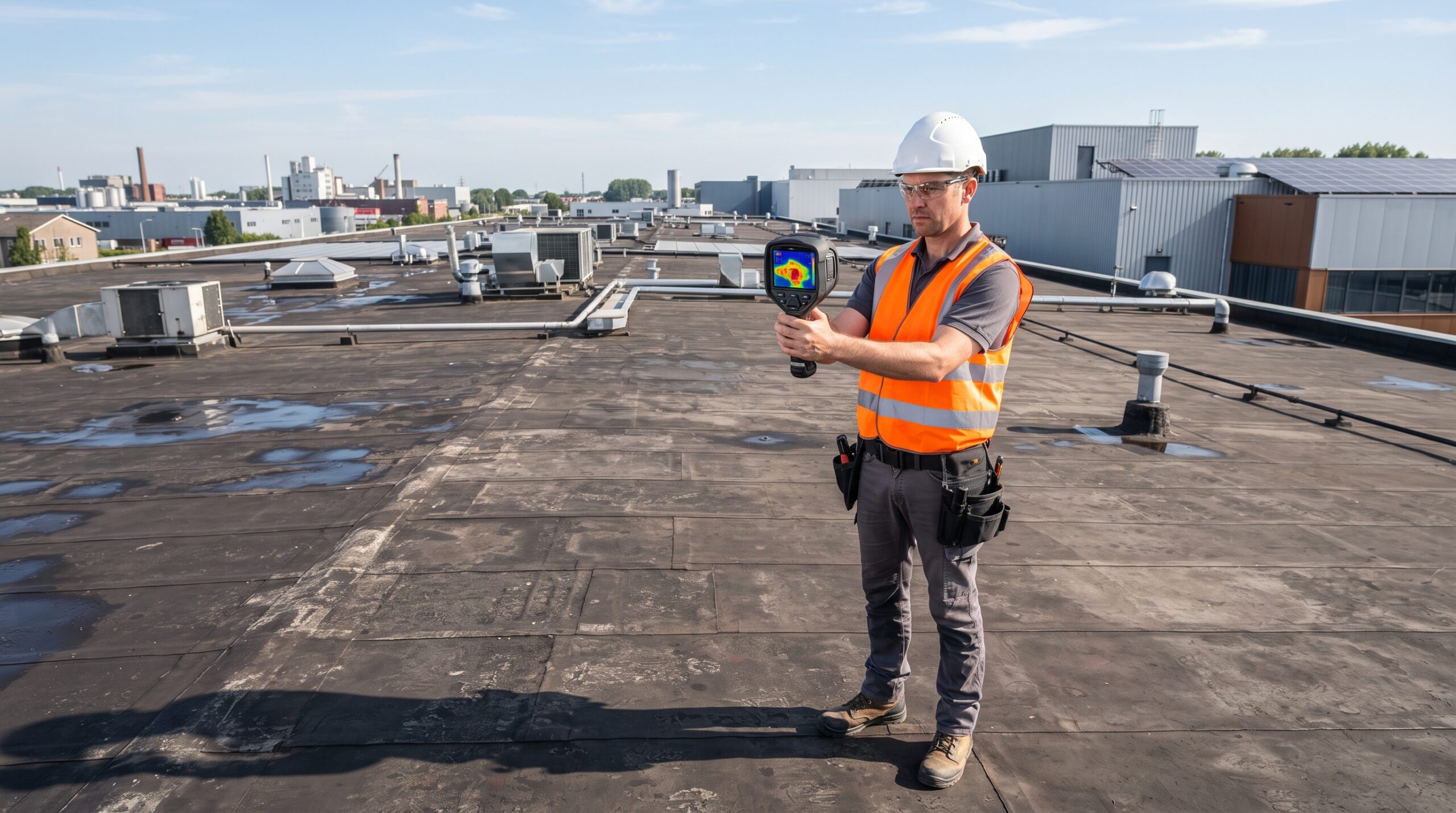
Flat roofs are common on Santa Barbara commercial buildings and on the rear additions of many Craftsman and bungalow-style homes in neighborhoods like Eastside and the Riviera. Modified bitumen and built-up roofing membranes rely on a granule or gravel surface layer to reflect UV radiation and protect the underlying waterproofing material. Coastal UV exposure is intense here year-round, and the combination of salt air and heat accelerates the breakdown of that protective layer. Signs of trouble include patches where the surface looks smooth or shiny rather than textured, blistering bubbles that feel spongy underfoot, and collections of dark granules washing into gutters or pooling near drains. Blistering in particular signals that moisture has already penetrated between membrane layers. Left unaddressed, those blisters rupture and create open pathways for water intrusion. Our complete storm damage evaluation guide explains how inspectors assess flat roof integrity after major weather events.
If a membrane is past repair, many Santa Barbara owners of flat-roofed homes and buildings move to a new system; see our Polyglass flat roofing installations.
3. Rust Stains or Corrosion Around Flashing and Fasteners
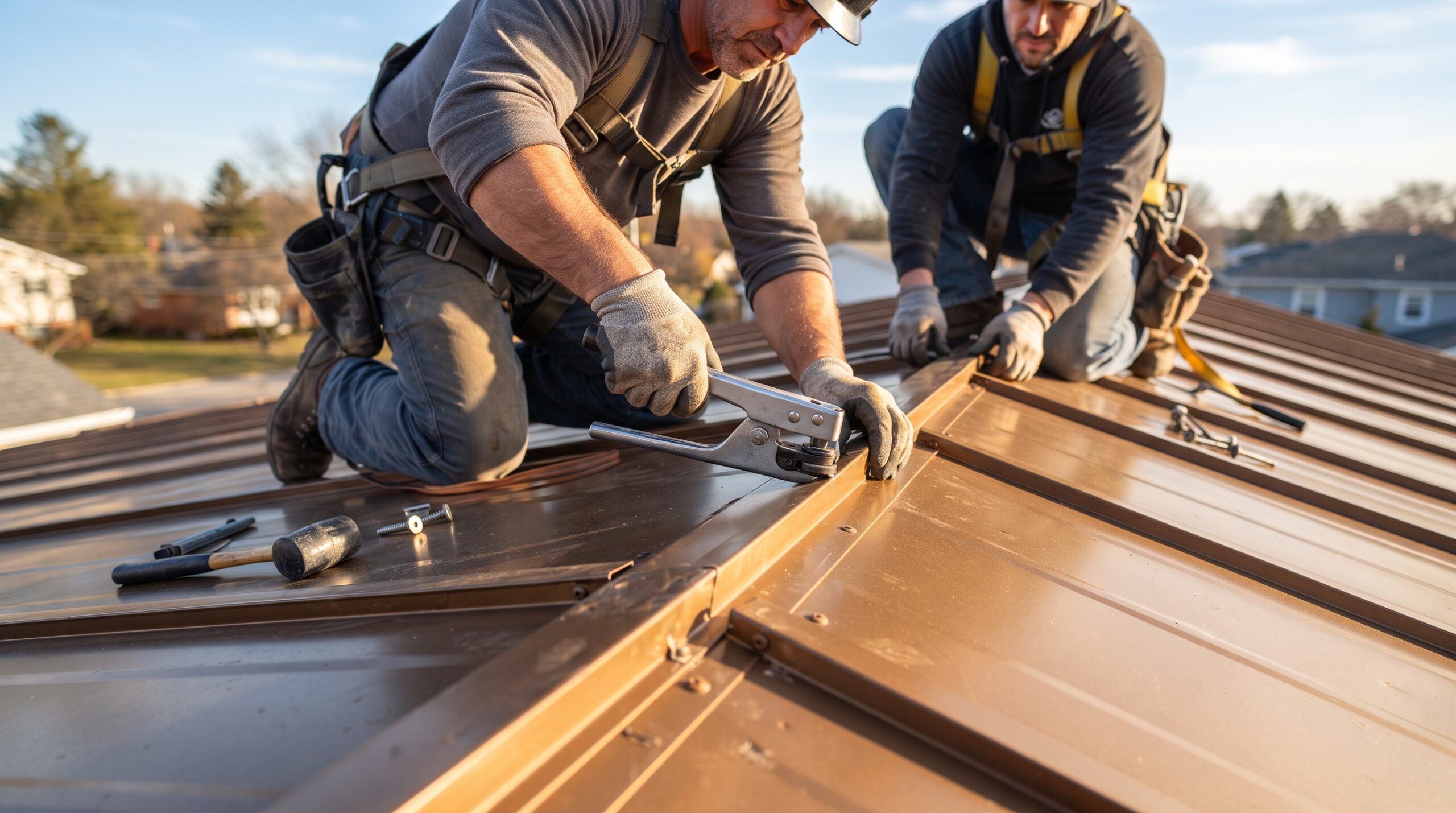
Flashing is the sheet metal installed at every roof penetration: chimneys, skylights, vent pipes, and the joints where a roof meets a wall. In Santa Barbara’s salt air environment, standard galvanized steel flashing corrodes faster than it would in an inland climate. Rust streaks running down a chimney face or along a parapet wall are a reliable indicator that the flashing beneath is compromised. Corroded fasteners are equally telling. When the screws or nails holding ridge caps, valley flashing, or drip edges begin to rust, they lose their grip and allow the metal to lift slightly during wind events. That small gap is enough for wind-driven rain to push water underneath. Check for orange-brown staining on the exterior walls below any roof-to-wall junction. If you see it, the flashing itself almost certainly needs replacement; sealing alone will not hold.
When a corroded flashing detail sits on a flat roof whose membrane is also worn out, it is often better to redo both at once; see our Polyglass flat roofing in Santa Barbara.
4. Water Stains or Soft Spots on Interior Ceilings and Attic Sheathing
Interior evidence is often the first sign homeowners actually notice, but by the time a water stain appears on a ceiling, the leak has often been active for some time. A yellow or brown ring on drywall or plaster indicates water has traveled from the entry point, soaked through insulation, and saturated the ceiling material. In older Santa Barbara homes, particularly those built before the 1970s in areas like Hope Ranch or the upper Mesa, attic access is sometimes limited, but even a brief inspection with a flashlight can reveal darkened or soft roof sheathing, white mineral deposits left by evaporated water, or active mold growth on rafters. Soft spots in the ceiling that flex when pressed suggest the drywall or plaster has lost structural integrity from repeated wetting. This is a situation where a professional roof damage inspection is the right next step rather than a DIY patch.
5. Sagging Gutters and Blocked Drainage Channels
Gutters are part of the roofing system rather than a cosmetic feature, and in Santa Barbara they take a particular beating. The eucalyptus, palm, and Canary Island pine trees that line many neighborhood streets drop debris year-round, and marine layer moisture keeps that debris damp and heavy. When gutters fill with compacted leaves and organic matter, water backs up under the drip edge and begins saturating the fascia board and the roof deck behind it. Gutters that have pulled away from the fascia or that visibly sag in the middle are telling you the fascia is already softening from moisture exposure. This condition also creates the ideal environment for wood rot to spread into the rafter tails, which is a more expensive repair than the gutter work itself. Check whether water flows freely through downspouts after rain; if it pools or overflows mid-gutter, the system needs clearing and the underlying wood should be inspected.
6. Salt Air Deterioration of Ridge Caps and Mortar Beds (Santa Barbara-Specific)
This sign is particularly relevant to Santa Barbara and other coastal Southern California communities close to the shoreline. Tile roofs installed in this zone use a mortar bed to set ridge cap tiles and hip tiles in place. Salt-laden air, combined with the thermal cycling that comes from cool marine layer mornings and warm afternoon sun, causes that mortar to crack, shrink, and eventually crumble. When the mortar bed fails, ridge caps become loose and are easily dislodged by the Sundowner winds that accelerate down the Santa Ynez Mountains toward the coast. A ridge cap that shifts even slightly exposes the ridge board beneath to direct weather. Homeowners in Montecito, the Riviera, and the beachside neighborhoods of the lower West Side should pay particular attention to this issue after any strong wind event. The marine layer roof wear article goes into detail on how repeated salt fog cycles affect mortar and tile adhesion over time.
7. Daylight Visible in the Attic or Unexplained Drafts Near the Roofline
If you can stand in your attic on a sunny day and see pinpoints or streaks of light coming through the roof deck, you have confirmed gaps in the roofing system. These openings may be too small to produce an immediate visible leak during light rain, but they allow wind-driven water to enter during heavier storms and create pathways for insects and moisture vapor year-round. Unexplained drafts near the ceiling in upper-floor rooms can point to the same problem: gaps at ridge vents, around attic hatches, or where roof penetrations have separated from their boots. In Santa Barbara, where coastal breezes are a constant presence, these drafts are easy to dismiss as normal air movement. They are not. A professional roof inspection can distinguish between intentional ventilation and gaps that compromise the roof’s weatherproofing. If any of these signs sound familiar, reviewing the storm damage evaluation process is a practical starting point before scheduling repairs.
Frequently Asked Questions
How soon after a storm should I check my roof for damage?
A visual ground-level inspection is reasonable as soon as wind and rain have passed and conditions are safe. For any suspected damage, a professional inspection within a few days of the storm is advisable, since water intrusion that goes undetected can cause secondary damage to insulation, framing, and interior finishes within a short window. The post-storm maintenance checklist outlines what to look for in the immediate aftermath.
Can I walk on my tile roof to check for damage myself?
Walking on clay or concrete tile without proper technique and footwear causes cracking and breakage, often creating more damage than the storm did. Ground-level observation with binoculars and a careful attic inspection are the safest homeowner options. Leave physical roof access to a licensed roofing professional who knows how to distribute weight across tile surfaces.
Does homeowner’s insurance cover coastal wind and salt damage in Santa Barbara?
Coverage depends heavily on your specific policy language and the cause of the damage. Wind damage from a named storm event is typically treated differently than gradual deterioration from salt air exposure. Requirements also vary by insurer and policy type. A licensed roofing contractor can document the damage in a way that supports your claim, and your insurance agent is the right resource for interpreting your coverage. Always consult both before beginning repairs.
Catching these signs early is the difference between a targeted repair and a full roof replacement. If your Santa Barbara home is showing one or more of these warning signs, the most productive next step is a professional roof damage inspection from a contractor who understands the specific demands of this coastal climate. Contact our roof repair team to schedule an assessment and get a clear picture of what your roof actually needs.
NEMA Roofing serves the Santa Barbara coast and the inland valleys alike. Its crews come from five Google-verified locations, in Downey, Tarzana, Woodland Hills, Oxnard and Santa Barbara, and between them reach every part of Riverside, San Bernardino, Los Angeles, Ventura and Santa Barbara counties; see our service areas. Call 805-977-5949 to book an inspection.