For ceiling leaks in Woodland Hills homes, the emergency steps are: move people and belongings away from the water, shut off power to the wet area, relieve a bulging ceiling with a small hole over a bucket, photograph everything, then call a roofer to stop the water where it enters the roof. Stay off a wet roof. For an emergency visit, call NEMA Roofing at 818-528-6412.
Why Woodland Hills Roofs Leak Suddenly
Water moving through a ceiling does not wait. By the time a stain appears on the drywall, moisture has often been traveling through insulation and framing for a while. In Woodland Hills that hidden stage is common for two reasons: the age of the housing and the shape of the weather.
Most homes here are not new. Census figures for the two Woodland Hills ZIP codes (91364 and 91367, American Community Survey 2024 five-year estimates) show about 64 percent of housing units built before 1980, with the largest share from 1960 to 1979; the median year built is 1967 in 91364 and 1975 in 91367. On roofs of that age, pipe boots, flashing and underlayment that have been replaced piecemeal, or not at all, are the usual weak points.
The weather then does the rest. The NOAA climate normals for the Pierce College station in Woodland Hills (1991 to 2020) show an average August high of 97.4°F and about 115 days a year at 90°F or hotter, while nearly all of the roughly 16 inches of yearly rain falls from December through March, with February the wettest month. Months of heat dry out sealants, rubber boots and asphalt; the first real storms then find every crack at once. If it has been a while since anyone looked at your roof, the Woodland Hills roof inspection checklist is worth working through before the rainy months.
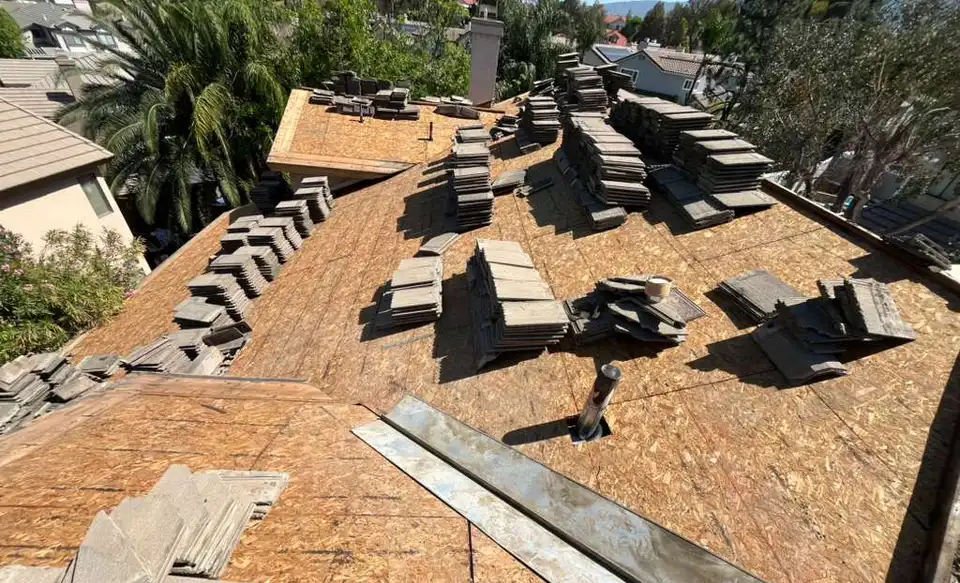
Debris adds to it. Leaves and needles collect in valleys and gutters, and a blocked valley can push water sideways under shingles in a heavy downpour, even on a roof that looked fine at its last inspection. Once the underlayment fails, older board sheathing can soak up water and soften quickly. The steps below are written for that situation.
The First Ten Minutes: Protect What Is Inside
The moment you notice water coming through the ceiling, resist the urge to climb onto the roof. A wet roof surface in a storm is dangerous, and no meaningful repair can be made in those conditions anyway. Your job in the first ten minutes is to limit damage indoors.
- Clear the area. Move furniture, electronics and anything irreplaceable out from under the leak. Lay plastic sheeting or garbage bags down and put buckets or large pots under each drip.
- Cut the power. Turn off the breakers that serve the affected rooms. If you are unsure which circuits run through the wet area, switch off the larger section of the house until someone qualified has checked it.
- Relieve a bulging ceiling. If water is pooling above the drywall and the ceiling is bowing, stand to the side and use a screwdriver to puncture the lowest point over a bucket. A controlled release keeps the ceiling from giving way under the weight of the water, which causes far more damage and can injure someone.
- Photograph before you clean. Take photos and video of the stains, the ceiling, the attic and any damaged belongings before you move or cover anything. Your insurer will want evidence of the damage as it happened.
If you want it handled correctly the first time, see our emergency roof repair service.
Temporary Measures That Actually Help
Once the inside is under control, a few things are useful and reasonably safe. None of them is a repair; they slow the water until a roofing crew arrives.
A tarp, only if it is safe. If the rain has stopped and you can reach a single-story section from a sturdy ladder, a large polyethylene tarp over the suspected leak area, weighted with sandbags, can reduce the water coming in. Do not try this on a steep roof, a wet surface or near an edge without fall protection. If you have any doubt, skip it. A temporary cover is not worth a fall.
Find the entry point from the attic. With a flashlight, follow the wet trail on the roof boards and rafters uphill, toward the ridge. Water runs along wood before it drips, so the entry point is often a few feet uphill from the ceiling stain. Put a container or a board under the drip, and mark or photograph where the wet trail starts. That mark saves the roofer time. Smearing sealant on the underside of the roof deck does little, because the water is coming through from above.
Calling for Emergency Roof Repair in Woodland Hills
When you call, be specific: which part of the roof the leak seems to come from (front slope, back valley, chimney side), what the ceiling looks like, how long the water has been coming in and if you found the entry point in the attic. That helps the crew bring the right materials and set priorities.
A roofing contractor offering genuine emergency roof repair in Woodland Hills should be able to provide same-day or next-day response for active leaks, weather permitting.
Many Woodland Hills homeowners rely on our roofing contractor services for exactly this.
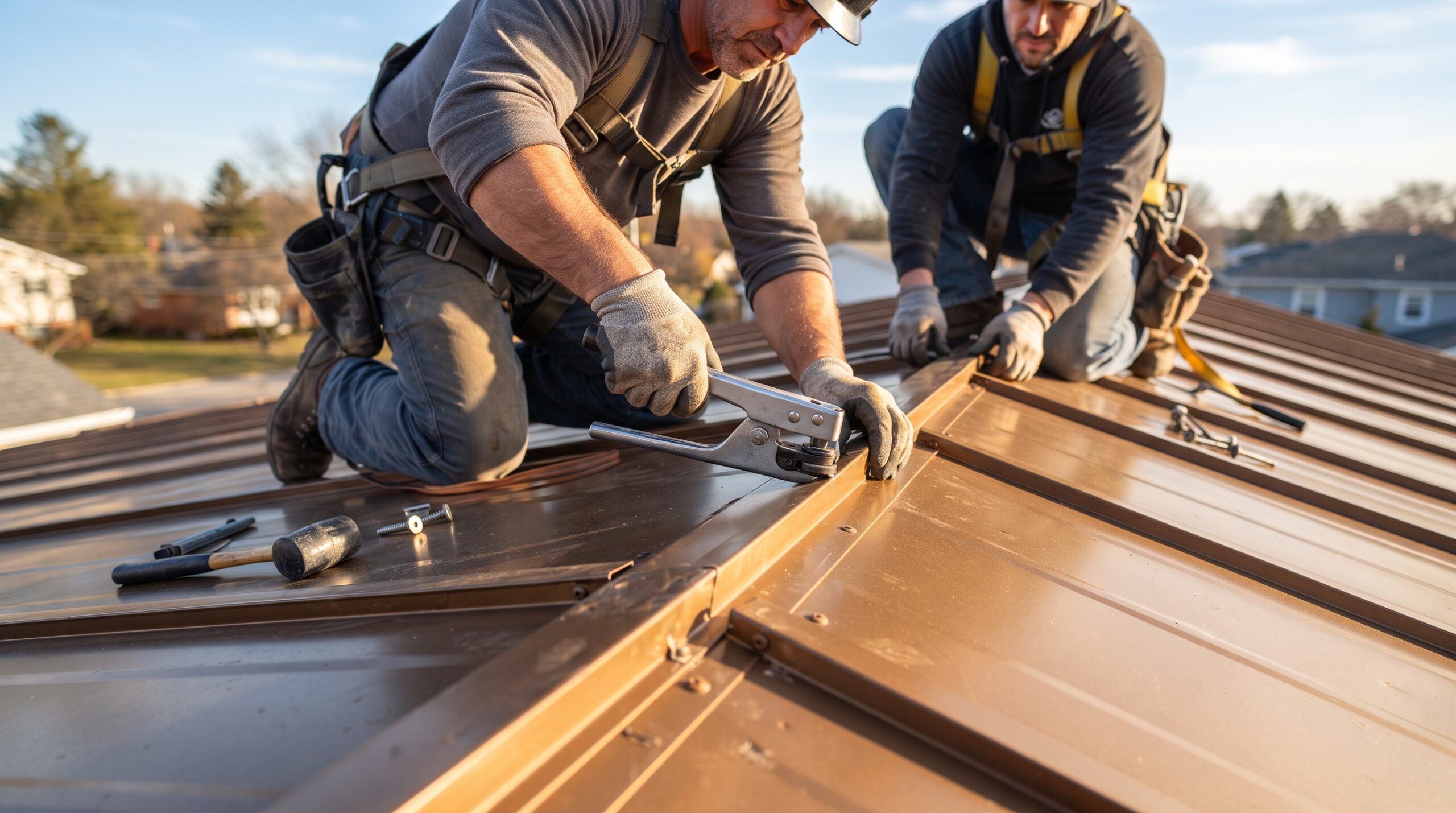
On the roof, a qualified crew finds the actual source (which is often not directly above the drip), then secures it. That might mean re-setting loose flashing, replacing a cracked pipe boot or laying a temporary membrane over a failed section until the permanent repair can be done in dry weather. The goal of the emergency visit is to stop the water, not always to finish the job in one trip.
Woodland Hills is part of the City of Los Angeles, so if the leak turns into a reroof, the permit comes from the Los Angeles Department of Building and Safety. Both Woodland Hills ZIP codes include areas mapped as Very High Fire Hazard Severity Zones, where a new roof covering must be Class A. For how a Woodland Hills roof contractor handles those rules, see the guide to hiring a roof contractor in Woodland Hills.
What Happens After the Emergency Visit
Once the leak is stopped, the next step is an inspection of the roof around it, to learn whether the failure was isolated or a symptom of wider wear. On an older roof, one failed flashing often means the others are in similar shape. Fixing only the visible failure is a common way to end up with another emergency a season or two later.
Inside, the wet framing, sheathing and insulation need to dry fully before any drywall is closed up. The U.S. Environmental Protection Agency advises drying water-damaged areas and items within 24 to 48 hours to prevent mold growth; wet insulation that cannot dry that fast usually has to come out. A moisture meter reading a few days later confirms the area is dry before the ceiling is repaired.
If the inspection shows the roof is near the end of its life, weigh a replacement before paying for repeated patches. The factors that affect replacement cost in Woodland Hills help with that decision. With summer heat like the Valley’s, a replacement is also the moment to look at a reflective roof; see the cool roofing facts for Woodland Hills.
Frequently Asked Questions
Can I stay in my home while the roof is leaking?
In most cases, yes, as long as the power to the affected area is off and the ceiling is not sagging. If a large area of ceiling is bowing, or water is near the electrical panel, move to another part of the house or leave until a professional has looked at it.
How do I know where the leak is actually coming from?
Follow the water uphill. It travels along rafters and sheathing before it drips, so the ceiling stain is rarely right below the entry point. In the attic, look for daylight, dark stains on the wood and wet insulation. Pipe boots, chimney flashing and the metal flashing where a roof meets a wall are frequent sources, because heat dries and cracks them.
Will homeowner’s insurance cover an emergency roof leak?
It depends on the cause and your policy. Sudden damage from a storm is often covered, while leaks blamed on long-term wear or neglect are often excluded. Photos with dates, taken before cleanup, and a written note from the roofer on the cause make a claim stronger. Ask your insurer what the policy says before the permanent repair starts.
How quickly should a professional be on site after a leak starts?
As soon as you can get one. Every extra hour of water pushes moisture further into framing and insulation, which then takes days to dry. The interior steps above reduce damage while you wait; they do not replace the roof visit.
After the Water Stops
A ceiling leak is stressful, but it also tells you something specific about your roof that a dry-weather look might have missed. Treat it as the start of a real assessment of the roof, not a problem to patch and forget. Schedule a follow-up inspection once the emergency is over, and ask for the findings in writing with photos.
NEMA Roofing’s Woodland Hills team is one of five, alongside Santa Barbara, Oxnard, Tarzana and Downey, and between them they cover Los Angeles, Ventura, Santa Barbara, Riverside and San Bernardino counties; the service areas page lists the towns. For an emergency leak visit or a follow-up inspection, call 818-528-6412.