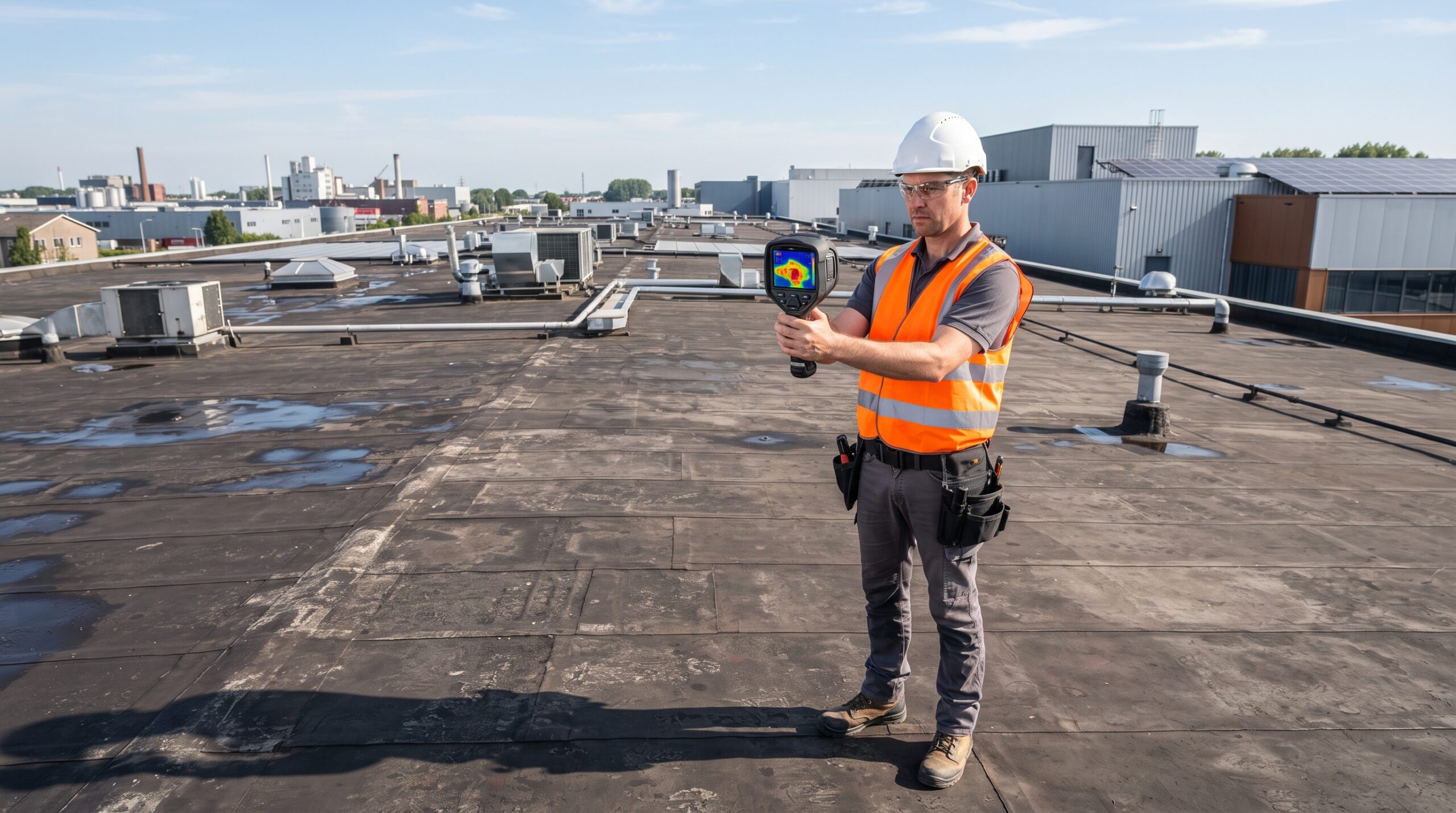
Flat roofing systems are the membranes and multi-ply assemblies used on roofs with little or no visible slope: single-ply TPO, PVC and EPDM, modified bitumen, built-up roofing (BUR), spray polyurethane foam and liquid-applied coatings. A “flat” roof is really a low-slope roof, built with enough fall (at least 1/4 inch per foot under the California Building Code for these systems) to move water to drains, scuppers or gutters. Below: how each system works, where it fits, and what California requires. For flat roof advice on your building, call NEMA Roofing at 866-631-3366.
What types of flat roof systems are there?
| System | What it is | Where it fits |
|---|---|---|
| TPO | A single-ply thermoplastic sheet, usually white, with heat-welded seams | Homes and commercial roofs where reflectance and welded seams matter |
| PVC | A single-ply thermoplastic sheet with heat-welded seams | Roofs exposed to kitchen grease or chemicals |
| EPDM | A single-ply synthetic rubber sheet, black or white, seams taped or glued | Roofs that move or where a flexible sheet suits the detailing |
| Modified bitumen | Asphalt modified with polymers, installed in two or more plies | Roofs with foot traffic and equipment; residential flat roofs and additions |
| Built-up roofing (BUR) | Alternating plies of felt and bitumen, often surfaced with gravel | Structures that can carry the weight of a multi-ply, gravel-surfaced roof |
| Spray polyurethane foam | Foam sprayed in place, then coated | Irregular roofs and recovers over a sound existing roof |
| Liquid-applied and coatings | Fluid membranes or reflective coatings applied over a prepared surface | Restoring a sound roof or detailing complex areas |
How do the main systems compare over time?
The U.S. Department of Defense’s roofing criteria, written for military buildings, give a neutral view: properly constructed weldable thermoplastic systems (TPO and PVC) may last 15 years or more; modified bitumen must be considered where long service life is required and has low maintenance cost; and gravel-surfaced built-up roofs tend to outlast mineral cap sheet built-up roofs because the gravel keeps the membrane cooler and protects it. In every system, installation quality and upkeep matter as much as the material. See how long each flat roof material lasts for more.
What is a flat roof made of, layer by layer?
- Deck: wood sheathing on most homes; wood, metal or concrete on commercial buildings.
- Insulation: rigid boards, often tapered to create slope toward the drains.
- Cover board: a firm layer that protects the insulation and gives the membrane an even base (system dependent).
- Membrane: the waterproof layer itself.
- Surface: the membrane’s own reflective face, granules, gravel or a coating.
- Flashing and drainage: membrane and metal at walls, curbs and edges, plus drains, scuppers and gutters, with secondary overflow drains or scuppers where parapets would trap water.
What does California require of a flat roof?
- Slope: a design slope of at least 1/4 unit in 12 for single-ply, modified bitumen, built-up, spray foam and liquid-applied roofs (1/8 in 12 for coal-tar built-up roofs).
- Overflow drainage: secondary drains or scuppers where the roof perimeter would trap water if the primary drains backed up.
- Cool roof on replacement: for homes, replacing more than half of a low-slope roof in climate zones 4 and 6 through 15 requires an aged solar reflectance of at least 0.63 and thermal emittance of at least 0.75 (or an equivalent index), unless an insulation trade-off is used; that includes coastal Santa Barbara and Ventura (zone 6) and the inland valleys (zone 9). Commercial low-slope reroofs fall under the rule in every zone.
- Fire rating: in a Fire Hazard Severity Zone or wildland-urban interface area, where the 2025 California Wildland-Urban Interface Code applies, a roof covering that is replaced, or has 50 percent or more replaced within 12 months, must meet the Class A rating required for new construction.
Are flat roofs a good choice for homes?
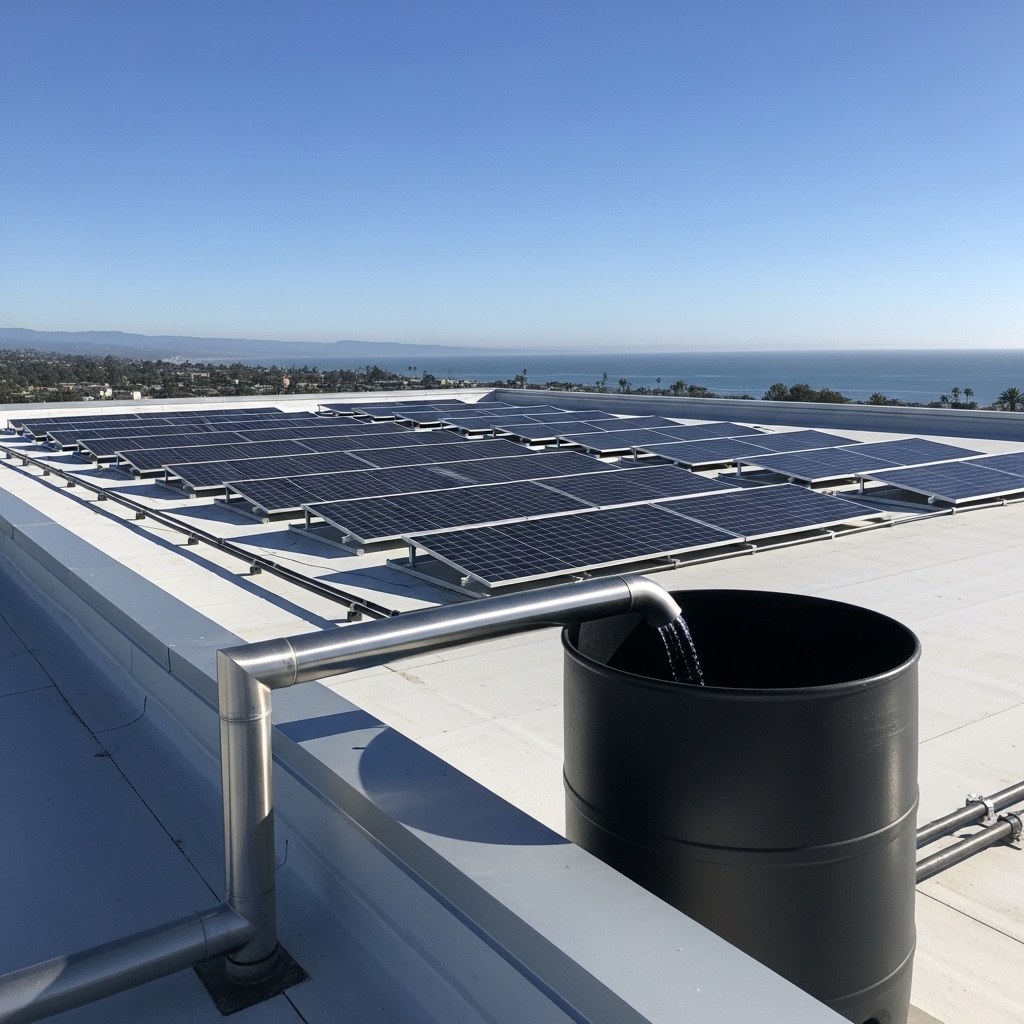
Flat and low-slope roofs are common on modern and mid-century homes, additions, garages and patio covers. They can carry solar panels and equipment, and a white membrane keeps the space below cooler. Their weak points are drainage and the joints where the roof meets walls, which is why slope, drains and flashing get as much attention as the membrane. A yearly inspection and clear drains before the rainy season catch problems while they are small; use the flat roof maintenance checklist, and read common flat roof problems for what goes wrong.
How do you choose a system?
- Check the structure and existing layers: can the deck carry the system, and must the old roof come off?
- Decide how the roof is used: foot traffic, equipment and solar favor tougher surfaces or walk pads.
- Meet the cool-roof values on a replacement, or plan the insulation trade-off.
- Look at detailing: many walls, curbs and penetrations favor systems that flash cleanly.
- Compare installation methods (fastened, adhered, torched, welded) for your building’s access and neighbors.
For the install process, see flat roof installation: what to expect. NEMA Roofing installs and repairs flat roofing systems from five locations (Santa Barbara, Oxnard, Tarzana, Woodland Hills and Downey) across Santa Barbara, Ventura, Los Angeles, Riverside and San Bernardino counties; see our flat roofing service. To talk through the right system for your roof, call NEMA Roofing at 866-631-3366.