The environmental impact of commercial roofing in Santa Barbara comes down to five things: how much solar heat the roof lets into the building, how long it lasts before it becomes landfill, how it handles the winter rain that runs off it, what it is made of and applied with, and what happens to it at the end of its life. Salt air, strong sun and Sundowner winds decide how long a roof lasts here, and a dry summer followed by concentrated winter rain decides how clean its runoff is. Below is what to do about each. To plan a greener reroof, call NEMA Roofing at 805-977-5949.
Where a commercial roof’s environmental impact comes from
| Impact | What drives it | The Santa Barbara factor | What helps most |
|---|---|---|---|
| Energy use | Surface reflectance and insulation | Sunny afternoons; cool, damp mornings | A rated cool surface plus insulation at reroof |
| Waste | How soon the roof must be replaced | Salt, UV and Sundowner winds shorten weak systems | Coastal-grade details and regular maintenance |
| Runoff quality | What collects on the roof between rains | Months of dry weather, then concentrated winter storms | Cleaning drains and roof surfaces before the first rain |
| Materials and emissions | Manufacturing, transport, adhesives and coatings | Occupied buildings stay open during work | Low-VOC products and a durable system |
| End of life | Tear-off, disposal, recycling | Recover rules and separation of metals | A roof kept dry enough to be recovered |
How does the roof affect energy use in a Santa Barbara building?
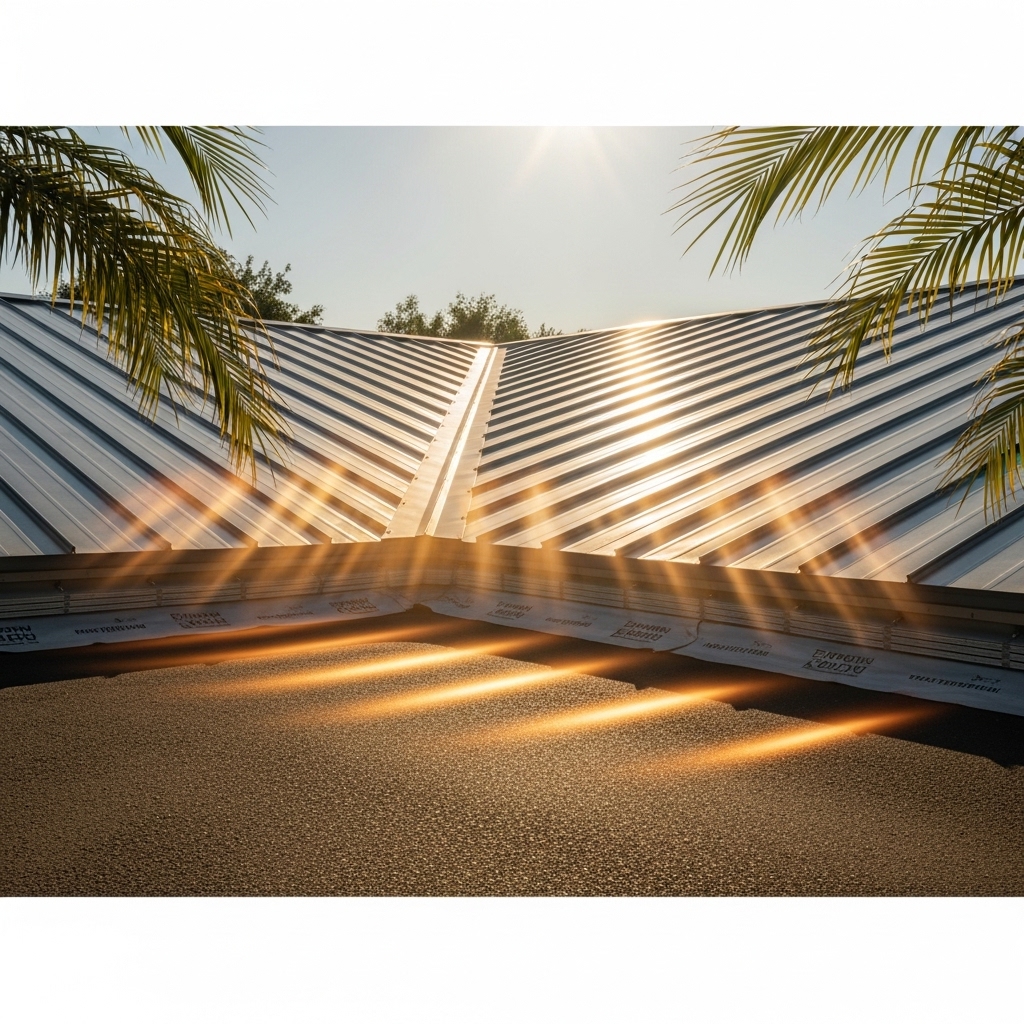
Santa Barbara’s weather looks mild on paper: at the downtown weather station, average daily highs run from about 66 degrees Fahrenheit in winter to 77.7 in August and September (NOAA 1991 to 2020 normals). The roof still sees strong sun on clear afternoons, and a dark membrane over a poorly insulated building adds to the cooling load then. Reflective (cool) membranes and coatings return more of that energy to the sky, and the U.S. Environmental Protection Agency notes that a cool roof absorbs and transfers less heat to the building than a conventional roof.
Insulation works in both directions, which matters here: it reduces heat gain on sunny afternoons and heat loss on cool, damp mornings. California’s Energy Code already ties the two together. Santa Barbara’s ZIP codes fall in climate zone 6, but the commercial reroof rule in the 2025 Title 24 code applies in every zone: work covering over half of a low-slope roof (or over 2,000 square feet, if smaller) must use a surface rated at no less than 0.63 aged reflectance, 0.75 emittance and SRI 75, barring an exception, and bring the insulation up to the code’s level. That makes a reroof the cheapest moment to add both.
Why is durability the biggest environmental lever?
The greenest roof is often the one that does not need replacing early. Every extra year of service defers the manufacturing, trucking and disposal of a whole new roof. On the Santa Barbara coast, three stresses shorten roof life:
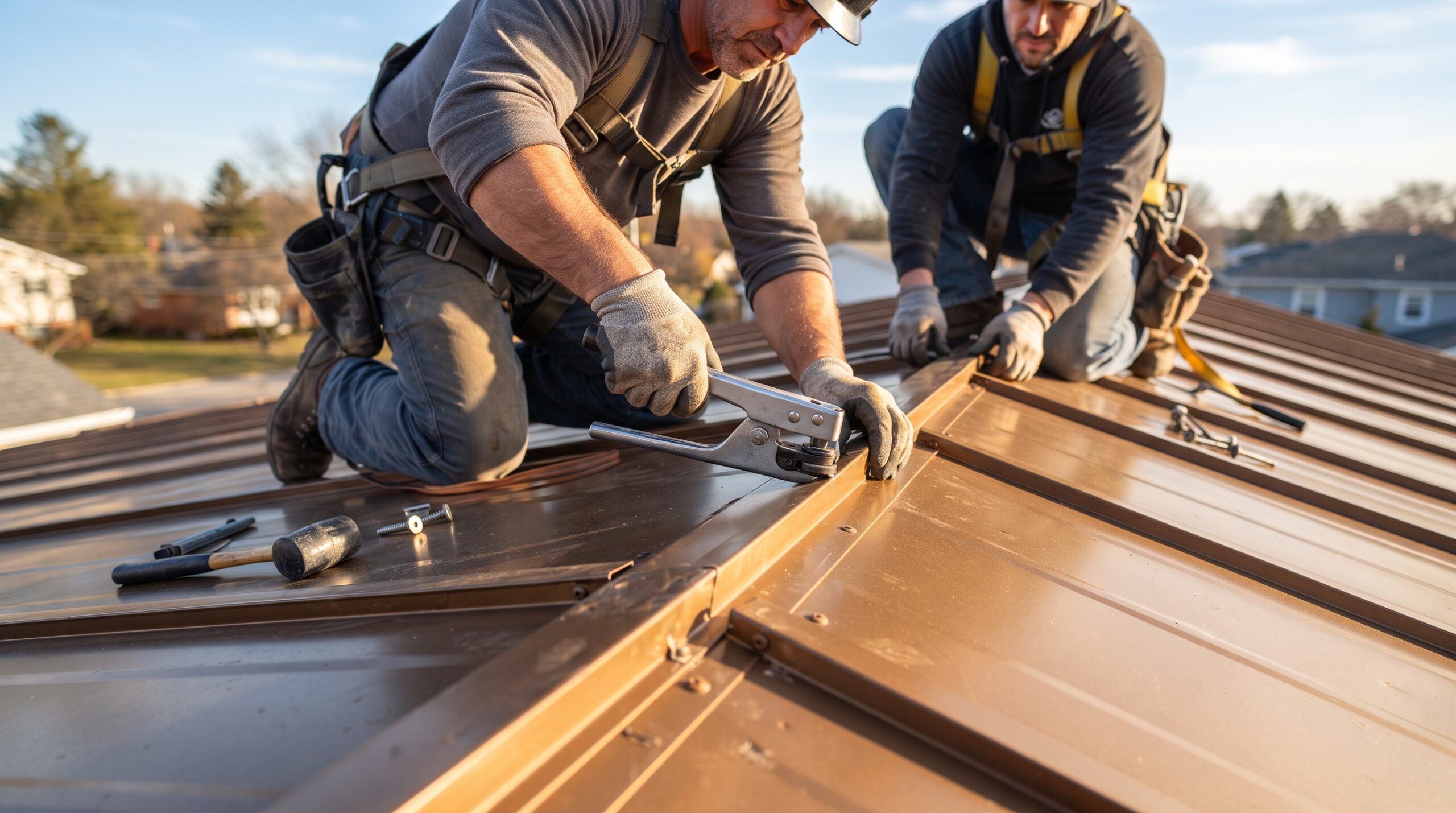
- Salt air corrodes unprotected metal: fasteners, edge metal, flashings and rooftop equipment stands. Corrosion-resistant fasteners and separating dissimilar metals prevent early replacement of those parts.
- Sun breaks down some membranes and sealants and wears coatings thin. UV-stable top surfaces and recoating on schedule keep the membrane protected.
- Sundowner winds, the gusty downslope winds off the Santa Ynez Mountains that peak from early evening to mid-morning, load roof edges and corners hardest. Reinforced perimeters and securely fastened edge metal are where to spend on wind.
Durability is as much detailing as material. Reinforced corners, correct fastening, smooth drainage paths and walk pads on service routes all extend service life. Our post on common commercial roofing problems in Santa Barbara covers how each of these failures shows up.
How should a Santa Barbara commercial roof handle stormwater?
Santa Barbara’s rain is concentrated: of about 19 inches in an average year at the downtown station, about 87 percent falls from November through March, and June through September average almost none (NOAA 1991 to 2020 normals). That pattern matters for runoff. Through the dry months, dust, leaves, grease residue near kitchen exhausts, loose granules and metal fragments build up on the roof, and the first storms of the season wash them into gutters, downspouts and storm drains.
What to do, in order:
- Clean the roof surface, drains, scuppers and gutters in the fall, before the first rain.
- Deal with grease at its source: containment at restaurant exhaust fans keeps it off the membrane and out of the runoff.
- Pick up loose fasteners, metal shavings and debris after any rooftop work.
- Fix areas where water ponds; standing water concentrates what it collects and wears the membrane.
- Where the site allows, direct downspouts to approved cisterns or infiltration areas rather than straight to the street.
Materials, coatings and embodied impact
Every roofing product carries the energy of making and shipping it. The practical rule is to weigh that against service life: a product with slightly better green credentials that fails years earlier on the coast is the worse environmental choice. Questions worth asking on a proposal:
- Does the manufacturer take back scrap or old membrane, and can edge metal and flashings be separated for recycling?
- Are the adhesives, primers and coatings low-VOC? Occupied restaurants, offices and shops stay open during most reroofs, so fewer fumes matter to tenants and crews.
- Does the insulation carry recycled content, and is it rated for the roof’s use?
For coating choices on the coast, see cool roof coating options in Santa Barbara.
Is the roof ready for solar?
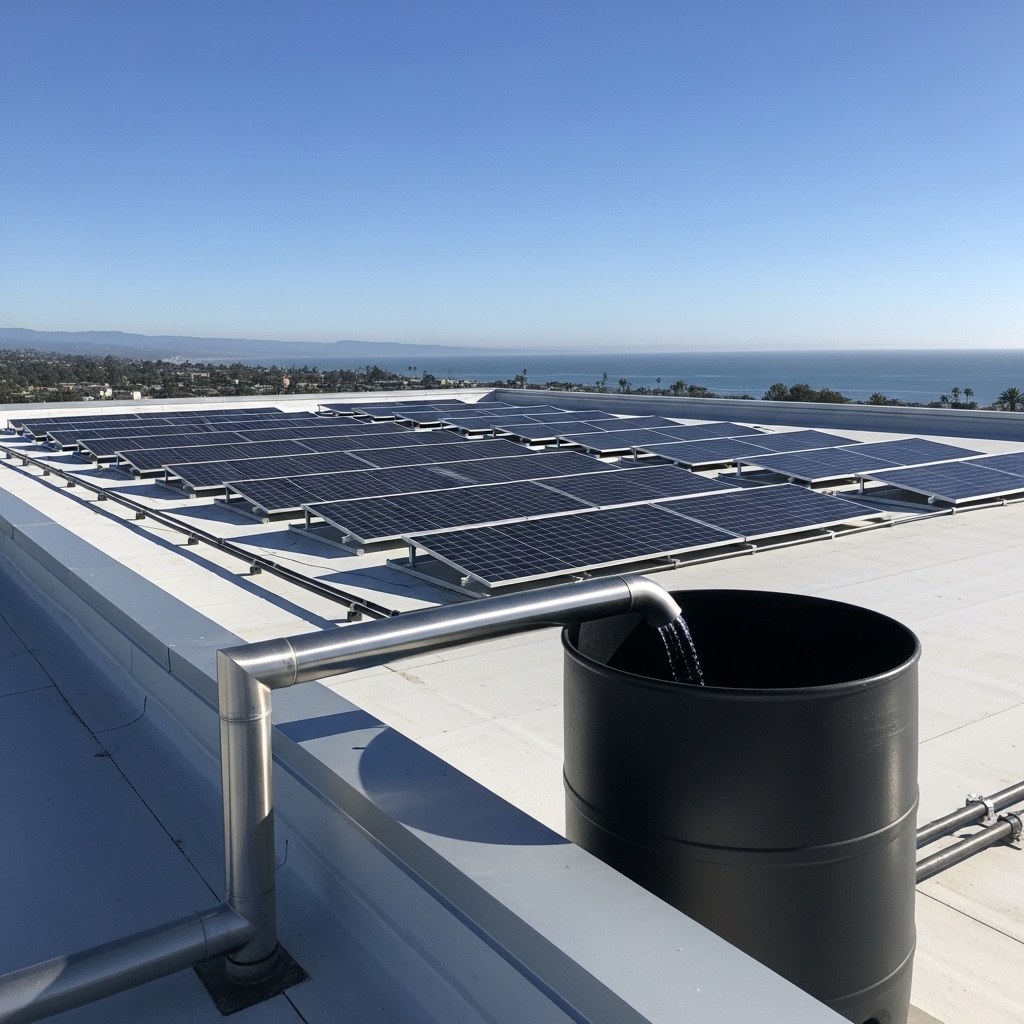
Solar lowers a building’s operating emissions, and a roof planned for it lasts longer. Settle panel layout, attachment method, wire routes and maintenance walkways with the roofer before the array goes on, so penetrations are flashed to the manufacturer’s details once rather than added one at a time. Match the roof’s remaining life to the array’s: removing panels to reroof underneath is a second project with its own waste. The same coordination applies to new HVAC units and telecom equipment.
Do green roofs make sense here?
Green roofs (a planted layer over the waterproofing) reduce and slow stormwater runoff, insulate and cool the roof surface, according to the EPA, and the deeper intensive kind needs more structural support. In Santa Barbara the dry summer is the design question: with almost no rain from June through September, plants need irrigation or drought-tolerant species. On most existing low-slope commercial roofs here, a durable reflective system is the simpler environmental choice; a green roof fits where the structure, water supply and maintenance budget allow.
Can an existing roof be made greener without replacing it?
Often, yes. In rough order of cost:
- Clean drains and the roof surface before the rainy season, and keep a maintenance log.
- Repair seams, flashings and small leaks early, so insulation stays dry.
- Add walk pads on service routes to rooftop equipment.
- Correct ponding with added drains or tapered insulation.
- Apply a rated reflective coating over a sound roof; a recoat large enough to trigger the rule above must meet its cool-roof values.
Our guide to maintaining a commercial roof in Santa Barbara sets out a full schedule.
Planning the end of the roof’s life
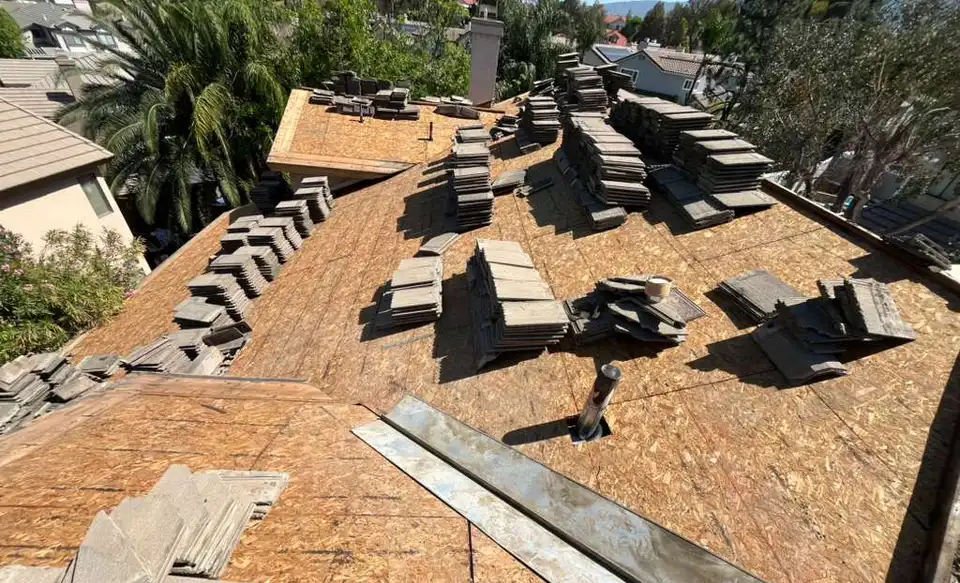
Tear-off waste is the largest single environmental cost of a roof. The California Building Code allows a new covering or coating over many existing low-slope roofs instead of a tear-off, but not over a roof that is water-soaked or deteriorated, and not where there are already two or more roof coverings. A roof kept dry keeps that option. When a tear-off is needed, separating metals and other recyclable materials keeps them out of landfill; the EPA tracks asphalt from roofing shingles among the construction materials that can be recovered. Keeping records of what was installed, where and when makes that sorting easier years later. For the cost side of the same decision, read commercial roof life cycle cost.
Talk to a commercial roofer about your building
Retail on State Street, tasting rooms in the Funk Zone and warehouses toward Goleta all face the same coastal stresses, in different measure. Our crews reach these buildings, and commercial properties in every other part of the five counties we cover (Santa Barbara, Ventura, Los Angeles, Riverside and San Bernardino), from NEMA Roofing’s locations in Oxnard, Downey, Tarzana, Woodland Hills and Santa Barbara; see all our service areas. Learn more on our commercial roofing service page, or call 805-977-5949 to plan a reroof that meets your environmental goals and the code.