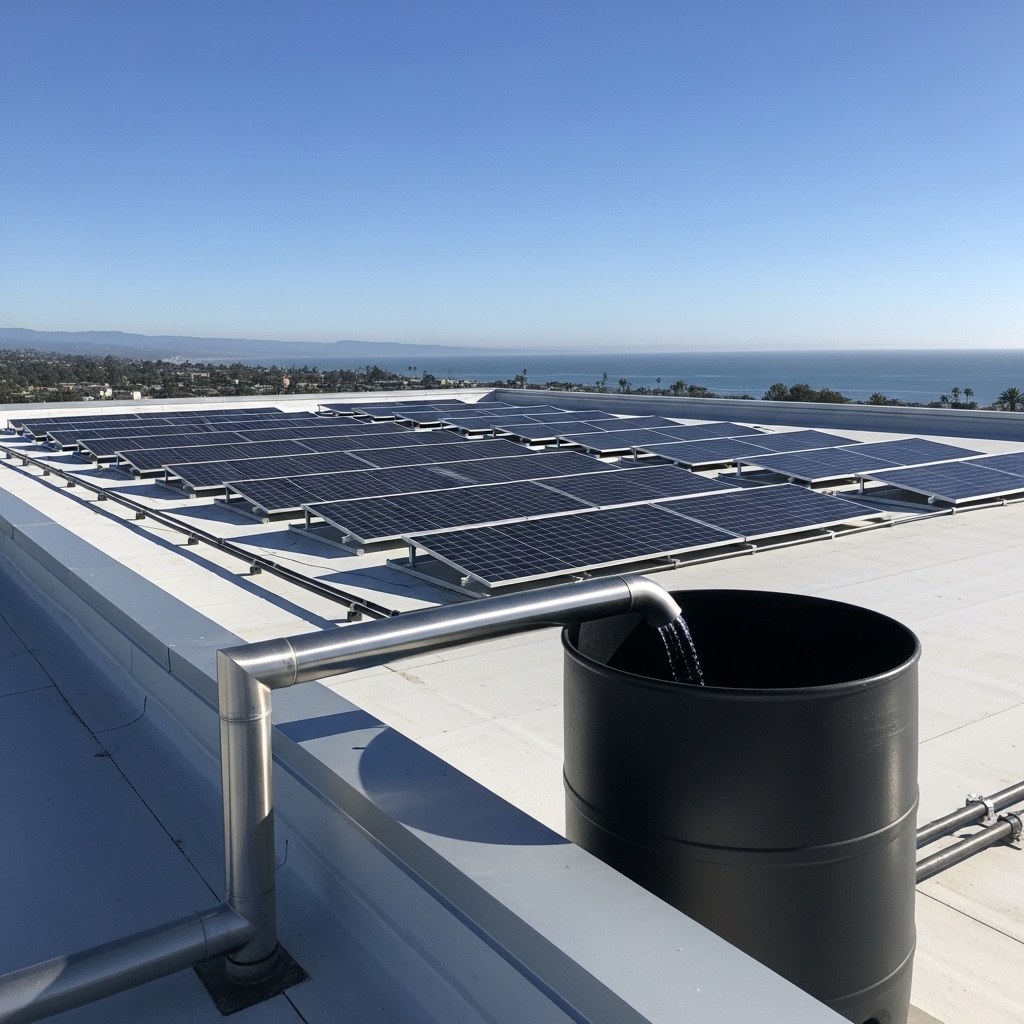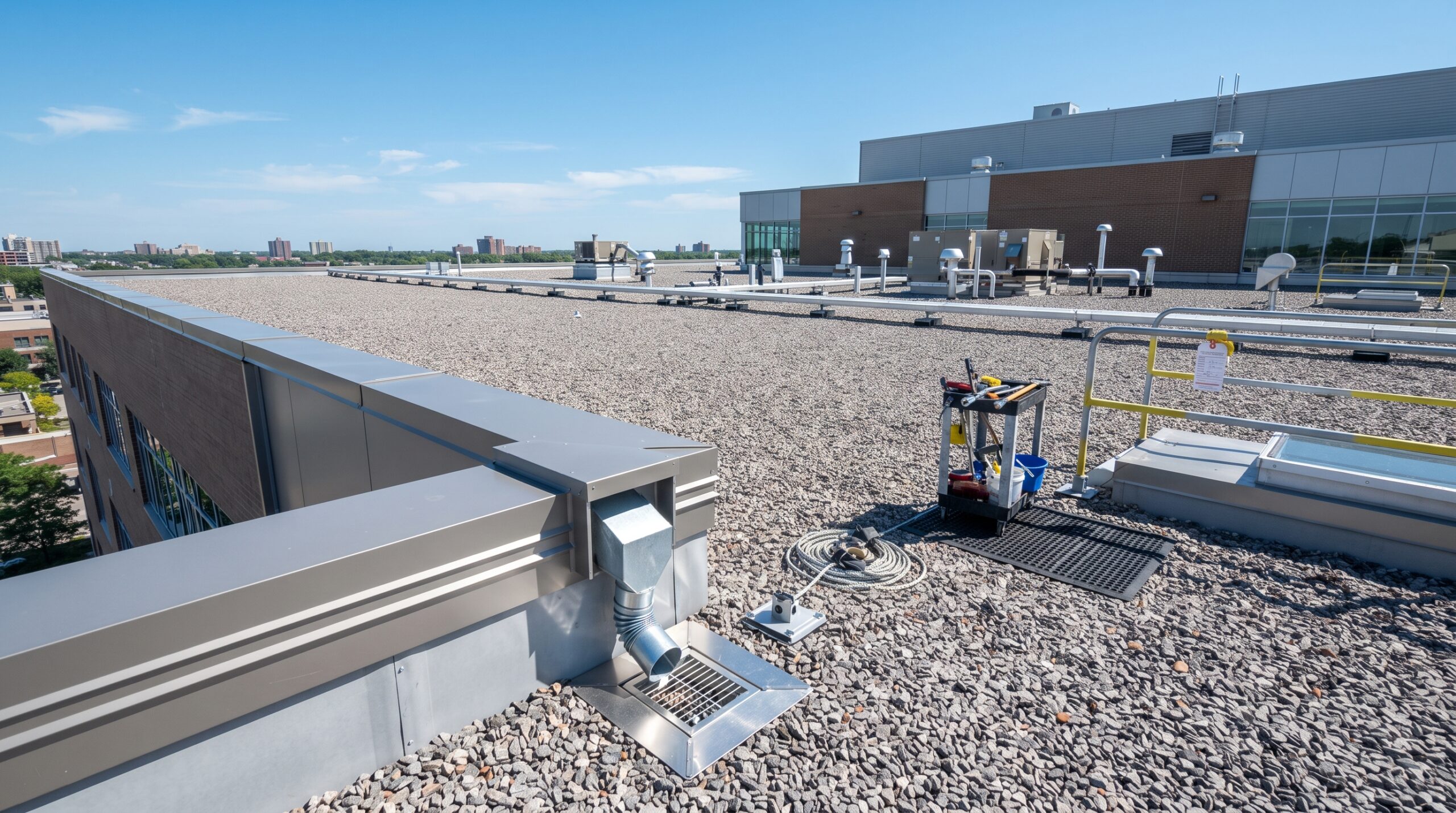
The most common flat roof problems are ponding water, leaks at seams and flashing, blisters, cracks and splits, punctures, clogged drains, a membrane shrinking away from its edges, and wet insulation under the surface. Nearly all of them trace back to three things: water that drains slowly, the joints where the membrane meets a wall, pipe or another sheet, and age and sun. Caught early, most are a repair rather than a new roof. The table below pairs each problem with its cause, the usual fix and how soon it needs attention. To have a flat roof checked, call NEMA Roofing at 866-631-3366.
Common flat roof problems and fixes
| Problem | What causes it | Usual fix | How urgent |
|---|---|---|---|
| Ponding water (still there two days after rain) | Blocked drains or scuppers, a sagging deck, crushed insulation, too little slope | Clear the drains; build up the low area with tapered insulation or a cricket; repair the deck if it sags | Before the next rain if a drain is blocked; plan the rest |
| Open seams | A weld that never fused, adhesive or tape that aged, movement at the laps | Clean and reweld (TPO, PVC), re-adhere or strip-in (EPDM, modified bitumen) | Before the next rain |
| Flashing leaks at walls, parapets and curbs | Membrane pulled away from the wall, failed sealant, loose termination bar, rusted counterflashing | Rebuild the flashing rather than caulking over it; replace corroded metal | Before the next rain; this is the most common leak source |
| Blisters | Air or moisture trapped between plies or under the membrane, expanding in the sun | Small, intact blisters are monitored; broken or large ones are cut out and patched | At the next service unless broken |
| Cracking, splitting, “alligator” crazing | Sun and age drying out the surface; building movement | Recoat if the membrane is sound; patch or replace sections if cracks go through | Soon if cracks are deep |
| Punctures and cuts | Foot traffic, dropped tools, hail, equipment installs | A patch of the same material; walkway pads on busy routes | Before the next rain |
| Membrane shrinking at the edges | Some single-ply sheets shrink with age, pulling at corners and wall flashing (“tenting”) | Release and reflash the edge; widespread shrinkage points to replacement | Soon |
| Bare spots, lost granules or gravel | Sun, wind and runoff wearing away the surface layer that protects the membrane | Recoat, or replace gravel so the membrane is covered again | At the next service |
| Wet insulation, soft spots underfoot | A leak that ran for a long time, or condensation from inside | Cut out the wet section, replace insulation, new membrane over it | Soon: wet insulation keeps damaging the deck |
Why do flat roofs have more of these problems than sloped roofs?
Water leaves a flat roof slowly. The California Building Code asks for a design slope of only 1/4 inch per foot (2 percent) on built-up, modified bitumen, single-ply and spray foam roofs, far less than a pitched roof. So any blockage, dip or open seam has water sitting on it instead of running past. A flat roof also has more of its weak points exposed: seams across the field, and every pipe, vent, skylight and HVAC curb sealed by hand. That is why flashing and drainage account for most repair calls, and why a flat roof rewards regular upkeep more than a pitched one does.
What problems are specific to flat roof houses?
Homes with flat or low-slope roofs, common in mid-century and modern designs, bring a few issues that commercial roofs do not:
- Parapet walls. Stucco parapets crack and let water into the wall from above; the metal cap on top needs sealed joints. Stains high on an inside wall often come from here, not the roof field.
- Scuppers through the parapet. A house may drain through one or two scuppers. If one clogs, water rises until it finds another way out, sometimes over the flashing.
- Roof decks with doors onto them. Water gets in at the door threshold or under a deck surface laid over the membrane, and the membrane under pavers or wood is hard to inspect.
- Little attic space. Many flat roofs have the ceiling fastened almost directly under the roof, with little room for ventilation. Warm, damp indoor air can condense under the deck and look like a leak.
- Older, flatter slopes. Houses built before today’s code may have less slope than new work needs. When such a roof is replaced or recovered, the code does not force the 1/4-inch slope as long as the roof drains positively, so the question is whether it drains, not only its pitch.
Which problems mean more than a repair?
Individual problems are usually fixable. These combinations suggest the roof is at the end of its life, or that the fix has to go deeper than the surface:
- Leaks in several places at once, or the same leak returning after good repairs.
- Soft spots in more than one area, meaning wet insulation or deck.
- Seams failing along much of their length rather than at one point.
- Ponding that stays after the drains are clear, because the deck has sagged.
- A roof that already has two layers: the building code does not allow a third covering over it, or a recover over a roof that is water-soaked, so the next step is a tear-off.
Our article on repairing a flat roof without replacing the entire roof walks through that decision, and how long each flat roof material lasts explains what to expect by material.
How urgent is each problem?
- Call now: water coming through the ceiling, a ceiling bulging with water, or a roof section that visibly sags.
- Fix before the next rain: open seams, gaps at wall flashing, blocked drains or scuppers, punctures, loose edge metal.
- Plan for the next service: small intact blisters, surface crazing, worn coating, patches of lost gravel or granules.
Most of the problems above start small and are found on a routine walk, which is the purpose of our flat roof maintenance checklist. NEMA Roofing fixes these problems as part of its flat roofing repair and replacement service, from six locations in Santa Barbara, Oxnard, Woodland Hills, Tarzana, Downey and San Bernardino that together cover all of Santa Barbara, Ventura, Los Angeles, Riverside and San Bernardino counties (see every area we serve). To have a flat roof problem diagnosed, call 866-631-3366.