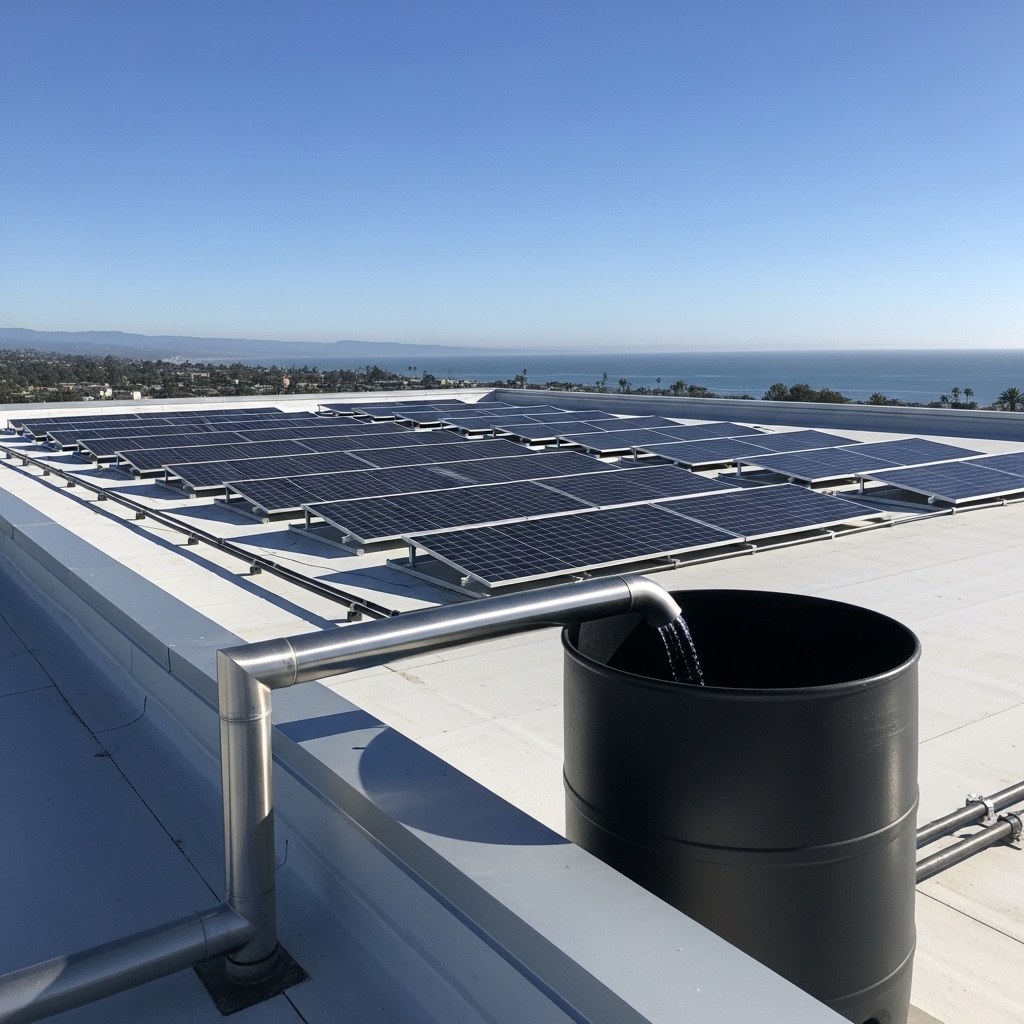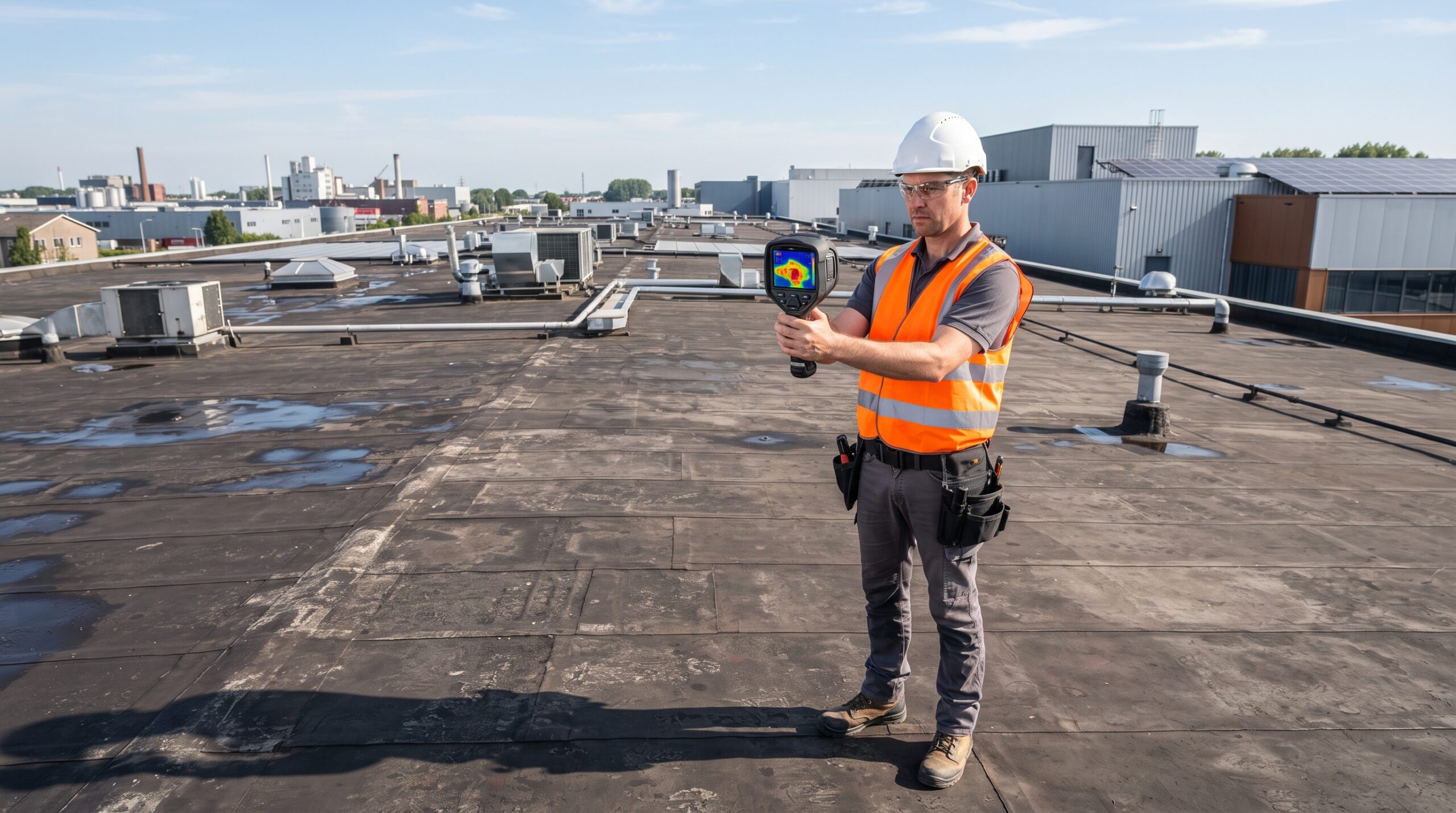
What to expect during a commercial roof inspection in Santa Barbara: a walk of the whole roof that starts where this coast hits hardest (edges exposed to Sundowner winds, drains that must be ready before the December-to-March rains, metal parts exposed to marine air), tests where something looks wrong, and a written report that ranks repairs by urgency and names the permit rules for your address. The city, the county, Montecito and Goleta each handle roof permits differently, and a good inspector flags that before you plan work. To book an inspection, call NEMA Roofing at 805-977-5949.
Before the inspector arrives
Have ready the leak history (where, when and in what weather), dates of recent HVAC, solar or telecom work on the roof, the roof warranty and any earlier reports. Clear the hatch or ladder and tell tenants, so footsteps overhead do not surprise anyone.
What a Santa Barbara inspection looks at first
- Edges and parapets, for wind. Sundowners are downslope windstorms off the Santa Ynez Mountains; the National Center for Atmospheric Research’s Sundowner Winds Experiment, a field study run in Santa Barbara, describes them as one of the most significant fire weather hazards for the county’s populated areas and notes that they peak from early evening to mid-morning. Gusts pull at edge metal, coping and corner terminations, so the inspector checks for lifted metal, loose clips and membrane peeling back at the perimeter, the damage an overnight wind leaves that nobody saw happen.
- Drains and scuppers, for the rainy season. At NOAA’s Santa Barbara station, January and February each average about 4.4 inches of rain in the 1991-2020 normals and December and March about 3, while July, August and September average a few hundredths of an inch. Months of dry weather let leaves, palm fronds and windblown dust collect in drains, and the first real storm finds every blockage. Expect strainers checked, outlets opened and silt rings located where water has stood.
- Metal, for marine air. Salt in the coastal air starts rust on fasteners, equipment rails, flashings and parapet caps. The U.S. Department of Defense roofing criteria (UFC 3-110-03) note that aluminum-zinc coated steel performs less well in salt spray and that dissimilar metals in contact should be avoided, so the inspector looks at what each metal part is made of, not only whether it is rusty.
- The field and the flashings, for sun and age. Heat is rarely the problem here: the Santa Barbara station averages about 5 days a year at 90 F or hotter, and average highs peak near 78 F in August and September. The steady sun still chalks and dries membranes, so seams, blisters and sealant at curbs, skylights and pipe boots get a close look; the federal criteria note that most leaks begin at flashings.
- Rooftop equipment. Kitchen exhaust curbs, condensate lines, solar racking and wiring that can rub the membrane.
Tests you may see
Seam probing, a controlled water test at drains, and moisture scans where the roof feels soft or a leak’s source is unclear. Infrared thermography covers the whole surface, capacitance or nuclear meters sample a grid, and core cuts confirm what the scans suggest; the inspector should explain where and why before cutting and patch every core.
When to book it in Santa Barbara
- Early fall (September to November): the main inspection, so repairs are done before December’s rain.
- Spring (April to May): after the wet months, to find what the storms opened.
- After a Sundowner event or a major storm: a quick check of edges, corners and drains.
That matches the recommendation, cited in the federal criteria, of at least two inspections a year plus one after significant storms.
What the inspection report should contain
| Priority | Typical items | When to act in Santa Barbara |
|---|---|---|
| Now | Active leaks, open seams, lifted edge metal, blocked drains, safety hazards | Before the next storm or Sundowner forecast |
| Before the rains | Worn sealants, weak flashings, rust on metal parts, ponding areas | By November, while the weather is dry |
| Plan and budget | Recoating, section replacement, recover or full replacement | A dry-season project, with the permit path for the address confirmed first |
Each finding should come with a dated photo and a mark on a roof plan, and areas that are fine today should be photographed too, so the next inspection can compare. Price estimates normally follow as a separate proposal once the scope is agreed.
Permit rules the inspector should flag, by address
- City of Santa Barbara. The city’s Building and Safety Division issues permits. Its instant OnDemand reroof permits are limited to one- and two-family homes. Express (over-the-counter) permits, which the city says apply to some commercial properties, include reroofs with a new material, color and type of roofing; other commercial work goes through regular review, where each review after the first takes 10 business days.
- Unincorporated Santa Barbara County. The county’s list of work exempt from a building permit includes roof repairs of less than 100 square feet within twelve months and applying an approved roof coating, with fire-resistant materials required for that coating exemption in high fire hazard areas.
- Montecito. The Montecito Fire Protection District’s Development Standard #1 requires Class A roofing and treats replacing more than 10 percent of a roof’s area as a trigger to replace the whole roof with Class A materials. The Montecito Board of Architectural Review considers building colors and materials, and its exemptions do not list reroofing.
- Goleta. A separate city with its own Building and Safety Division; state fire hazard maps show Very High zone land inside the city limits.
Statewide, a recoat, recover or replacement of more than half a nonresidential low-slope roof (or more than 2,000 square feet, whichever is less) must also meet the Title 24 cool-roof values in section 141.0(b)2B, so a report recommending that work should say so.
To turn the report into a routine, read our commercial roof maintenance plan for Santa Barbara; for what inspectors find most often, see common commercial roofing problems in Santa Barbara.
Book a commercial roof inspection
Santa Barbara is one of NEMA Roofing’s six locations, alongside Oxnard, Woodland Hills, Tarzana, Downey and San Bernardino, and our inspectors cover every part of Santa Barbara, Ventura, Los Angeles, Riverside and San Bernardino counties; see the areas we serve. Read about our roof inspection service and commercial roofing services, or call 805-977-5949 to schedule a visit.