Flat roof maintenance comes down to two jobs: keep water moving off the roof, and keep every seam, edge and opening sealed. In practice that means clearing drains, scuppers and gutters, checking the membrane, seams and flashing for damage, watching for water that stays after rain, and having a roofer inspect the roof at least once a year and after any major storm. The checklist and schedule below show what to look at, when, and which jobs to leave to a professional. To book a flat roof inspection, call NEMA Roofing at 866-631-3366.
How often does a flat roof need maintenance?
A low-slope roof sheds water slowly, so small problems (a blocked drain, an open seam) do more harm than they would on a pitched roof. A workable flat roof maintenance schedule looks like this:
| When | What to do |
|---|---|
| Early fall, before the rains | The main service: clear every drain and scupper, check seams and flashing, reseal what has opened, have a roofer look at anything doubtful |
| Spring, after the rainy months | Look for damage the winter caused: ponding marks, lifted edges, new stains on ceilings |
| A day or two after every heavy storm | Check for standing water, debris in drains and wind damage at the roof edge |
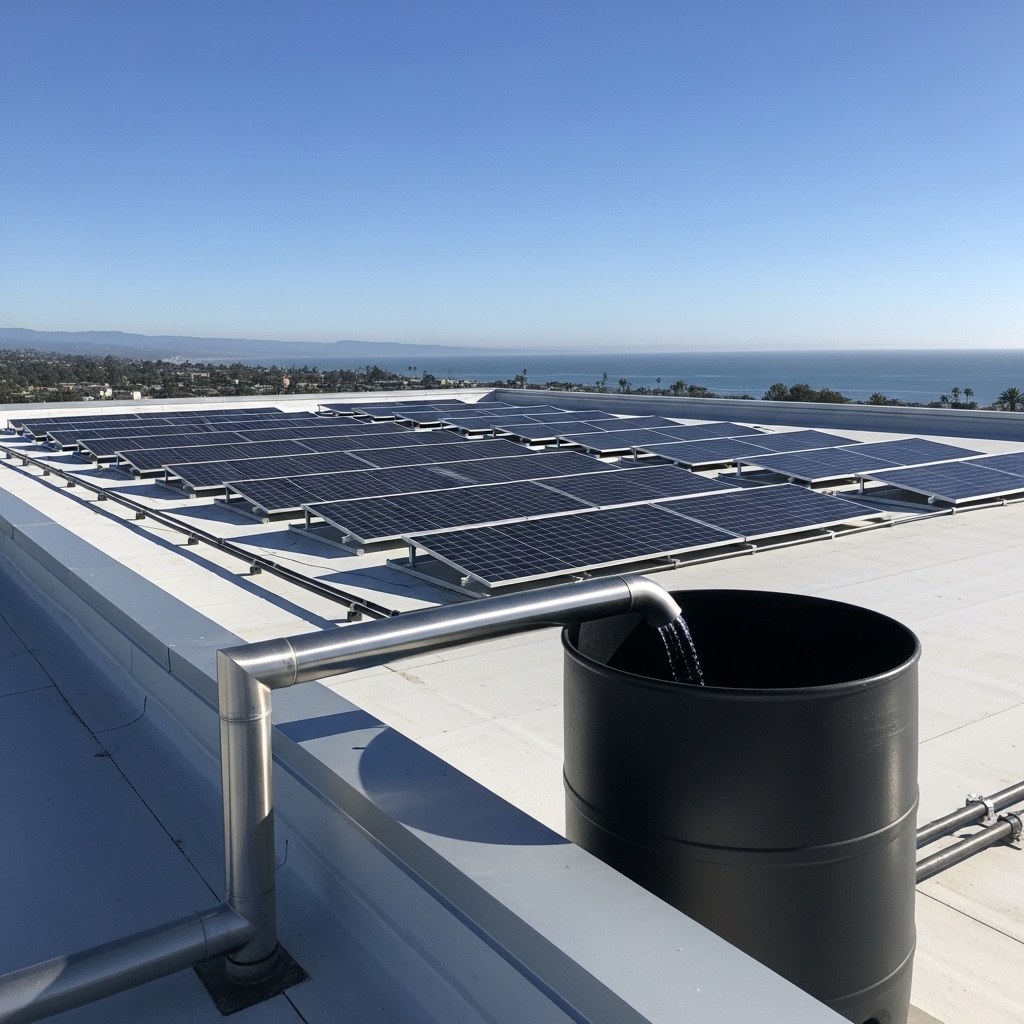
| After anyone works on the roof | HVAC service, solar installs, antenna or satellite mounts: check for punctures, dropped screws and unsealed new penetrations |
| Once a year | A professional inspection with a written report and photos |
The flat roof maintenance checklist, part by part
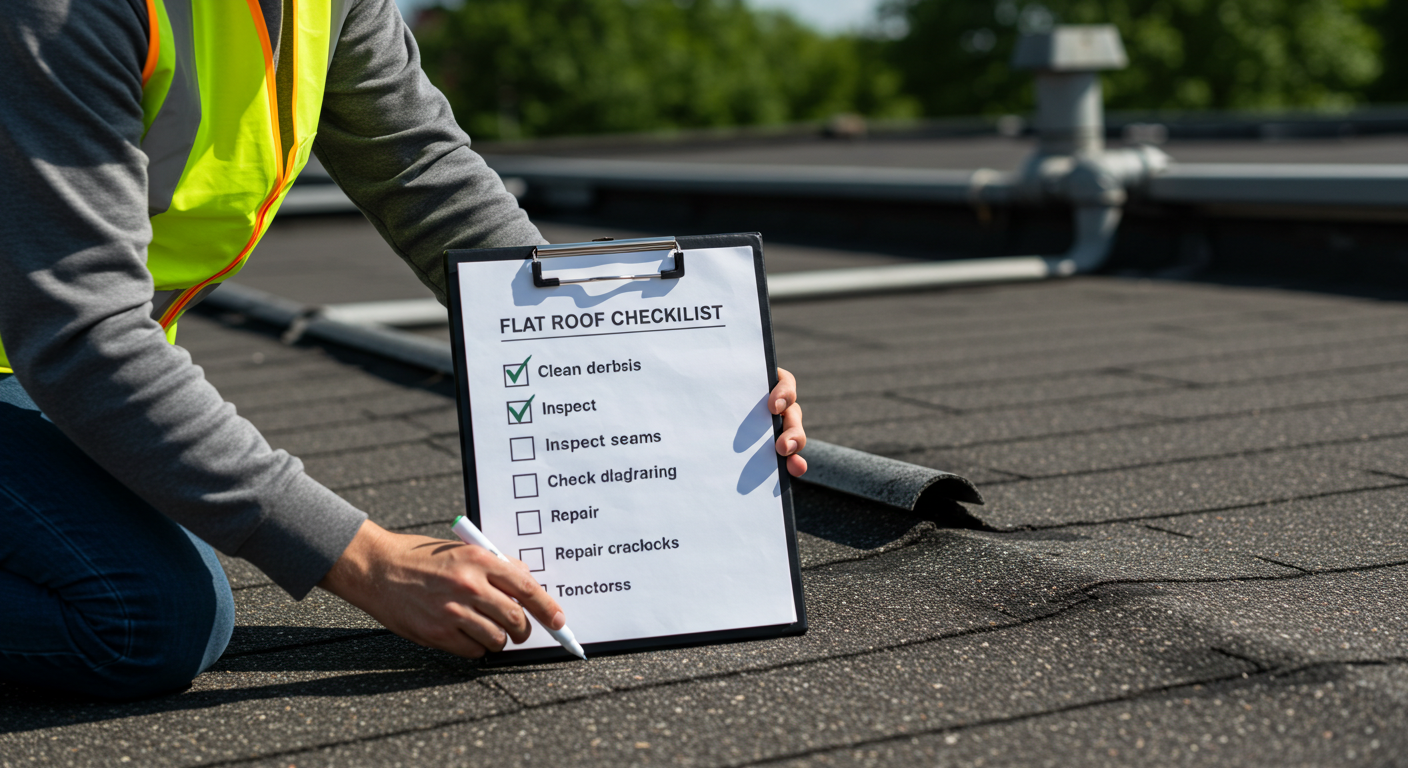
Use this as your flat roof inspection checklist. Photograph each item so you can compare next time.
Drainage
- Drains and their strainer domes: clear of leaves, grit and loose gravel, dome in place.
- Scuppers (openings through the parapet wall) and any overflow scuppers: open, not rusted through, sealed where they pass the wall.
- Gutters and downspouts: flowing freely, firmly attached, discharging away from the building.
Membrane surface
- Blisters (raised bubbles), cracks, splits or “alligator” crazing on the surface.
- Bare patches where granules, gravel or the coating have worn away and the membrane is exposed to the sun.
- Punctures, cuts and scuffs, most often along paths people walk to rooftop equipment.
Seams and laps
- Edges of overlapping sheets that have lifted, wrinkled or opened; a fingernail should not slide into a seam.
- Patches from past repairs: still bonded all around, not curling at the corners.
Flashing and edges
- Where the roof turns up a parapet or wall: membrane still tight to the wall, termination bar and caulk intact, no gap at the top.
- Metal edge trim and coping: fasteners tight, no rust streaks, no loose sections that wind could catch.
Penetrations and equipment
- Pipe boots, vents, skylight curbs and HVAC curbs: sealed all around, no cracked sealant.
- Pitch pans (sealant-filled cups around odd-shaped supports): filled to the top, not shrunk away from the metal.
- Condensate lines from air conditioners draining to a drain, not onto the membrane.
Inside the building
- Stains, peeling paint or bubbling on top-floor ceilings and on walls under parapets.
- A musty smell or damp insulation, which can mean a slow leak long before a drip appears.
How do you tell ponding water from normal wet spots?
Every flat roof is wet for a while after rain. The U.S. Department of Defense roofing criteria define ponding as water in low or irregular roof areas that remains longer than 48 hours after rain stops, in weather that lets it evaporate. So look twice: once right after the storm and again two days later. Water still sitting on the second visit is ponding.
Mark the outline with a photo, because the dried ring of dirt shows where it collects. The usual causes are a clogged drain or scupper, a deck that has sagged, or insulation crushed by foot traffic. Clearing the drain is maintenance; a sagging deck or a low area that holds water after the drains are clear needs a roofer, who can add tapered insulation or a cricket to move the water.
What maintenance does each flat roof material need?
| Material | Watch for | Typical upkeep |
|---|---|---|
| TPO and PVC (heat-welded single-ply) | Seam welds opening, punctures, shrinkage pulling at edges | Clean, probe seams, weld on new patches of the same material |
| EPDM (rubber) | Seam tape lifting, shrinkage at corners and flashing | Re-adhere or tape seams with EPDM products; keep oils and solvents off |
| Modified bitumen | Granule loss, cracked laps, blisters | Seal laps, patch with compatible material, recoat bare areas |
| Built-up roof with gravel | Gravel blown off in patches, blisters, splits | Redistribute or replace gravel so the membrane stays covered |
| Coated roofs | Coating worn thin, peeling, chalking | Clean and recoat on the maker’s schedule before the base shows |
Use only repair products the membrane maker approves: an asphalt-based patch on a TPO or PVC roof does not bond and can damage it. For more on how each system is built, see our guide to how long each flat roof material lasts.
Flat roof maintenance and preparations before the rainy season
- Clear the whole roof surface of leaves, branches and anything stored up there.
- Run a garden hose into each drain and scupper and confirm water flows out the other end.
- Trim branches that overhang the roof; they drop debris into drains all winter.
- Check that overflow scuppers or secondary drains are open. They are the backup if the main drain clogs.
- Walk the edges and wall flashing, and get open seams or cracked sealant fixed before the first storm, not after it.
- Note or photograph existing stains on ceilings so you can tell a new leak from an old one.
Which jobs are safe for a homeowner, and which need a roofer?
Reasonable to do yourself (from a secure ladder, in dry weather, if the roof is safe to walk on): picking up debris, clearing drain strainers and gutters, hosing out downspouts, taking photos, checking ceilings inside.
Leave to a roofer: anything that cuts, heats or seals the membrane, work on flashing and edge metal, probing seams, finding the source of a leak (water often travels under the membrane before it shows inside), soft spots underfoot, and anything near a roof edge without a parapet. A wrong sealant or a patch over wet insulation can trap water and shorten the roof’s life.
Why keep a maintenance record?
A simple log of dates, photos and what was done makes the next inspection faster, shows a pattern (the same drain clogging every year, the same seam reopening), and helps if you ever make a warranty claim, since membrane warranties usually spell out owner upkeep duties. Keep the roof’s installation paperwork with it.
If an item on this list turns up a problem, our article on common flat roof problems and how they are fixed explains the likely cause. NEMA Roofing handles flat roof repair, replacement and installation and scheduled roof maintenance, with crews at six locations, Oxnard, Santa Barbara, Tarzana, Woodland Hills, Downey and San Bernardino, who between them reach every part of Ventura, Santa Barbara, Riverside, Los Angeles and San Bernardino counties; see the areas we serve. To schedule a flat roof inspection or maintenance visit, call 866-631-3366.