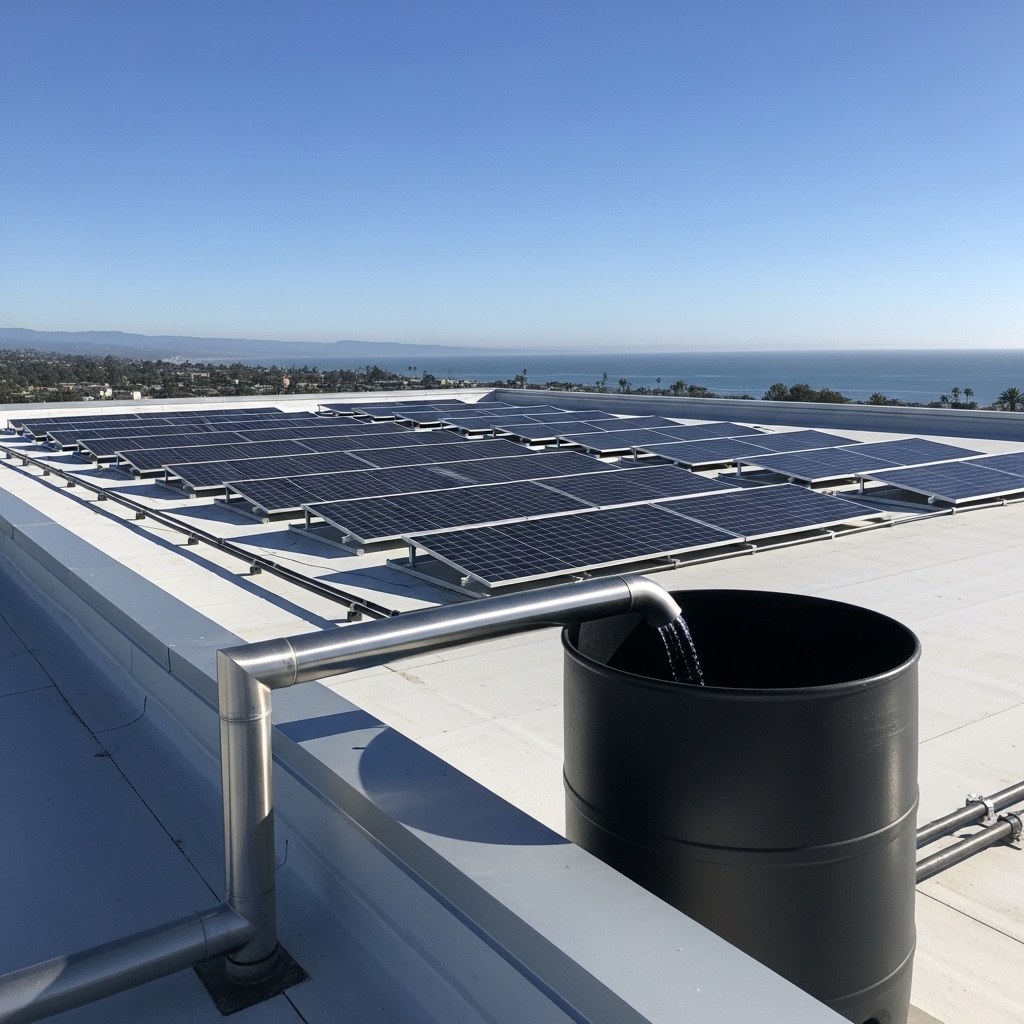
A flat roof inspection is a walk of the whole roof by a roofer who checks the membrane and its seams, every flashing and penetration, the drains and scuppers, the roof edges and the signs of trapped water, then gives you a written report with photos and repairs ranked by urgency. Because a flat roof hides water in its insulation, a thorough inspection may add a moisture survey with small test cores. Book one at least once a year and after major storms. To schedule a flat roof inspection, call NEMA Roofing at 866-631-3366.
How a flat roof inspection differs from a sloped roof inspection
On a pitched roof, much can be judged from a ladder or from the ground. A flat roof is inspected by walking it, and the questions are different. Water does not run off quickly, so the inspector looks for where it stays. The membrane is one sheet, so a single open lap matters. And a flat roof can be dry on top and wet inside, which is why moisture testing is part of a thorough inspection and rarely part of a shingle inspection.
What the inspector checks, area by area
| Area | What is checked |
|---|---|
| Field of the roof | Surface wear, cracks, blisters, punctures, bare spots in granules or coating, soft areas underfoot |
| Seams and laps | Open or lifted edges, fishmouths, T-joints; on welded membranes, a probe run along the laps |
| Flashings | Base flashing at walls and parapets, curbs under rooftop units, skylights, pipes and conduit; height, attachment, open corners |
| Drainage | Drains, scuppers, gutters and overflows clear and secure; ponding marks and dirt rings that show where water sits |
| Edges and copings | Metal edges tight, joints sealed, coping caps on parapets secure |
| Rooftop equipment | Units on curbs or supports, condensate lines draining off the roof, no damage from service visits |
| Inside | Ceilings and upper walls for stains; the deck underside where visible, for rust or rot |
U.S. Department of Defense roofing criteria (UFC 3-110-03) tell inspectors to pay special attention to flashings because most leaks start there, and to note anything installed on the roof that is unneeded or done wrong. A good inspector also notes debris, loose fasteners and failed sealant, which are the small items that become leaks.
What each flat roof system adds to the inspection
- TPO and PVC: weld quality along the seams, cracking or chalking of the surface, shrinkage pulling at walls, punctures near equipment. The PVC roofing guide covers what that membrane must not touch.
- EPDM: seam tape lifting, shrinkage at the edges, any oily or swollen patches.
- Modified bitumen and built-up roofs: granule loss, alligator cracking, blisters, splits and lifted lap edges.
- Spray foam and coated roofs: coating thickness and wear, exposed foam, pecked or cracked areas.
Moisture surveys and test cores
Water trapped in the insulation cannot be seen from either side of the roof, so a thorough inspection may map it. The federal criteria describe three nondestructive methods, infrared thermography, electrical capacitance and nuclear moisture meters, and point out the difference in coverage: an infrared scan images the entire roof, while meter readings on the usual 10-foot grid sample only about 2 percent of it. They also say these methods add to a visual inspection rather than replace it, and that any suspect area should be confirmed with a core sample. A core is a small plug cut through the roof to see and test the layers underneath, then patched the same day.
Some inspections also use electronic leak detection, which finds breaches in a membrane by measuring electrical conductance (ASTM D7877 is the standard guide). It is useful when a leak persists and nothing looks wrong on the surface. For what the results mean for your building, see flat roof water damage.
How often should a flat roof be inspected?
One inspection a year is the floor the federal criteria set for every roof. They cite a stricter industry benchmark too: the National Roofing Contractors Association (NRCA) advises two inspections a year as a minimum, plus a visit after any major storm with high winds, hail or heavy rain. On a flat roof, sensible times are:
- After the rainy season, to catch what the storms opened.
- Before the next rainy season, to clear drains and fix small defects.
- After any contractor works on the roof: HVAC, solar, antennas.
- Before you buy or lease a building with a flat roof.
- Before a roof warranty expires, and as often as the warranty itself requires. The federal criteria remind owners to check a warranty’s terms and contact the warrantor before any repair.
- After a new roof is finished, before the final payment.
Between professional visits, the flat roof maintenance checklist lists the checks an owner can safely do.
What the inspection report should give you
- Photos of each finding, with its location on a simple roof plan.
- The roof system, its approximate condition and any signs of earlier repairs.
- Repairs ranked by urgency: leaking now, before the next rain, at the next maintenance visit.
- The moisture map and core results, if a survey was done.
- A plain statement of whether the roof is in repair territory or approaching replacement, and why.
A report like this is what lets you compare quotes, plan a budget and show an insurer or buyer the roof’s condition. How findings become a repair plan is explained in roof inspection and repair.
Flat roof inspections from NEMA Roofing
NEMA Roofing is a CSLB-licensed roofing contractor (license #1083283), bonded and insured, and a GAF Master Elite and Polyglass Preferred Contractor. From our six locations, Santa Barbara, Oxnard, Woodland Hills, Tarzana, Downey and San Bernardino, we inspect roofs throughout Santa Barbara, Ventura, Los Angeles, Riverside and San Bernardino counties, not only near one office; the service areas page lists the towns. For repairs that follow an inspection, see our flat roofing services, or call 866-631-3366.