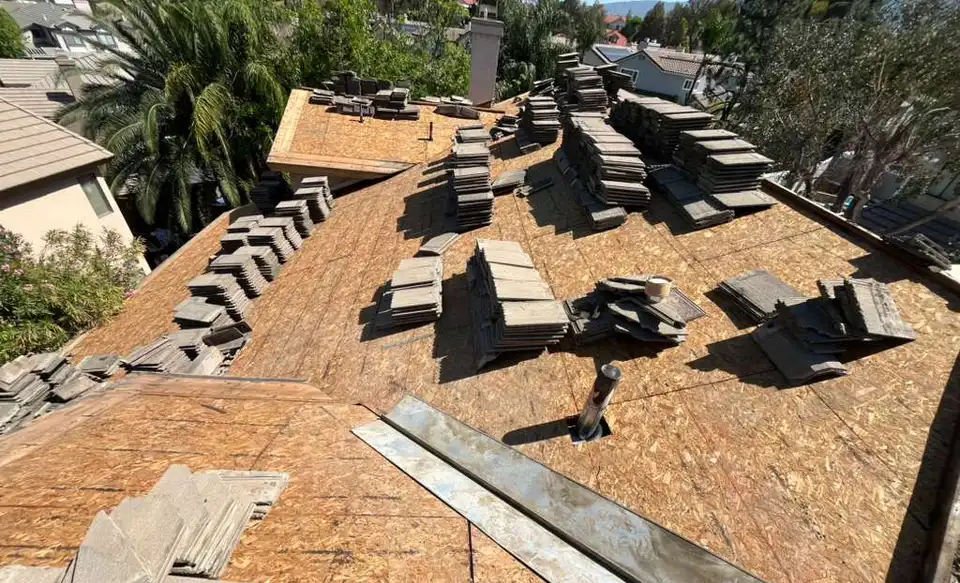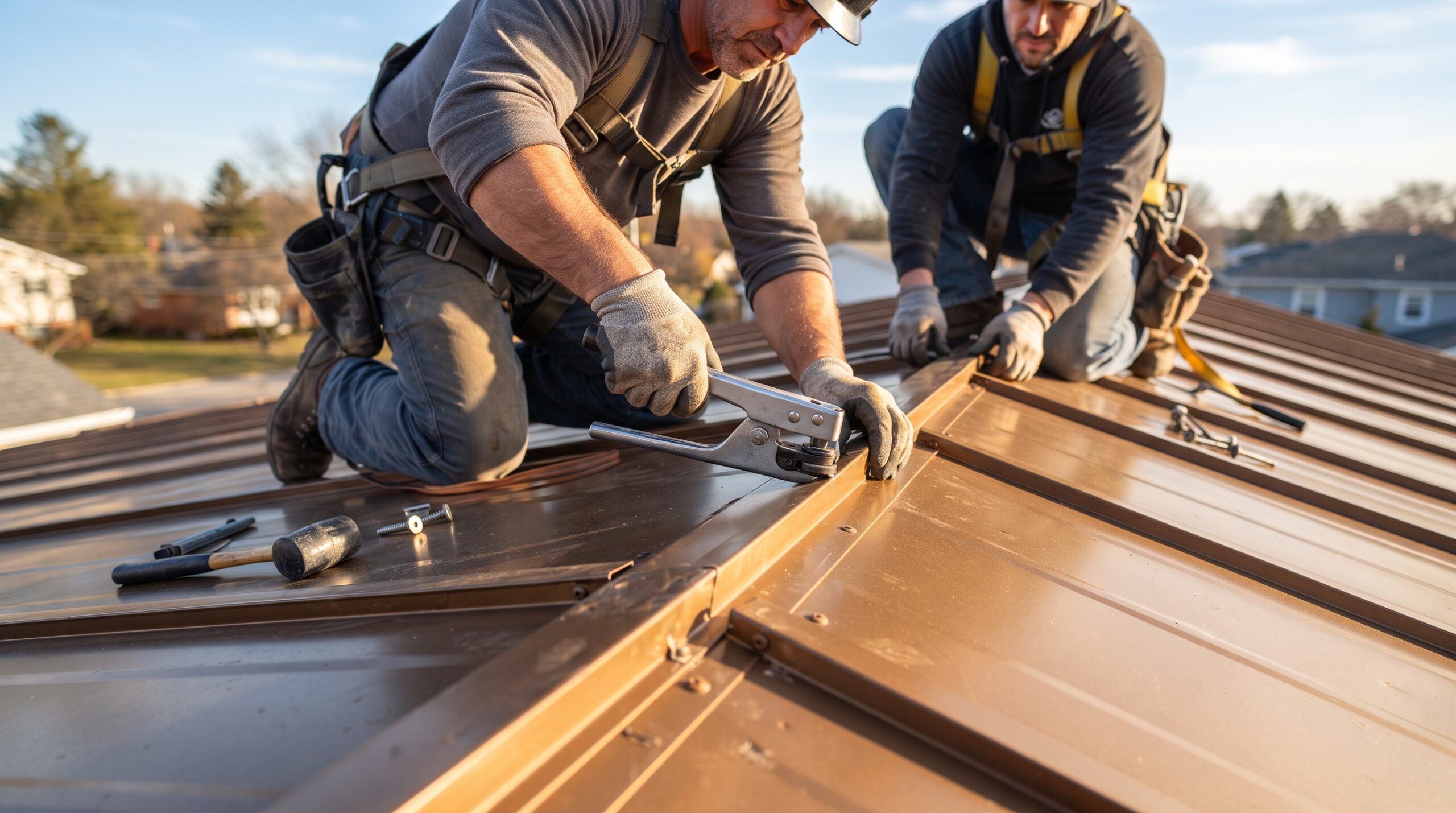
The most common commercial roofing problems are ponding water, leaks at flashing and penetrations, open seams, blisters, surface wear from sun and heat, punctures from foot traffic, and damage left by poor installation or skipped maintenance; almost all start small and can be fixed if caught early. The table below pairs each problem with its usual cause and fix. For a commercial roof inspection, call NEMA Roofing at 866-631-3366.
Which commercial roofing problems are most common, and how are they fixed?
| Problem | Usual cause | Typical fix |
|---|---|---|
| Ponding water | Too little slope, clogged or undersized drains, a sagging deck | Clear drains, add crickets or tapered insulation, add drains or overflow scuppers |
| Leaks at flashing | Aging or loose flashing at walls, parapets, curbs and pipes | Reflash with membrane and metal matched to the roof system |
| Open seams | Welds or adhesive that never fused, thermal movement, age | Clean and reweld (TPO, PVC) or strip in new seam tape and cover (EPDM, modified bitumen) |
| Blisters and bubbles | Trapped moisture or air between plies or under the membrane | Cut, dry and patch small blisters; widespread blistering points to wet insulation |
| Cracking, crazing, bare spots | Sun and heat wearing an unprotected surface | Restore the protective surface with a compatible coating or granules |
| Punctures and tears | Foot traffic, dropped tools, rooftop equipment work | Patch, then add walk pads along service routes |
| Wind damage at edges | Loose perimeter metal letting wind under the membrane | Refasten or replace edge metal and reattach the membrane |
Why does ponding cause so many other problems?
Water that sits on a roof finds every weak seam, keeps the surface wet, and adds weight that can sag the deck, which then holds more water. The California Building Code sets a minimum design slope of 1/4 unit in 12 for built-up, modified bitumen, single-ply, spray foam and liquid-applied roofs, and requires secondary overflow drains or scuppers where parapets would trap water if the main drains back up. Many older buildings fall short of one or both. For the full drainage picture, see commercial roof drainage.
Where do commercial roof leaks usually start?
Look first where the membrane is interrupted: parapet walls and their copings, curbs under HVAC units, pipe penetrations, skylights, drains and roof edges. Water can travel under the membrane or along the deck before it shows inside, so the stain below is rarely right under the entry point. A moisture scan or core cuts show how far water has spread, which decides between a local repair and a larger section.
How does installation quality show up later?
Seams that were not fully welded or adhered, fasteners too far apart, flashing that relies on sealant alone, and membranes run without proper edge metal all look fine on day one. They surface as leaks and wind damage in the first years. The California Building Code requires roof coverings to be installed to the code and the manufacturer’s approved instructions, and manufacturer system warranties depend on the same, so ask for the installation specification and keep it with the building records.
What maintenance prevents most of these problems?
- Inspect in spring and fall and after major storms, with photos of each area.
- Clear drains, scuppers and gutters before the rainy season.
- Reseal flashing and repair seams as soon as they open.
- Protect traffic routes to equipment with walk pads, and check the roof after any trade has worked on it.
- Renew protective coatings before they wear through.
For more, read preventive commercial roof maintenance, commercial roofing repair solutions and the top commercial roofing materials. With six locations, in Santa Barbara, Oxnard, Tarzana, Woodland Hills, Downey and San Bernardino, NEMA Roofing repairs commercial roofs across Santa Barbara, Ventura, Los Angeles, Riverside and San Bernardino counties (service areas); our commercial roofing service covers repair, recover and replacement. To schedule an inspection, call NEMA Roofing at 866-631-3366.