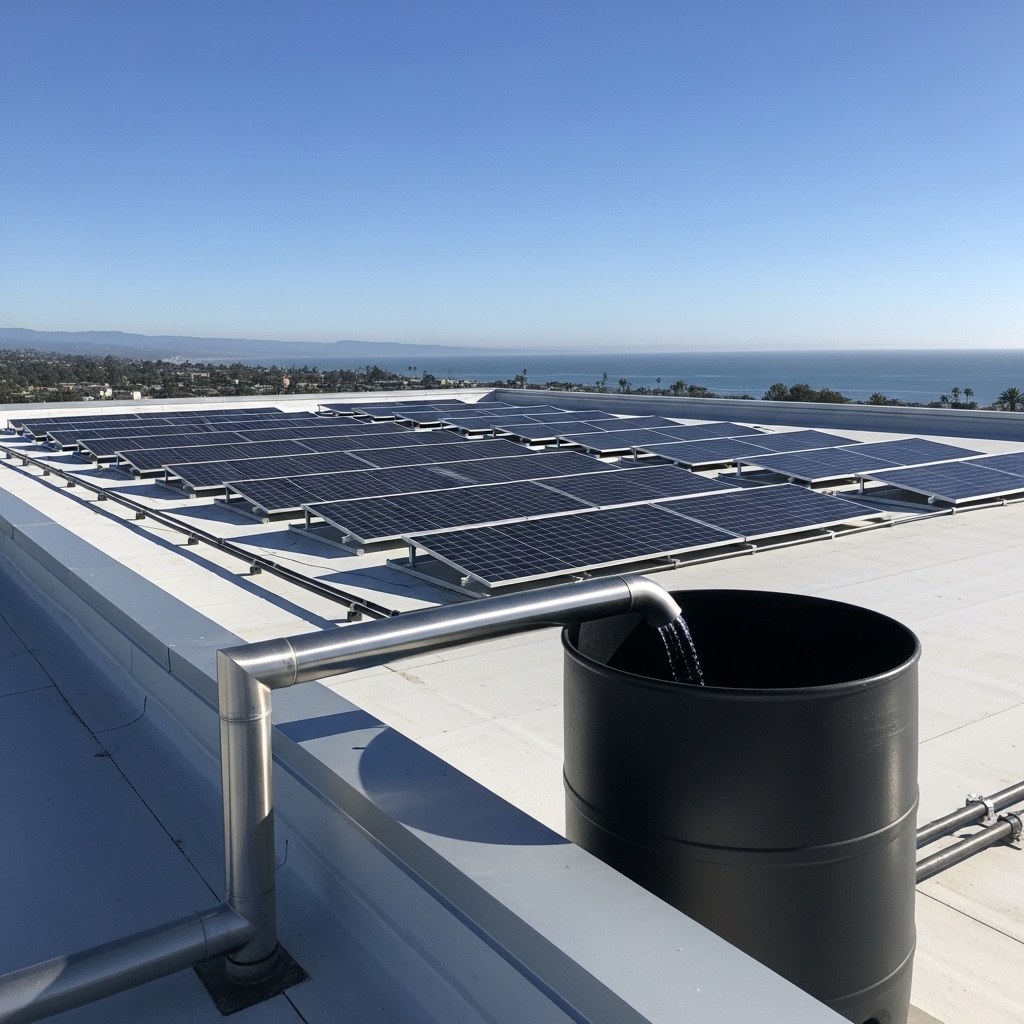
Good commercial roof drainage moves water off a low-slope roof through enough slope, working primary drains or scuppers, and a secondary overflow path, so nothing ponds long enough to damage the membrane or overload the structure. Most drainage problems come from clogged drains, sagged or flat areas, and missing or undersized overflows, and most can be fixed without a new roof. For a commercial roof drainage assessment, call NEMA Roofing at 866-631-3366.
What does the code require for commercial roof drainage?
The California Building Code sets the baseline:
- Slope. Built-up, modified bitumen, single-ply membrane, spray foam and liquid-applied roofs need a design slope of at least 1/4 unit vertical in 12 units horizontal (2 percent) for drainage (coal-tar built-up roofs 1/8 in 12).
- Design. Roof drainage systems must comply with the building code’s drainage and rain-load sections and Chapter 11 of the California Plumbing Code.
- Overflow. Where roof drains are required and the roof perimeter rises above the roof so water would be trapped if the primary drains back up, secondary (emergency overflow) drains or scuppers must be provided.
- Gutters. Exterior gutters and leaders on most commercial buildings must be noncombustible or at least Schedule 40 plastic pipe.
Older buildings were often built flatter than today’s minimum or have settled, which is why ponding is common on roofs that “always drained fine.”
How do you tell a roof has a drainage problem?
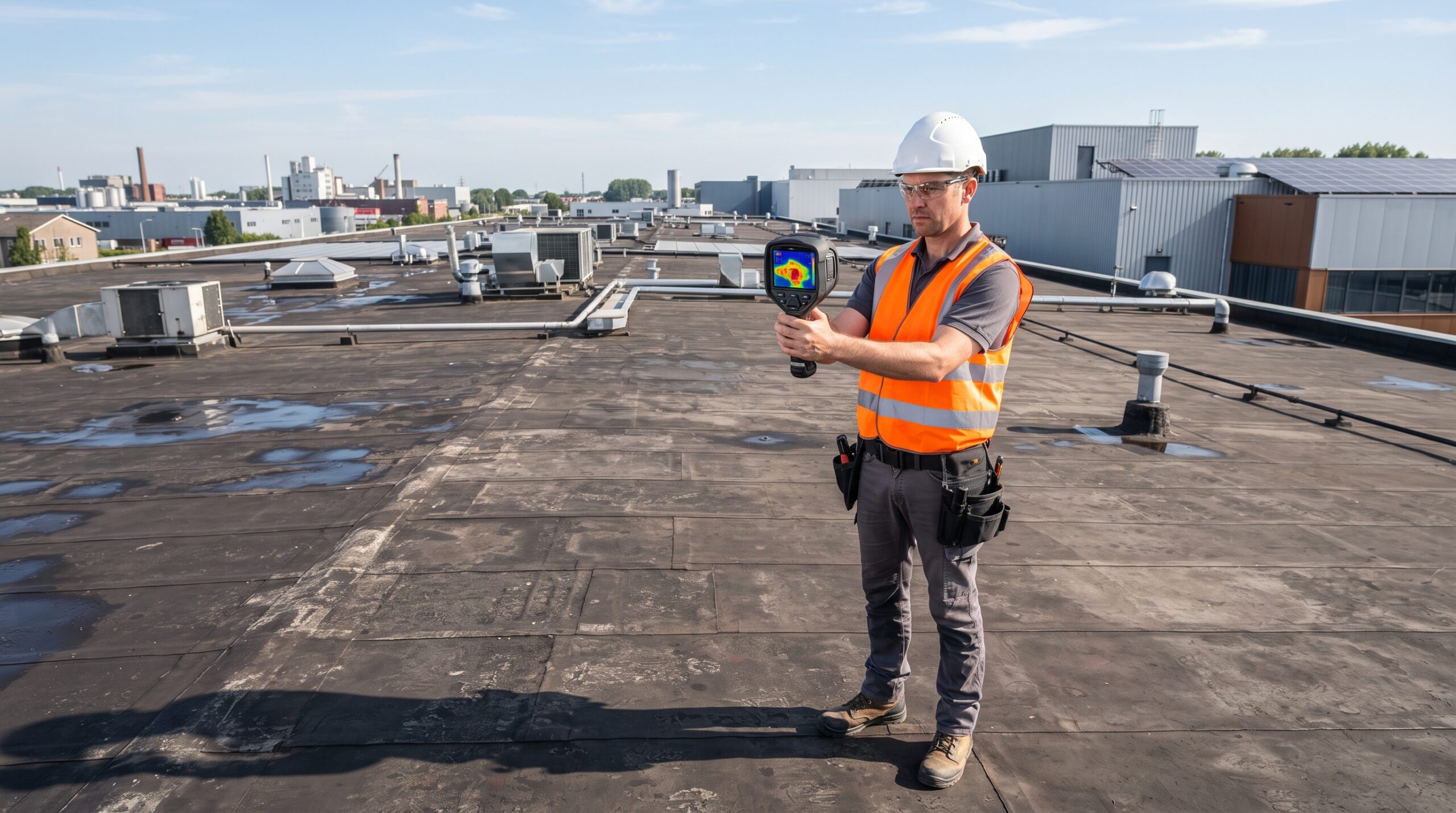
- Water still standing on the roof well after rain has stopped, or dried rings of dirt marking where it sat.
- Water stains on ceilings near drains or along parapet walls.
- Algae, vegetation or debris collecting around drains and in low spots.
- Overflowing scuppers or gutters during ordinary rain.
- Soft spots in the roof, a sign that water has reached the insulation.
How can you improve drainage on a commercial roof?
| Problem | Fix |
|---|---|
| Clogged drains or scuppers | Clear debris, add strainers or domes, and put drain checks on a maintenance schedule |
| Ponding between drains | Tapered insulation or crickets that build slope toward the drains, installed during a recover or replacement |
| Water trapped behind rooftop units, curbs or chimneys | Crickets (small sloped diverters) on the uphill side of the obstruction |
| Too few or undersized drains | Added drains or scuppers, sized by a designer to the roof area and local rainfall |
| No overflow path | Secondary overflow drains or scuppers where the parapet would trap water |
| Leaks at drain bowls | New drain clamping rings, flashing or drain inserts tied properly into the membrane |
Drains are where the membrane has to be cut and sealed, so a drain that is clear but poorly flashed still leaks. Any new drain or scupper is part of the roofing work, not just plumbing.
What does ponding water do to a roof?
Standing water keeps membranes wet, speeds up surface wear, finds its way through any open seam and adds weight to the deck; long-term ponding can deflect the deck further, which collects even more water. Building slope back in during a recover or replacement heads off the larger job of replacing wet insulation and deck later.
How often should commercial roof drains be checked?
Before the rainy season and after major storms, plus whenever rooftop equipment is serviced, since technicians leave screws, filters and packaging near drains. In Southern California the dry months are the time to clear leaves and debris so the first storms drain freely. Keep a simple log with photos of each drain.
For related reading, see common issues with commercial roofs, preventive commercial roof maintenance and the top commercial roofing materials. NEMA Roofing works on commercial roofs from five locations (Santa Barbara, Oxnard, Tarzana, Woodland Hills and Downey) across Santa Barbara, Ventura, Los Angeles, Riverside and San Bernardino counties; our commercial roofing service covers drainage repairs, recovers and replacements. To have your roof’s drainage checked, call NEMA Roofing at 866-631-3366.