
Flat Roof Inspection: The Protection Your Property Can Rely On
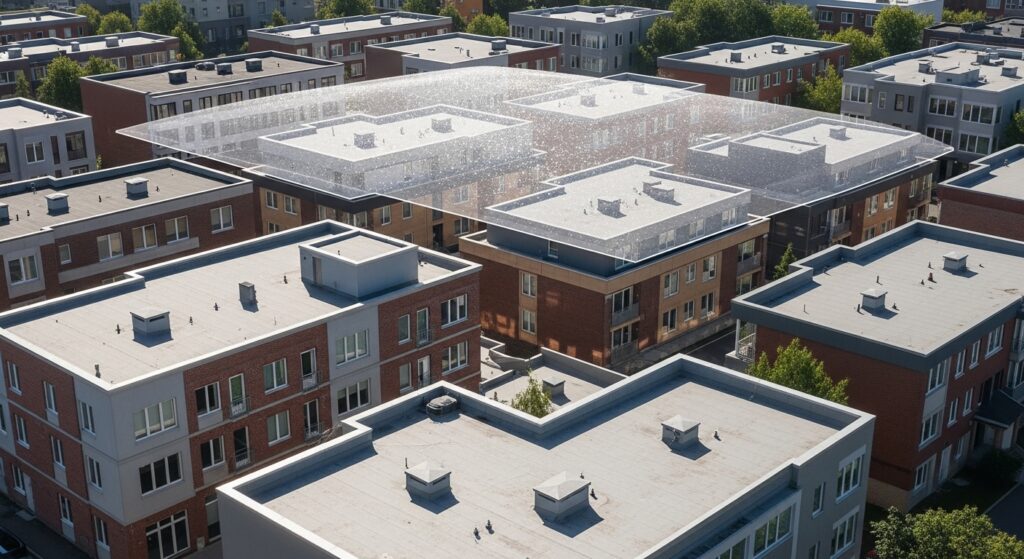
A flat roof inspection is a walk of the whole roof by a roofer who checks the membrane and its seams, every flashing and penetration, the drains and scuppers, the roof edges and the signs of trapped water, then gives you a written report with photos and repairs ranked by urgency. Because a flat roof […]
Flat Roof Drainage: Drains, Scuppers, Overflows and Ponding Fixes
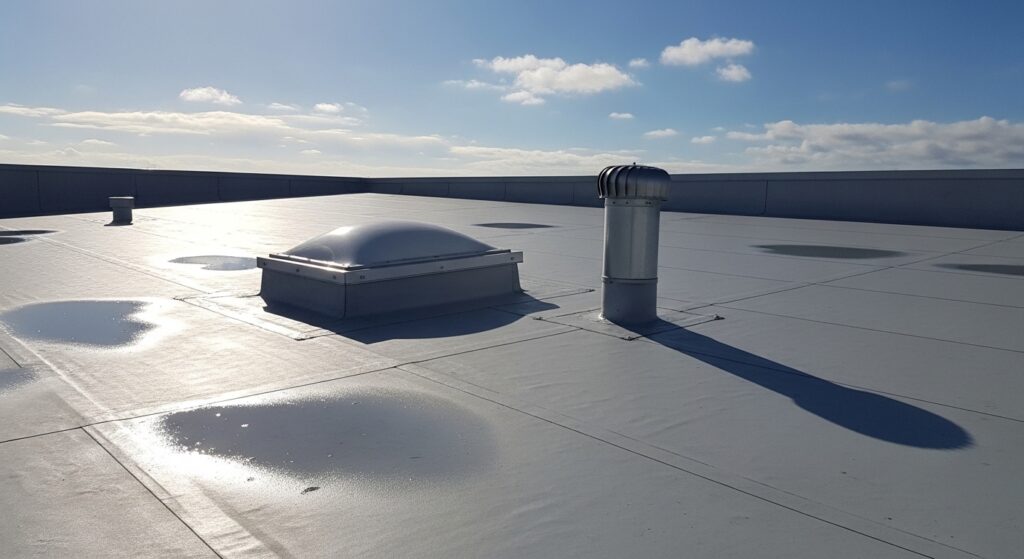
Flat roof drainage works by giving a roof that looks level a slight, steady slope (at least 1/4 inch per foot under California’s codes) toward its outlets: interior drains, scuppers through a parapet wall, or gutters at the edge, plus overflow outlets wherever a raised edge could trap water. Water that is still standing two […]
Spray Foam Roofing: Why It Has to Be Done Right the First Time
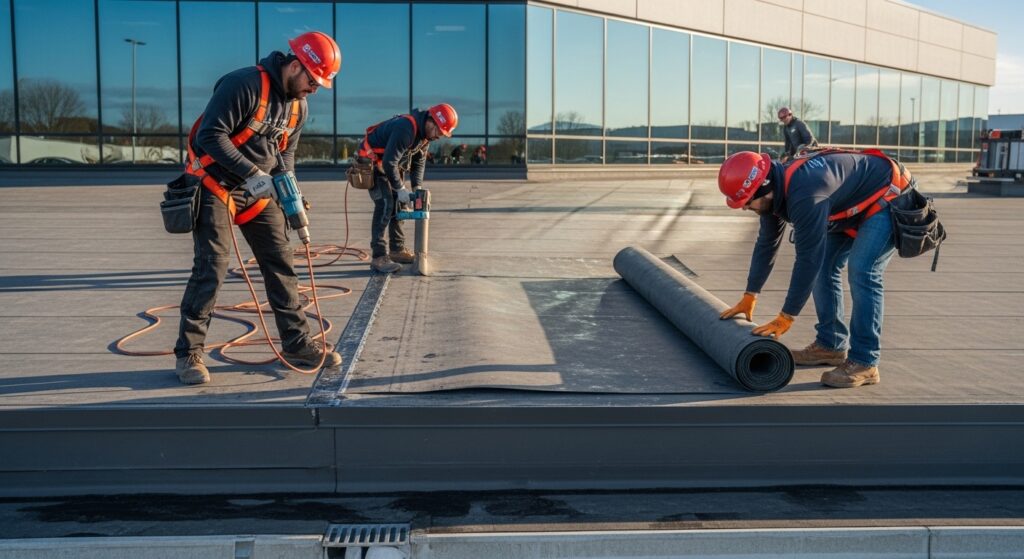
Spray foam roofing (sprayed polyurethane foam, or SPF) is a flat roof built on site: two liquid components are mixed at the spray gun, expand into a rigid layer of foam with no seams, which insulates and sheds water, and are then covered with an elastomeric coating that shields the foam from sunlight. It has […]
Flat Roof Insulation: Modern Flat Roofing That Handles Every Season
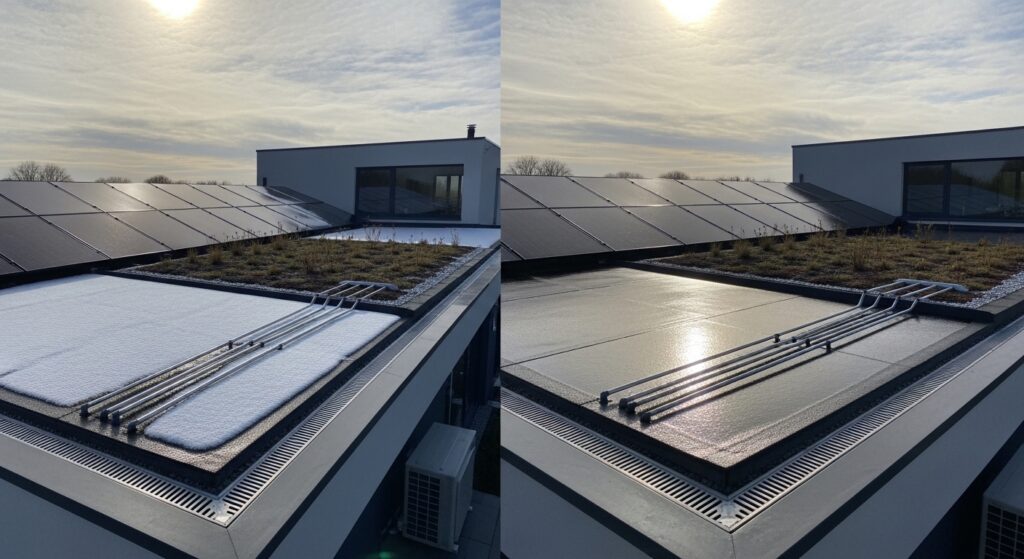
Flat roof insulation is the layer that slows heat moving through a flat roof, usually rigid foam board laid on the deck under the membrane, or insulation packed between the ceiling joists below. Where it sits matters as much as how thick it is: board above the deck protects the structure and can build in […]
Flat Roof Wind Uplift: How a Flat Roof Is Engineered to Stay Put
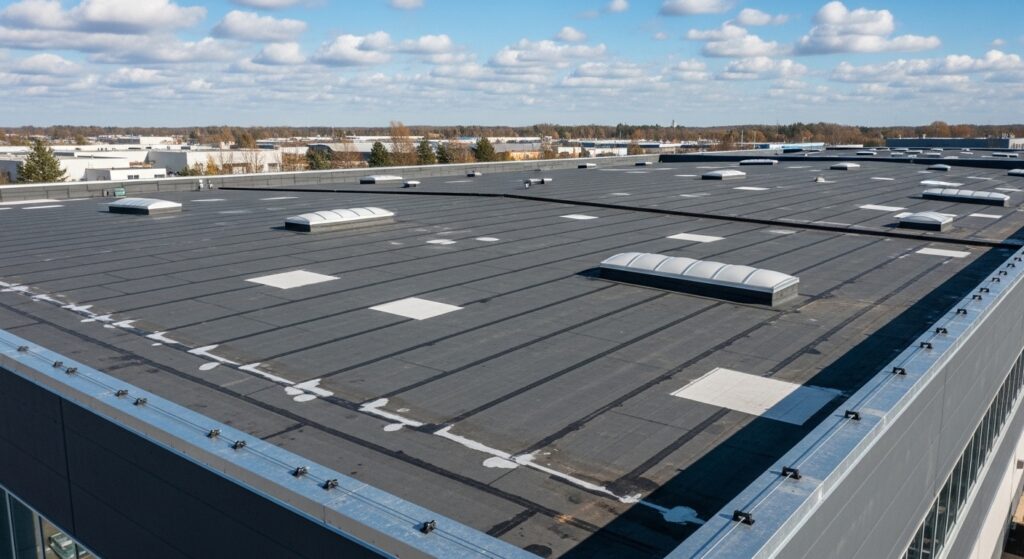
Flat roof wind uplift is the suction that wind creates as it passes over a low-slope roof, pulling the membrane, insulation and edge metal upward; it is strongest at the corners and along the perimeter. A flat roof resists it through how each layer is attached to the deck, a tested metal edge, and tighter […]
Flat Roof Seams: Reliable Joints for Residential and Commercial Roofs
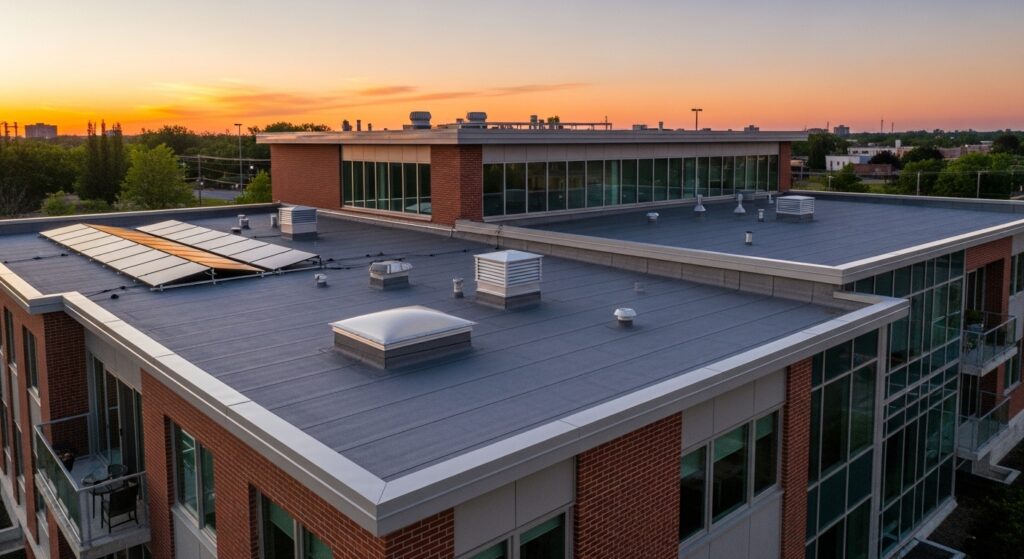
Flat roof seams are the laps where one sheet or roll of roofing overlaps the next, and on most membrane roofs they are, along with the flashings, where leaks begin. Each system joins them differently: TPO and PVC are welded with hot air, EPDM is taped, modified bitumen is fused with heat or bonded with […]
Flat Roof Installation Mistakes That Cause Leaks and Costly Repairs
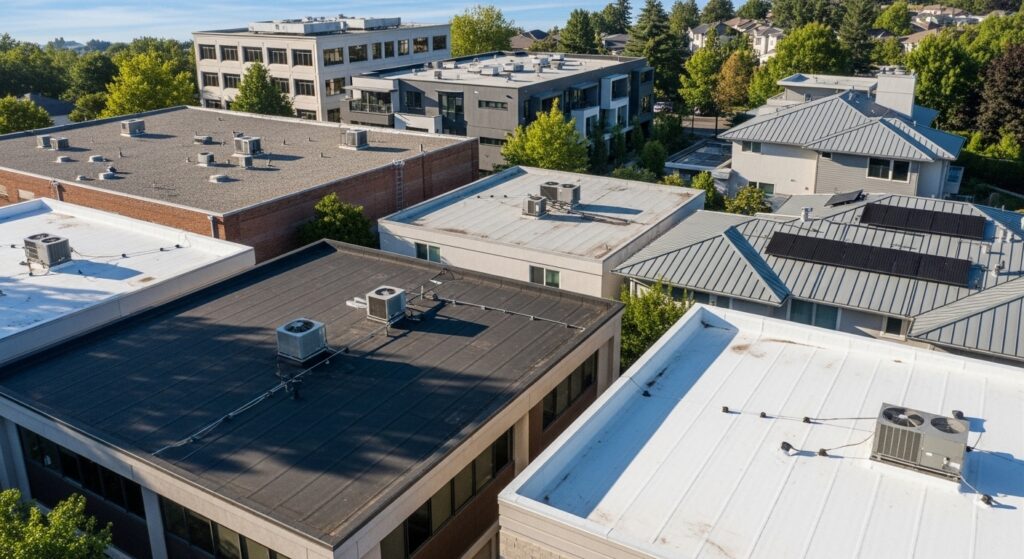
The flat roof installation mistakes behind most early leaks are few and predictable: too little slope, seams that were never properly welded or taped, flashing that stops short at walls and equipment, wet or unsuitable material sealed under the membrane, and drains set higher than the roof around them. Each one can be avoided on […]
EPDM Roofing: A Durable Rubber Flat Roof Solution, Pros and Limits
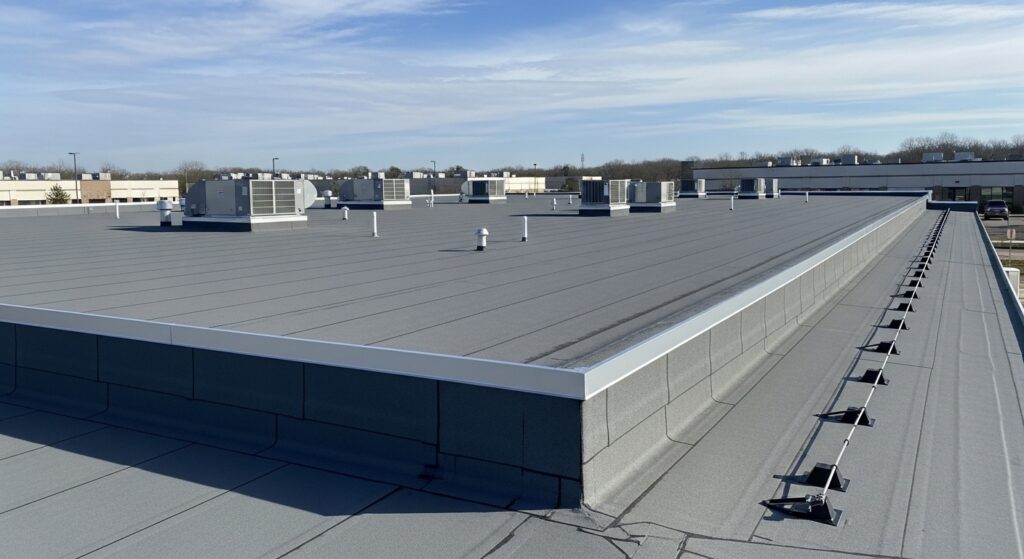
EPDM roofing is a synthetic rubber membrane (ethylene propylene diene monomer) laid in wide single sheets over a low-slope roof, joined at the laps with seam tape, and held down by adhesive, fasteners or ballast. It stays flexible in heat and cold, shrugs off sunlight better than most rubbers and has few seams, but it […]
Flat Roof Blisters: Why Heat, Rain and Time Raise Them and What to Do

Flat roof blisters are raised, bubble-like pockets where a layer of the roof has come loose from the layer beneath it and the gap has filled with air or water vapor. They form where moisture or a void was trapped in the roof, and sun heat makes them swell because warm vapor expands. A small, […]
Common Flat Roof Problems and How to Fix Them
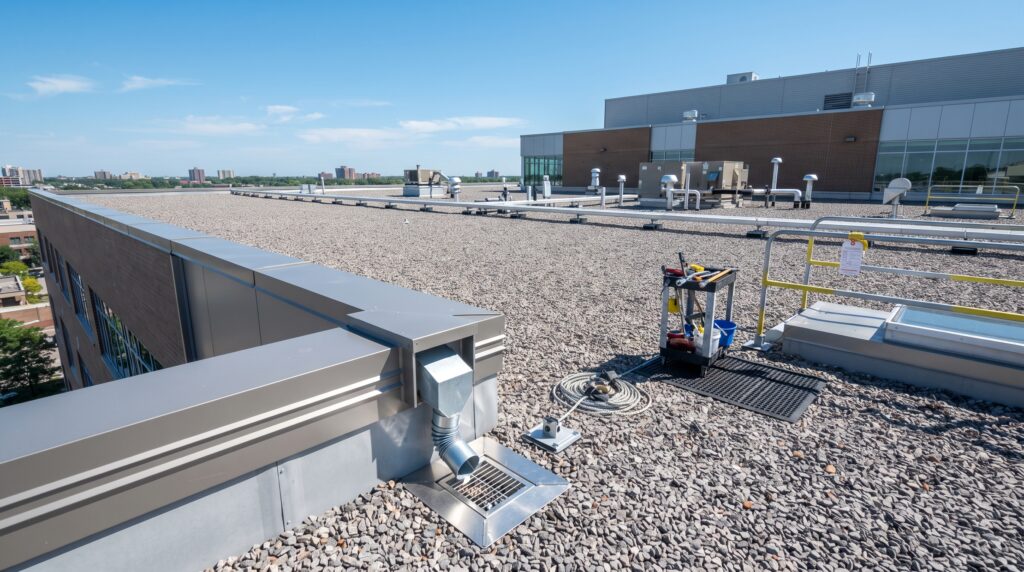
The most common flat roof problems are ponding water, leaks at seams and flashing, blisters, cracks and splits, punctures, clogged drains, a membrane shrinking away from its edges, and wet insulation under the surface. Nearly all of them trace back to three things: water that drains slowly, the joints where the membrane meets a wall, […]