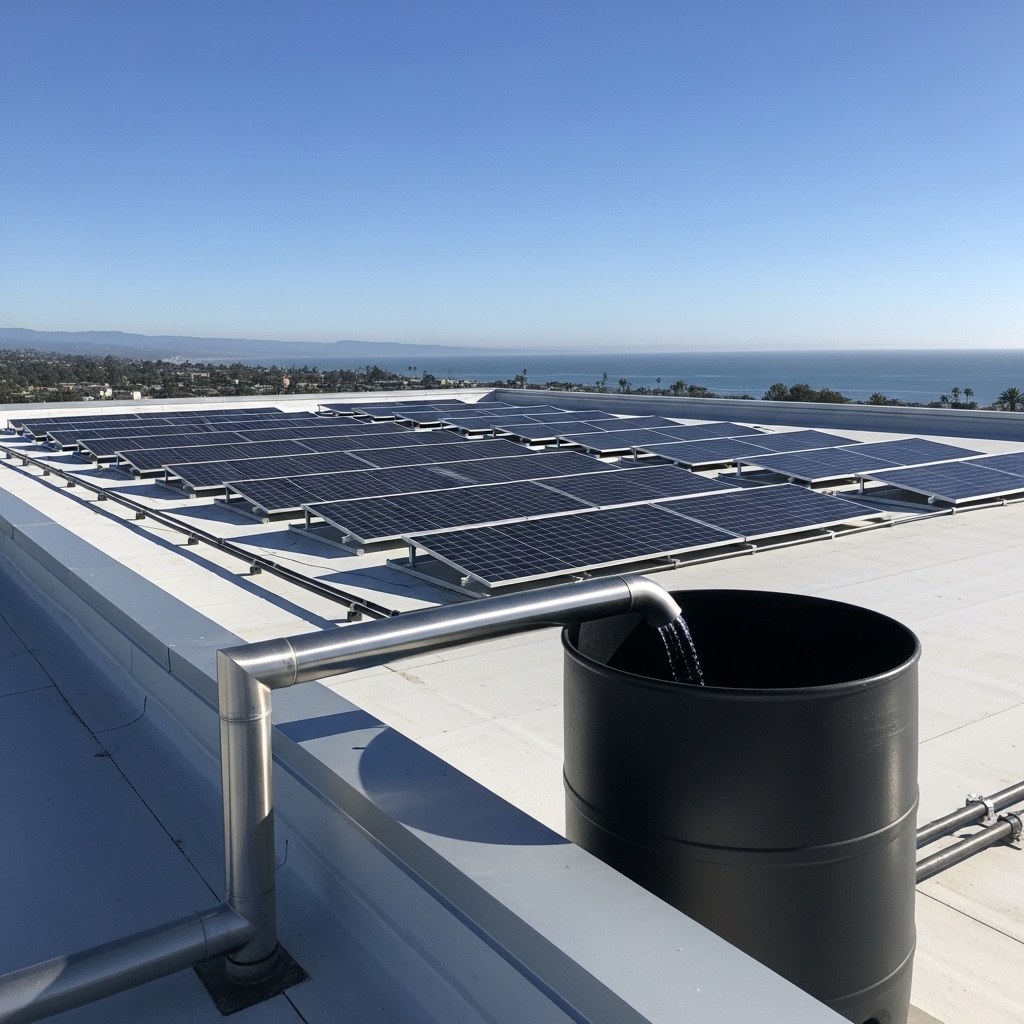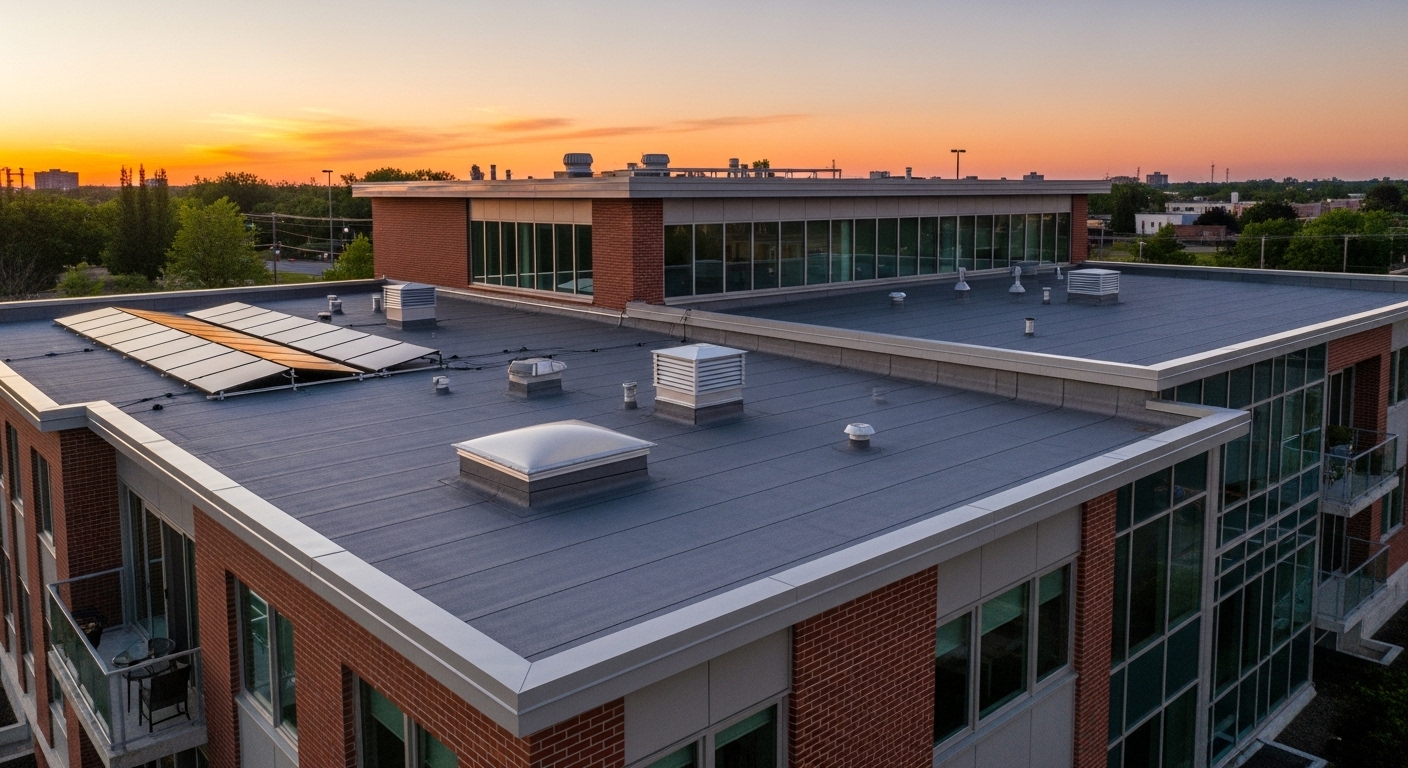
Flat roof seams are the laps where one sheet or roll of roofing overlaps the next, and on most membrane roofs they are, along with the flashings, where leaks begin. Each system joins them differently: TPO and PVC are welded with hot air, EPDM is taped, modified bitumen is fused with heat or bonded with asphalt or adhesive, and spray foam and liquid-applied roofs have no seams at all. A reliable seam is one that was fully bonded on the day it was made and is kept free of standing water afterwards. For seams that are opening on your home or commercial building, call NEMA Roofing at 866-631-3366.
How each flat roof system makes its seams
| System | How laps are joined | Typical seam failure | How the seam is checked |
|---|---|---|---|
| TPO, PVC | Hot-air welded, by machine on long runs and by hand at details | Cold weld that never fused; scorched weld; wrinkles (fishmouths) at the edge | Probing the full length; test welds peeled apart |
| EPDM | Primer plus seam tape, with cover strips or patches where laps cross | Tape peeling from the ends; gaps at T-joints | Visual check and gentle lifting at the lap edge |
| Modified bitumen | Torch-fused, set in hot asphalt, cold adhesive or self-adhered | Lap edges lifting where the sheet was not fully melted or bonded | A continuous bead of bitumen at the lap edge; probing |
| Built-up (tar and gravel) | Several overlapping plies set in asphalt | Splits and ridges rather than single open laps | Visual check for splits, blisters and bare spots |
| Spray foam, liquid-applied | No seams: sprayed or rolled in one continuous layer | Thin or worn coating instead | Coating thickness and condition |
The California Residential Code requires single-ply membranes to be installed to the manufacturer’s instructions (section R905.12.3), and those instructions set the lap widths, primers, weld settings and cover-strip details. A seam made outside them is also a warranty problem, not only a leak risk.
Why seams open
- They were never fully bonded. A welder running too cold or too fast, a lap that was dusty or damp, tape pressed onto an unprimed sheet. These seams can look closed for months.
- Heat and movement. A flat roof heats up and cools down every day, and the membrane moves with it. The stress concentrates at laps, at T-joints where three layers meet, and where the sheet is fastened.
- Standing water. Water that ponds over a lap works at the bond for weeks instead of hours. This is why low spots and seams so often fail together.
- Wind. On mechanically fastened sheets, wind lifts the membrane between fastener rows and pulls on the laps where the fasteners sit. U.S. Department of Defense roofing criteria (UFC 3-110-03) prefer fully adhered single-ply systems for this reason.
- Traffic and equipment. Service technicians kneeling on a lap, tools dropped on it, equipment dragged across it.
- Age. Adhesives and tapes weaken, and some membranes shrink and pull at their laps and edges.
Seams on homes and on commercial roofs
The principle is the same on both, but the risk sits in different places. A house roof is small, so most of its seams sit close to walls, edges, doors and skylights, where laps are short, cut by hand and hard to weld by machine. A commercial roof has long straight seam runs that a machine welds well, but many more of them, plus rooftop units, conduit and regular foot traffic from technicians. On a home, check the laps near the details first; on a commercial roof, check the laps around equipment, along walkways and wherever water collects.
How seams are tested
- Probing. On welded membranes, a blunt probe is run along the edge of every seam after welding. It catches spots where the weld did not fuse.
- Test welds. Before seaming starts, and when the weather changes, the crew welds scrap pieces and pulls them apart. On a good weld the sheet tears before the seam gives. The federal criteria ask for these test strips on every day of welding.
- Cut samples. On larger jobs, short sections of seam may be cut out to check the weld width, then patched.
- Electronic leak detection. ASTM D7877 is the standard guide for locating leaks in waterproof membranes by electrical conductance, used alongside visual and infrared inspection. It can find breaches a probe cannot, including in some membranes that are covered by other layers.
What a proper seam repair looks like
A seam repair uses the roof’s own material and method, never a bead of caulk along the edge:
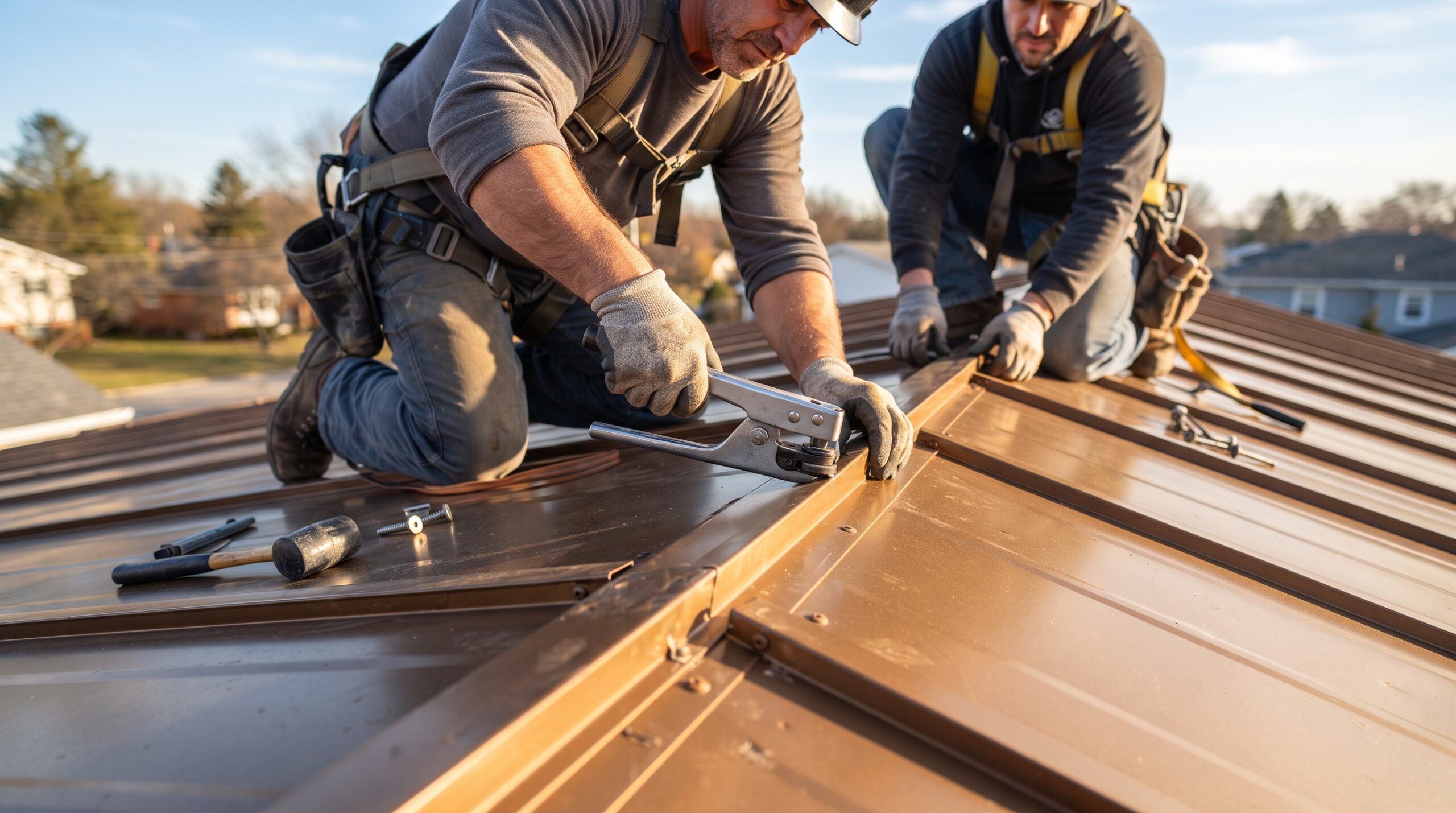
- TPO and PVC: the area is cleaned (weathered sheet often needs a specific cleaner before it will weld again), and the open section is re-welded or covered with a welded patch.
- EPDM: the lap is opened, cleaned and primed, and re-taped, with a cover strip or patch with rounded corners over the repair.
- Modified bitumen: the lifted edge is re-fused or re-adhered, or a new strip is applied over it with the method the system uses.
More on repair options short of a new roof: repairing a flat roof without replacing it. If the seam trouble started soon after the roof went on, the other early faults are in flat roof installation mistakes.
When seam problems mean more than a repair
A few open laps are a repair. Seams failing all over the roof, a membrane too brittle or chalky to weld, or tape letting go wherever you look are different: the bonds have reached the end of their life, and fixing one seam moves the leak to the next. Water that has been getting in at the laps may also have soaked the insulation underneath, which has to be checked before any decision; see flat roof water damage. When the whole roof is due, recover or replacement is the next choice.
Seam repairs and flat roofs from NEMA Roofing
NEMA Roofing works on flat roofs for homeowners and businesses and holds CSLB license #1083283 (roofing C-39, general building B), with bond and workers’ compensation on file with the state board. Six NEMA locations, in Santa Barbara, Oxnard, Woodland Hills, Tarzana, Downey and San Bernardino, let us cover all five counties we serve, Santa Barbara, Ventura, Los Angeles, Riverside and San Bernardino, with a crew near every town; our San Bernardino County service area is part of that reach. Read about our flat roofing services or call 866-631-3366 to have your seams checked.