Metal roofing for extreme weather in Southern California has to get through five kinds of events: dry downslope windstorms, long stretches of triple-digit heat, wildfire embers, short heavy winter storms and, in the mountains, snow and hard freezes. A metal roof handles each one through a different detail, and each leaves different signs to check afterwards. This guide goes event by event. To have your roof checked or a metal roof planned, call NEMA Roofing at 866-631-3366.
Which extreme weather does a roof here actually face?
| Event | Where it hits hardest | What the record shows |
|---|---|---|
| Santa Ana winds | The Los Angeles area | The National Weather Service defines them as strong, hot, dust-bearing winds that descend to the coast around Los Angeles from the inland deserts |
| Sundowner winds | Coastal Santa Barbara County | Downslope windstorms off the Santa Ynez Mountains, peaking from early evening to mid-morning; the Sundowner Winds Experiment, a 2022 field project listed by the National Center for Atmospheric Research’s Earth Observing Laboratory, calls them one of the most significant fire weather hazards for populated areas there |
| Heat | San Fernando Valley, Ojai, Inland Empire, high desert | NOAA 1991-2020 normals: about 35 days a year at or above 100 F at Woodland Hills Pierce College, 16 at Ojai, 26 at Redlands and 42 at Victorville |
| Wildfire embers | Hillside and canyon edges | State fire hazard maps show Very High zones in Woodland Hills, Ojai, Camarillo, Thousand Oaks and Santa Paula, among many others |
| Winter downpours | Everywhere, heaviest against the mountains | NOAA normals: about 19 inches of rain a year at Santa Barbara, 15 of them from December through March; about 21 at Ojai |
| Snow and freeze | San Bernardino Mountains | NOAA normals for Big Bear Lake: about 59 inches of snow and 176 days with a low at or below freezing a year |
How does a metal roof ride out a Santa Ana or Sundowner wind?
These winds arrive gusty and dry and often carry branches and grit. The panels themselves rarely fail if the roof matches its tested wind assembly; trouble starts at the pieces wind can get under.
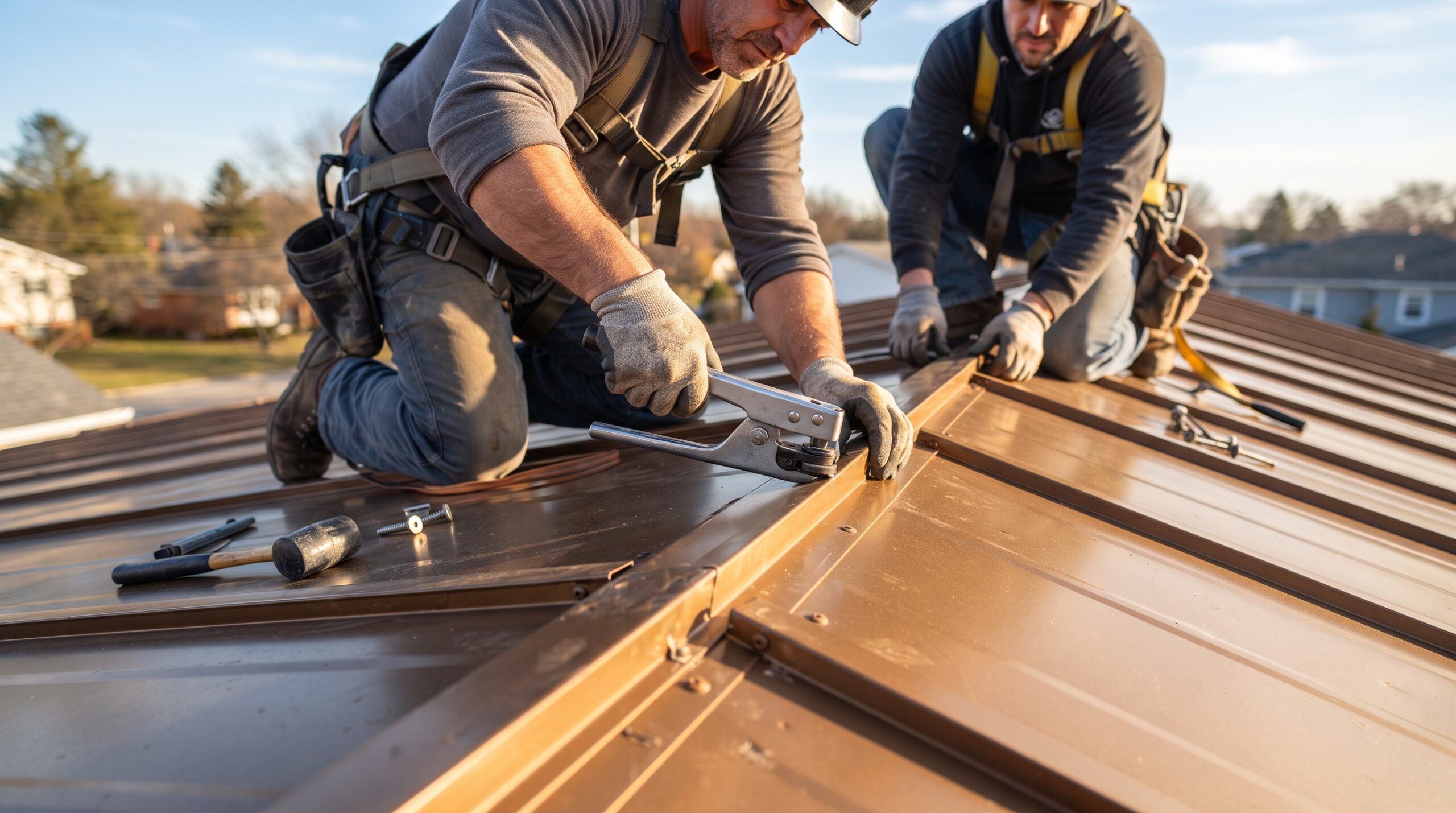
- Rake and eave trim. Loose or short-fastened trim is the usual first failure; once it lifts, the panel edge behind it is exposed.
- Ridge and hip caps. Caps over the top of the panels take suction on both sides.
- Add-ons. Satellite dishes, antennas and conduit screwed through the panel loosen in gusts; seam clamps hold them without holes.
- Debris strikes. A thrown branch can dent or scratch a panel; a scratch through the paint on steel is worth touching up before it rusts.
How wind ratings are tested and why corners get tighter fastening is explained in metal roof wind resistance.
What does a heat wave do to a metal roof?
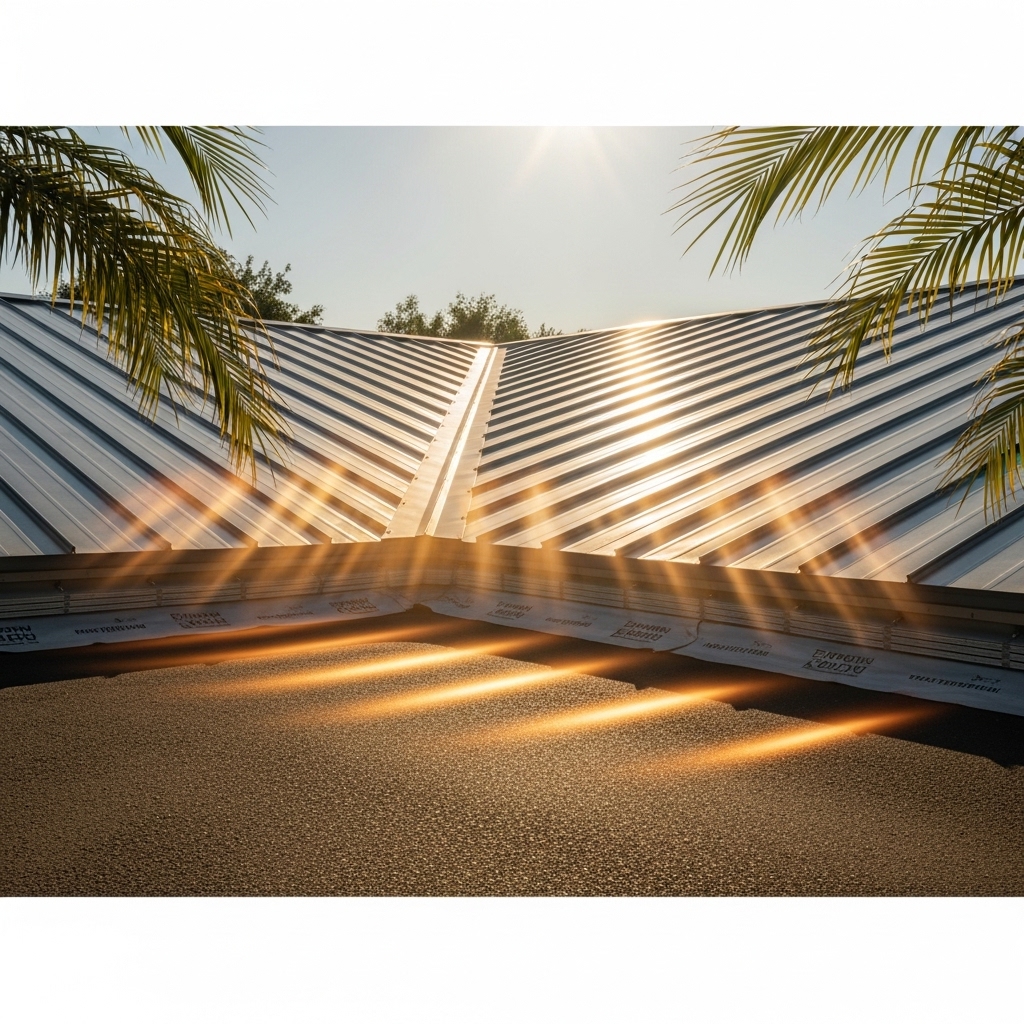
A sunny panel runs far hotter than the air, and every day it grows and shrinks. On a day of 100 F or more that swing is at its widest, which is why panels need to slide on floating clips and why screws through the face of exposed-fastener panels loosen faster in hot valleys. Heat also works on what is under the metal: the U.S. Department of Defense roofing criteria call for a continuous high-temperature self-adhering underlayment under the whole roof of a water-shedding metal system. Ask which underlayment your quote includes and its temperature rating.
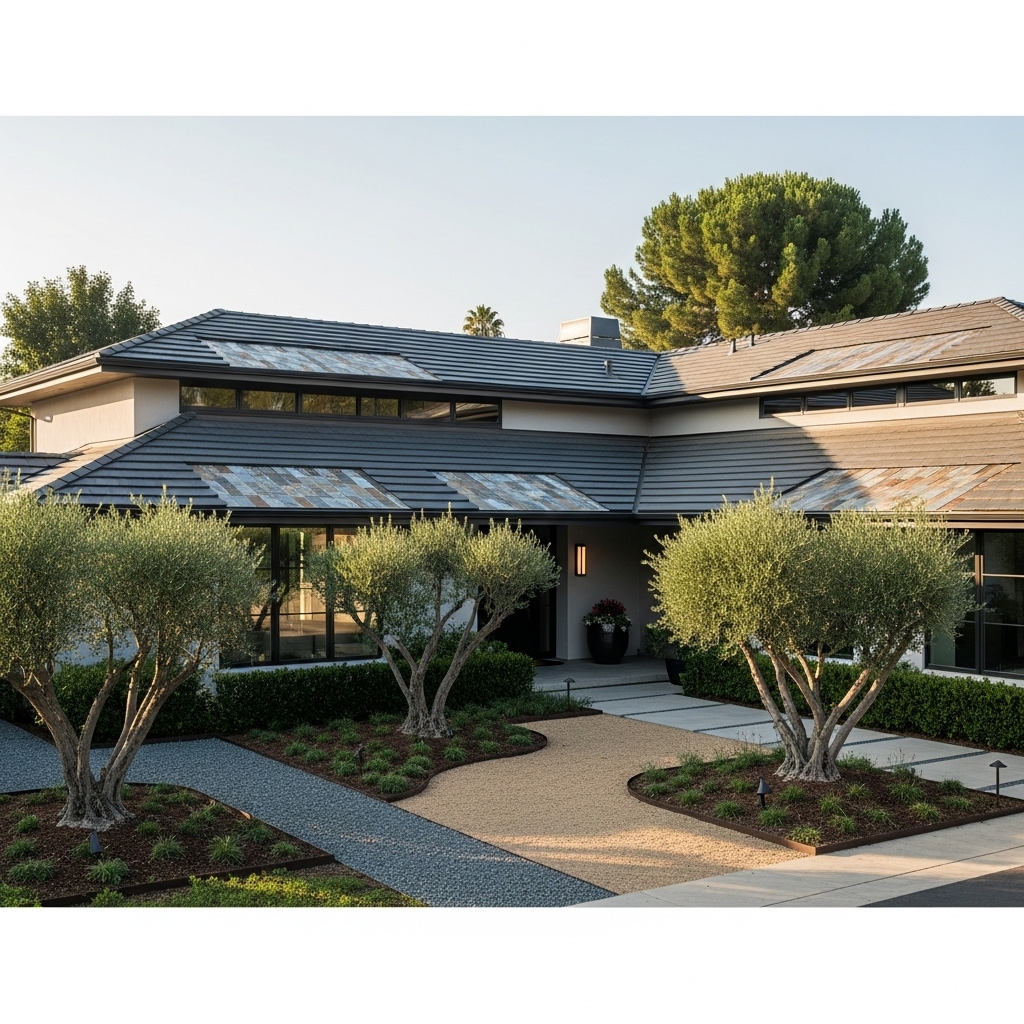
A cool-rated finish lowers the heat that reaches the attic. In the Valley and inland zones, a steep-slope reroof of more than half the roof needs rated cool values unless an exception applies; the guide to energy efficient metal roofing lists the numbers by climate zone.
Is a metal roof safe in a wildfire?
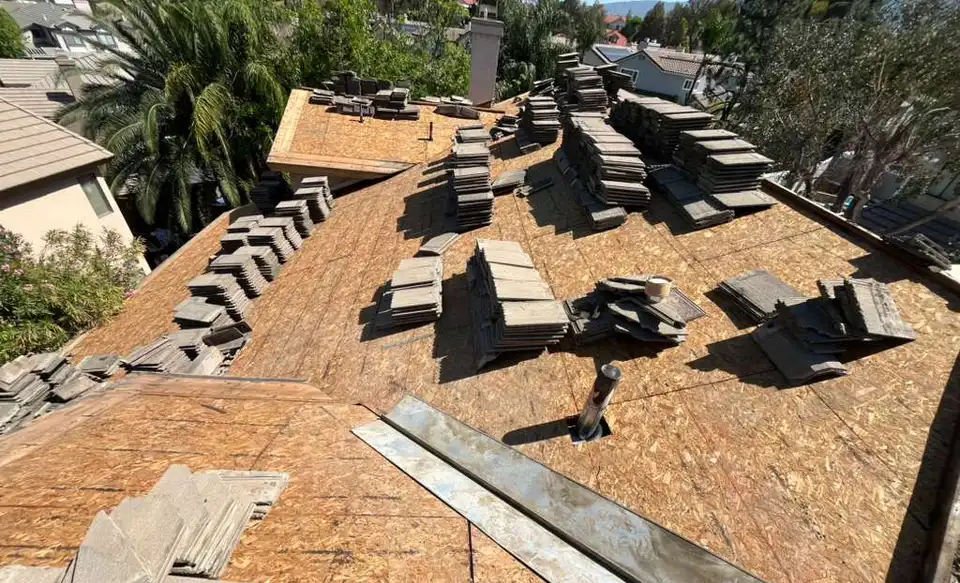
Metal does not burn, but the fire rating belongs to the whole roof assembly. Under the 2025 California Wildland-Urban Interface Code, roofs it covers must be Class A, and replacing 50 percent or more of a roof within 12 months brings the whole roof covering up to that standard. Metal sheets and shingles count as Class A without testing only when laid on a noncombustible deck. Most houses have a wood deck (plywood or boards), so there the metal roof must be a tested, listed Class A assembly; ask for the listing that names the underlayment it was tested with.
Embers are the bigger threat to most homes, and they get in through gaps rather than through the metal:
- Open panel ends. Ribbed and corrugated panels leave open profile ends at the eave and ridge; closures (end plugs) seal them so embers and debris cannot get under the panels.
- Vents. The California Department of Insurance’s Safer from Wildfires program lists ember- and fire-resistant vents with 1/16 to 1/8 inch noncombustible mesh among its discount measures.
- Gutters and valleys. Dry leaves collected against the roof edge catch embers. For buildings the wildfire code covers, gutters must be noncombustible and fitted with an approved way to keep leaves out.
How does a metal roof handle a winter downpour?
Most of the year’s rain arrives in a few winter months. Whether a metal roof stays dry depends on its slope and the way its seams are made. The California Residential Code sets the minimum slopes:
| Panel type | Minimum slope |
|---|---|
| Standing seam | 1/4 inch per foot |
| Lapped panels with lap sealant | 1/2 inch per foot |
| Lapped panels without sealant | 3 inches per foot |
Below those slopes, water driven by wind can back up through the laps. On any slope, the weak spots in a downpour are where the roof meets something else: sidewall and chimney flashing, skylight curbs, valleys packed with leaves and gutters that overflow back under the eave trim.
What about snow and freezing nights in the mountains?
In Big Bear and the other mountain communities, snow tends to release from smooth metal all at once. The military criteria call for snow retention on metal roofs in cold climates, clamped to the seams rather than glued on or screwed through the panel, and sized for the roof’s slope and snow load. Which metal and gauge suit the mountains is covered in the best metal roofing material for each climate.
What should you check after extreme weather?
- From the ground, look along every edge: trim that has lifted, bent or pulled loose.
- Look at ridge and hip caps for gaps or shifted pieces.
- Look for dents, scratches or branches resting on the panels.
- Check gutters and valleys for leaves, ash or debris.
- Inside, check ceilings and the attic below valleys, skylights and walls for stains.
- After a fire nearby, have the vents, closures and gutters checked for ember damage even if the roof looks fine.
Stay off a metal roof yourself, since wet or dusty panels are slippery. A professional roof inspection covers the areas you cannot see from the ground.
Metal roofing across all five counties
With six locations in Santa Barbara, Oxnard, Woodland Hills, Tarzana, Downey and San Bernardino, NEMA Roofing works in every climate in the table above, from the coast of Santa Barbara and Ventura counties through Los Angeles County to Riverside and San Bernardino counties, including the San Bernardino County mountain and desert towns. Learn about the systems we install on our metal roofing service page, or call 866-631-3366 to plan a metal roof for the weather at your address.