Energy efficient metal roofs save energy by reflecting sunlight and shedding the heat they do absorb, so less of it reaches the attic, the ducts and the rooms below. The saving comes from the factory finish (its rated solar reflectance and thermal emittance), not from the metal itself, and how much it matters depends on the climate zone, the attic insulation and where the ducts run. To check a finish against your home’s zone, call NEMA Roofing at 866-631-3366.
What makes a metal roof energy efficient?
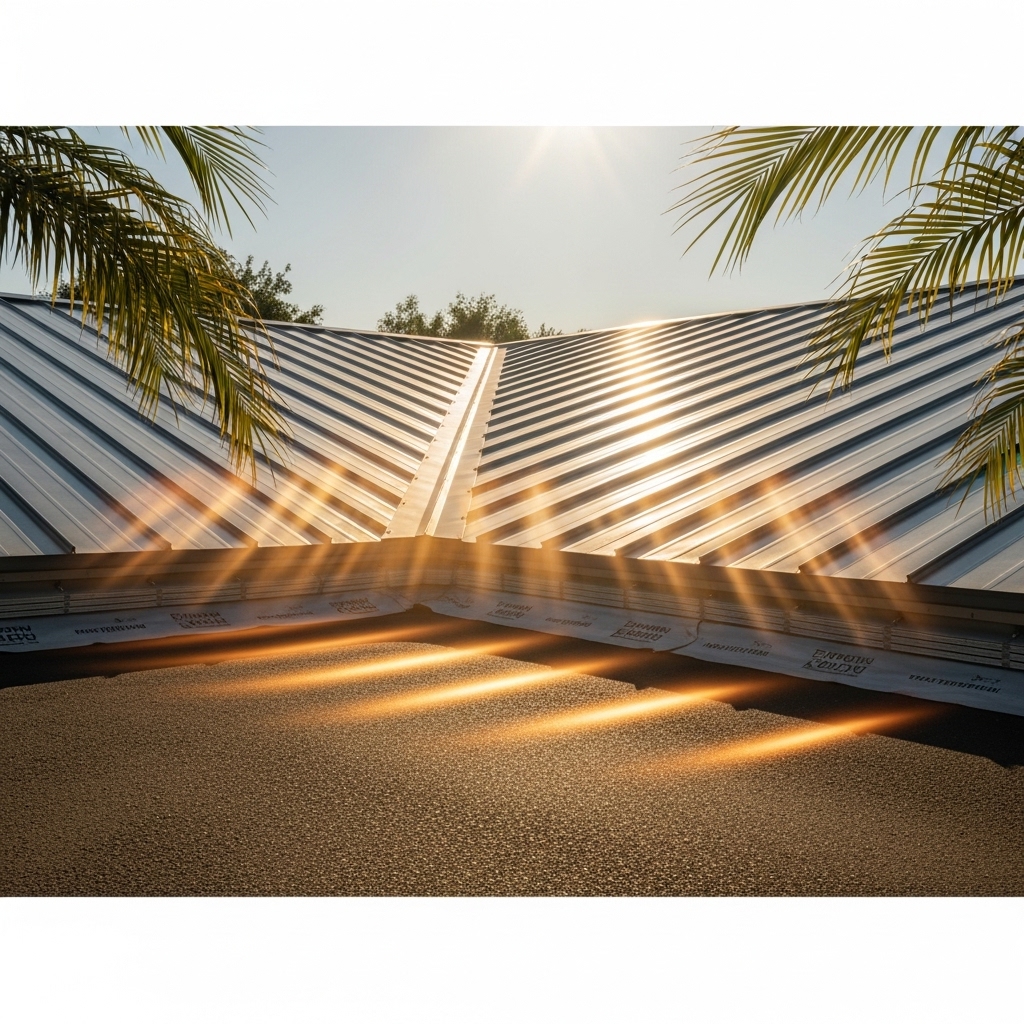
Two measured properties decide it. Solar reflectance is the share of sunlight the surface bounces away; thermal emittance is how well it releases the heat it absorbs as infrared radiation. Lawrence Berkeley National Laboratory’s Heat Island Group points out that the two are independent of each other, so a cool roof needs both to be high.
Color is only part of the story. About half of the sun’s energy arrives as invisible near-infrared light, and cool-colored pigments reflect that part while still looking dark. The same lab estimates that on a typical summer afternoon a cool-colored roof reflecting 35 percent of sunlight stays about 22°F cooler than a roof of the same look that reflects 10 percent. That is why a charcoal or bronze metal roof can still be an efficient one.
Where do you find a panel’s real numbers?
The Cool Roof Rating Council tests roofing products and publishes their values in its Rated Roof Products Directory, both when new and after three years of outdoor exposure. California’s energy code only accepts the aged values, because dust and weathering lower reflectance over time. When you compare metal panels, ask for the CRRC product ID of the exact color, not a brochure claim that the line is “cool”.
The base metal matters less than people expect. Coated steel and aluminum panels carry the same kinds of factory finishes, and the finish sets the energy numbers. Aluminum earns its place near the ocean: the U.S. Department of Defense roofing criteria (UFC 3-110-03) note that aluminum-zinc coated steel has a shorter service life in direct contact with salt spray and that aluminum may be the better choice there, at a higher cost.
How does a metal roof perform across Southern California’s climate zones?
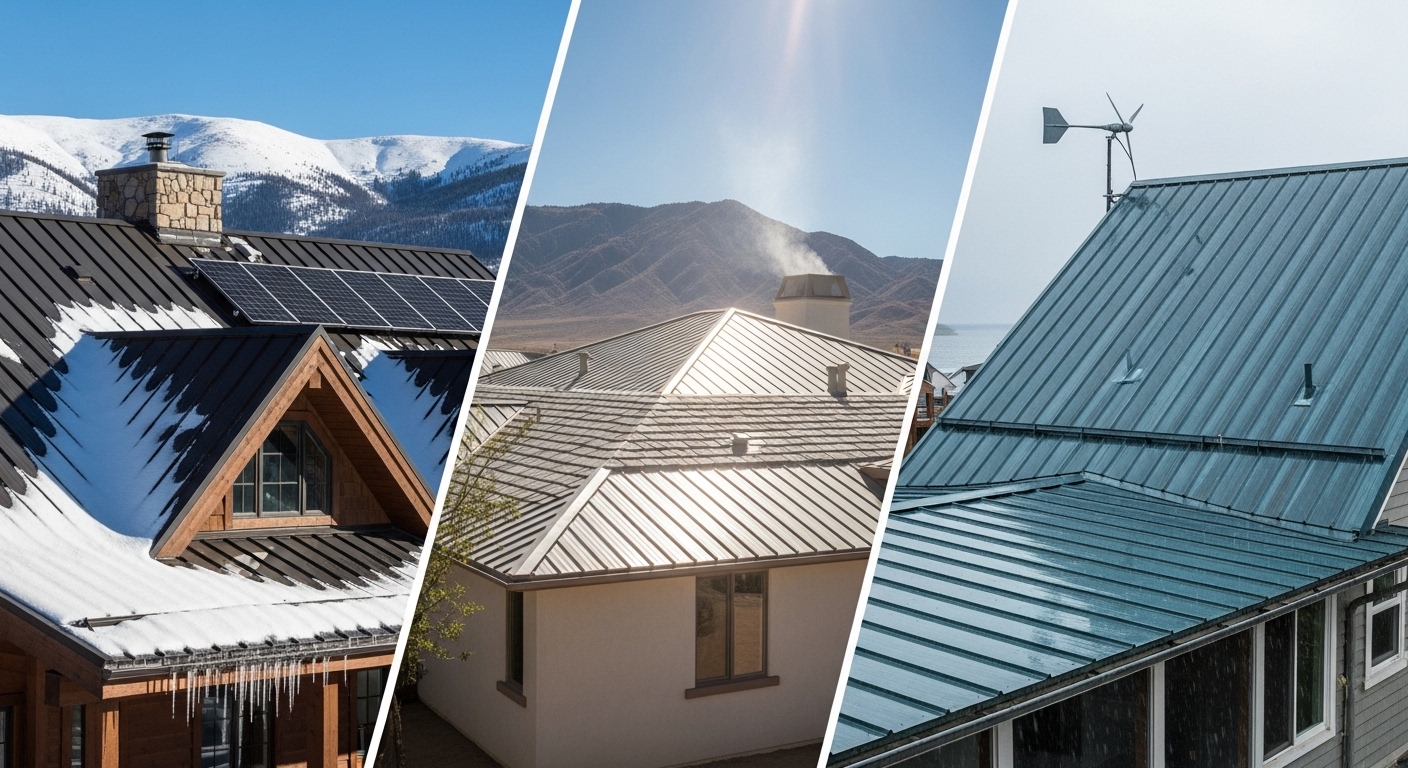
“Any climate” is a real question in the area NEMA covers. The California Energy Commission’s climate zone list by ZIP code puts the five counties we serve in at least nine different zones, and the energy code treats them differently.
| Area (examples) | CEC climate zone | What drives the finish choice |
|---|---|---|
| Santa Barbara, Goleta, Carpinteria, Oxnard, Camarillo | 5 or 6 | Mild coast; no reflectance rule for a sloped reroof, salt air favors aluminum close to the water |
| Downey and much of the Los Angeles basin | 8 | Sloped reroof over half the roof needs a rated cool product unless an exception applies |
| Woodland Hills, Tarzana, Encino, Ojai, Santa Paula | 9 | Hot inland summers; same sloped-roof rule, and attic ducts remove one exception |
| Riverside and San Bernardino cities | 10 | Long, hot summers; same sloped-roof rule and the same duct exception |
| Desert and high-desert parts of Riverside, San Bernardino and Los Angeles counties | 14 or 15 | Desert sun and heat; same sloped-roof rule |
| Mountain communities in the same counties | 16 | Real winters; no sloped-roof reflectance rule, heating matters more |
For a sloped home roof, the 2025 energy standards (in force since January 1, 2026) set the reroof rule in zones 4 and 8 through 15: when more than half of the roof is replaced, the new covering needs an aged solar reflectance of at least 0.20 and a thermal emittance of at least 0.75, or a solar reflectance index of at least 16. Low-slope home roofs follow a stricter rule in zones 4 and 6 through 15.
Does a reflective roof cost you heat in winter?
A little, in cold places. The U.S. Environmental Protection Agency notes that cool roofs may raise heating energy in winter in cold climates, and that this “heating penalty” is usually offset by summer savings because the winter sun is lower and the days are shorter. For most homes from the coast to the Inland Empire the summer side wins. In a zone 16 mountain home, a mid-tone finish and better attic insulation are often the more balanced choice; the state does not require a cool sloped roof there.
What matters underneath the metal?
The finish is the first line; the attic is the second. The state rule’s exceptions show how the code weighs them: a sloped reroof can skip the reflectance values if the ceiling has R-38 insulation or better, if there is a qualifying radiant barrier, or (in zones 2, 4, 9, 10, 12 and 14) if no ducts run through the attic. The Defense Department criteria make a similar point from the other side: above about R-24 insulation, the cool surface has little influence on a building’s energy use. If your ducts sit in a hot attic, a reflective roof protects them; if the attic is well insulated and duct-free, the finish matters less and color becomes more a matter of taste.
Checklist for choosing an energy efficient metal roof
- Find your home’s CEC climate zone from its ZIP code and whether the reroof rule applies.
- Ask for the CRRC product ID and the aged reflectance, emittance or SRI of the color you like.
- Check the attic: insulation depth, radiant barrier, and whether ducts run there.
- Ask what paint system the finish uses and what its fade and chalk warranty covers; the Defense Department criteria call for a 70 percent PVDF resin finish on exterior metal panels, a useful benchmark.
- Within a few miles of the ocean, ask whether aluminum panels are the better base metal.
- Plan solar at the same time: standing seam panels take mounts clamped to the seams, without holes through the roof.
Getting an energy efficient metal roof from NEMA Roofing
With six locations (Santa Barbara, Oxnard, Woodland Hills, Tarzana, Downey and San Bernardino), NEMA Roofing installs metal roofs across Santa Barbara, Ventura, Los Angeles, Riverside and San Bernardino counties, from the zone 6 coast to the hot inland zones; see our service areas. Read more on our metal roofing service, how a reflective roof compares in cool roofing vs traditional roofing, and how long a metal roof lasts. For a written estimate that names the product and its rated values, call 866-631-3366.