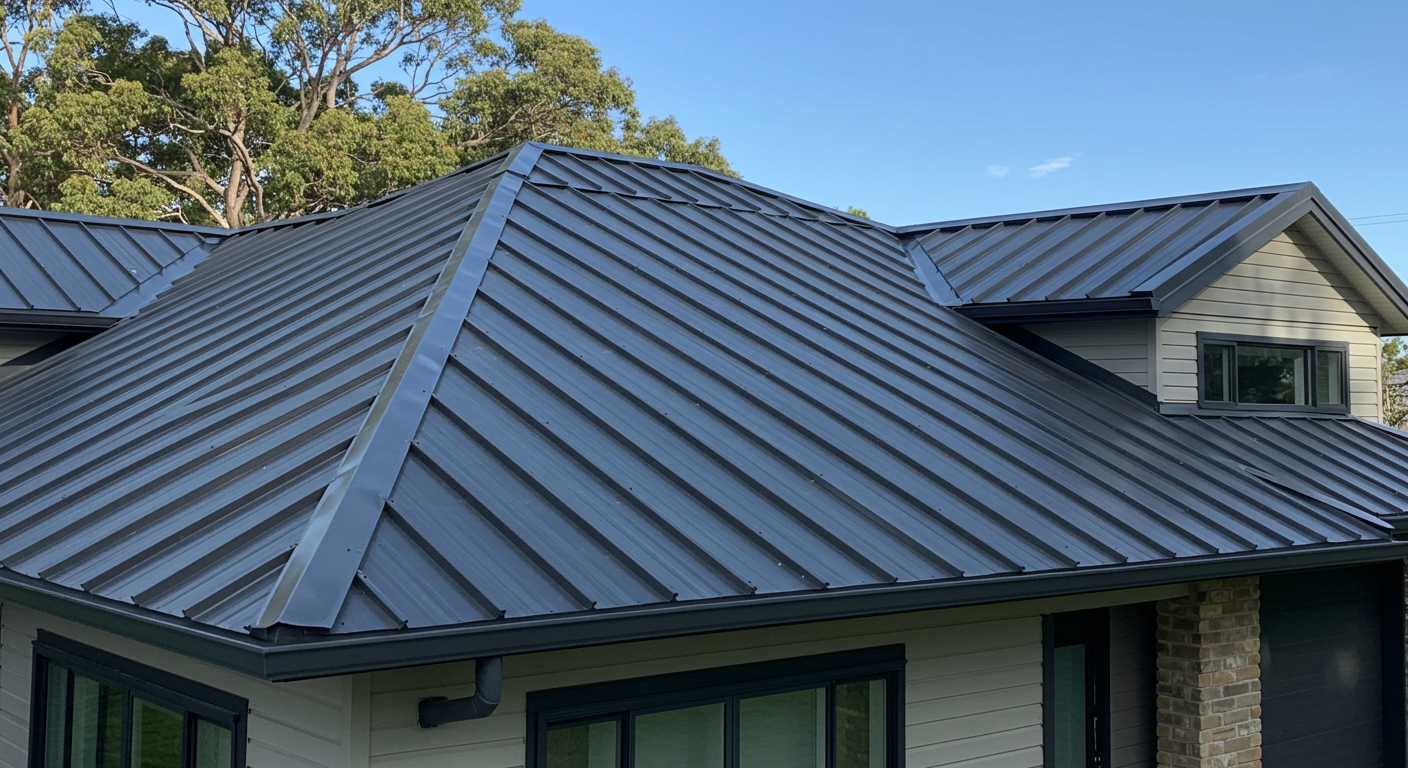
How long does a metal roof last? Usually several decades: the Metal Roofing Alliance, the industry’s homeowner-education group, tells homeowners to count on 30 to 50-plus years, and a study of home component life by the National Association of Home Builders lists copper roofing as lasting the life of the house. Where a given roof lands depends on the metal and its coating, the paint finish, the fasteners and flashing details, salt exposure and upkeep. To have yours assessed, call NEMA Roofing at 866-631-3366.
Metal roof life span by material
“Metal roof” covers several different metals, and they age differently. The table sums up what the sources say about each, without inventing a year count where none is published.
| Metal | How it ages | What shortens its life |
|---|---|---|
| Aluminum-zinc coated steel (Galvalume), painted or bare | A widely used panel metal for homes. Defense Department roofing criteria note the steel substrate outlasts its paint. | Direct salt spray: it is used near the coast but gives a shorter service life there |
| Aluminum | Does not rust; the criteria name it the better choice in some salt-spray settings, at a higher cost | Contact with steel or copper without a separator; more thermal movement to allow for |
| Galvanized (zinc-coated) steel | Older and farm-building panels; the zinc layer wears away first | Corrosive settings: the same criteria rule out G90 galvanized in harsher environments except on temporary buildings |
| Copper | Weathers to a patina; the NAHB study lists copper roofing as “lifetime” | Its runoff stains and attacks other metals below it |
| “Tin” roof | A common name for older terne-coated or galvanized steel roofs rather than tin itself | Rust once the coating is gone; age of the fasteners |
For comparison, the same NAHB study gives asphalt shingles about 20 years. Why metal outlasts shingles, part by part, is covered in metal roofing designed to outlast traditional shingles.
How long does metal roof paint last?
On painted steel, the finish is usually the first thing to age, not the metal. The U.S. Department of Defense criteria (UFC 3-110-03) say plainly that for aluminum-zinc coated steel the substrate life will exceed the paint life, and they call for a 70 percent PVDF (polyvinylidene fluoride) resin finish on exterior panels. Fading and chalking come first; the panel underneath keeps working. The Metal Roofing Alliance makes the same point from the owner’s side: a metal roof can often be repainted rather than replaced.
When you compare panels, read the finish warranty (fade and chalk) separately from the panel warranty (rust-through), because they cover different things for different periods.
Standing seam or exposed fasteners: which lasts longer?
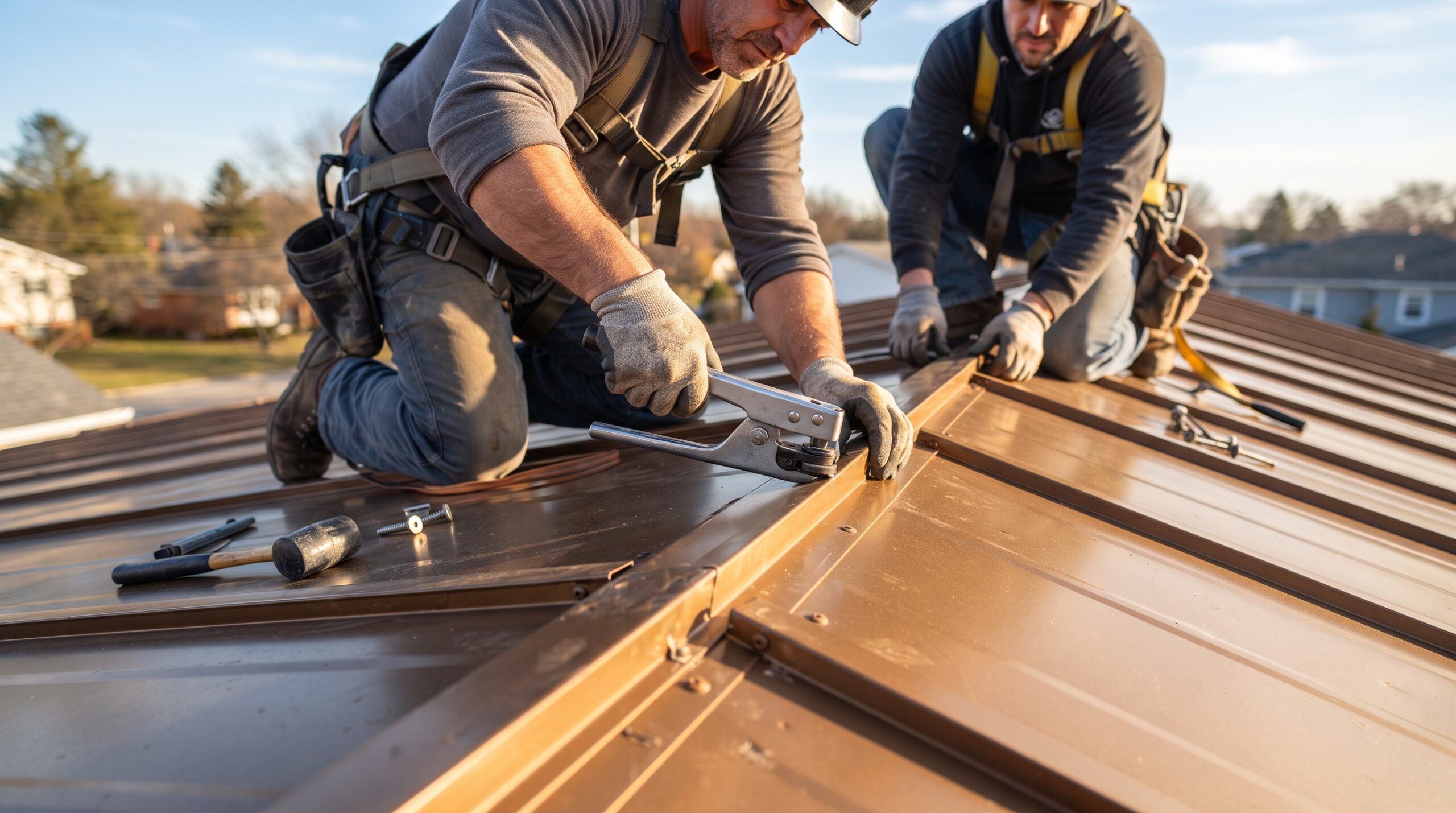
On an exposed-fastener (ribbed or corrugated) roof, the fasteners usually need attention before the panels do. Each screw goes through the weathering surface with a rubber washer, and the washers age in the sun long before the steel does. The Defense Department criteria tell designers to minimize fasteners through the panels and to use EPDM washers rather than neoprene for durability. A standing seam roof hides its clips under the seams, so it has far fewer holes to age. An exposed-fastener roof can still last a long time; it just needs its screws checked and replaced as the washers wear.
What shortens a metal roof’s life?
- Salt air. Within reach of ocean spray, coated steel ages faster; aluminum panels or a heavier coating are the usual answer.
- Mixed metals. Steel and aluminum in contact corrode unless separated, and water running off copper lines attacks the metal below; the criteria say to jacket copper lines.
- Cutting debris. Metal shavings left on the panels after installation rust and stain the finish.
- Trapped debris. Leaves in valleys and behind chimneys hold moisture against the metal.
- Foot traffic and add-ons. Dents, scratched coatings and screws driven through the panels for antennas or lines. The criteria call for non-penetrating seam clamps for anything mounted on the roof.
How often do metal roofs need to be replaced?
Far less often than they need small repairs. Most problems on an aging metal roof are fixable parts: worn washers, dried sealant at a skylight, a loose trim piece, a faded finish. Replacement makes sense when rust has eaten through panels over large areas, when the coating has failed across most of the roof, or when leaks keep returning at seams that can no longer be sealed. A yearly look at fasteners, flashings and valleys is what keeps a metal roof toward the long end of its range.
Does Southern California’s climate help or hurt?
Both, depending on where you live. The coastal strip from Santa Barbara to Oxnard brings salt air, which is where the choice between coated steel and aluminum matters most. Inland valleys and the Inland Empire trade salt for strong sun and heat, which works on paint finishes and makes a rated cool finish worth choosing; see energy-efficient metal roofs for any climate.
Getting a metal roof checked or installed
From its six locations in Santa Barbara, Oxnard, Woodland Hills, Tarzana, Downey and San Bernardino, NEMA Roofing works on metal roofs throughout Santa Barbara, Ventura, Los Angeles, Riverside and San Bernardino counties (see all service areas). Learn more on our metal roofing service page or read what to expect from a metal roofing installation. For an inspection or a written estimate, call 866-631-3366.