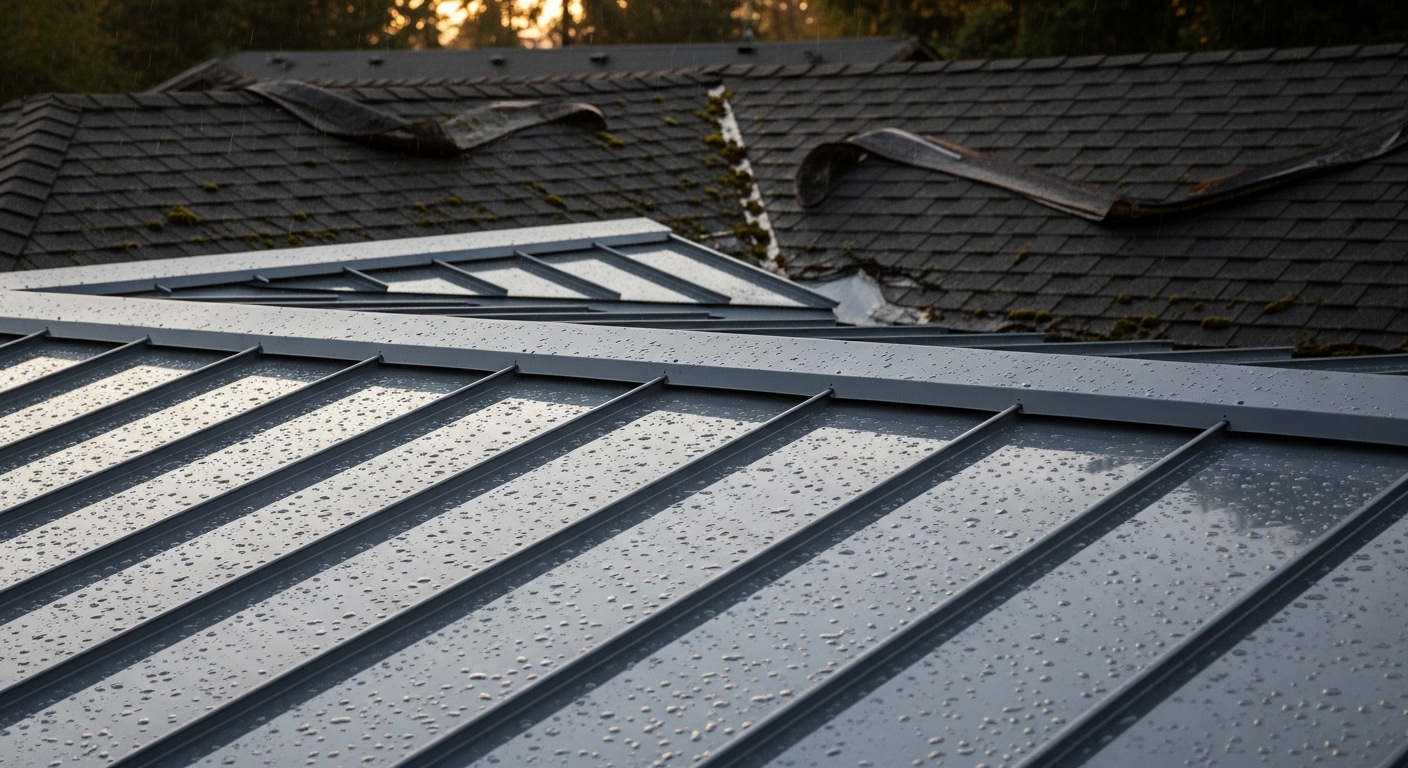
Yes, a metal roof will usually last longer than shingles, because the two age in different ways: asphalt shingles weather away as they lose the mineral granules that shield them from the sun, while a metal panel’s paint fades long before the metal underneath gives out. The catch is that a whole roof only lasts as long as its weakest part, so the flashing, fasteners and underlayment under a metal roof have to be built for the same long life. For a roof assessment, call NEMA Roofing at 866-631-3366.
Why do asphalt shingles wear out?
An asphalt shingle is a mat coated in asphalt and surfaced with mineral granules, which the Asphalt Roofing Manufacturers Association (ARMA) describes as ceramic-coated crushed rock. The granules take the sun so the asphalt does not. As years of heat, rain and wind wear them off, the exposed asphalt dries, stiffens and cracks. The Defense Department’s roofing criteria describe the same process on granule-surfaced asphalt membranes: as granules are lost, ultraviolet degradation starts to hurt performance.
ARMA’s own advice follows from that. Every roof eventually needs replacing, usually from the long-term effects of weathering, and a home roof more than 20 years old is a prime candidate for reroofing. The signs it lists are cracked, curled or missing shingles and excessive granule loss. A home-component study by the National Association of Home Builders puts asphalt shingles at about 20 years as well.
How does a metal roof age instead?
Metal has no granules to lose. What ages is the finish on top and the small parts around it. For aluminum-zinc coated steel, the U.S. Department of Defense criteria (UFC 3-110-03) state that the substrate life will exceed the paint life, and the Metal Roofing Alliance notes that a metal roof can often be repainted instead of replaced. That is the core of the difference: on a shingle roof, the weathering surface is the roof; on a metal roof, the weathering surface is a coating over a panel that keeps shedding water after the coating fades.
Part by part: which pieces set the life of each roof?
| Part | Shingle roof | Metal roof |
|---|---|---|
| Weathering surface | Granules and asphalt: the part that wears out | Paint over a coated panel: fades first, panel keeps working |
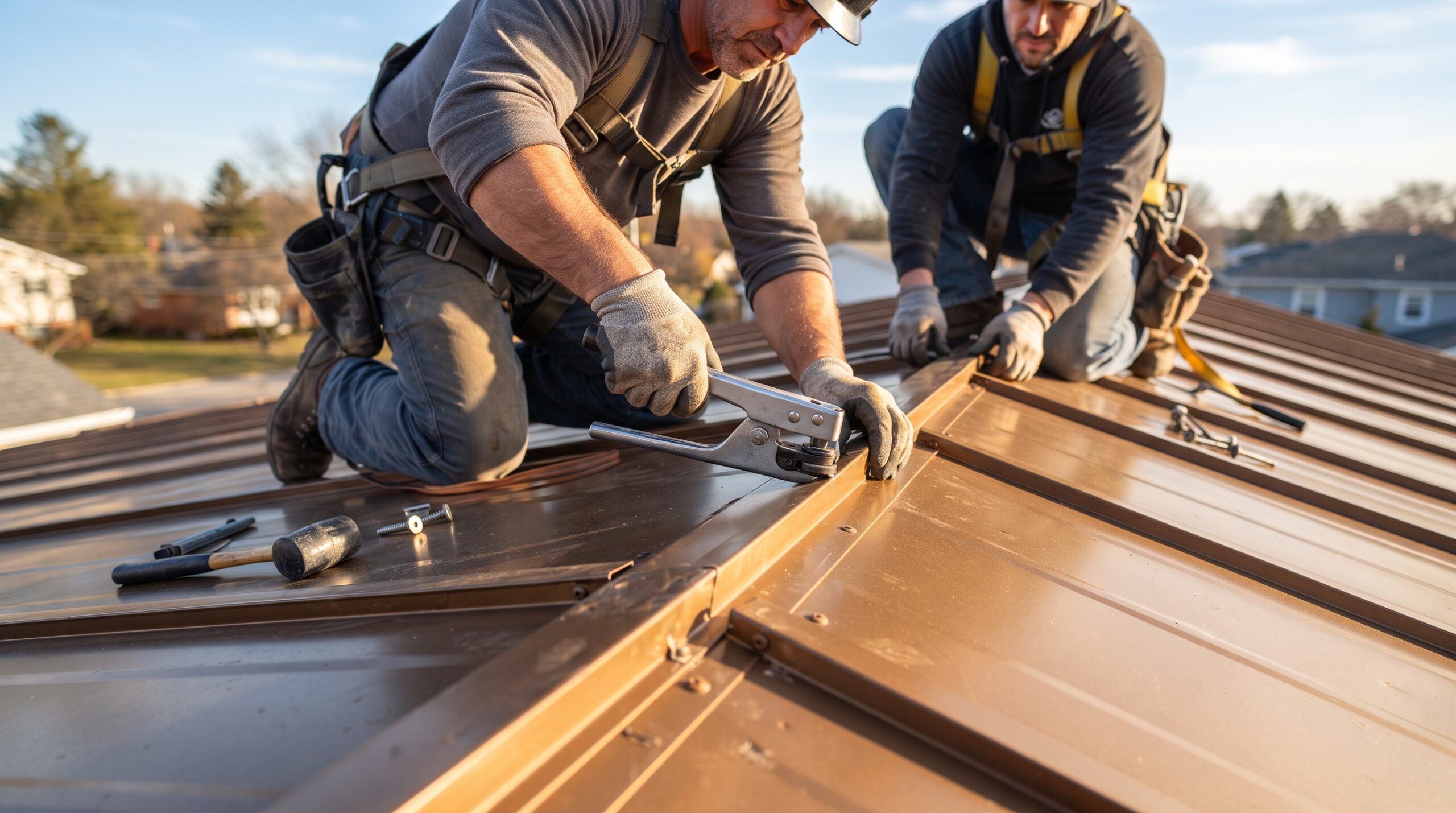
| Fasteners | Nails hidden under the shingle above | Hidden clips on standing seam; screws with rubber washers on exposed-fastener panels, which need checking as the washers age |
| Underlayment | Replaced with each new shingle roof | Has to last as long as the panels, so a high-temperature underlayment matters more |
| Pipe boots and sealants | Usually replaced at reroofing | Outlived by the panels; plan to inspect and renew them |
| Flashing and trim | Replaced or reused piece by piece at each reroof | Formed from matching metal and finish so it ages with the panels |
The pattern is clear: a metal roof moves the maintenance from the whole surface to a few small parts. Keep those parts in good order and the panels are free to reach their full life.
When does metal not outlast shingles?
- Coated steel in direct salt spray. The Defense Department criteria note it gives a shorter service life there; aluminum may be the better choice near the ocean.
- Mixed metals. Steel touching aluminum, or copper runoff onto steel, corrodes the panels.
- Panels on too low a slope. California’s building code sets minimum slopes by panel type (3 in 12 for lapped panels without sealant, 1/4 in 12 for standing seam). Lapped panels on a flatter roof let water back up at the laps.
- Neglected screws. On an exposed-fastener roof, worn washers left alone turn into leaks and wet decking.
- Poor details. Short flashings at walls and chimneys leak on any roof, metal included.
What does switching from shingles to metal involve?
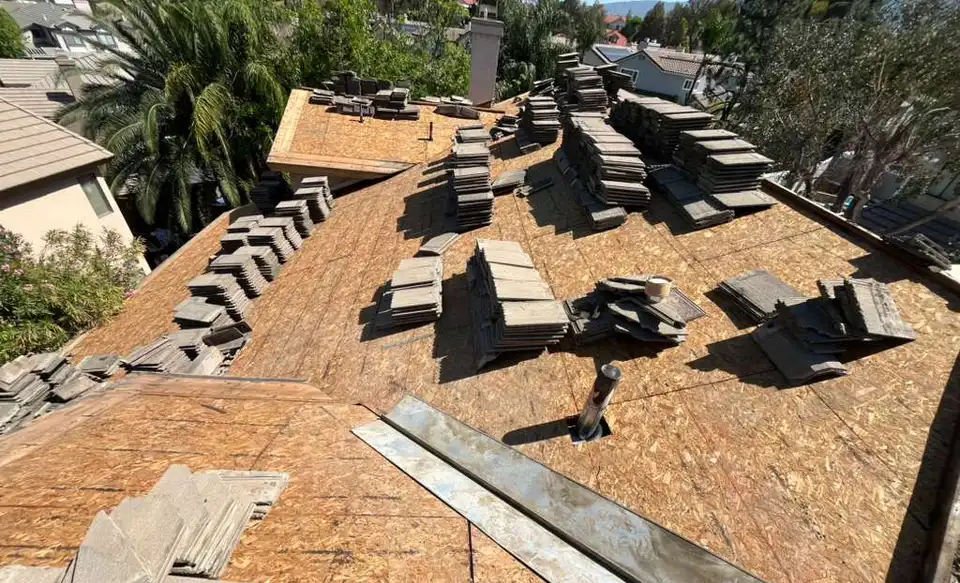
Sometimes less than people expect. Section 1512.3 of the 2025 California Building Code lets a new roof go over an old one if the new product’s instructions allow it, but never over a roof that is soaked or too far gone, and never over two or more existing layers. ARMA makes the same point about local codes and layers. So a house with one sound layer of shingles may be able to take metal over it, while a house with two layers, or soft decking, needs a full tear-off. A tear-off also lets the crew replace bad sheathing before the long-life roof goes on, a good reason to choose it even where a recover is allowed.
How to make sure a metal roof reaches its full life
- Match the metal to the site: coated steel inland, aluminum close to the ocean.
- Choose a profile allowed for your roof’s pitch.
- Ask what finish the panels carry, and read the finish warranty and the panel warranty separately.
- Ask for high-temperature underlayment and self-adhered membrane in valleys and at penetrations.
- Check that flashings and trim are made from the same metal and finish as the panels.
- Plan a yearly look at fasteners, boots, sealant and valleys.
Talk to NEMA Roofing about replacing shingles with metal
NEMA Roofing replaces shingle roofs with metal across Santa Barbara, Ventura, Los Angeles, Riverside and San Bernardino counties, working from six locations: Santa Barbara, Oxnard, Woodland Hills, Tarzana, Downey and San Bernardino. Inland customers can start with the San Bernardino County service area. For lifespan by metal type, read how long a metal roof lasts; for the job itself, see metal roofing installation: what to expect; and for the service, visit metal roofing. For a written estimate, call 866-631-3366.