
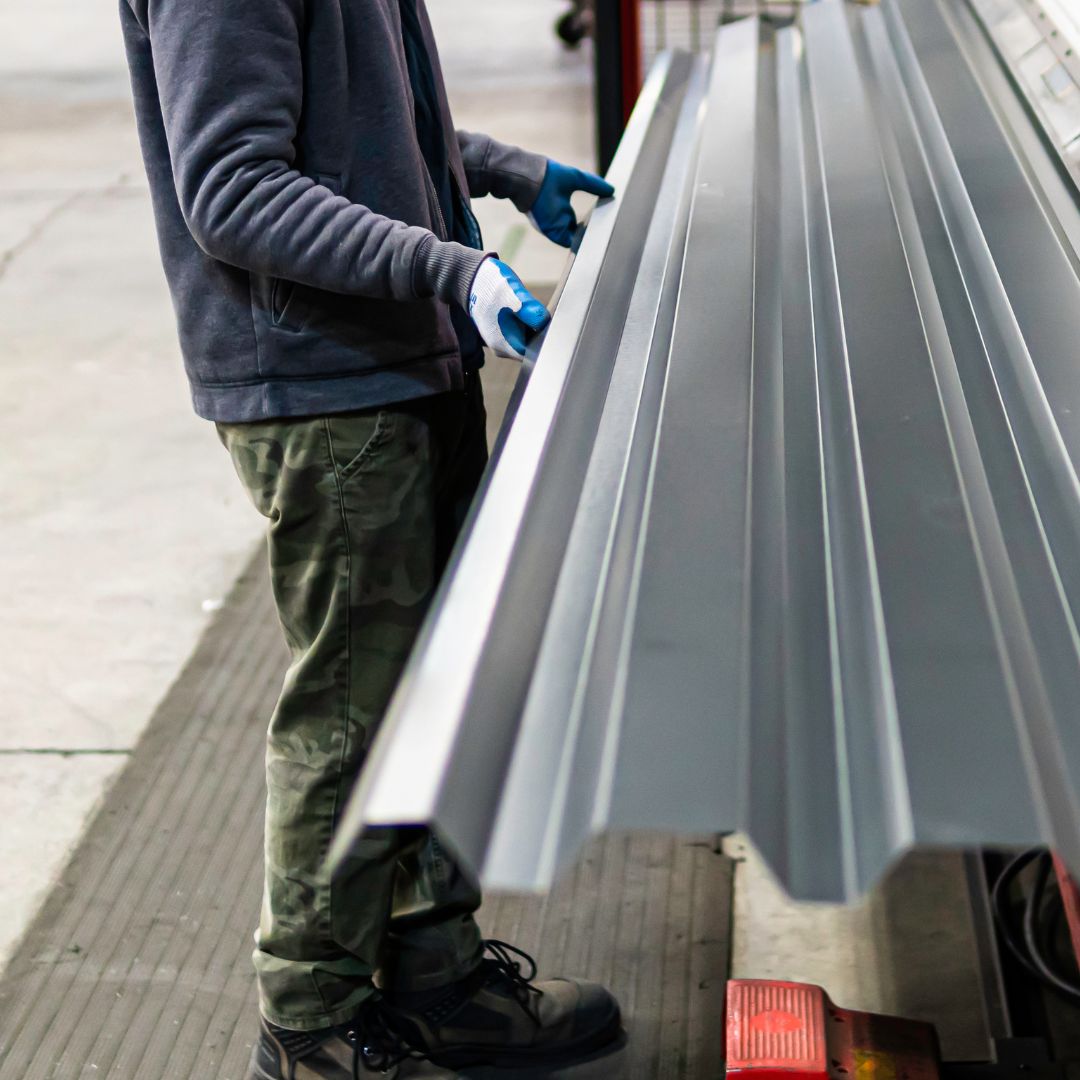
Metal roofing installation, and what to expect from it, follows a fixed order: measuring and choosing the panels, the permit, tearing off the old roof (or an allowed recover), deck repair, underlayment, edge trim, the panels themselves, flashing around every pipe and wall, then the ridge, cleanup and the final inspection. At home you will notice noise, a material drop in the driveway and a crew on the roof until the last trim piece and the cleanup are done. Questions about your roof: call NEMA Roofing at 866-631-3366.
What happens before the crew arrives?
Most of the decisions that shape the job are made before anyone climbs a ladder:
- Measurements and profile. The roof is measured plane by plane. The pitch decides which panels are allowed: California’s building code sets a minimum slope of 3 in 12 for lapped panels without sealant, 1/2 in 12 with lap sealant, and 1/4 in 12 for standing seam systems. Low-pitched sections often end up in standing seam for that reason.
- Panel lengths. Standing seam panels are usually formed to run from eave to ridge in one piece, because end laps are a weak point; the U.S. Department of Defense roofing criteria tell designers to avoid them. That is why panel lengths are ordered after the final measurements.
- Color and ratings. In many inland areas a reroof needs a finish with rated cool-roof values, and in a Very High Fire Hazard Severity Zone the assembly must be Class A. Both are settled before the order goes in.
- Permit. The contractor pulls the reroof permit from your city or county building department, which then inspects the work.
Tear-off, or can metal go over the old roof?
Sometimes it can. The 2025 California Building Code (section 1512.3) allows a new covering over an existing one when the manufacturer’s instructions permit it, and it names standing seam systems that carry their loads directly to the structure as one example. Metal panels may also go over wood shakes, with the extra protection the code requires for the hidden space this creates.
A recover is not allowed when the existing roof is water-soaked or too deteriorated to serve as a base, when it is slate, clay, cement or asbestos-cement tile, or when it already has two or more layers. A full replacement means removing every layer down to the deck (section 1512.2). Tear-off also lets the crew see and fix the deck, a common reason to choose it.
Step by step: how the metal roof goes on
- Deck check and repair. Metal panels need a solid or closely fitted deck unless the system is designed for spaced supports. Soft or delaminated sheathing is replaced now; ask for the price of deck repair as a unit rate in the estimate.
- Underlayment. A high-temperature underlayment covers the deck, with self-adhered membrane in valleys, at eaves and around penetrations, where water collects.
- Eave and rake trim. Edge metal goes on before the panels so the panels can hook or lock over it and water drips clear of the fascia.
- Panels. Standing seam panels are held by concealed clips that let each panel slide as it heats and cools, with one fixed point per panel, usually at the ridge or eave. Exposed-fastener (ribbed) panels are screwed through the face with sealing washers; the Defense Department criteria specify EPDM washers rather than neoprene for durability.
- Penetrations. Plumbing vents get rubber boots with a metal compression ring, placed in the flat of a panel rather than across a seam; larger openings such as skylights get a built curb.
- Walls, valleys, hips and ridge. Wall and chimney flashings, valley pans, closures under the ridge cap and the ridge trim finish the weathertight envelope.
- Cleanup. Metal shavings from cutting are swept off the panels before they can rust-stain the finish, and the yard and driveway are swept with a magnet for screws and nails.
What to expect at home during the job
- Noise. Tear-off and screw guns are loud, most of all while the old roof comes off.
- Space. Leave the driveway clear for panels, trim and a debris bin; move cars out of the drip line.
- Attic and walls. Tear-off can shake dust loose into the attic and rattle wall hangings; cover stored items and take down fragile pieces.
- Solar. If you already have panels, a solar contractor usually removes and resets them, so both trades need to be scheduled together.
- Pets and children. Keep them away from the work sides of the house while material is coming off the roof.
What should you receive at the end?
- The signed-off permit inspection.
- The panel manufacturer, profile, thickness and color name, so a future repair can match it.
- The manufacturer’s finish and panel warranty papers, and any registration the warranty requires.
- Photos of the deck and underlayment taken before the panels covered them.
After installation: the first year
A metal roof asks for little, but the first year is when small misses show up. After the first real rain, look for drips at skylights and walls. Keep gutters and valleys clear of leaves. On exposed-fastener roofs, check the screw washers once a year; on standing seam, look at trim and sealant at penetrations. For how profiles and metals affect lifespan, read how long a metal roof lasts.
Installation with NEMA Roofing
Our installation crews work out of five locations, in Downey, Tarzana, Woodland Hills, Oxnard and Santa Barbara, and reach every town in the five counties we serve: Los Angeles, Ventura, Santa Barbara, San Bernardino and Riverside; see the Ventura County service area and our full service areas. Compare profiles in standing seam options and ribbed metal panels, or start with our metal roofing service. To schedule measurements for a written estimate, call 866-631-3366.




