Green roofing cost in Woodland Hills comes down to six things: the covering you choose, whether the old roof is torn off or its tile lifted and reset, the state of a deck that is often original to a 1960s or 1970s house, how the reroof meets the climate zone 9 cool-roof rule, whether the address lies in a Very High Fire Hazard Severity Zone, and any flat sections. This guide gives no prices because each roof is measured and scoped on its own; the sections below show which choices move an estimate and why. For a written estimate, call NEMA Roofing at 818-528-6412.
Does a green roof cost more than a standard reroof here?
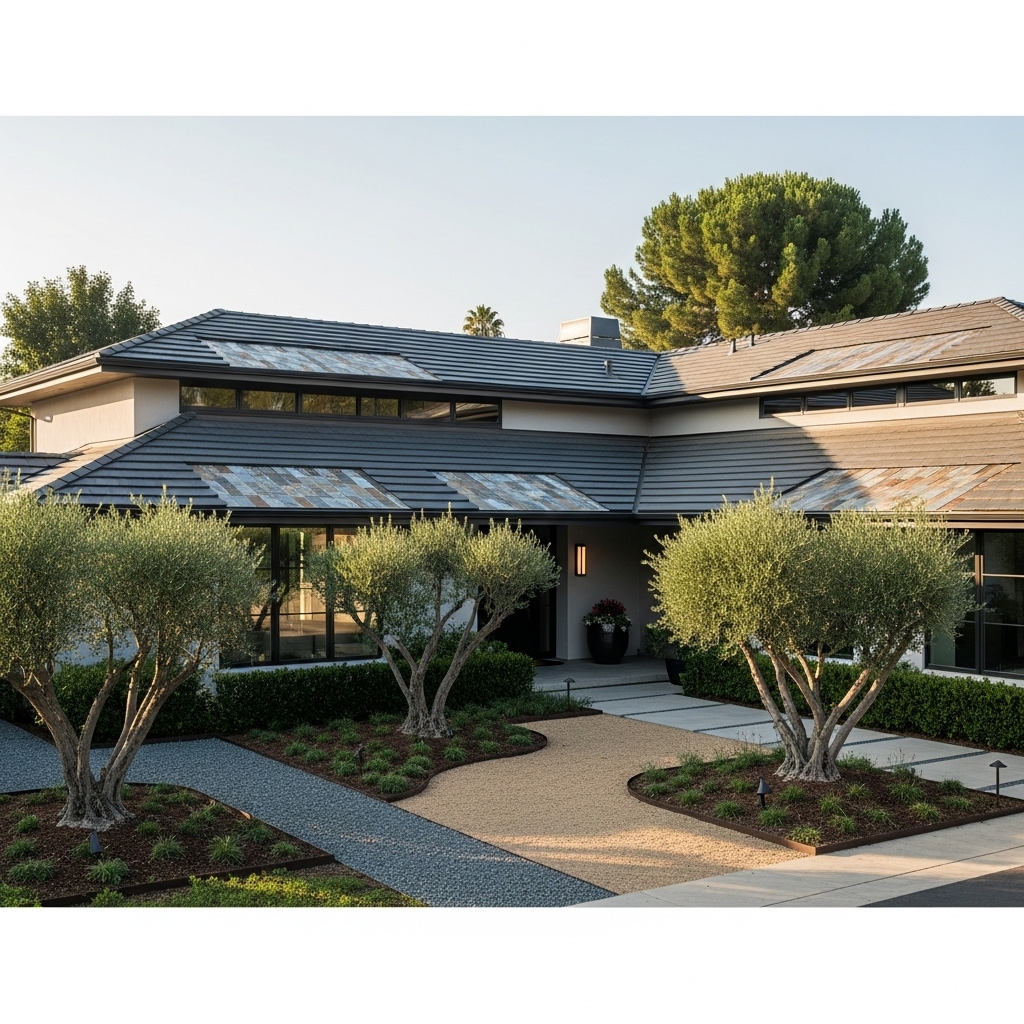
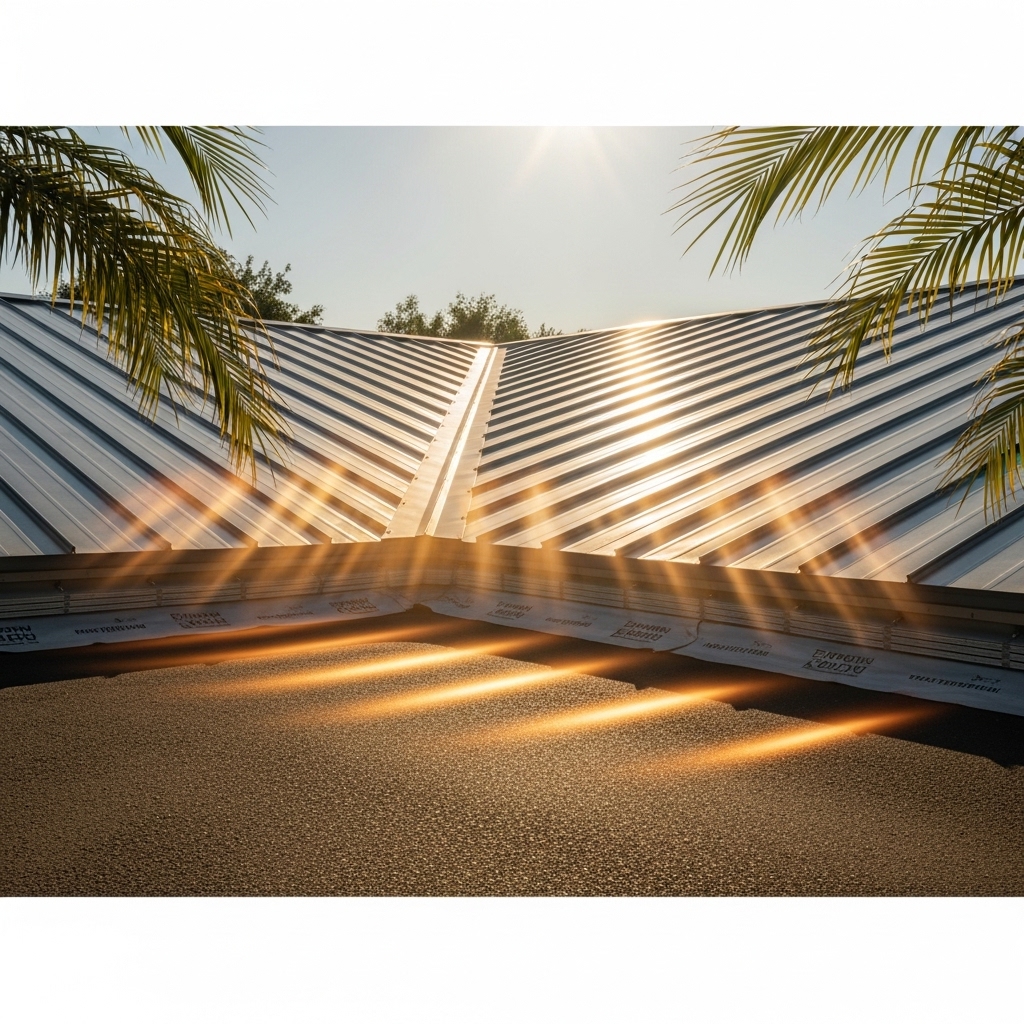
Often less extra than people expect, because in Woodland Hills the basic “green” surface is already the legal baseline. Woodland Hills is part of the City of Los Angeles, and the Department of Building and Safety (LADBS) requires a product certified by the Cool Roof Rating Council (CRRC) when more than half of a house’s roof is replaced. So a shingle or metal reroof that meets code is a cool roof by default, unless the house uses one of the exceptions described below. Cool-rated products are not limited to white: the California Energy Commission notes they come in light, dark and bright colors.
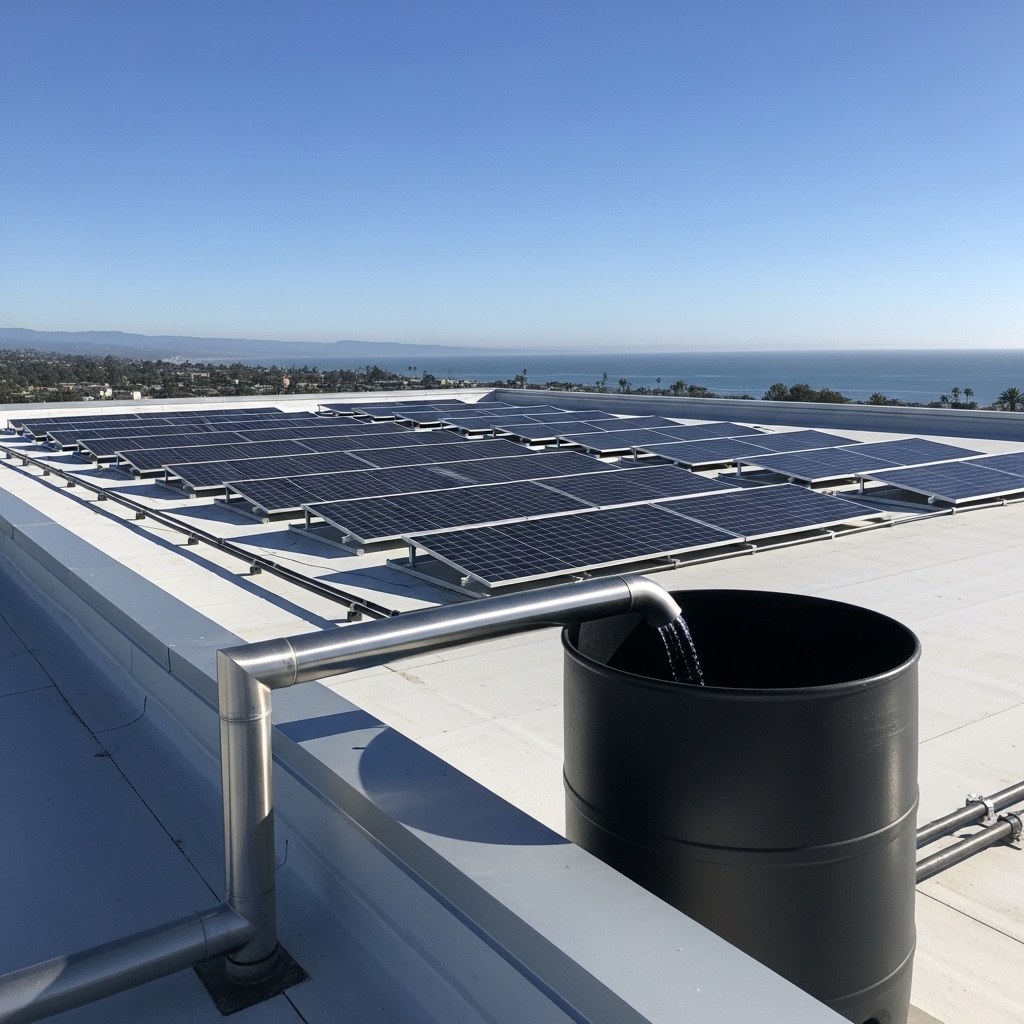
The price rises when you go past that baseline: a premium covering such as standing seam metal or new clay tile, a planted roof that needs a structural check, extra insulation, or solar preparation. It can fall when sound tile is reused, when a low-slope membrane is coated instead of removed, or when a longer-lasting covering spares you a replacement cycle.
Which choices raise or lower a green roofing estimate?
| Choice | Tends to raise the price | Tends to hold it down |
|---|---|---|
| Covering | Standing seam metal, new clay or concrete tile, a vegetated (living) roof | Cool-rated asphalt shingles or ribbed metal on a simple roof |
| Old roof | Several layers to strip, or heavy tile to haul away | Sound tile lifted, re-underlaid and reset |
| Deck | Rotted or spaced board sheathing that must be replaced or covered | Solid plywood in good shape |
| Cool-roof path | A color with high rated values, or insulation work to qualify for an exception | A rated product in a color you already like |
| Fire zone | Class A assembly with the underlayment its listing calls for | Addresses outside the mapped zones |
| Flat sections | Full tear-off of an old membrane | A rated coating over a sound membrane, where the code allows it |
| Shape and access | Many hips, valleys, skylights and a steep pitch | A plain gable with room to stage materials |
| Solar planning | Mounts, flashing and conduit paths added at reroof time | No solar planned, or panels already removed |
To get a scope that prices these choices correctly the first time, talk to our green and eco-friendly roofing team in Woodland Hills.
How do the cool-roof rules for Woodland Hills affect the price?
Both Woodland Hills ZIP codes, 91364 and 91367, fall in California climate zone 9. When more than half of a steep-slope roof is replaced there, the 2025 Title 24 energy code asks for a covering with an aged solar reflectance of 0.20 or more and a thermal emittance of 0.75 or more, or a solar reflectance index (SRI) of 16 or more. Only aged values listed in the CRRC directory count, so the estimate should name the exact product and color.
The code also offers ways out of the cool surface, and they are a real cost decision rather than a loophole:
- Ceiling insulation. An attic insulated to R-38 (or an assembly at U-0.025 or better) exempts the roof surface. Topping up thin insulation in an older attic costs money, but it lets you keep a darker color and cuts heat gain on its own.
- Radiant barrier. A radiant barrier in the attic is another qualifying option.
- No ducts in the attic. In zone 9 a house with no ducts in the attic qualifies. If your ducts run through the attic, this route is closed.
- Insulation above the deck. Continuous insulation of R-2 or more at the roof deck is a fourth route.
Only roof area covered by building-integrated solar panels (part of the roof itself) is exempt; ordinary rack-mounted panels over a finished roof do not change what the covering underneath must meet.
What a fire zone adds to the job
LADBS requires a Class A roof covering in Very High Fire Hazard Severity Zones, and in Woodland Hills the answer depends heavily on the ZIP code. A grid estimate from the state (CAL FIRE) and City of Los Angeles hazard maps puts about 55 percent of the land in ZIP code 91364 in the Very High zone, against about 2 percent in 91367. Class A comes from the whole assembly, so a covering that needs a specific underlayment or cap sheet to earn the rating carries that material in the price. Metal, tile and many shingles have Class A listings; ask for the listing that matches the installed layers. We check each address against the maps before pricing.
Why the age of a Woodland Hills house shows up in the budget
Census figures (American Community Survey 2024, 5-year) count about 31,800 homes in 91364 and 91367, and roughly 64 percent were built before 1980; the median home was built in 1967 in 91364 and in 1975 in 91367. On houses that age the hidden work often decides the total:
- Sheathing. Houses first roofed with wood shakes may have spaced boards. The California Residential Code (R905.2.1) requires asphalt shingles to be fastened to structural panels or solid lumber sheathing, so spaced boards get new sheathing over them before shingles go on.
- Attic insulation and ducts. These decide whether an exception is cheaper than a cool-rated color (see above).
- Framing for weight. Moving from a light covering to clay or concrete tile, or adding a planted roof, means checking that the framing carries the new load. The code requires the structure to support the covering and the loads of installation.
About 41 percent of the homes in these two ZIP codes are in buildings of five or more units, and many of those roofs are low-slope. For houses and for nonresidential buildings, a low-slope reroof must reach an aged solar reflectance of 0.63 and emittance of 0.75 (or an SRI of 75), with an insulation trade-off allowed; multifamily buildings follow their own section of the energy code, so ask which rule an estimate for a condominium roof is built on.
This hidden work is where many Woodland Hills homeowners rely on an experienced eco-friendly roofing contractor in Woodland Hills, because the deck and attic findings often decide the final total.
Tear off, reset or recover: the greenest option is often the cheaper one
Reusing sound material keeps it out of the waste stream and usually trims labor and disposal. Three routes, and when each applies:
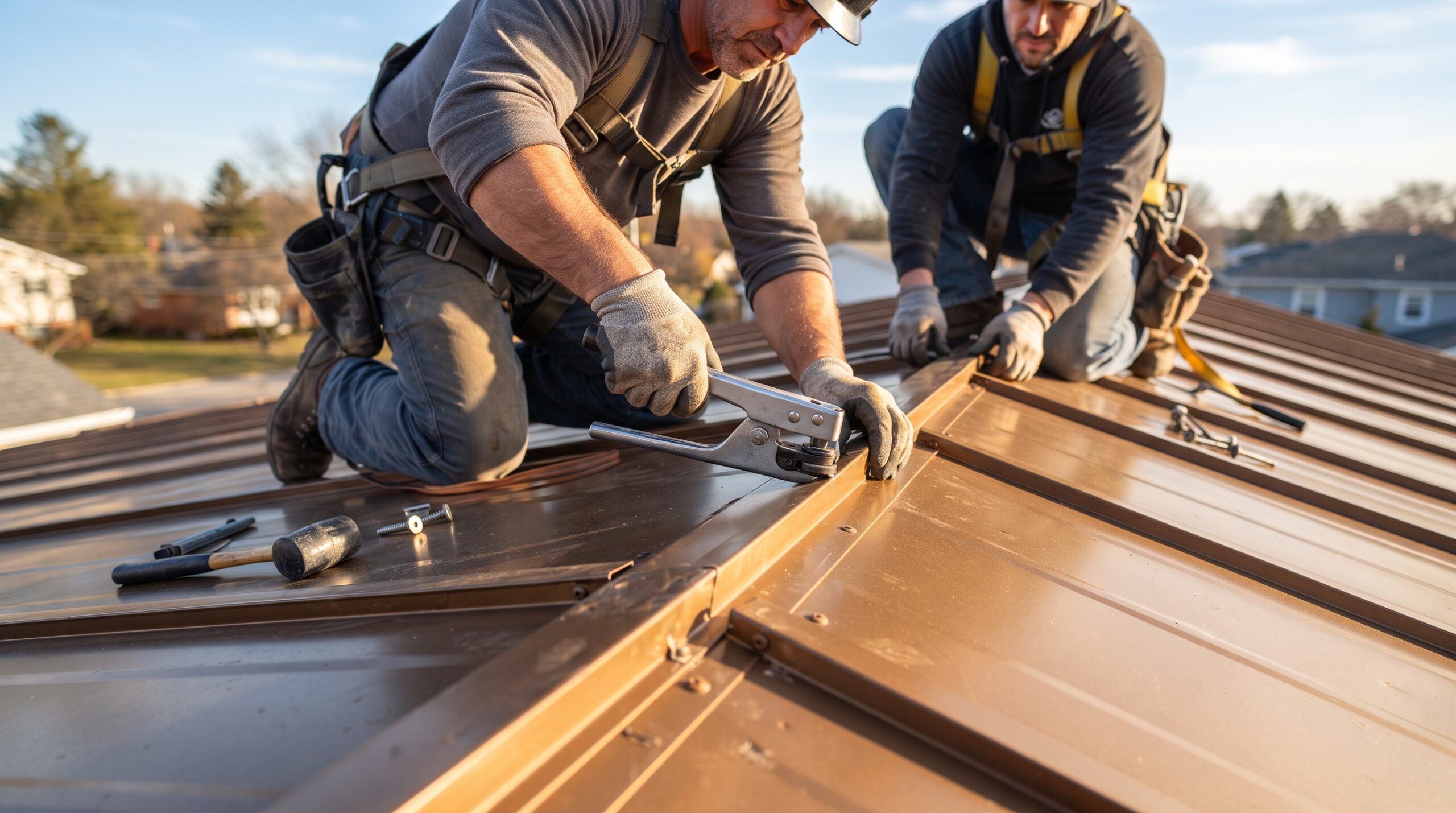
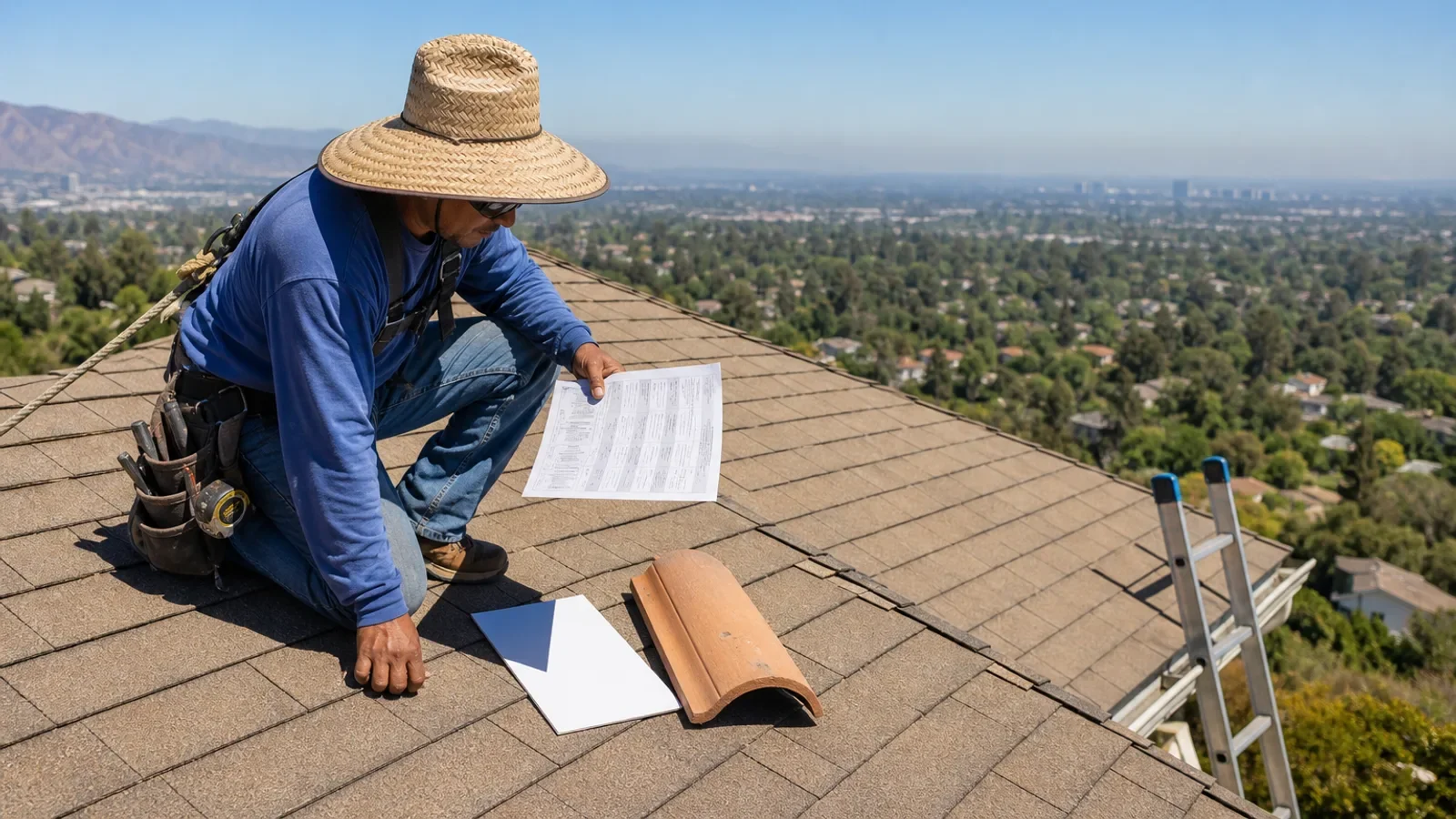
- Reset the tile. The code allows existing clay or concrete tile to be reinstalled, as long as cracked or broken pieces are replaced and rusted or damaged flashings are renewed. In the City of Los Angeles, lifting the tiles, laying new underlayment and putting the same tiles back is an Express Permit item, and that scope does not trigger the cool-roof requirement.
- Recover a low-slope roof. A new protective coating over an existing single-ply, modified bitumen or built-up roof is allowed without tear-off, if the roof below is dry and sound.
- Tear off. A new covering cannot go over an existing tile roof, over a water-soaked or deteriorated one, or over two or more existing layers. Tear-off is the only route then, and disposal becomes a line item; ask where the old material goes.
LADBS issues a reroof with a Class A or B covering under 6 pounds per square foot over solid sheathing as an Express Permit, with no plan check. A heavier covering, or one going onto anything other than solid sheathing, does not fit that Express Permit category, so ask which permit route your estimate assumes.
How to compare green roofing estimates in Woodland Hills
- The covering is named by product and color, with its CRRC aged values, or the estimate says which code exception it relies on and prices that work (insulation, radiant barrier).
- If your address is in a Very High zone, the Class A listing matches the underlayment and deck being installed.
- Tear-off, reset or recover is stated, with what happens to the removed material.
- Replacement sheathing is priced per sheet or per square foot, so hidden deck damage does not become an open-ended change.
- Flat sections are priced separately, with the low-slope values they must meet.
- The permit route (Express Permit or plan check) and who pulls it are written down, and the contractor’s CSLB license is current. NEMA Roofing holds CSLB license #1083283.
Getting a written estimate
A reliable number starts with measuring the roof, looking at the deck from the attic, and checking the address against the fire and climate maps. To see how the covering choices compare, read our eco-friendly roofing guide for Woodland Hills homes and how heat reflectance differs between Woodland Hills roofs; if metal is on your list, see what drives steel roofing cost in Woodland Hills.
Ready for the next step? See how our green roofing services in Woodland Hills work and reach out to the team.
Woodland Hills is one of five Google-verified NEMA Roofing locations; the others are Tarzana, Downey, Oxnard and Santa Barbara, and crews from them price and build green roofs throughout Los Angeles, Ventura, Santa Barbara, Riverside and San Bernardino counties (see the Woodland Hills roofing page and all service areas). Call 818-528-6412 to book the measurement and get the estimate in writing.