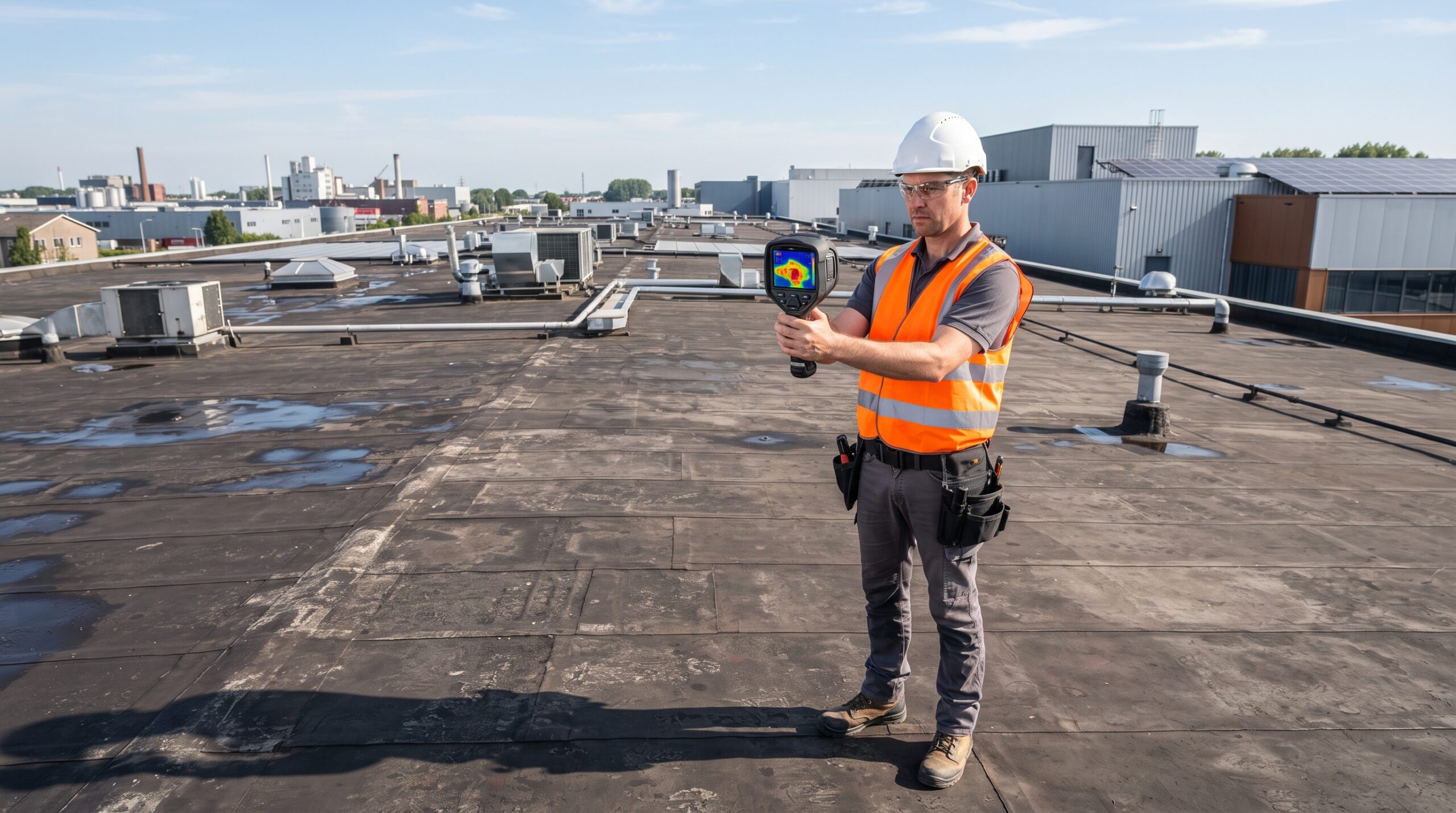
Cool roof maintenance in Woodland Hills is a short seasonal routine: scan the roof from the ground, clear drains and gutters, clean the reflective surface gently, check flashings, seams and penetrations, look in the attic, judge the coating or membrane, and log what you find, with a full round in late spring before peak heat and another after the summer. The eight steps below walk through each check and when to hand it to a professional. For a cool roof inspection, call NEMA Roofing at 818-528-6412.
A reflective roof that goes unchecked quietly loses its edge. Dirt accumulation, minor membrane lifts, and clogged drainage can cut a cool roof’s solar reflectance significantly before a homeowner ever notices a change in the energy bill. In Woodland Hills, where summer temperatures regularly push past 100°F and the Santa Ana winds deposit a fine layer of dust and debris across every rooftop, that degradation happens faster than it does in milder climates. The good news is that a structured maintenance routine keeps your roof performing close to its original specification year after year, without waiting for a problem to announce itself.
This guide walks you through exactly how to maintain a cool roof in Woodland Hills from late spring through the end of summer. If you are still weighing which reflective system to install, see our complete eco-friendly roofing guide for a full material comparison first.
Before You Start: What You Will Need
- Soft-bristle roof brush or low-pressure garden hose (for surface cleaning)
- Non-abrasive, pH-neutral roof cleaning solution (check compatibility with your membrane type)
- Rubber-soled, flat shoes with no heel (to avoid puncturing single-ply membranes)
- Binoculars (for a safe ground-level visual scan before any roof access)
- Flashlight or headlamp (for attic inspection)
- Caulk gun and compatible sealant (for minor flashing touch-ups only)
- Camera or smartphone (to document findings)
- Ladder in good condition, secured at the base
- A helper on the ground when using a ladder
Safety note: If your roof pitch is steep, if you are not comfortable at height, or if you spot structural damage during your ground-level scan, stop and call a licensed roofing professional. The steps below assume a low-slope or flat cool roof typical of Woodland Hills tract homes and custom builds. Never walk a cool roof membrane in hard-soled shoes, and never attempt repairs on electrical components near rooftop HVAC units.
Step 1: Do a Ground-Level Visual Scan Before Climbing
Stand back from the house at several angles and use binoculars to look across the entire roof surface. You are checking for obvious pooling areas (low spots where water sits after rain), visible membrane bubbles or blisters, lifted or missing flashing around vents and the chimney, and any debris piles left by wind. In Woodland Hills, eucalyptus leaves and dry brush accumulate in valleys and at parapet walls after any significant wind event. Note everything you see before setting foot on the roof, because a systematic ground scan often catches issues that are easy to miss once you are focused on a specific area overhead. Photograph anything that looks unusual so you have a baseline record for future inspections.
Step 2: Clear Debris from Drains, Gutters, and Scuppers
Blocked drainage is the single most common cause of premature cool roof failure in the San Fernando Valley. Standing water accelerates membrane degradation, adds structural load, and can force moisture under flashing seams. Start at every roof drain and scupper opening: remove debris by hand, then flush with a garden hose to confirm water flows freely. Move to gutters and downspouts, clearing any compacted leaf matter. On flat or low-slope roofs, check that the slope toward each drain is unobstructed. If you notice a drain area that consistently collects debris, that is worth mentioning to a roofing professional during your next scheduled inspection, because the drain may need repositioning or a larger debris guard. For more on how Woodland Hills building styles affect drainage design, see what drives roof project costs locally.
Step 3: Clean the Reflective Surface
A dirty cool roof is a less effective cool roof. Airborne particulates, bird droppings, and the fine clay-dust that blows in from the Simi Hills coat the surface and reduce solar reflectance. The cleaning method depends on your roofing material:
- Elastomeric or acrylic coatings: Use a soft brush and a diluted, pH-neutral cleaner. Rinse thoroughly. Avoid pressure washing above roughly 1,200 PSI, which can erode the coating layer.
- TPO or PVC single-ply membrane: A low-pressure rinse is usually sufficient. For stubborn stains, use a cleaner specified by the membrane manufacturer.
- Cool-rated asphalt shingles with reflective granules: A gentle rinse from the top down is appropriate. Avoid stiff brushes that dislodge granules.
- Metal roofing with reflective finish: Rinse and spot-clean with a non-abrasive cloth. Check for any rust at fastener points while you are up there.
Clean in the early morning or on a mild day. Cleaning a hot membrane in direct afternoon sun can cause cleaning solutions to dry too quickly and leave residue that is harder to remove than the original dirt.
Step 4: Inspect Flashings, Seams, and Penetrations
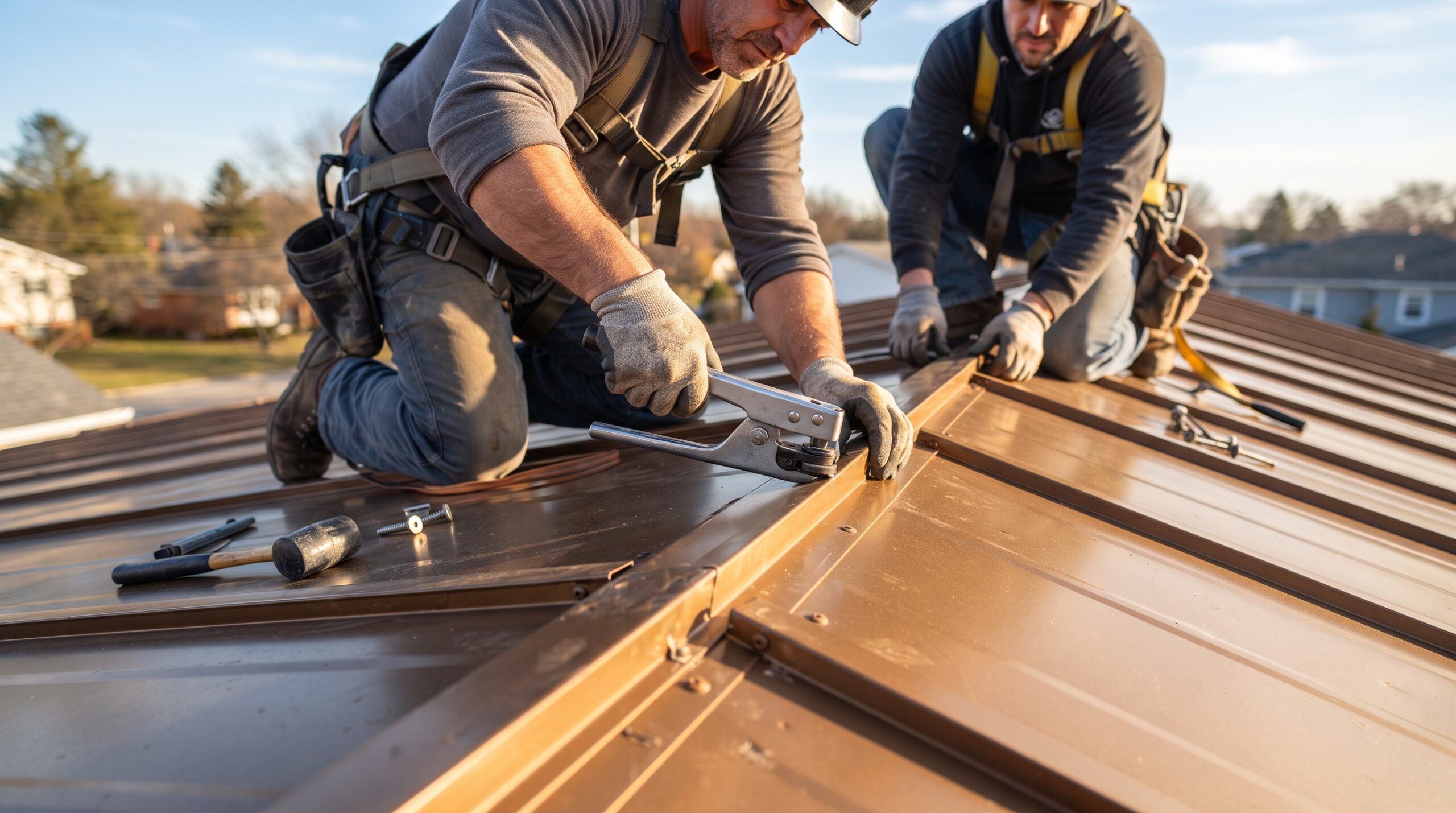
Flashings are the thin metal or membrane strips that seal the roof at every transition: around vents, skylights, HVAC curbs, chimneys, and parapet walls. They are also the most common entry point for water when a cool roof develops a leak. Walk the perimeter and each penetration carefully, looking for:
- Lifted or separated flashing edges
- Cracked or dried-out sealant at seams
- Rust staining on metal flashings (indicates moisture is getting behind the surface)
- Membrane seams that are lifting or show bubbling along their edge
- Any area where the roof surface meets a vertical wall, because these transitions take the most thermal expansion stress in Woodland Hills summers
If a flashing or seam needs more than a touch-up, have it fixed right the first time by a professional cool and green roofing crew in Woodland Hills.
Minor sealant gaps at non-structural joints can be touched up with a compatible caulk if you are comfortable doing so. Anything involving a lifted membrane seam, a cracked flashing, or a penetration that shows active moisture staining should be handled by a professional. Improper flashing repairs can void manufacturer warranties on single-ply systems.
Step 5: Check the Attic for Heat and Moisture Signals
Cool roof performance is only half the equation. An under-ventilated attic traps heat even when the roof surface is reflecting it efficiently, which means your HVAC system still works overtime. On a hot afternoon, open the attic hatch and note the temperature. A well-ventilated Woodland Hills attic should feel warm but not stifling. If it feels like an oven, ventilation is the likely culprit. Also look for:
- Daylight showing through the roof deck (indicates gaps or damage)
- Water stains or dark discoloration on the underside of the sheathing
- Compressed or wet insulation (a sign of past or active moisture intrusion)
- Blocked soffit vents (often covered by insulation that has shifted)
Attic ventilation and cool roof reflectance work together. If your attic check raises concerns, that is worth including in any conversation with a roofing contractor. Our heat reflectance roofing overview for Woodland Hills explains how reflectance ratings and attic airflow interact in the local climate.
Step 6: Evaluate Coating or Membrane Condition
Reflective coatings and single-ply membranes have a finite service life, and catching degradation early is far less disruptive than waiting for a failure. Signs that a coating is nearing the end of its effective life include:
- Chalking or powdering when you run a gloved hand across the surface
- Visible cracking or alligatoring (a pattern of surface cracks resembling reptile skin)
- Areas where the coating has thinned and the substrate color shows through
- Loss of the bright-white or reflective sheen, replaced by a dull gray tone even after cleaning
For single-ply membranes, look for shrinkage at the edges, punctures, and any area where the membrane has separated from the substrate beneath it (you can often feel a soft, spongy spot underfoot). Documenting these observations with photos gives a roofing professional useful context when they conduct a formal inspection. You can also cross-reference what you find against the material types covered in our eco-friendly roofing guide to understand typical lifespans for your specific system.
Step 7: Test and Clear Rooftop HVAC and Equipment Areas
Woodland Hills homes with rooftop HVAC units have an additional maintenance consideration: the area around the equipment. Condensate lines can drip and create persistent wet zones that accelerate membrane wear. HVAC curb flashings are a common leak point. During your inspection:
- Clear any debris that has accumulated against the unit base
- Check that condensate drains are flowing and not backing up onto the membrane
- Look at the curb flashing on all four sides of the unit for separation or rust
- Confirm that any refrigerant lines passing through the roof have intact penetration boots
Do not attempt to service the HVAC unit itself or any refrigerant lines. If you spot a flashing problem at the curb, that is roofing work, not HVAC work, and a roofing contractor should address it.
Step 8: Document Everything and Set a Maintenance Schedule
A single inspection without a record is useful. A documented inspection history is invaluable, especially if a warranty claim ever arises. After each maintenance visit, note the date, what you cleaned, what you observed, and any repairs made or scheduled. Photograph the same reference points each time so changes are easy to spot year over year.
Many Woodland Hills homeowners hand this record-keeping to an experienced green roofing contractor in Woodland Hills, who adds it to a written inspection report.
For Woodland Hills cool roofs, a practical maintenance calendar looks like this:
- Late April or early May: Full inspection and cleaning before peak heat season
- After any significant wind event: Quick debris clear and visual scan
- October or November: Post-summer inspection before winter rains, checking for any heat-season damage
- Every 3 to 5 years (coating systems): Professional assessment of coating thickness and reflectance, with recoating if warranted
When to Call a Professional in Woodland Hills
Some findings are clear signals to stop DIY maintenance and bring in a licensed roofing contractor. In Woodland Hills specifically, the combination of intense UV exposure, thermal cycling, and occasional high-wind events from the Santa Ana season means that issues which might stay minor in a cooler climate can escalate quickly here. Call a professional when you find:
- Any active leak or water staining inside the home that traces to the roof
- Lifted or separated membrane seams longer than a few inches
- Cracked or missing flashing at any penetration or parapet
- Soft or spongy spots on a flat roof membrane (indicating trapped moisture beneath)
- Widespread coating alligatoring covering more than a small area
- Structural concerns: sagging, visible deck damage, or any sign the roof deck has been compromised
- Any situation where you do not feel safe accessing the roof
NEMA Roofing Repair offers professional cool roof inspections and maintenance in Woodland Hills that cover everything in this checklist and more, with a detailed written report you can keep for your records. Scheduling a professional inspection every few years alongside your own seasonal checks gives you the most complete picture of your roof’s condition.
Frequently Asked Questions
How often should I clean my cool roof in Woodland Hills?
Once a year is the minimum for most Woodland Hills homes, ideally in late spring before temperatures peak. Homes near open land, hillsides, or areas with heavy tree cover may benefit from a second cleaning in the fall after the dry season’s wind events have deposited debris. Regular cleaning helps the reflective surface maintain its rated solar reflectance rather than gradually losing efficiency under a layer of dust and organic material.
Can I walk on my cool roof membrane without damaging it?
Single-ply membranes like TPO and PVC can be walked on carefully in rubber-soled, flat shoes, but they are more vulnerable to puncture than a traditional shingle surface. Avoid dragging tools across the membrane, kneeling on sharp edges, or walking on areas that feel soft or unsupported beneath your feet. If you are uncertain about your roof type or its walkability, contact a roofing professional before accessing the surface.
My cool roof looks gray and dull even after cleaning. Is that normal?
Some dulling over time is normal as UV exposure gradually weathers a reflective coating. However, if the surface looks consistently gray rather than bright white (for elastomeric systems) or has lost its metallic sheen (for metal roofing), that can indicate the coating has thinned past its effective reflectance range. A professional can measure reflectance and advise whether a recoat is warranted. Catching this early typically means a recoat rather than a full replacement.
Does cool roof maintenance affect my warranty?
Most manufacturer warranties for single-ply membranes and reflective coatings require periodic maintenance and professional inspections to remain valid. Keeping a documented maintenance log, using only manufacturer-approved cleaning products, and having a licensed contractor perform any repairs are the key steps to protecting your warranty coverage. Requirements vary by manufacturer, so review your specific warranty documentation or ask your roofing contractor to clarify what is required.
What is the difference between a cool roof inspection and a regular roof inspection?
A standard roof inspection checks for structural integrity, leaks, and flashing condition. A cool roof inspection adds an assessment of reflectance performance, coating thickness (for elastomeric systems), membrane seam integrity, and the condition of any reflective granules or finishes. Both types are valuable, and a contractor experienced with reflective roofing systems will incorporate both into a single visit.
Keeping Your Investment Working in Woodland Hills’ Climate
A cool roof is one of the more practical investments a Woodland Hills homeowner can make given the climate here, but it performs best when it is maintained rather than simply installed and forgotten. The steps in this guide are manageable for most homeowners on a seasonal basis, and they create the kind of documented history that makes professional inspections more efficient and warranty claims more straightforward.
If you are considering upgrading to a more efficient reflective system, the sustainable roofing material comparison breaks down the options available in the local market. And when you are ready to talk through what your specific roof needs, our team at NEMA Roofing Repair is available to schedule an inspection and walk you through the findings in plain language.
NEMA Roofing runs cool roof inspections from five Google-verified locations, with Woodland Hills alongside Tarzana, Downey, Oxnard and Santa Barbara, and covers homes in all of Los Angeles, Ventura, Santa Barbara, Riverside and San Bernardino counties; see the Woodland Hills roofing page or all service areas. To book a professional check to go with your own seasonal routine, call 818-528-6412.