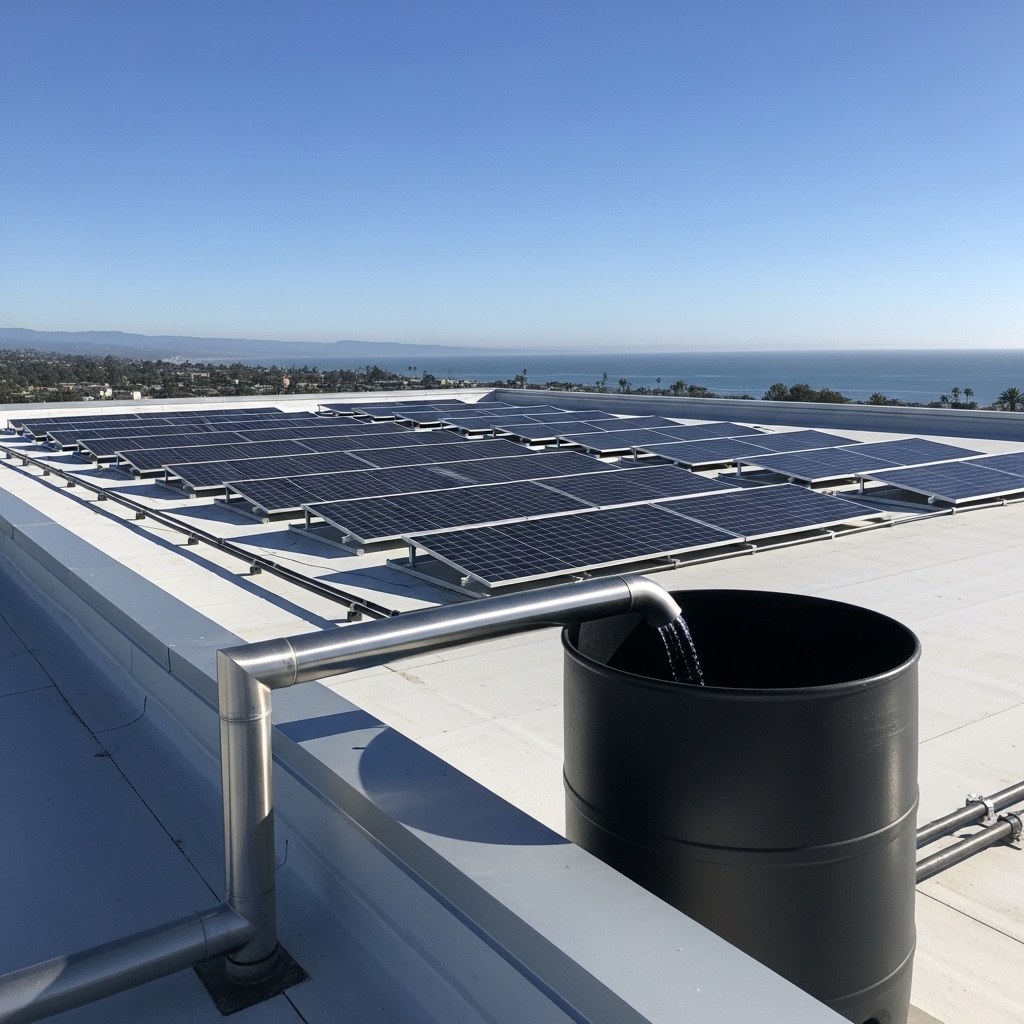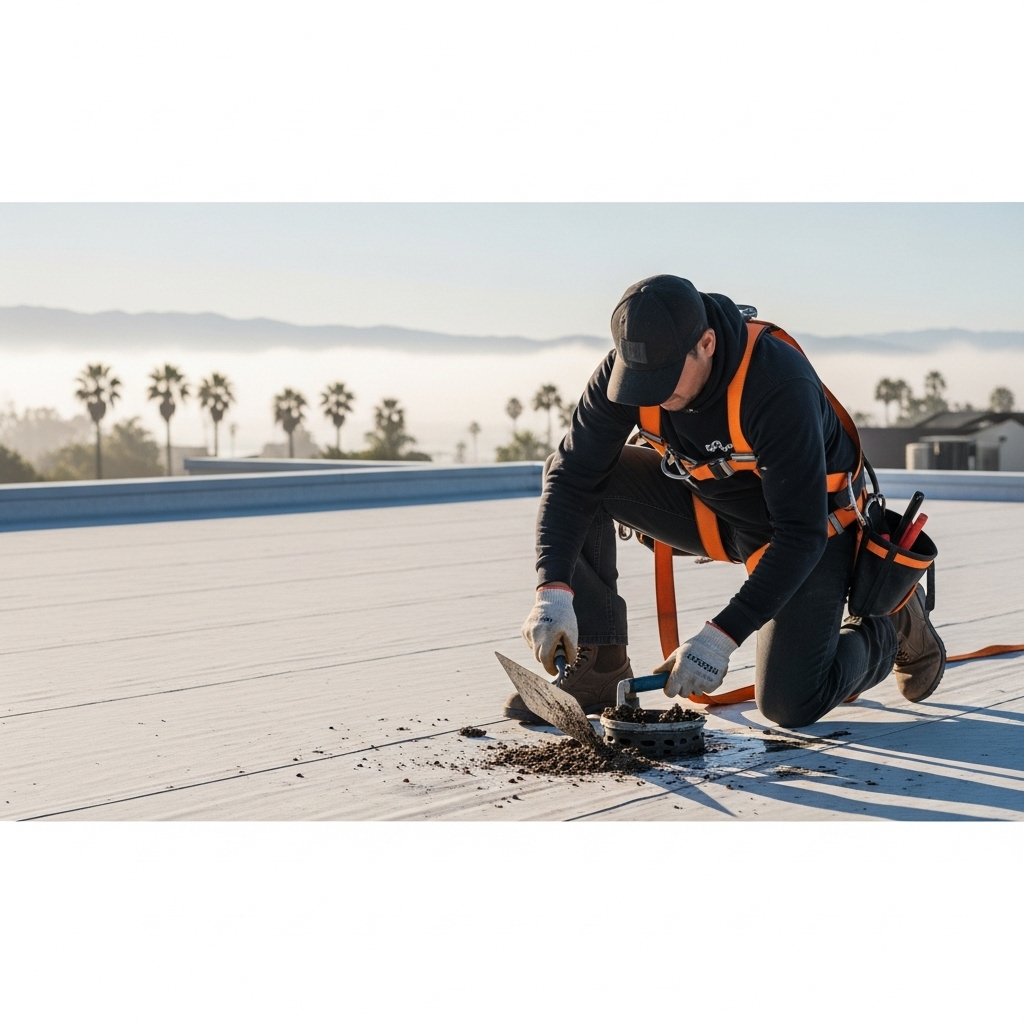
Commercial roof maintenance in Santa Barbara works best as a yearly routine: a professional inspection in the fall before the rains, a second one in spring after them, a check after any major storm or Sundowner wind event, and building staff keeping drains clear and rooftop traffic controlled in between. Most leaks on a low-slope roof start at flashings and blocked drains rather than in the open membrane, so that is where the routine spends its time. To set up a maintenance visit, call NEMA Roofing at 805-977-5949.
A maintenance calendar built on Santa Barbara’s rain season
NOAA’s 1991-2020 normals for the Santa Barbara station show roughly 3 to 4.4 inches of rain in each month from December through March and almost none from June through September. That split sets the calendar: the dry months are for finding and fixing, the wet months are for watching.
| When | Why then | What gets done |
|---|---|---|
| September to November | Last dry weeks before the first real rain | Full inspection, drains and scuppers cleared, seams and flashings repaired, low spots flagged |
| December to March | Most of the year’s rain falls now | Walk the roof after heavy storms, clear debris from drains, note any interior stains the same day |
| April to May | The wet season is over and the damage is visible | Second full inspection: storm damage, split seams, wet insulation, sealant that has pulled away |
| June to August | Dry, warm, stable weather | Planned repairs, coating work that needs mild weather to cure, rooftop equipment projects |
Twice a year is not a local invention: the U.S. Department of Defense roofing criteria (UFC 3-110-03) note that the National Roofing Contractors Association recommends inspecting roofs at least twice a year and after significant storms such as high winds or heavy rain.
What building staff can handle between visits
- Drains, scuppers and gutters. Remove leaves, palm fronds and sand by hand, never with a tool that can cut the membrane, and make sure every drain strainer is in place.
- Standing water. Water still sitting on the roof two days after rain stops is what the federal criteria define as ponding. Photograph the spot and report it; it usually needs tapered insulation, a cricket or a drain correction, not more sealant.
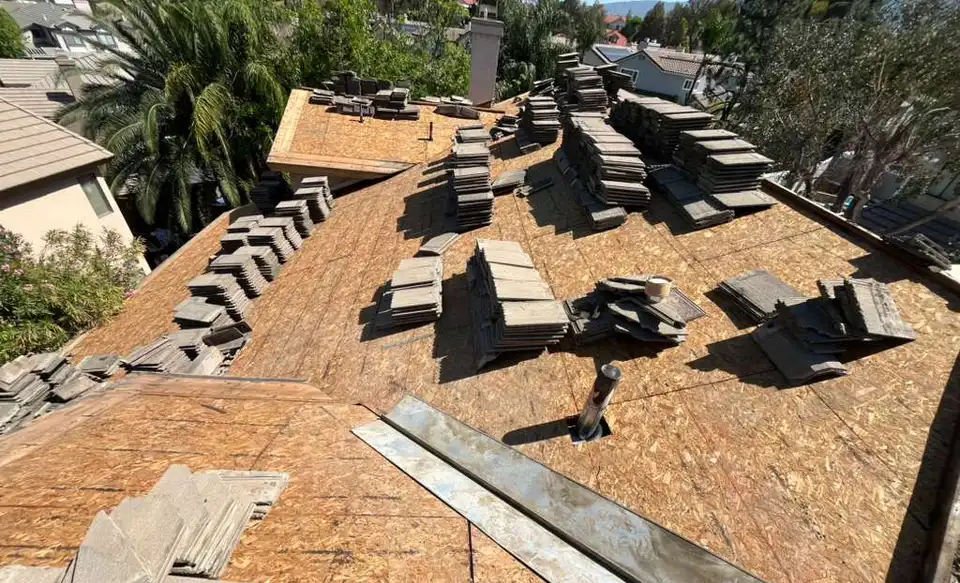
- Debris and loose items. Screws, panel clips and cut-offs left behind by other trades puncture membranes when someone steps on them.
- Interior signs. A new ceiling stain, a musty smell in a top-floor room or a drip near a skylight goes on the log with the date and the weather.
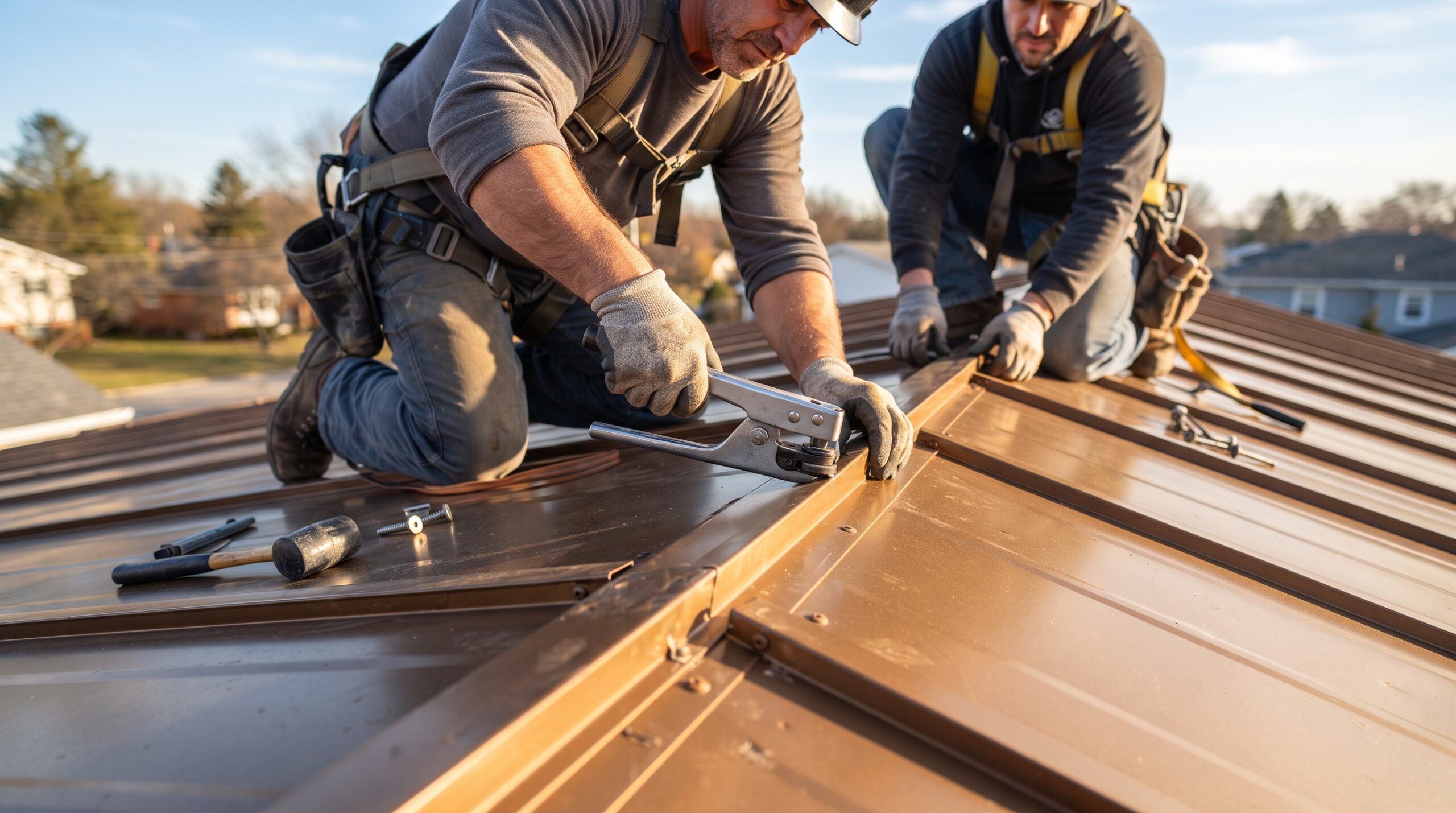
Anything past observation and cleaning (seam welding, edge metal, flashing work, anything cut open) belongs to a roofer. That keeps workers safe and keeps membrane warranties valid.
What the roofer checks on each inspection
The federal criteria say to pay special attention to flashings because most leaks start there. A thorough visit covers:
- Base and counter flashings at parapets, walls, curbs, skylights and drains.
- Seams, laps, inside and outside corners, where sun and movement open small splits first.
- Perimeter edge metal and its fasteners, the first thing a strong downslope wind pulls on.
- Pipe boots, pitch pans and conduit supports, including sealant that has cracked or shrunk.
- Exposed metal: equipment rails, parapet caps and fasteners, where salt air starts rust that is cheap to clean and recoat early and costly to replace later.
- Places where two different metals touch (copper against galvanized steel, for example), which need an isolator to stop corrosion.
- The field of the roof for surface wear, blisters, chalking and soft or wet areas.
Our guide to commercial roof inspections in Santa Barbara walks through the visit and the report step by step.
Why the wind season deserves its own check
Sundowners are downslope windstorms off the Santa Ynez Mountains; researchers at the National Center for Atmospheric Research describe them as one of the most significant fire weather hazards for populated areas in Santa Barbara County, with gusts that peak from early evening to mid-morning. On a flat roof, that wind works on the edges and corners. After a wind event, check for lifted edge metal, loose coping, displaced walk pads and debris pushed into drains, and have lifted sections refastened before the next rain.
Rooftop traffic: HVAC, solar and other trades
We see many preventable leaks start at a single clogged drain or a curb flashing cracked by foot traffic. A few habits prevent most of them:
- Walk pads along the routes to each equipment cluster, so technicians stay off unprotected membrane.
- A short roof orientation for regular vendors: where the drains are, which areas are fragile, and who to call if something looks wrong.
- Protection mats under kitchen exhaust fans, where grease and cleaning chemicals soften some membranes.
- A roofing check after every mechanical or solar service, looking for new penetrations, dropped hardware and scuffed seams.
- Wire management under solar arrays, since loose wires can abrade the membrane as they move.
Keep a roof log, and read your warranty
Record each visit: date, weather, areas checked, work done, and photos of drains before and after cleaning and of every repair. Over a few seasons the log shows patterns, such as a drain that clogs every fall or a wet patch that returns at the same parapet. It also matters for coverage: roofs under a warranty must be inspected as the warranty terms require, and the warranty holder should be contacted before repairs. The log is the proof that you did.
When maintenance turns into a recoat or a new roof
If a section keeps leaking after repeated repairs, the federal criteria advise scheduling it for replacement rather than patching it again. Two rules then come into play:
- Cool roof. Under California’s 2025 Energy Code (Title 24, Part 6, section 141.0(b)2B, in effect since January 1, 2026), replacing, recovering or recoating more than half of a low-slope nonresidential roof, or more than 2,000 square feet of it, whichever is less, means the new surface must be a rated cool product: 0.63 or better aged solar reflectance paired with 0.75 or better thermal emittance, or a solar reflectance index of 75 or more. Extra insulation can offset a lower reflectance, and a few exceptions apply. Santa Barbara’s ZIP codes are in climate zone 6, but this rule applies in every zone.
- Permits. Addresses inside city limits go through the City of Santa Barbara’s Building and Safety Division. In unincorporated areas, the County of Santa Barbara lists roof repairs under 100 square feet in 12 months and approved roof coatings among the work that does not need a building permit; larger work does.
For a wider look at what goes wrong on local roofs, read common commercial roofing problems in Santa Barbara, and for a component-by-component list, our commercial roof preventative maintenance checklist.
Setting up a maintenance plan with NEMA Roofing
NEMA Roofing maintains commercial roofs throughout Santa Barbara, Ventura, Los Angeles, Riverside and San Bernardino counties, with six locations (Santa Barbara, Oxnard, Woodland Hills, Tarzana, Downey and San Bernardino) so a crew is close to every building we look after; see all the areas we serve. Learn more about our commercial roofing services and roof maintenance programs, or call 805-977-5949 to schedule the fall inspection before the rain arrives.