A commercial roof preventative maintenance checklist covers five areas on a fixed schedule: drainage, the membrane and its seams, flashings and edges, rooftop equipment, and the building interior under the roof. A roofer works through the full list at least twice a year and after major storms; building staff handle the quick monthly items in between. The checklist below shows each task, how often it is due and who should do it. To book a maintenance inspection, call NEMA Roofing at 866-631-3366.
The checklist at a glance
| Task | How often | Who |
|---|---|---|
| Clear drains, scuppers, gutters and strainers | Monthly, and before forecast rain | Building staff |
| Pick up debris and loose hardware | Monthly, and after any trade works on the roof | Building staff |
| Look for standing water after rain | After each significant rain | Building staff |
| Check ceilings and walls on the top floor | Monthly | Building staff |
| Full membrane, seam and flashing inspection | At least twice a year | Roofer |
| Edge metal, coping and fastener check | Twice a year, and after high winds | Roofer |
| Sealant and penetration check | Twice a year | Roofer |
| Coating condition (coated roofs) | Once a year | Roofer |
| Moisture survey of suspect areas | When wet insulation is suspected | Roofer |
The twice-a-year baseline comes from the National Roofing Contractors Association, as cited in the U.S. Department of Defense roofing criteria (UFC 3-110-03), which also call for an inspection after significant storms such as high winds or heavy rain.
Drainage checklist
- Every drain has its strainer or dome, seated and undamaged.
- Scuppers and overflow scuppers are open, with nothing stacked in front of them.
- Gutters and downspouts are attached and flowing; downspouts discharge away from the wall.
- No water remains 48 hours after the rain stops. That is the federal definition of ponding, and it points to a slope or drain problem that sealant will not solve.
- No dirt lines, algae rings or debris patterns marking where water sat.
Membrane and seam checklist, by roof type
| Roof type | What to look for |
|---|---|
| TPO or PVC single-ply | Open or loose seam welds, punctures, membrane pulling at corners and curbs, surface cracking or chalking |
| Modified bitumen | Granule loss, blisters, lap edges lifting, cracks along seams |
| Built-up (tar and gravel) | Bare spots where gravel has moved, blisters, cracked or alligatored surfacing |
| Coated roofs | Thin or worn areas, peeling, cracking, chalk on the surface |
| Spray foam | Worn coating that exposes the foam, bird pecks, soft spots |
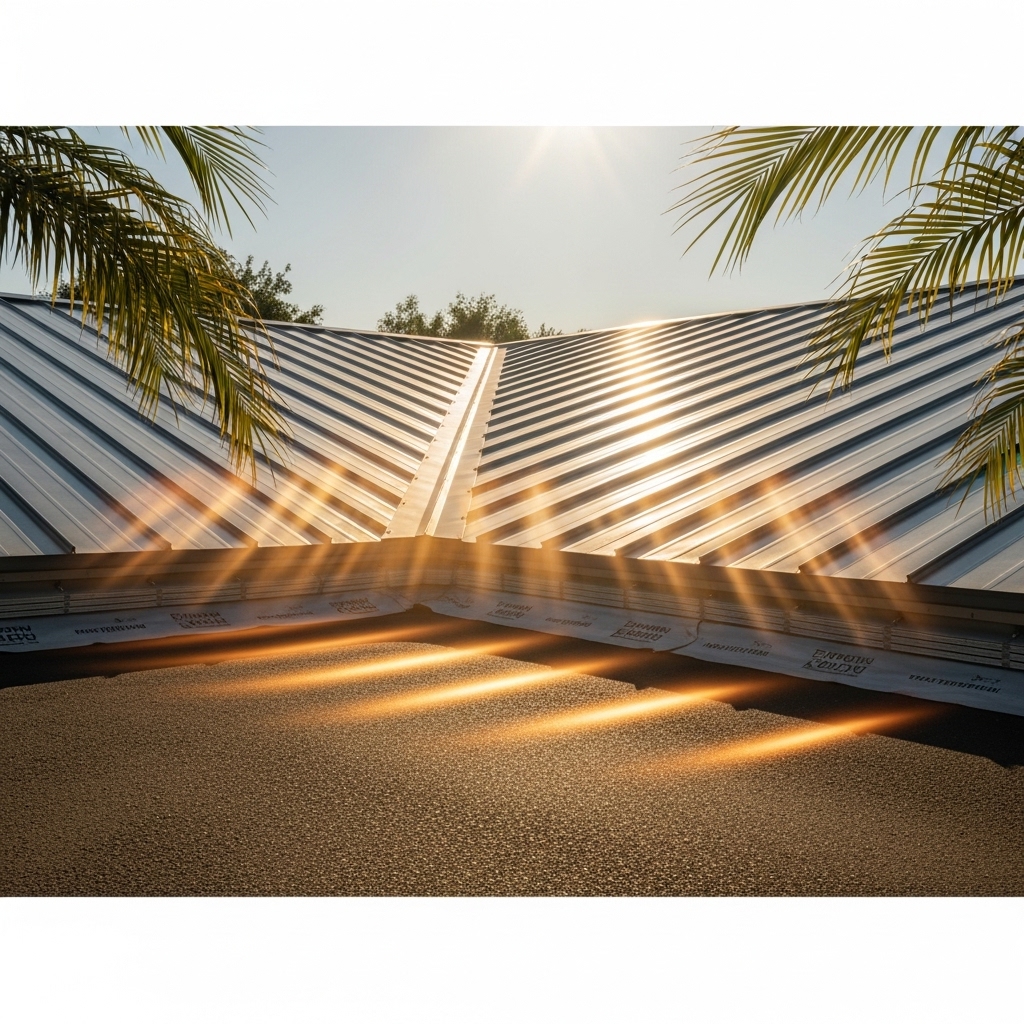
| Metal panels | Loose or backed-out fasteners, aged washers, rust at cut edges and laps, sealant gaps |
A soft or spongy spot underfoot on any system can mean wet insulation below. Mark it for a moisture survey rather than cutting it open.
Flashing, edge and penetration checklist
The federal roofing criteria single out flashings because most leaks start there. At each professional visit, check:
- Base flashings at parapets and walls: bonded, not split, not sagging.
- Counterflashings and termination bars: fastened, with sealant intact.
- Coping and perimeter edge metal: secure, joints covered, no lifted corners.
- Pipe boots, pitch pans and vents: pitch pans filled, boots uncracked, clamps tight.
- Skylight and hatch curbs: flashing continuous on all four sides.
- Expansion joints: covers attached and not torn.
Rooftop equipment and access checklist
- HVAC units: condensate lines draining to a drain, not onto the membrane; access panels closed; no new screws or scrap on the roof after service.
- Equipment supports and rails: stable, flashed, not rusting through.
- Kitchen exhausts: grease contained, protection pad under the fan.
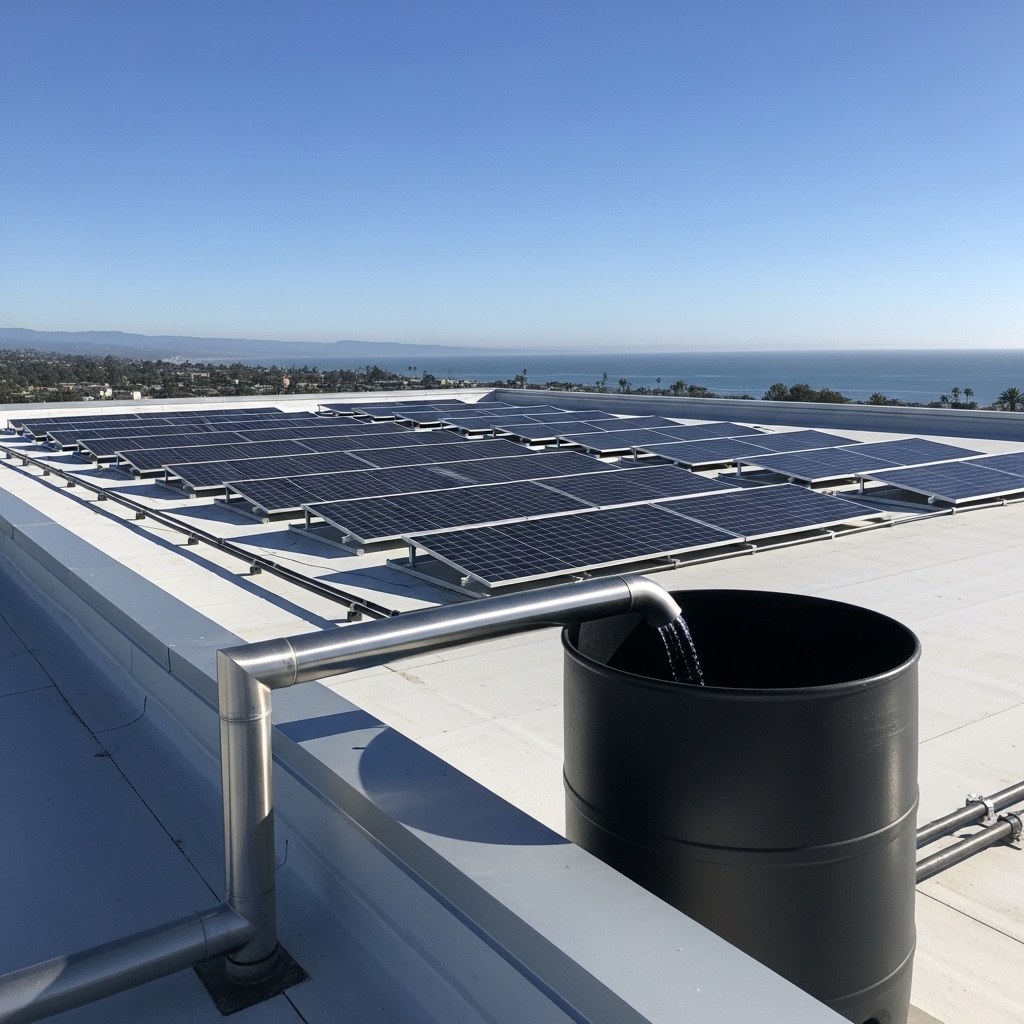
- Solar arrays: mounts flashed, wires clipped up off the roof surface, ballast in place.
- Walk pads in place on the routes technicians use; roof hatch and ladder secure.
Inside-the-building checklist
- Stained, sagging or damp ceiling tiles on the top floor.
- Rust stains on the underside of a steel deck, or water marks around drain bodies and skylights.
- Musty smells in top-floor rooms, which can point to wet insulation.
Interior water is not always the roof: the federal criteria note that what gets reported as a roof leak can come from walls, windows or mechanical units, so the source should be traced before a repair.
Adjust the checklist to where the building sits
Coastal and inland buildings wear differently. NOAA’s 1991-2020 normals count about 115 days a year at or above 90 F at Pierce College in Woodland Hills, against about 5 at the Santa Barbara station. Inland roofs deserve an extra look at coatings, seams and sealants for heat and UV wear; roofs near the ocean need closer attention to rust on metal flashings, fasteners and equipment rails. For a coastal example, see our commercial roof maintenance plan for Santa Barbara.
What to record after each check
Date, weather, who went up, what was checked, what was found and what was done, plus photos of drains and every repair. The record shows problems that repeat, and roofs under warranty must be inspected as the warranty terms require, so it doubles as proof for a warranty claim.
Getting the professional half of the checklist done
NEMA Roofing handles the roofer’s side of this checklist for buildings in all five of the counties it serves (Riverside, San Bernardino, Los Angeles, Ventura and Santa Barbara), with teams at its Oxnard, Downey, Tarzana, Woodland Hills and Santa Barbara locations; see Ventura County or all service areas. Read more about our commercial roofing services and roof maintenance, or call 866-631-3366 to schedule the next inspection.