
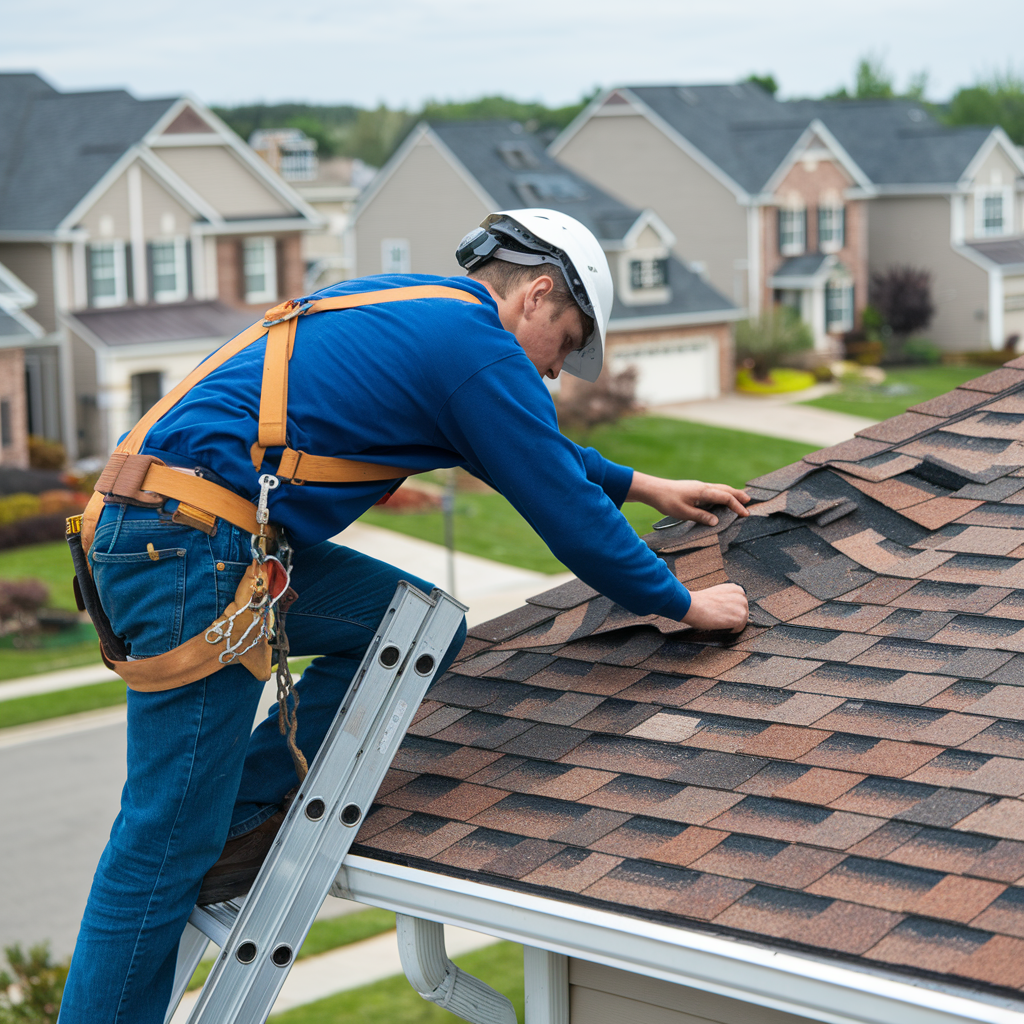
Regular roof maintenance matters because roofs fail at small points first (a seal, a flashing edge, a clogged drain), and those points are cheap to fix only while water has not yet reached the wood underneath. A check with minor repairs at least once a year, plus one after major storms, catches them in time. To schedule one, call NEMA Roofing at 866-631-3366.
What happens when roof maintenance is skipped?
Roof damage rarely starts big. It grows in stages, and each stage costs more to fix than the one before it:
| Stage | What is happening | What the fix involves |
|---|---|---|
| 1. A small opening | Sealant cracks at a vent, a tile slips, a gutter clogs | A quick reseal, reset or cleaning |
| 2. Water under the covering | Rain reaches the underlayment and starts wearing it out | Lifting part of the covering to repair underlayment and flashing |
| 3. Wet decking | The plywood or boards under the roof stay damp and begin to rot | Cutting out and replacing sections of deck |
| 4. Inside the house | Insulation soaks through, ceilings stain, mold can start | Roof repair plus interior drywall, insulation and cleanup |
That progression is the real importance of roof maintenance: regular visits keep problems at stage 1. Without it, the first sign most owners see is stage 4, a ceiling stain, by which point the water has been getting in for a while.
The benefits of regular roof maintenance
- Fewer surprise leaks. Leaks commonly start at flashing, penetrations and roof edges, the exact places a maintenance visit checks.
- A longer roof life. The covering reaches its expected age instead of being replaced early because the parts around it failed. Our guide to extending roof lifespan covers what sets that age.
- Smaller, planned repair bills. Work found early is small and can be scheduled for dry weather instead of done as an emergency in the rain.
- A drier, healthier attic. Wet insulation insulates poorly and damp wood invites mold and rot; keeping water out keeps both dry.
- Records that help later. Dated photos of a roof in good condition are useful when you file an insurance claim after a storm or sell the house.
- No surprise replacement. Year-by-year reports show when a roof is nearing the end of its life, so replacement can be budgeted.
How regular is “regular”?
There is no single schedule for every roof. A sensible schedule depends on the roof and what surrounds it:
| Your roof | Suggested schedule |
|---|---|
| Newer pitched roof, few trees nearby | One maintenance visit a year, before the rainy season |
| Roof under or near trees | The annual visit plus extra gutter and valley clearing during leaf drop |
| Flat or low-slope roof | The annual visit plus drain checks before and during the rainy months |
| Older roof, or one with past leaks | Checks more than once a year, with a report on remaining life |
| Any roof after high wind, a hard storm or nearby fire | An extra check soon after the event |
If you are unsure where your roof stands, start with a roof inspection to set a baseline, then plan the schedule from what it finds.
Does maintenance matter for insurance after a storm?
It can. A 2024 winter-storm alert from the California Department of Insurance explains the split: flood, mudslide and debris flow are usually excluded from homeowners’ coverage, while a tree falling on the house, or rain blown in by the wind during the storm, may be covered. Its storm tips tell owners to make temporary repairs that prevent further damage, photograph everything, keep records of cleanup and repair costs, and hold off on permanent repairs until the adjuster has seen the damage. A maintenance log with recent photos gives you a clear before picture to set beside the after. Your own policy’s wording decides what is covered, so read it or ask your agent.
Which maintenance can you do yourself?
| Safe for most owners (from the ground or attic) | Better left to a roofer |
|---|---|
| Look over the roof with binoculars after wind and rain | Anything that means walking on the roof, especially tile |
| Watch gutters during rain for overflow | Resealing or replacing flashing and pipe boots |
| Check the attic with a flashlight for stains or damp spots | Replacing broken shingles, tiles or metal fasteners |
| Keep trees trimmed back from the roof (with an arborist for big limbs) | Membrane seams, drains and coatings on flat roofs |
| Note anything unusual in a simple log with dates | Judging how much life the roof has left |
For a structured approach to the professional side, see how a preventive roof maintenance program is set up.
Regular roof maintenance from NEMA Roofing
NEMA Roofing is not a single-office roofer: with five Google-verified locations (Oxnard, Tarzana, Santa Barbara, Downey and Woodland Hills), we take maintenance calls from the whole of Ventura, Los Angeles, Santa Barbara, San Bernardino and Riverside counties (towns are listed on the San Bernardino County page and our other service area pages). See our roof maintenance service for what a visit includes, or call 866-631-3366 to put your roof on a regular schedule.




