
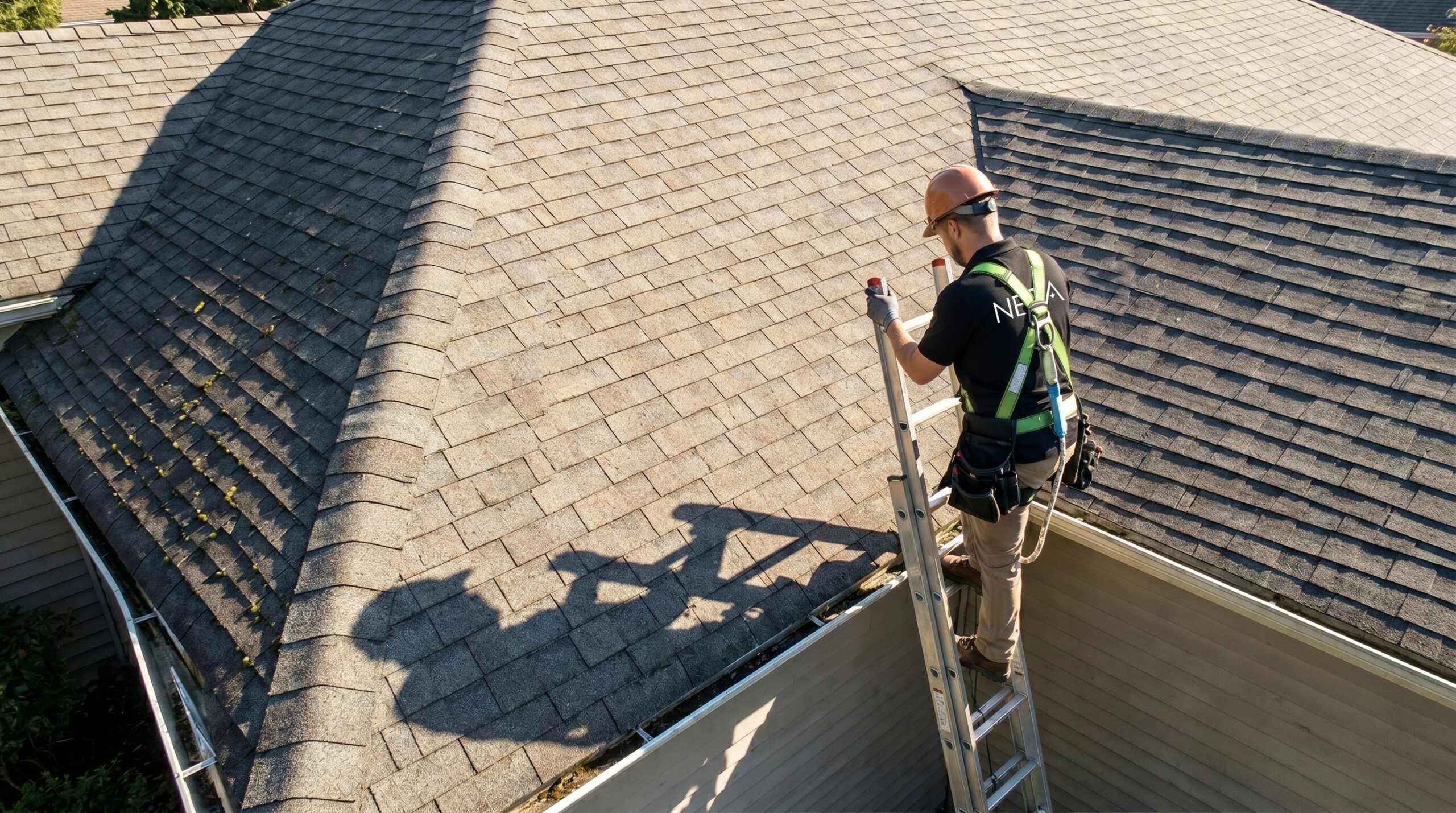
Preventive roof maintenance is scheduled care that finds and fixes small roof problems (loose flashing, cracked sealant, a slipped tile, a clogged drain) before they let water in. For most homes it means a professional check at least once a year and after major storms, with minor repairs done on the spot or quoted in writing. To set up a visit, call NEMA Roofing at 866-631-3366.
Some roofers call it preventative roof maintenance; the goal is the same either way: keep the roof shedding water the way it was designed to, so the structure under it stays dry and the covering reaches the end of its expected life instead of failing early. Below is what a preventive visit covers, how it differs from waiting for a leak, and how to build a program that keeps both people and the building safe.
What does preventive roof maintenance include?
General preventive roof maintenance follows water: where it lands, where it flows and where it could get in. Each task below targets a specific failure.
| Task | What it prevents |
|---|---|
| Check flashing at walls, chimneys, skylights and valleys; reseal or refasten where it has lifted | Leaks at joints and edges, the usual entry points for water |
| Inspect pipe boots, vents and other penetrations | Water running down a vent pipe into the attic when a rubber collar dries and splits |
| Replace or reset missing, cracked or slipped shingles and tiles | Exposed underlayment that breaks down in sun and rain |
| Clear gutters, downspouts, scuppers and flat-roof drains | Water backing up under the roof edge, rotting fascia, or ponding on a low-slope roof |
| Remove leaves, needles and debris from valleys and behind chimneys | Trapped moisture, dams that push water sideways, and fuel for embers in fire season |
| Look for tree limbs touching or overhanging the roof | Abrasion of the surface and branches breaking onto the roof in wind |
| Check the attic for stains, damp insulation and blocked vents | Hidden leaks and moisture buildup that rots the deck from below |
| Photograph and record every finding | Guesswork next year: a record shows what is changing and how fast |
Preventive versus reactive: what changes?
Reactive maintenance waits for a symptom, usually a ceiling stain. By the time water shows indoors it has already passed the covering, the underlayment and often the deck, and it may have soaked insulation or drywall along the way. The repair then covers the interior as well as the roof.
Preventive maintenance works on the other end of that chain. A lifted flashing edge or a split pipe boot is a small fix while the wood beneath is still dry. The work is planned rather than urgent, it can be scheduled in dry weather, and the owner gets a written list of what can wait and what cannot.
How often should preventive roof maintenance happen?
- Once a year is the baseline for most homes, ideally in late summer or early fall so any repair is done before the rains.
- After any major storm or high-wind event, because wind lifts edges and ridge pieces that looked fine a week earlier.
- More often for flat and low-slope roofs (drains clog and water has nowhere to go), roofs under trees, and older roofs where sealants and underlayment are near the end of their life.
Gutters under heavy trees may need clearing several times a year even when the roof itself only needs its annual check.
How preventive maintenance keeps people safe
Safety is the part of this topic most articles skip. A neglected roof creates hazards before it ever leaks:
- Falling material. Loose ridge tiles, cracked tile pieces and lifted metal trim can come down in wind over walkways, patios and driveways.
- Water near wiring. A leak that reaches a light fixture, attic wiring or a ceiling fan box is an electrical hazard as well as a stain.
- Mold. The U.S. Environmental Protection Agency advises drying wet materials within 24 to 48 hours after a leak; in most cases mold will not grow if that happens. A slow roof leak inside an attic is rarely found that quickly.
- Falls from ladders and roofs. The Asphalt Roofing Manufacturers Association tells homeowners not to climb on the roof at all, because walking on it is dangerous and can damage the covering. A maintenance plan puts the climbing in trained hands.
How it adds years to the roof
Roof coverings rarely wear out evenly. The field of shingles or tiles often has years left when the parts around it give out first: the sealant at a flashing, the rubber of a pipe boot, the underlayment under a slipped tile, the fascia behind an overflowing gutter. Preventive maintenance renews those short-lived parts on schedule, so a failure in one small component does not force an early replacement of the whole roof.
Keep the paperwork too. A dated record of each visit, with photos, shows when the roof was checked and what was done, which helps if a warranty or insurance question comes up later or when the house is sold.
Setting up a preventative roof maintenance program
- Start with a baseline inspection. A full check with photos records the roof’s type, approximate age, condition and every weak point.
- Sort the findings. Separate what needs repair now (active leak paths, missing pieces) from what to watch (worn sealant, early granule loss) and what is fine.
- Set the schedule. Pick the annual visit date and add storm checks; flat roofs and tree-covered roofs get extra drain and gutter visits.
- Keep one log. Store each visit’s photos, notes and repairs together, with the roof’s installation records if you have them.
- Review each year. When the repair list starts growing year over year, the log tells you it is time to plan a replacement rather than keep patching.
Our roof inspection checklist lists what a baseline check looks at, and owners of low-slope roofs can use the flat roof maintenance checklist between visits.
What you can check between visits
- Walk around the house with binoculars after wind or rain and look for missing, cracked or curled pieces and loose trim.
- Watch the gutters during a rain: water spilling over the front edge means a clog or a sagging section.
- Take a flashlight into the attic once or twice a year and look at the underside of the roof deck for dark stains or damp spots, especially around vents and chimneys.
- Look for granules collecting at downspout outlets on a shingle roof.
Anything you spot goes into the log and onto the next visit’s list, or gets a call right away if water is coming in.
Preventive roof care from NEMA Roofing
NEMA Roofing handles preventive maintenance for homes and commercial buildings through five Google-verified locations, in Santa Barbara, Oxnard, Woodland Hills, Tarzana and Downey, which keeps a crew within reach of every town in Santa Barbara, Ventura, Los Angeles, Riverside and San Bernardino counties (see our service areas). We are a licensed roofing contractor, CSLB license #1083283. Read more about our roof maintenance service, or call 866-631-3366 to book a baseline inspection and start a maintenance schedule.




