
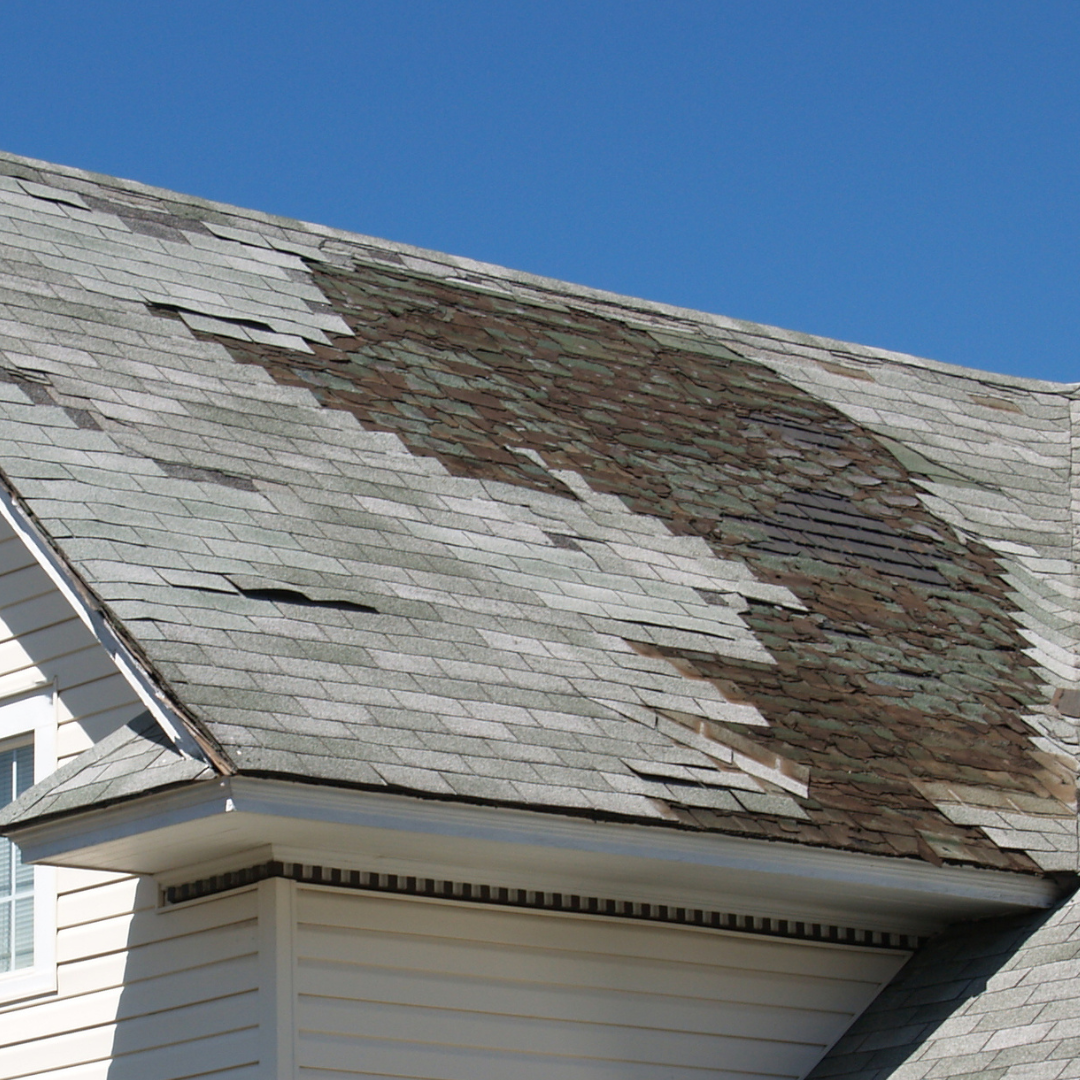
A temporary roof repair is a stopgap that keeps water out until the damage can be fixed properly: a secured tarp over a damaged area, roofing cement or sealant on a small leak, or a patch on a flat roof. It is short-term by design and should be followed by a permanent repair that fixes the cause, whether that is broken flashing, missing shingles or damaged deck. If water is coming in now, call NEMA Roofing at 866-631-3366.
Which temporary roof fix fits which damage?
| Damage | Temporary fix | What the permanent repair usually is |
|---|---|---|
| Missing or broken shingles, cracked tiles, a hole from a branch | A heavy tarp stretched over the area and past the ridge, fastened through wood battens so it cannot lift | Replace the shingles or tiles and any damaged underlayment and deck beneath |
| A small leak at a vent, chimney or skylight | Roofing cement or sealant over the gap in the flashing | New flashing or a new vent boot, sealed and counterflashed |
| A split or blister on a flat or low-slope roof | A patch or compatible sealant over the clean, dry spot | A proper membrane repair or a new section welded or adhered to the existing system |
| Water through the ceiling with no visible roof damage | A bucket, a pinhole in the bulging ceiling to drain it, and a tarp on the suspected slope | Leak tracing to find the real entry point, which is often uphill of the stain |
A tarp that flaps in wind tears shingles and lets water in at its edges, so how it is fastened matters more than its size. Sealant stuck on a wet or dusty surface peels within days.
Should you put up a temporary fix yourself?
Only if it is safe. A wet, windy or steep roof is where homeowners get hurt, and a fall costs far more than any leak. From the ground or inside you can safely:
- Move furniture and valuables, and set out buckets or towels.
- Relieve a bulging ceiling with a small hole into a bucket, so it does not collapse.
- Photograph the damage inside and outside for an insurance claim.
- Clear a blocked downspout you can reach from the ground.
Anything on the roof itself, especially tarping, is better left to a roofing crew with fall protection. For a step-by-step list of what to do in the first hour, see emergency roof leak steps.
How long can a temporary roof repair last?
Not long. Treat it as a short-term measure and schedule the permanent repair right away. Tarps degrade in strong sun and fail in wind; cement and sealant patches crack as the roof heats and cools. The longer a temporary fix stays up, the more likely water finds a way past it into the deck and insulation, which turns a repair into a bigger one. Check the fix after every storm until the permanent work is done.
When does the permanent repair need a permit?
A tarp is not construction, but the permanent repair can be. The small-repair thresholds differ from place to place in NEMA’s service area:
| Where | Repair that does not need a building permit |
|---|---|
| City of Oxnard | Under 40 square feet, as long as the work does not go past the roof covering into the underlayment or structure |
| City of Carpinteria | Simple weatherproof coating patches under 40 square feet; anything reaching the covering, underlayment or structure needs a permit |
| Santa Barbara County (unincorporated, including Montecito) | Roof repairs under 100 square feet within a twelve month period, and applying an approved roof coating |
| Ventura County (unincorporated) | No small-roof-repair exemption on the county’s exempt-work list, so ask before any repair |
In Montecito, the fire district adds its own rule: replacing more than 10 percent of the roof area requires replacing the whole roof with conforming Class A material. That can turn a large storm repair into a replacement, so it is worth knowing before the permanent work is scoped.
What does the permanent repair involve?
A permanent repair starts with finding where water actually enters, then fixes that and anything it damaged:
- Remove the temporary material and dry the area.
- Trace the leak path from the ceiling stain up to the entry point.
- Replace wet or rotted deck and damaged underlayment.
- Rebuild flashing at walls, chimneys, skylights and vents where it failed.
- Install matching shingles, tiles or membrane so the repair sheds water like the rest of the roof.
If the damage covers a large share of an aging roof, a repair may only move the next leak elsewhere; roof repair vs. full replacement explains how to decide. For the common causes behind sudden leaks, see top causes of roof emergency repairs.
How is an emergency repair different from routine maintenance?
An emergency repair stops active damage: water inside, a section torn open, a tree limb through the roof. Routine maintenance prevents those events: clearing gutters and valleys, resealing aging flashing and replacing a few worn shingles or cracked tiles before they leak. Most emergencies on older roofs trace back to a small maintenance item that was missed, which is why a yearly check before the rainy season is worth scheduling.
NEMA Roofing works from five locations, in Santa Barbara, Oxnard, Tarzana, Woodland Hills and Downey, and handles storm damage across Santa Barbara, Ventura, Los Angeles, Riverside and San Bernardino counties. For fast help with a damaged roof, see our emergency roof repair service or our general roof repair service, or call NEMA Roofing at 866-631-3366.




