Metal roof vs shingles: asphalt shingles are the lower-cost roof that almost any roofer can repair, while a metal roof costs more to install but is the stronger pick for a long stay, a low-pitched roof, a wildfire-prone lot or a planned solar system. Neither wins everywhere; your pitch, budget, time in the house and local rules decide it. To price both on your roof, call NEMA Roofing at 866-631-3366.
Quick verdict: which roof fits your situation?
Most metal vs shingle roof decisions come down to the same few questions about money, time and the roof itself.
Asphalt shingles usually make more sense if:
- the lowest installed price matters most, or you expect to sell in a few years;
- the roof is cut up with many valleys, dormers and small planes, where metal trim work adds up;
- you want repairs any local roofer can make with stock materials.
Metal usually makes more sense if:
- you plan to keep the house long enough to skip a second reroof;
- part of the roof is too flat for shingles (see the pitch section below);
- you have solar or plan to add it;
- the home sits in or near a fire hazard severity zone and you want a noncombustible covering.
What makes metal cost more, and when does it pay back?
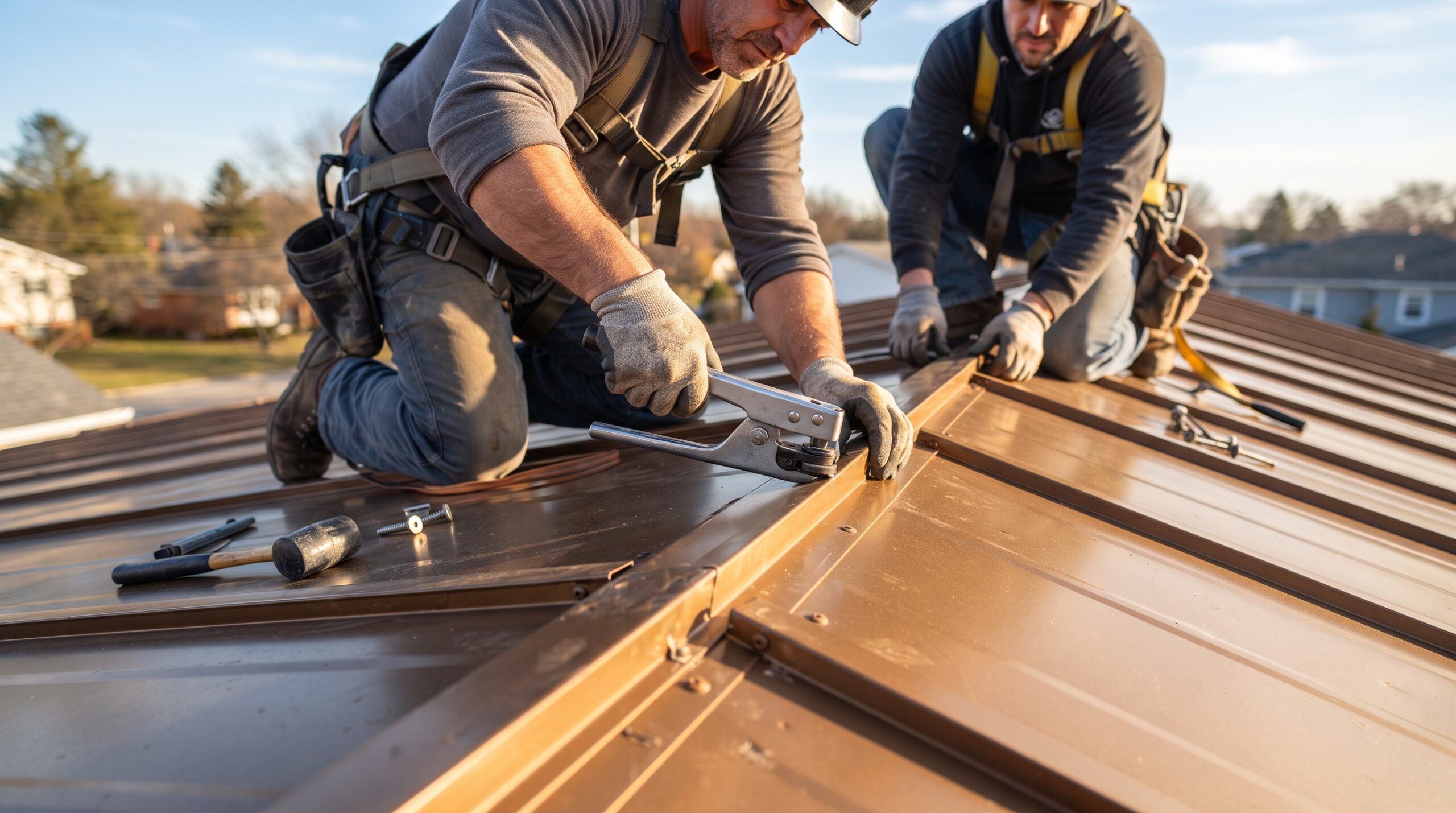
A metal roof costs more for three reasons: the panels and their matching trim cost more than shingles, the work is slower (panels are measured, cut and seamed, and every edge, valley and wall gets custom-bent flashing), and it needs a crew trained on metal. Shingles go on quickly with standard materials and tools.
Metal pays back through time, not through a lower bill. The question to ask is how many roofs you will buy while you own the house. If a shingle roof would need replacing once more before you sell, or would have to come off from under a solar system, the gap narrows. If you will move before the shingles wear out, it rarely does. No prices appear here because every roof differs; ask for both options itemized in one written estimate. Our Oxnard metal vs shingles guide walks through the cost drivers for a coastal home.
How long does each roof last?
The National Association of Home Builders’ study of home component life expectancy puts asphalt shingle roofs at about 20 years and copper roofs at over 50, and stresses that any roof’s life depends on local weather, how the house was built and designed, material quality and maintenance. For painted steel, the Department of Defense’s roofing criteria (UFC 3-110-03) note that the metal underneath outlasts its paint, so the finish, not the steel, usually sets when a coated steel roof needs attention. Why shingles wear out sooner, and when metal does not outlast them, is explained in why metal roofs outlast shingles.
Does your roof’s pitch rule one out?
Sometimes, and it is the first thing to check. The 2025 California Residential Code sets these minimum slopes:
| Roof covering | Lowest slope allowed | Condition |
|---|---|---|
| Asphalt shingles | 2 in 12 | Double underlayment from 2 in 12 up to 4 in 12 |
| Metal shingles | 3 in 12 | No lower option |
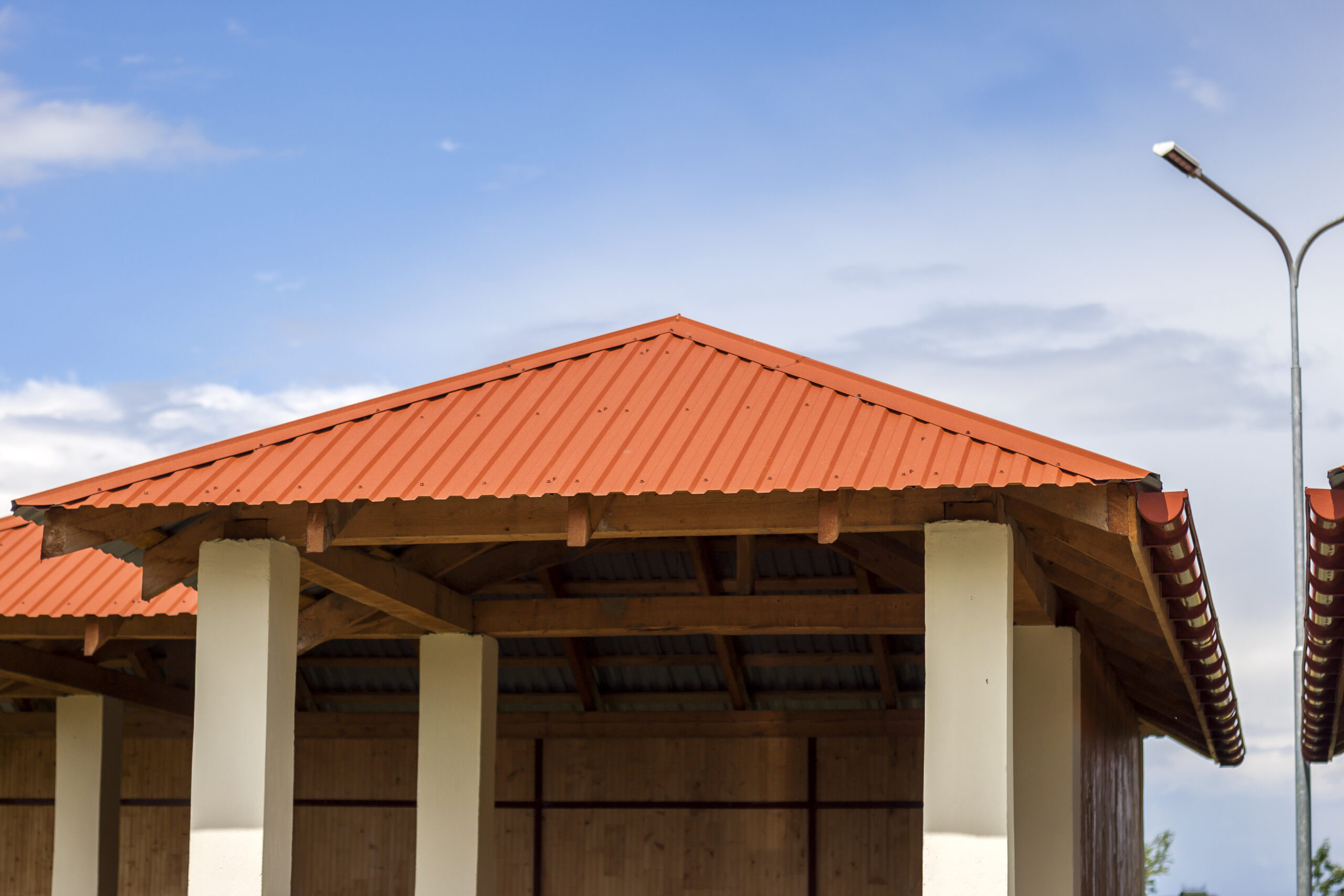
| Lapped metal panels (ribbed, corrugated) | 3 in 12 | Down to 1/2 in 12 with sealant in the laps |
| Standing seam metal | 1/4 in 12 | Product instructions may ask for more |
So a patio cover, porch or addition with a gentle pitch below 2 in 12 cannot take shingles at all, while standing seam can cover it. On a typical pitched house roof the code allows both, so the metal roof versus shingle roof choice moves to the points below.
Which is safer in fire, and cooler in the sun?
- Fire. Asphalt shingles carry a Class A, B or C fire rating, with Class A the most resistant, according to the Asphalt Roofing Manufacturers Association. Metal does not burn. California’s 2025 Wildland-Urban Interface Code counts metal sheets and shingles laid on a noncombustible deck as Class A without further testing; on the wood decks most homes have, metal and shingles alike need a tested and listed Class A assembly. In a fire zone, compare the listed assembly, not the material name.
- Heat. The EPA lists cool-roof products in both camps: asphalt shingles with cool-colored granules, and metal shingles or tiles with reflective paint or granules. Where California’s energy code applies a cool-roof rule to pitched-roof replacements (climate zones 4 and 8 through 15, when more than half the roof is replaced), either material can meet it with a rated product unless an exception applies.
Solar, noise and repairs
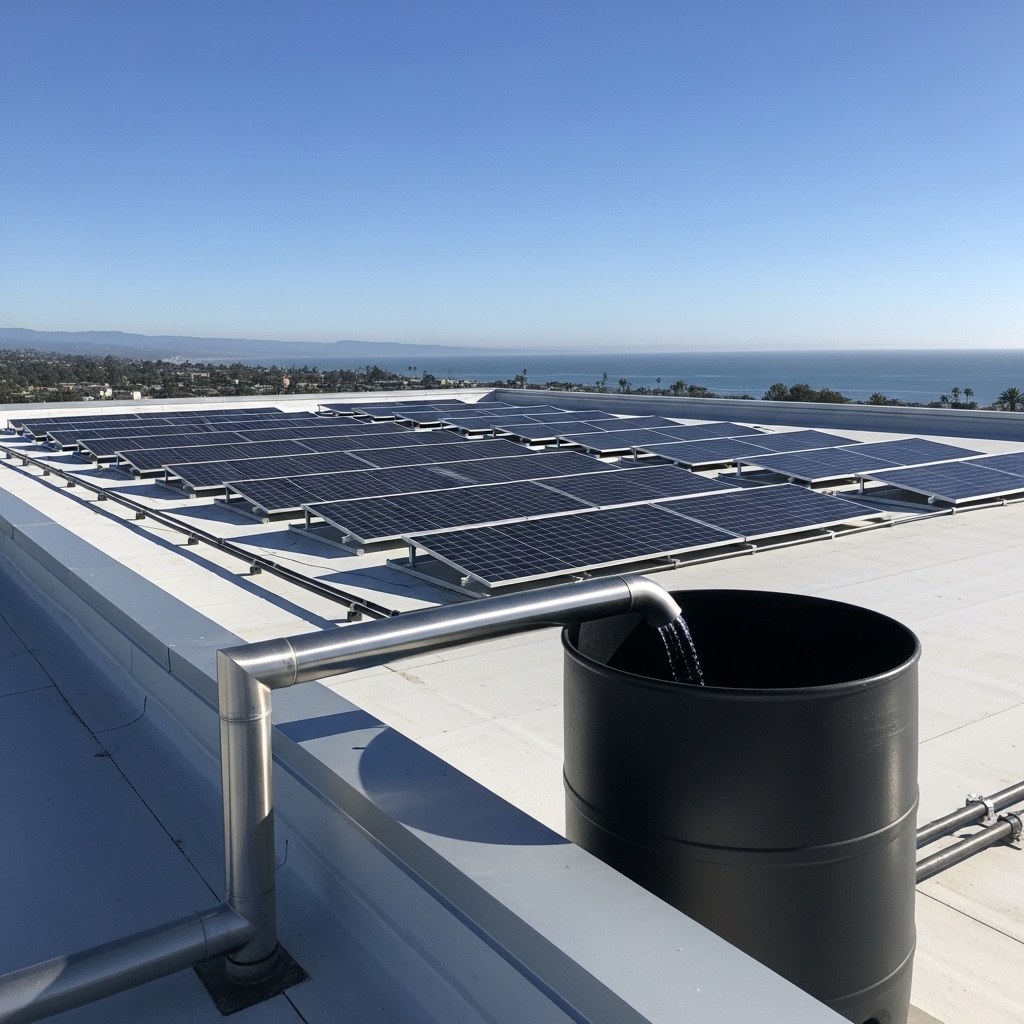
- Solar. On standing seam, racking can clamp to the seams; the UFC requires non-penetrating seam clamps for equipment on its standing seam roofs. On shingles, each mount is bolted through the roof and flashed. Plan the reroof before the solar goes up, so the panels do not have to come off early.
- Rain noise. The Metal Roofing Alliance, a metal industry group, says there is little difference between metal and other materials in rain or hail noise. What sits under the metal matters: on a house, solid sheathing, underlayment and attic insulation stand between the panels and the rooms, while panels screwed to open framing, as on many barns, have nothing under them.
- Repairs. A damaged shingle can be lifted out and replaced with common stock. A damaged metal panel or trim piece needs the same profile and color and a crew that works with metal, so keep the product name and color on file.
Can a metal roof go over existing shingles?
Sometimes. Section R908.4 of the 2025 California Residential Code allows a new covering over an existing one when the new product’s instructions permit it, but not over a roof that is water soaked or deteriorated, and not where two or more layers are already on. A tear-off still has an advantage: it exposes the deck, so soft or rotted sheathing is replaced before a long-life roof goes on top.
Where do metal shingles fit in?
Metal shingles, shakes and stone-coated steel tiles sit between the two: metal material pressed into a traditional shape. They suit owners who want metal’s fire and weather performance on a house or street where a panel roof would look out of place, but they need at least 3 in 12 of pitch and have more joints than standing seam. Compare them with the other systems in metal roof styles and types.
What warranties come with each?
Shingle roofs carry manufacturer warranties whose coverage depends on who installs them. NEMA Roofing is a GAF Master Elite contractor, which lets it register all of GAF’s enhanced warranties, the Golden Pledge Limited Warranty among them, where GAF stands behind the installation workmanship too. As an Owens Corning Preferred Contractor, NEMA can also register Owens Corning’s Preferred Protection warranty, and that plan includes workmanship coverage. For a metal roof, the panel manufacturer’s paint and material warranties apply; get the written terms for the exact product and color before you sign.
NEMA Roofing installs both metal and shingle roofs. With five locations, in Santa Barbara, Oxnard, Woodland Hills, Tarzana and Downey, our crews reach every town in Santa Barbara, Ventura, Los Angeles, Riverside and San Bernardino counties; see our service areas, our metal roofing service and roof replacement. For a side-by-side estimate on metal and shingles, call 866-631-3366.