
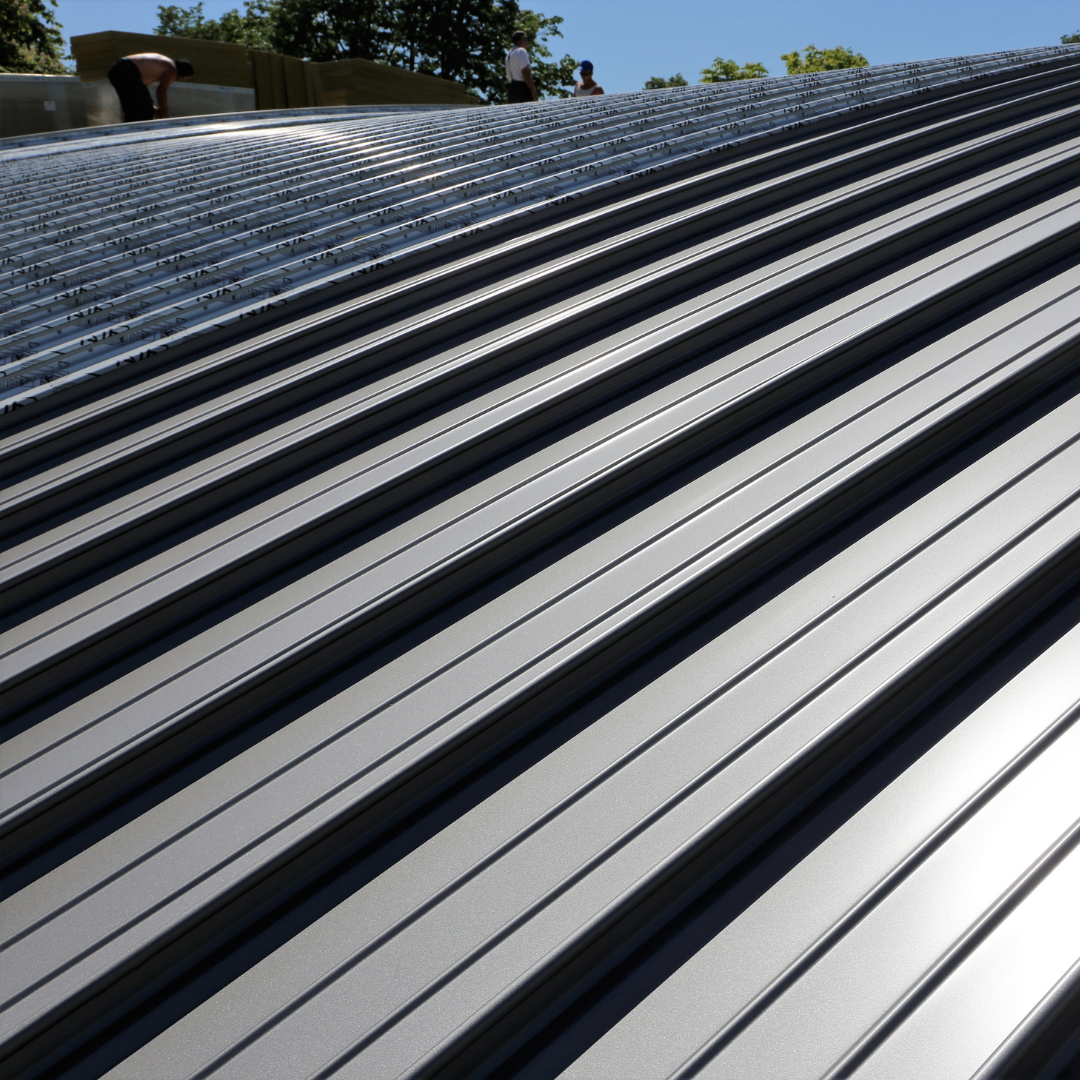
Metal roof styles for homes fall into three systems: standing seam panels held down by hidden clips, ribbed or corrugated panels screwed through the face, and modular metal shingles, shakes and tiles that interlock like a traditional roof. Each system comes in steel, aluminum, copper or zinc, with a painted or stone-coated finish. Roof pitch, budget, the look of the house and the site (coast, heat, fire zone) decide which fits. To talk through the options for your roof, call NEMA Roofing at 866-631-3366.
Types of metal roofing at a glance
The lowest pitch in the table is the floor set by the 2025 California Residential Code; a manufacturer’s instructions can ask for more, and they win.
| Type | How it is held down | Lowest pitch allowed | Typical use |
|---|---|---|---|
| Standing seam (mechanically seamed or snap-lock) | Concealed clips under raised seams; no screws through the flat of the panel | 1/4 inch of rise per foot | Modern and farmhouse homes, low-pitch roofs, homes with solar |
| Ribbed panels (often called R-panel or PBR) | Screws with rubber sealing washers through the face; panels overlap at the edges | 3 in 12, or 1/2 in 12 with sealant in the laps | Patios, garages, shops, budget-minded or rustic homes |
| Corrugated panels | Same as ribbed: face-fastened and lapped | Same as ribbed | Barns, sheds, carports, industrial-style accents |
| Metal shingles, shakes and slate looks | Individual pressed pieces that lock into each other, fastened in the hidden lap | 3 in 12 | Traditional homes and neighborhoods where a panel roof would stand out |
| Stone-coated steel shingles and tiles | Pressed steel pieces with bonded stone granules, installed like metal shingles | 3 in 12 | Homes that want a shingle, shake or barrel tile look with a metal base |
The Department of Defense’s roofing criteria (UFC 3-110-03) sum up how to pick among them: the panel type decision is “aesthetic, economic, and functional,” and wind uplift can also dictate it.
How does a standing seam roof work?
Standing seam is the system most people picture when they hear “residential metal roofing.” Long panels run from eave to ridge, ideally in one piece, since the UFC treats end-to-end laps as a weak point to avoid. Their edges turn up into seams, and clips fastened to the roof deck hook into those seams, so no screw goes through the part of the panel that carries water. The clips matter because a metal panel grows and shrinks with every day’s heat: the panel is pinned at one point, usually the ridge or the eave, and slides in the clips everywhere else.
The seams come in several shapes:
- Mechanically seamed. A seaming tool folds the two edges together once (a 90-degree single lock) or twice (a 180-degree double lock). Which one a roof gets depends on the wind uplift it must resist and the look wanted.
- Snap-lock. One edge snaps over the other with no seaming tool. It installs faster; check the product’s own minimum pitch and wind rating before using it on a low or exposed roof.
- Batten or cap seam. Two upturned legs sit side by side and a separate cap covers them; the UFC lists it among profiles that shed water rather than sealing against it.
- Bulb and trapezoidal seams. A bulb seam has a rounded top. A trapezoidal seam is a wide raised rib with an industrial look that needs end plugs at eaves and valleys, so the UFC limits it to simple roofs with few valleys.
Another way metal roof systems are explained is by how they keep water out. The UFC calls a roof “hydrostatic” when its seams are sealed to resist standing water, like a membrane, and “hydrokinetic” when it relies on the slope to shed water. Under the UFC’s own rules a hydrostatic roof may go as low as 1 in 12, while a water-shedding one needs at least 4 in 12. Wide flat panels can show a slight waviness (oil canning); small striations or pencil ribs rolled into the panel, or a heavier gauge, reduce it.
For profile choices on real homes, see standing seam options in Woodland Hills.
What are exposed-fastener panels (ribbed and corrugated)?
Ribbed and corrugated panels are fastened straight through the face with screws that carry a rubber or neoprene washer. The panels overlap at their sides and ends instead of locking together. That makes them quicker to install and usually the least expensive metal option, which is why they cover so many barns, shops and patio roofs.
The trade-off is the screws. Every one is a hole in the roof, sealed only by its washer, and panels that move with heat work on those washers over time. Plan on checking and replacing loose or aged fasteners as part of normal upkeep. Corrugated panels have the classic rounded wave; ribbed panels have taller, squared ribs and a cleaner line on a house. See ribbed metal panels for homes and corrugated metal for shops and barns.
What are metal shingles, shakes and tiles?
These are small pieces of steel or aluminum pressed into the shape of a shingle, a split wood shake, slate or clay barrel tile. They lock together along their edges, and the fasteners hide under the piece above. Some are painted; stone-coated steel has stone granules bonded to its surface, which gives it the texture of an asphalt shingle or tile. The California Residential Code allows metal shingles only on roofs of 3 in 12 or steeper and requires a solid or closely fitted deck under them unless the product is designed for spaced boards.
They suit homeowners who want metal’s fire and weather performance without a panel look, and associations or design boards that expect a traditional roof. They have more joints than standing seam, so flashing around chimneys, valleys and walls takes care, and a repair needs pieces of the same product. For how each style reads on different house types, see our guide to metal roof designs.
Which metals and finishes are used?
Any of the styles above can be made from several metals. The 2025 California Residential Code lists the ones allowed on homes and a minimum for each:
- Coated steel. The most common residential metal. The code requires a corrosion-resistant coating, such as 55 percent aluminum-zinc (the AZ50 grade, often sold as Galvalume) or galvanized G90, with any paint applied over that coating.
- Aluminum. At least 0.024 inch thick for roll-formed panels and 0.019 inch for pressed shingles. It does not rust, and the UFC names it the preferred metal where salt spray reaches the roof, at a higher price.
- Copper. At least 16 ounces per square foot for sheet roofing. Usually left bare, so it weathers to a natural patina.
- Zinc. At least 0.027 inch thick. Like copper, a soft metal usually left unpainted, and work for a specialist crew.
Two paint families cover most painted metal. PVDF (often 70 percent PVDF resin) is described by coatings maker PPG as the premium choice for intense sun and long color stability; SMP (silicone-modified polyester) costs less and PPG notes it is popular for residential, industrial and agricultural buildings. Both come in cool-roof pigments, which matter in California climate zones 4 and 8 through 15, where replacing more than half of a pitched roof generally calls for a rated cool product unless an exception applies. Our cool roofing page explains the ratings. Which metal to pick for coast, valley heat or mountain snow is covered in the best metal roof material by climate.
How do you choose among the metal roofing options?
- Measure the pitch. Below 3 in 12, shingle-style metal is out and the choice is standing seam or panels with sealed laps; below 1/2 in 12, only standing seam remains.
- Decide on the look. Clean vertical lines point to standing seam; a traditional look points to metal shingles, shakes or stone-coated tile; a rural or industrial feel suits ribbed or corrugated.
- Weigh upkeep against price. Exposed-fastener panels cost less to install but need their screws checked; concealed-clip standing seam costs more and has far fewer holes in the roof.
- Match the metal to the site. Salt spray, strong sun and snow each favor a different metal and finish.
- Check the rules. A cool-rated color where the energy code asks for one; in a fire hazard zone, a roof assembly listed as Class A; and any HOA or design-review limits.
- Plan for solar. Standing seam takes mounts that clamp onto the seams without drilling the panels, which the UFC requires for rooftop equipment on its standing seam roofs.
If you are still deciding between metal and asphalt, read metal roofing vs traditional shingles. NEMA Roofing installs every one of these systems through five locations, Santa Barbara, Oxnard, Woodland Hills, Tarzana and Downey, with crews covering the whole of Santa Barbara, Ventura, Los Angeles, Riverside and San Bernardino counties; see roofing in Ventura County or all service areas, and our metal roofing service. To compare styles and get a written estimate for your roof, call 866-631-3366.




