In a cool roof vs traditional roof comparison, the cool roof performs better on heat: its surface, attic and rooms stay cooler in sun, so the air conditioner works less. On waterproofing, wind resistance, fire rating and lifespan, the two perform alike when they are the same material, because a cool roof is usually the same shingle, tile, metal or membrane with a more reflective surface. A traditional dark roof keeps an edge mainly where heating matters more than cooling. For advice on your roof, call NEMA Roofing at 866-631-3366.
What is the real difference between the two?
A cool roof is not a separate kind of roof. It is a roof whose surface has been tested for two properties, solar reflectance (how much sunlight bounces off) and thermal emittance (how readily absorbed heat is released), and scores well on both. The Cool Roof Rating Council (CRRC) measures these for roofing products, new and after three years outdoors, and lists them in its Rated Roof Products Directory. Most roof types come in both versions:
| Roof type | Traditional version | Cool version |
|---|---|---|
| Asphalt shingles | Dark granules | Granules with light or infrared-reflective pigments |
| Tile | Dark-colored concrete or clay | Light or cool-color glazes and coatings; terra cotta is naturally cool, per the U.S. EPA |
| Metal | Dark paint or unrated finish | Factory finish with cool pigments, in light and darker colors |
| Flat roof | Black or gray membrane, dark cap sheet, gravel | White or light single-ply membrane, reflective cap sheet, reflective coating |
How do they compare, point by point?
| What you care about | Cool roof | Traditional dark roof |
|---|---|---|
| Roof and attic temperature | Lower on sunny days | Higher; heat soaks into the attic for hours |
| Summer cooling bill | Lower; the CRRC puts average savings at 7% to 15% of total cooling costs | Baseline |
| Homes without air conditioning | The EPA cites research showing peak indoor temperatures 2.2 to 5.9°F lower | Hotter upstairs rooms in heat waves |
| Winter heating | Can cost slightly more to heat; the CRRC calls this penalty usually insignificant next to the summer savings | Gains a little free winter heat from the sun |
| Keeping water out | Same as the traditional version of the material | Same |
| Wear on the roof covering | Lower surface temperature may extend service life, according to the CRRC | Larger daily heat swings |
| Colors | Many, including darker cool colors; the coolest ratings are in lighter shades | Any color |
| First cost | Often the same; products with special infrared pigments tend to cost more (EPA) | Baseline |
| Upkeep | Light flat roofs may need periodic cleaning to stay reflective | Dirt shows less and matters less |
| California reroof code | Meets the cool roof values where they apply | May not pass when more than half the roof is replaced in a zone that requires cool values, unless an exception applies |
Where does a traditional roof still make sense?
- Cold, heating-dominated climates. The CRRC says the winter heating penalty is usually outweighed by summer savings in all but the most northern U.S. climate zones. Southern California is not among those northern zones.
- Fully shaded roofs. A roof under heavy tree cover gets little sun, so reflectance has little to work on.
- Design-review areas that limit colors. In Montecito, for example, the Board of Architectural Review considers the colors and types of building materials, and its list of exempt work does not include reroofing or roof color changes. A darker cool-rated color can keep the look a board wants while reflecting more heat than a standard dark color.
- Where the code exempts the roof. A pitched home reroof can skip the cool values when the house has, for example, R-38 ceiling insulation, a qualifying radiant barrier or, in some climate zones, no ducts in the attic. The choice is then yours.
Why the gap is wider on flat roofs
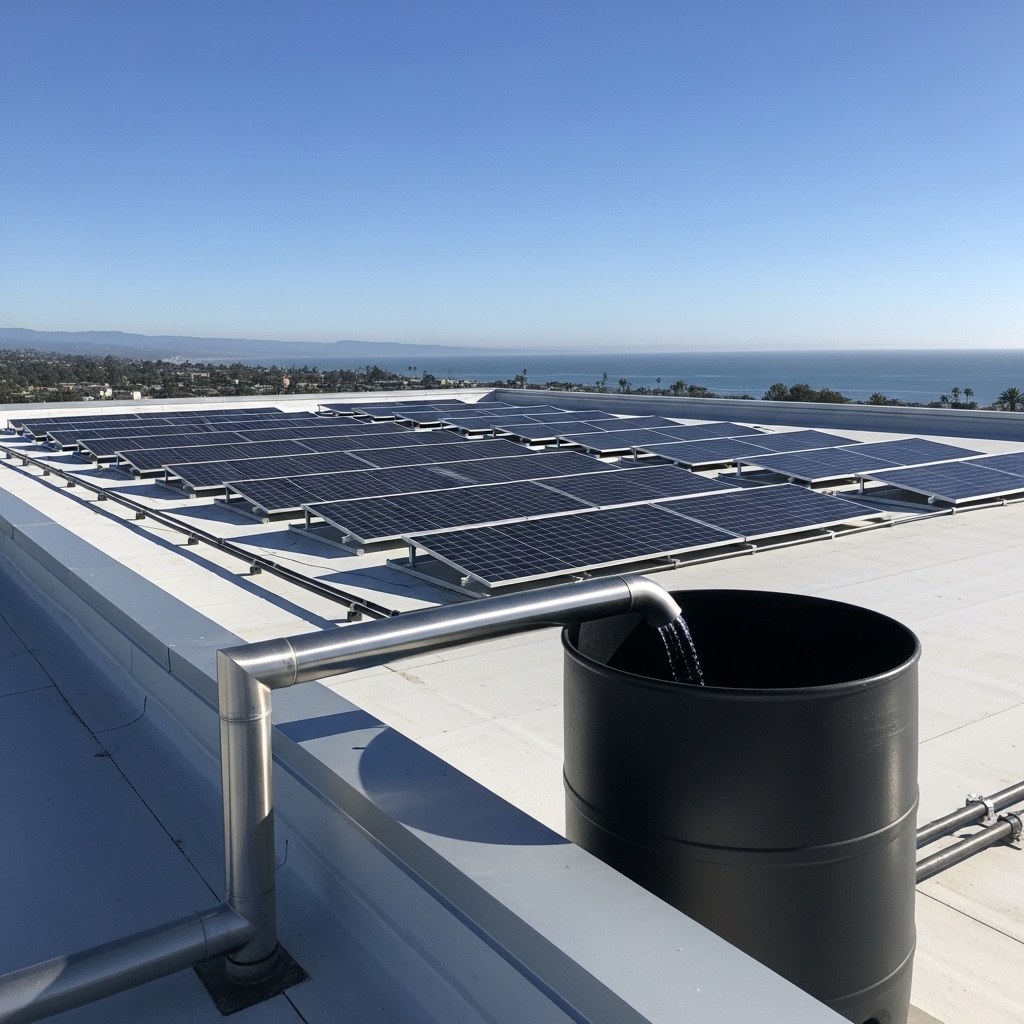
A flat roof faces the sky all day, and the reflective products made for it reach far higher values than pitched-roof products. California’s energy code shows the difference: a pitched home reroof in a zone that requires cool values needs an aged solar reflectance of at least 0.20, while a low-slope home reroof in climate zones 4 and 6 through 15 needs at least 0.63. That is why the energy difference between a black and a white flat roof is larger than between a dark and a cool-color shingle. See our flat roofing service for membrane and coating options.
How to compare a cool quote with a traditional one
- Ask for both versions of the same material, so the only difference is the surface.
- Get the product name, color and its CRRC aged solar reflectance and thermal emittance.
- Ask if your job triggers the state’s cool roof values and if any exception applies to your house.
- Compare the price difference with what you pay for summer cooling today.
- Check that underlayment, flashing and ventilation are identical in both quotes; these decide leaks, not color.
For the payback math, read is a cool roof worth it; for colors that stay cool, see the best cool roofing colors for Santa Barbara sun.
Talk to a roofer who installs both
NEMA Roofing installs cool and traditional versions of shingle, tile, metal and flat roofs, so the recommendation follows your building, not a product line. Our six locations (Santa Barbara, Oxnard, Woodland Hills, Tarzana, Downey and San Bernardino) put a crew within reach of every town in Santa Barbara, Ventura, Los Angeles, Riverside and San Bernardino counties; find yours on our service areas page, or see our cool roofing service. Call 866-631-3366 for a side-by-side estimate.