
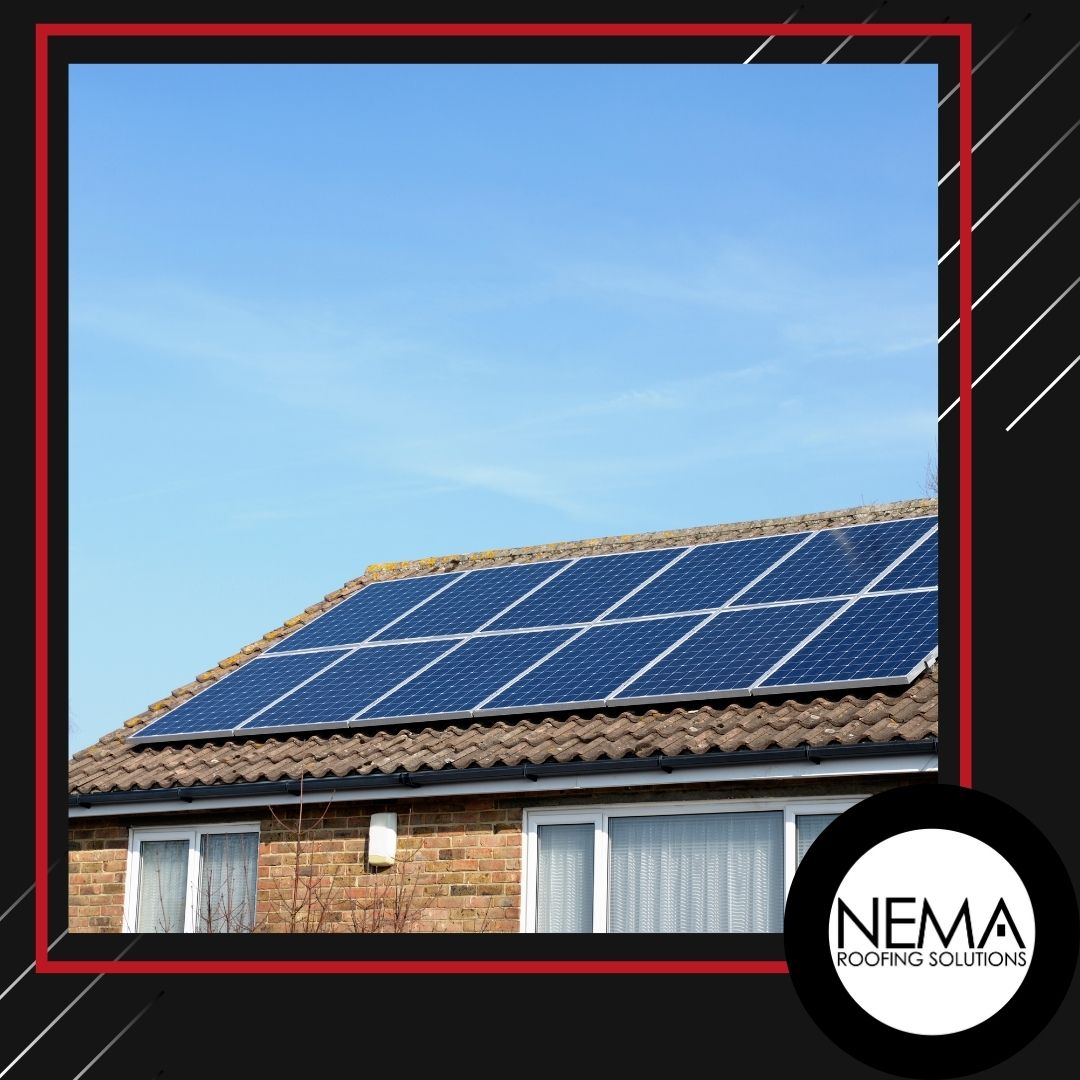
An eco friendly roof replacement follows the same steps as any reroof (assessment, permit, tear-off, deck repair, underlayment and ventilation, covering, flashing, final inspection), with a greener decision at each one: keep what can stay, fix the attic while the roof is open, choose a rated cool or recyclable covering, and send the old roof to reuse or recycling where a recycler takes it. Here is what happens at each step and what to ask. To start with an assessment, call NEMA Roofing at 866-631-3366.
Step 1: Decide whether the whole roof has to go
The greenest roof is the one you do not replace early. Before pricing a full replacement, check the cheaper, lower-waste routes the California Residential Code allows:
- Repair. A few failed flashings or a damaged valley do not justify a tear-off if the rest of the covering is sound.
- Reinstall the tile. Existing clay or concrete tile may go back on over new underlayment (section R908.5); only cracked or broken pieces are swapped out.
- Recoat a low-slope roof. A new protective coating over an existing membrane, built-up or modified bitumen roof is allowed without tear-off (section R908.4) when the roof beneath is dry and sound.
A recover is ruled out over tile, over a wet or deteriorated roof, or over two or more existing layers. In those cases the old material comes off.
Step 2: Assess the house, not only the roof
Every project begins with a look at the whole house: we check the attic, the deck, the climate the home sits in and how it uses energy, so the new roof fixes the real heat and moisture problems. The points that change an eco-friendly plan:
- Attic insulation depth, and whether heating and cooling ducts run through the attic.
- Existing vents: how many, where, and whether intake at the eaves is blocked by insulation.
- Deck condition, seen from below: stains, delamination, or spaced boards from an old shake roof.
- Planned solar, a future addition, or a flat section that could carry a coating or a planted roof.
Step 3: Choose the covering by its rating, not its brochure
If the house is in a California climate zone where the reroof cool-roof rule applies, the covering must meet the zone’s aged solar reflectance and thermal emittance values when more than half the roof is replaced, unless the house qualifies for an exception. The Cool Roof Rating Council publishes tested values in its Rated Roof Products Directory, which covers shingles, metal, tile, membranes and coatings; its own guidance to homeowners is to ask the contractor which cool products they offer and look them up there. Ask for the product name and color in writing, then check its aged values yourself.
Beyond reflectance, weigh what happens to the covering at the end of its life. Metal is fully recyclable, sound tile can be reused, and a longer service life means fewer tear-offs over the life of the house.
Step 4: Pull the right permit for your city or county
Most reroofs need a building permit, but the rule for small jobs changes from one jurisdiction to the next across the area NEMA covers:
| Where the house is | Who issues the permit | Small-job rule |
|---|---|---|
| Woodland Hills, Tarzana, Encino (City of Los Angeles) | Los Angeles Department of Building and Safety | Reroofing with a Class A or B covering under 6 lb per sq ft over solid sheathing is an Express Permit (no plan check) |
| Oxnard | City Building and Engineering Division | No permit for repairs under 40 sq ft that stay in the covering; anything reaching the underlayment or structure needs one |
| Montecito and other unincorporated Santa Barbara County | County Building and Safety Division | Repairs under 100 sq ft in 12 months, and approved coatings, are exempt (fire-resistant coatings in high fire areas) |
| Unincorporated Ventura County | Resource Management Agency, Building and Safety | No reroofing exemption in the county code’s exempt-work list |
| Unincorporated Riverside County | County Building and Safety | Re-Roof Permit; jobs under 25 percent of the roof (100 sq ft at most) with no sheathing work are exempt |
Fire zones add a rule of their own. Under the California Wildland-Urban Interface Code, in force since January 1, 2026, a building in a wildland-urban interface area whose roof covering is replaced, or has half or more replaced within 12 months, must get the Class A covering required for new construction there. That narrows the choice made in step 3.
Step 5: Tear off and sort the old roof
When the old covering has to go, the crew strips it to the deck. The green difference is in where it goes: metal flashing and panels have scrap value, clean tile can be stacked for reuse, and asphalt shingles can go to a recycler where one operates near the job. Ask before work starts which containers will be on site and where each load is taken; for the wider picture, our guide to sustainable roofing benefits covers recycling and service life.
Step 6: Repair the deck and fix the attic while it is open
With the deck exposed, three upgrades cost the least they ever will:
- Deck. Rotted panels are replaced, and spaced boards get solid sheathing over them where the new covering needs it.
- Ventilation. Section R806.2 sets the net free vent area at 1/150 of the vented space, or 1/300 when 40 to 50 percent of that area is placed high (no more than 3 feet below the ridge) and the rest in the bottom third of the attic (a vapor-retarder condition applies only in the cold climate zones). Balanced intake and exhaust keep the attic cooler and drier.
- Heat control. A radiant barrier under the deck, or rigid insulation above it, can be added now; either can also be one of the routes that exempt a house from the cool-surface requirement.
Step 7: Install the covering and the flashings
Underlayment goes down first, then the covering, with new flashing at walls, valleys, chimneys and every pipe. On a tile reinstall the code requires any rusted or damaged flashings and vents to be replaced rather than reused. If solar is coming, this is when mount locations and vent positions are planned, so the array does not need extra holes later.
Step 8: Final inspection and the records to keep
The building inspector signs off the permit at the end. Keep a folder with the permit card, the covering’s product name, color and CRRC listing, and the manufacturer warranty registration. On a GAF shingle roof, ask which warranty is being registered: NEMA holds GAF Master Elite status, which lets it register any of GAF’s enhanced warranties, up to the Golden Pledge Limited Warranty, where GAF itself also backs the installation workmanship. After that, a yearly check keeps the roof on track to reach its full life, which is the biggest environmental gain of all.
Questions to ask before you sign
- Can any of the existing roof stay (tile, a sound membrane), and if not, why not?
- Which exact product and color is quoted, and what are its aged CRRC values?
- What will be done in the attic: vents, insulation, radiant barrier?
- Where does the tear-off go?
- Who pulls the permit, and is the contractor’s state license current? NEMA Roofing holds CSLB license #1083283.
To compare coverings, read which eco-friendly roof types suit a typical home or, for Los Angeles County, what drives green roofing cost in Woodland Hills. Our eco-friendly roofing service handles every step above, from tear-off to final inspection.
With five Google-verified locations, in Tarzana, Woodland Hills, Downey, Oxnard and Santa Barbara, NEMA Roofing replaces roofs the green way in every part of Los Angeles, Ventura, Santa Barbara, Riverside and San Bernardino counties; start from the Ventura County service area or the full list of areas. Call 866-631-3366 to book the assessment.




