
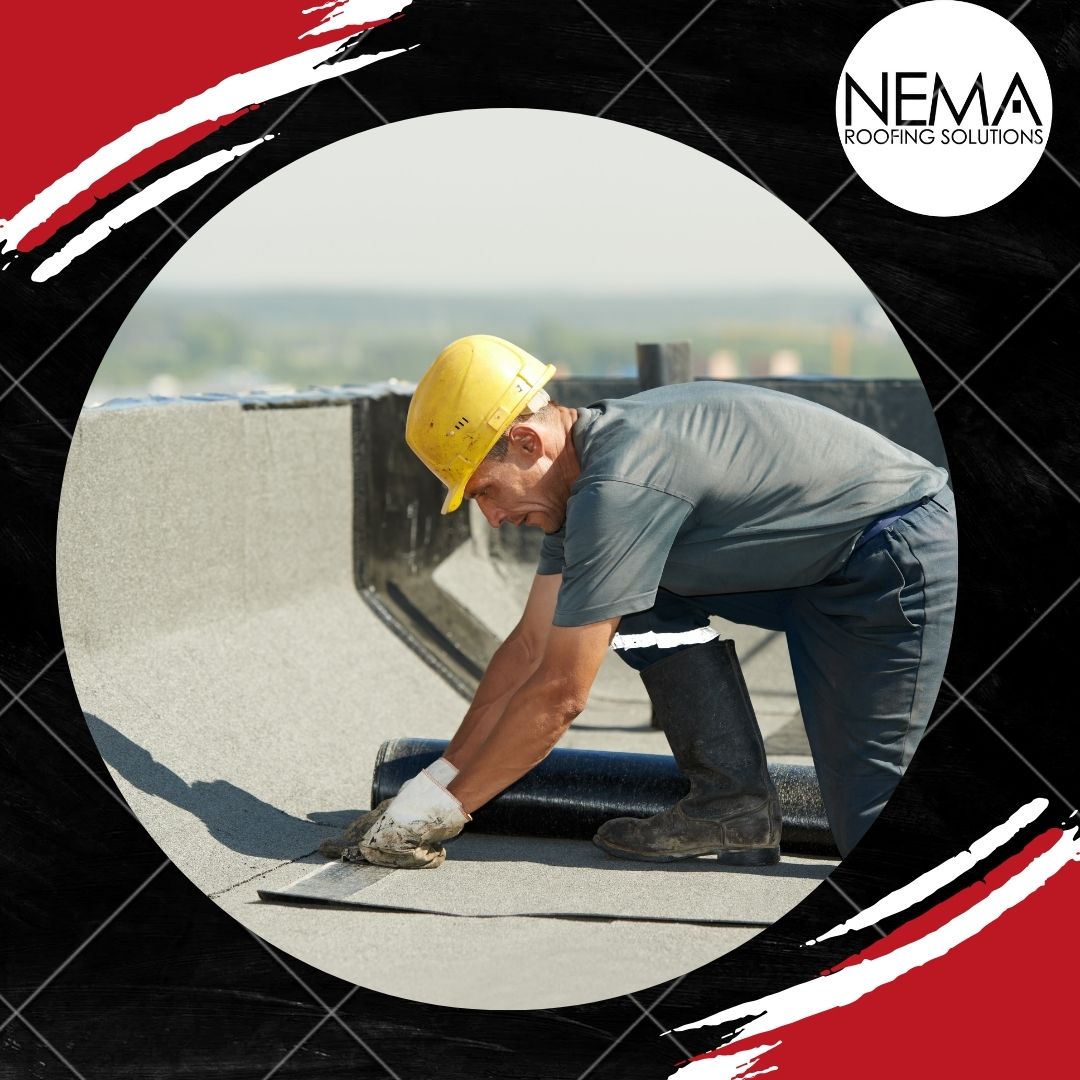
Flat roof surface finishes are the top, weather-facing layer of the roof: a smooth factory membrane (TPO, PVC or EPDM), a mineral-granule or coated cap sheet on modified bitumen, gravel set in asphalt on a built-up roof, or a liquid coating applied on site. The smooth, sleek look comes from single-ply membranes and coatings; how long any finish lasts depends mostly on how well it shields the layers below from sun and how it handles foot traffic. To choose or renew a finish, call NEMA Roofing at 866-631-3366.
What each finish looks like and how it wears
| Finish | Look | How it wears |
|---|---|---|
| Smooth single-ply (TPO, PVC) | Flat, even sheet, usually white or light gray, with welded seams as thin lines | Shows dirt and scuffs; the sheet itself is the weather surface, so punctures and seam defects matter more than wear |
| Smooth EPDM | Matte rubber sheet, traditionally black, with taped seams | Flexible and even; dark versions absorb heat; not resistant to grease and oil |
| Granulated cap sheet (modified bitumen) | Sandpaper-like texture in white, gray or tan granules | Granules shade the asphalt; bare patches appear where granules wash or scuff away |
| Coated smooth or foil-faced cap sheet | Even coated surface, or a metallic sheen on foil-faced sheets | The coating or foil carries the reflectance; coatings are renewed over time |
| Gravel (aggregate) on built-up roofing | Loose stone texture, gray or tan | Stone shields the membrane well; it drifts from wind and traffic and hides defects underneath |
| Field-applied coating (acrylic, silicone, polyurethane) | One continuous painted surface with no seams, usually white | Wears thin with sun and traffic and is recoated; silicone collects dirt |
Why the finish decides how long the roof lasts
Sunlight breaks down asphalt, so on asphalt-based roofs the surface is a shield. The U.S. Department of Defense’s roofing criteria (UFC 3-110-03) explain it plainly: ceramic granules reduce the temperature effect on modified bitumen and built-up roofs, but as granules are lost, ultraviolet degradation cuts performance; gravel keeps a built-up membrane cooler than a granulated cap sheet does, and gravel-surfaced systems tend to last longer. The same criteria do not allow uncoated smooth-surfaced modified bitumen at all on military roofs; smooth sheets there must be factory coated for heat reflection and UV protection.
On single-ply roofs the membrane is its own finish, so durability comes from sheet thickness, sound welds and protection from damage rather than from a separate surface layer. A sleek finish lasts when nothing is allowed to cut, grind or sit on it.
Which finish handles foot traffic and rooftop equipment?
- Service paths: granulated cap sheets and gravel tolerate occasional walking better than a smooth sheet, but no finish should be the regular path to an air conditioner. Walkway pads made for the membrane, laid from the roof access point to each unit, protect any finish.
- Roof decks: where people use the roof, the finish goes under pavers on pedestals or a raised deck, and the membrane is protected rather than exposed.
- Kitchen exhaust: the UFC notes EPDM is not resistant to grease and oil and should not be installed near food-preparation exhaust vents. Grease also stains light finishes; ask for a membrane or coating the maker rates for it.
- Solar racks and equipment stands: each foot sits on a protective pad or a flashed support, never directly on a coating.
How do you keep a smooth white finish looking clean?
A bright membrane dulls as dust, soot and organic growth settle on it, and that dulling also lowers how much sun it reflects. The Cool Roof Rating Council rates roofing products twice, when new and again after three years of outdoor exposure, and the aged figure is the one California’s cool-roof rules use, because weathered roofs reflect less. To keep a finish looking and working its best:
- Clear drains so water does not pond and leave dirt rings.
- Wash with the cleaner and method the membrane or coating maker allows; harsh chemicals and high-pressure spray can damage some surfaces, and warranty terms often say how a roof may be cleaned.
- Remove leaves and debris before they stain.
- Fix scuffs and cuts from equipment service promptly with the maker’s repair materials.
The full routine is in our flat roof maintenance checklist.
Can you change the finish on an existing flat roof?
Often, without a new roof. Under California’s building and residential codes, a roofer can put a fresh protective coating on top of a single-ply, modified bitumen, built-up, spray foam or previously coated roof and leave the old roof in place (CBC 1512.3, CRC R908.4), as long as the roof below is a sound, dry base. A gravel roof has to lose its loose stone first, and many owners use that moment to replace it; see tar and gravel roof replacement. Coating choices for single-ply roofs are covered in our guide to coating TPO and PVC roofs.
If the change comes with replacing more than half of the roof, California’s cool-roof values limit the finish to light, reflective products in climate zones 4 and 6 through 15 (which include Oxnard, Santa Barbara and the San Fernando Valley); how that works is explained in flat roof design.
Flat roof finishes from NEMA Roofing
NEMA Roofing installs, coats and repairs flat roofs on homes and commercial buildings; see our flat roofing services. We work from five locations, in Oxnard, Santa Barbara, Tarzana, Woodland Hills and Downey, and cover all of Ventura, Santa Barbara, Los Angeles, Riverside and San Bernardino counties, including the towns on our San Bernardino County page. To compare finishes for your roof, call 866-631-3366.




