
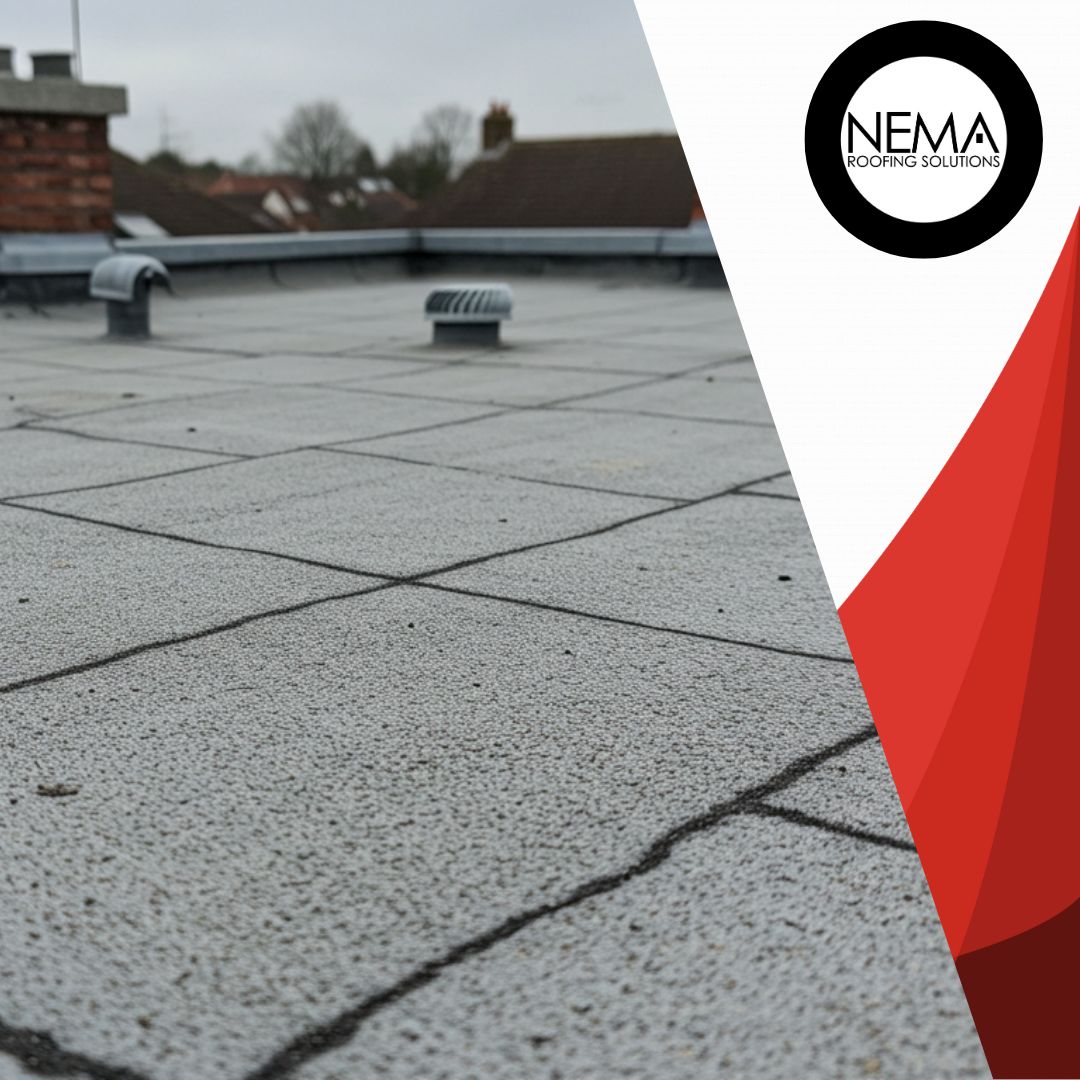
On flat roof vs pitched roof cost, a flat roof is usually the cheaper one to build, because it covers only the house’s footprint, needs simpler framing and is quicker and safer to work on; over the roof’s whole life the gap narrows, because the membrane needs more regular care and may be replaced sooner than tile. Which one costs you less depends on how long you keep the house and how well the flat roof drains. For a written estimate on either kind of roof, call NEMA Roofing at 866-631-3366.
Why a flat roof usually costs less to build
- Less roof to cover. A flat roof’s area is close to the footprint of the building. A pitched roof is longer than the floor it covers: at a 4-in-12 pitch the surface is about 5 percent larger than the footprint, at 6-in-12 about 12 percent, at 8-in-12 about 20 percent and at 12-in-12 about 41 percent, before overhangs. Every extra square foot means more material and more labor.
- Simpler structure. Roof joists with a slight slope replace the rafters or trusses, ridge and extra wall height that a pitched roof needs.
- Faster, safer work. Crews can walk a flat roof, stage materials on it and work without the steep-slope safety setup, which shortens the job.
- Large sheets, few pieces. Membranes go down in wide rolls with a limited number of seams, instead of thousands of individual shingles or tiles.
Where the savings shrink over the years
The up-front saving is real, but three things eat into it:
- Service life. The National Association of Home Builders’ life-expectancy study (2007) lists modified bitumen at about 20 years, the same as asphalt shingles, while clay and concrete tile are expected to last the life of the house. A flat roof may need a new membrane once or more in the time a tile roof stays in place (the underlayment below tile still ages). Each material’s life is covered in our guide to how long each flat roof material lasts.
- Upkeep. A pitched roof sheds water by gravity. A flat roof relies on drains, scuppers and seams staying clear and sealed, so it needs regular checks, drain cleaning and, on coated roofs, periodic recoating.
- Cost of a missed leak. Water can travel under a membrane before it shows on a ceiling, so a small defect found late can mean wet insulation and deck repair, not just a patch.
Cost factors side by side
| Factor | Flat (low-slope) roof | Pitched roof |
|---|---|---|
| Area to cover | About the footprint | Footprint plus the added length from the pitch and overhangs |
| Structure | Joists with a slight slope, often tapered insulation | Rafters or trusses, ridge, more height |
| Access and labor | Walkable, quicker to stage | Steeper roofs need more safety equipment and time |
| Drainage parts | Drains, scuppers, overflow outlets, crickets | Gutters and downspouts |
| Routine upkeep | Regular checks, drain cleaning, recoating on coated roofs | Less frequent; gutters, flashing, broken pieces |
| Options at the end of life | Often a coating or a recover instead of a full tear-off | Tile and slate roofs cannot be recovered; a replacement removes the old layers |
| Energy | Cool-roof values apply to most home reroofs in climate zones 4 and 6 to 15, so light membranes are the norm | Color depends on the material and the local cool-roof rule |
Does your roof’s pitch decide it for you?
Often it does. California’s Residential Code sets a minimum slope for each steep-slope material, and below it you need a low-slope membrane whatever the budget:
- Asphalt shingles: 2 in 12 or steeper, with double underlayment up to 4 in 12 (CRC R905.2.2).
- Clay and concrete tile: 2 1/2 in 12 or steeper, with double underlayment up to 4 in 12 (CRC R905.3.2).
- Lapped metal panels without lap sealant: 3 in 12 or steeper; with applied lap sealant, 1/2 in 12 (CRC R905.10.2).
- Built-up, modified bitumen, single-ply and spray foam roofs: designed with at least 1/4 in 12 slope for drainage (CRC R905.9.1, R905.11.1, R905.12.1, R905.13.1).
So a patio cover or addition with a very low pitch is a flat roof in cost terms, even if it looks sloped. Shingles laid below their minimum slope are a common source of leaks and are not a saving.
How to keep a flat roof’s lifetime cost down
- Fix ponding at the next reroof. Tapered insulation or crickets that move water to the drains protect the membrane for its whole life.
- Coat or recover when the code allows it. California’s Residential Code permits a new protective coating over an existing coating, built-up, modified bitumen, single-ply or spray foam roof without tear-off, and a recover over an existing roof, except where the old roof is water-soaked or deteriorated, or already has two or more roof coverings (CRC R908.4). A moisture check decides whether that cheaper route is open.
- Keep drains clear and seams checked every year and after storms, so small defects are caught before the deck gets wet.
- Choose the membrane for the use. Foot traffic, rooftop equipment and solar all change which system is the better value; see our flat roofing systems guide.
Getting a written estimate
This page gives no prices because the site states none and every roof differs; what moves a flat roof quote is covered in flat roof installation cost factors. NEMA Roofing installs and repairs both flat and pitched roofs (see our flat roofing services), with five locations in Santa Barbara, Oxnard, Woodland Hills, Tarzana and Downey and crews serving homes throughout Santa Barbara, Ventura, Los Angeles, Riverside and San Bernardino counties, including every town on our Ventura County page. Call 866-631-3366 to have your roof measured and priced both ways.




