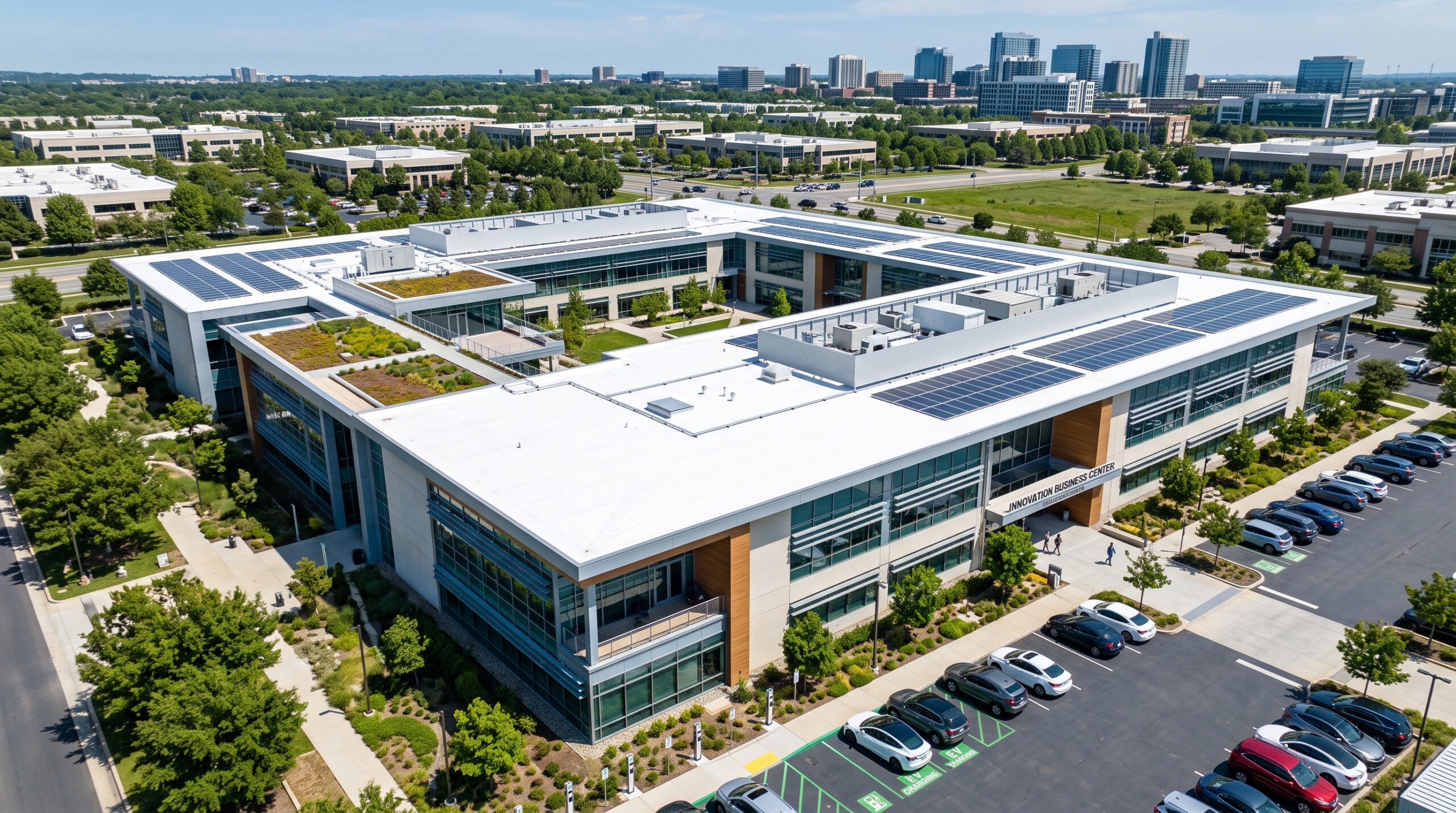
Cool roof energy savings come from one thing: less of the sun’s heat gets through the roof, so the air conditioner runs fewer hours on summer afternoons. Because those hours are also when electricity costs the most on time-of-use rates, the cut on the bill can be larger than the cut in energy. The Cool Roof Rating Council puts average savings at 7% to 15% of total cooling costs; the rest of the bill does not change. To find out what a cool roof would do on your home, call NEMA Roofing at 866-631-3366.
Where does roof heat go on a summer afternoon?
Follow the heat from the sun to your meter, and you can see each point where a cool roof interrupts it:
- The surface. A dark roof absorbs most of the sunlight that lands on it. A cool surface reflects more of it back to the sky and releases more of the heat it does absorb.
- The deck and attic. Heat the surface keeps soaks through the sheathing and warms the attic air, often long after sunset.
- The ducts. In many California homes the air conditioning ducts run through the attic. Hot attic air warms the cooled air inside them before it reaches the rooms.
- The ceiling. Heat passes through the ceiling insulation into the rooms below, most of all on the top floor.
- The thermostat. Rooms warm up, the air conditioner starts, and each extra hour it runs shows up on the bill.
A cool roof works at step 1, so every later step gets less heat to pass along. That is why it helps most in homes where steps 3 and 4 are weak: ducts in the attic, thin insulation.
Why does the saving land at the most expensive hours?
Roof heat peaks in the afternoon, which is also when air conditioners across a region run hardest and when time-of-use electricity prices are highest. The Cool Roof Rating Council notes that cool roofs cut air conditioning use during the hottest part of the day, so owners on time-of-use rates save energy when it is most expensive. The U.S. EPA cites research finding that in air-conditioned homes, a cool roof can reduce peak cooling demand by 11% to 27%. A kilowatt-hour saved at 5 p.m. in August is worth more on these rate plans than one saved at night.
What makes the saving bigger or smaller?
| Factor | Bigger saving | Smaller saving |
|---|---|---|
| Climate | Hot inland valleys with long cooling seasons | Mild coast where the air conditioner seldom runs |
| Air conditioning use | Runs most summer afternoons | Rarely used, or no air conditioning |
| Ducts | Run through the attic | Inside the living space |
| Ceiling insulation | Thin or old | Deep and complete |
| Number of stories | One story: more roof over each square foot of living space | Two or more stories: the roof sits over a smaller share of the home |
| Roof type | Flat or low-slope, where light membranes and coatings reach very high reflectance | Pitched, where cool colors reflect less than white flat-roof products |
| Current roof | Dark shingles or a black flat roof | Already light-colored or naturally cool terra cotta |
| Shade | Full sun | Heavy tree cover or large solar arrays |
California’s energy code reflects the same logic. It lets a pitched home reroof skip the cool roof values when the house has R-38 ceiling insulation, a radiant barrier or, in some climate zones, no ducts in the attic, because those homes already keep most roof heat out.
Which part of the bill will not change?
- Heating, water heating, cooking, lighting and appliances.
- Fixed monthly charges on the bill.
- Winter months, when a cool roof can add slightly to heating. The Cool Roof Rating Council calls this penalty usually insignificant next to the summer savings, because the winter sun is lower and weaker and the days are shorter.
That is why a cool roof can make a noticeable dent in an August bill and almost none in a January one. For the winter side in detail, see how a cool roof performs in winter.
How can you check the savings after a new roof?
- Compare kilowatt-hours, not dollars, because rates change from year to year.
- Compare the same billing months, June through September, before and after.
- Note whether the summer was hotter or milder; one heat wave can hide or exaggerate the change.
- Keep thermostat settings the same, or note what you changed.
- If your utility shows hourly usage online, look at the late-afternoon hours, where the difference should be clearest.
How do you get the most from a cool roof?
The EPA recommends pairing a cool roof with insulation and air sealing to get the most energy savings. In practice that means checking attic insulation depth, sealing leaky ducts, and clearing blocked eave vents when the roof is replaced. On a flat roof, keeping the surface clean keeps it reflective. For how the heat reaches particular rooms, read cool roofing for home comfort; to weigh cost against savings, see is a cool roof worth it.
Cool roofing near you
NEMA Roofing installs cool roofing for homes and businesses in every part of Santa Barbara, Ventura, Los Angeles, Riverside and San Bernardino counties, from six locations: Santa Barbara, Oxnard, Woodland Hills, Tarzana, Downey and San Bernardino. See all the areas we serve, then call 866-631-3366 before the next cooling season.