
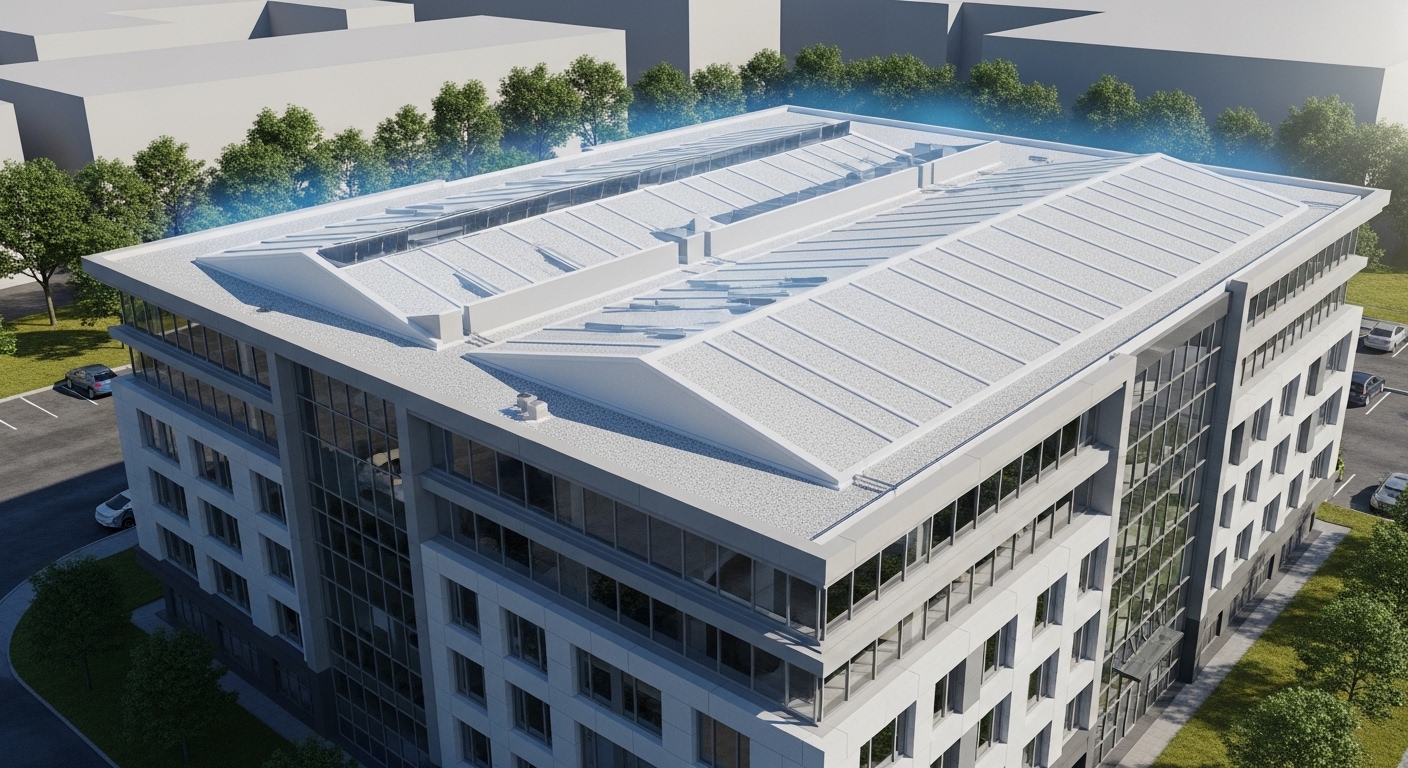
A cool roof in winter keeps out rain exactly as well as the same material in a standard color, and in Southern California’s mild winters the small extra heating it can cause is usually far outweighed by what it saves in summer. Performing year-round means matching the roof to each season’s stress: summer sun, fall fire weather, winter storms and spring dust, with a little care at each change. To have your roof checked before the next season, call NEMA Roofing at 866-631-3366.
Does a cool roof raise heating bills in winter?
Slightly, in some homes, and usually not enough to matter. The Cool Roof Rating Council (CRRC) gives the reasons the winter “heating penalty” stays small:
- The winter sun is lower in the sky and weaker, so there is less roof heat to lose.
- Days are shorter and cloudy days more common.
- Sunshine through windows still warms the house.
- A cool roof does not lose more heat than other roofs at night or on cloudy days; it only limits heat coming in on sunny ones.
The U.S. EPA adds that good insulation and energy-efficient design reduce the penalty further. Winters near the coast are mild: at the Oxnard Ventura County airport, the normal low in January, the coldest month, is 46.1°F (NOAA climate normals, 1991 to 2020). Homes that cool for months and heat for weeks gain far more than they give back.
Where does winter change the answer?
Mountain communities are the exception in the area we serve. Big Bear Lake (ZIP 92315) is in California’s building climate zone 16, and NOAA’s normals for its weather station show about 176 nights a year at or below freezing and 58.6 inches of snow. There:
- The state’s cool roof values for pitched home reroofs do not apply; zone 16 is outside the rule.
- Snow covers the roof for much of the winter, so its color matters less, as both the EPA and the CRRC point out.
- Moisture needs attention. The U.S. Department of Defense’s roofing criteria warn that poorly designed cool roofs in colder climates have trapped condensation under the membrane, because the roof surface does not get warm enough to drive moisture back down. Insulation and ventilation have to be designed for cold, not only for heat.
How does a cool roof handle the rainy season?
Reflectance has nothing to do with waterproofing. A cool-color shingle, tile or metal roof sheds water the same way as its standard version; leaks come from flashing, underlayment, fasteners and workmanship. Flat and low-slope cool roofs need two extra checks before the first storms:
- Drains and scuppers clear. Water that ponds leaves a ring of dirt as it dries, which dulls a white surface and can shorten the life of some coatings.
- Seams and coating sound. Look for split seams, lifted edges, blisters and places where the coating has worn through to the membrane.
Does a cool roof help or hurt in fire season?
Neither: solar reflectance and fire resistance are separate ratings. What matters in the fall, when dry winds arrive, is the roof assembly’s fire classification. California’s Wildland-Urban Interface Code (Title 24, Part 7, in effect since January 1, 2026) applies in fire hazard severity zones and the wildland-urban interface, and the roofs it covers need a Class A assembly. A cool rating and a Class A rating do not conflict, so check both, the cool rating and the fire classification, for the exact product. Clearing leaves and needles from the roof and gutters in late summer helps twice: it removes fuel, and it keeps the surface clean enough to reflect.
Can a reflective roof cause problems nearby?
On some commercial buildings, yes. The Department of Defense criteria note that reflected sunlight from cool roofs has overheated masonry walls, interior spaces, rooftop piping and mechanical equipment. Where a low roof sits below taller walls, windows or rooftop units, the layout deserves a look at design time. On most houses with pitched roofs, this is not a concern.
A year-round care calendar
| Season | What to do | Why |
|---|---|---|
| Spring | Clean flat and coated roofs using the method the manufacturer allows; check coating wear | Winter dirt and spring dust lower reflectance right before the hottest months |
| Summer | Watch attic temperature and air conditioner run time; look for curling, blistering or cracked sealant | Heat damage shows first at seams, edges and penetrations |
| Late summer and fall | Clear leaves and needles from the roof and gutters; confirm vents and flashings are intact | Fire weather and the first rains both find debris and weak spots |
| Before and after storms | Clear drains and scuppers; check for ponding, split seams and lifted edges | Standing water stains cool surfaces and finds any opening |
| Once a year | Have a professional inspection | Small repairs keep both the watertightness and the reflectance |
Our roof maintenance visits follow this kind of schedule. For the summer side in detail, read cool roof energy savings and how a cool roof limits heat damage.
A cool roof for every season, wherever you are
From the coast to the mountains, the right cool roof changes with the climate. NEMA Roofing works from five locations, Santa Barbara, Oxnard, Woodland Hills, Tarzana and Downey, and fully covers Santa Barbara, Ventura, Los Angeles, Riverside and San Bernardino counties, mountain towns included (see San Bernardino County). Learn more about our cool roofing service or call 866-631-3366.




