
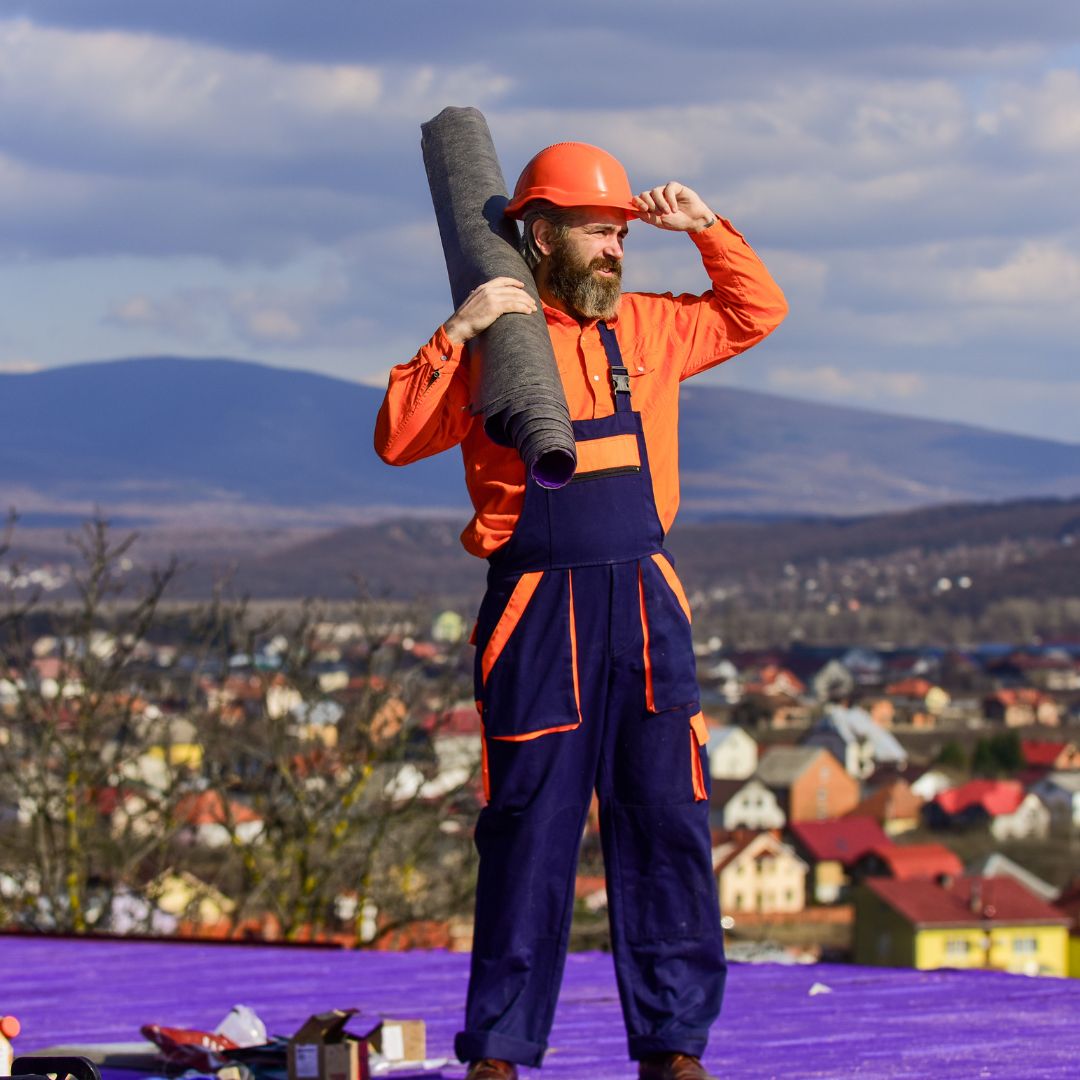
Durable commercial roofing is a complete assembly, not just a material name: multi-ply modified bitumen, gravel-surfaced built-up roofing, thick fully adhered single-ply membranes (PVC, TPO, EPDM) over a cover board, and standing seam metal on sloped roofs are the long-service options. How long any of them lasts depends on thickness, attachment, flashing details, drainage and upkeep. To have your building’s roof assessed, call NEMA Roofing at 866-631-3366.
What makes a commercial roof last?
Two roofs sold under the same material name can age very differently. These are the parts of the assembly that decide it:
- Thickness. A thicker membrane has more material to lose to sun and foot traffic before it leaks. Ask for the thickness in mils on the proposal, not just the product name.
- Attachment. Fully adhered membranes do not billow in wind; mechanically fastened sheets can lift and flex between fastener rows. The U.S. Department of Defense roofing criteria (UFC 3-110-03) call fully adhered installation the preferred method for EPDM and for weldable thermoplastics.
- Cover board. A rigid board under the membrane resists punctures from tools, hail and equipment service. The same criteria require high-density cover boards under fully adhered roofs where hail resistance is needed.
- A surface that blocks the sun. Gravel, mineral granules, a factory reflective face or a maintained coating protect the waterproofing layer from ultraviolet light. When granules wash off, the layer beneath starts to degrade.
- Seams. Heat-welded seams on PVC and TPO can be about as strong as the sheet itself; taped or glued seams depend more on workmanship and cleaning.
- Flashings and drainage. Most commercial leaks start at flashings (walls, curbs, drains, skylights), and standing water speeds up wear everywhere else. A strong membrane with weak details is not a durable roof.
Top 10 commercial roofing materials, judged on durability
| Material | What helps it last | What shortens its life |
|---|---|---|
| 1. Modified bitumen (SBS or APP) | Two or more plies; polymers improve flexibility in cold and stability in heat; tough surface for foot traffic | Granule loss on cap sheets; torch-applied work needs strict fire-safety practice |
| 2. Built-up roofing (BUR) with gravel | Several plies; the gravel keeps the membrane cooler and shields it from the sun | Heavy; loose or scoured gravel leaves bare spots |
| 3. PVC | Heat-welded seams; handles grease and many chemicals | Thin sheets; poorly welded seams |
| 4. TPO | Heat-welded seams; white, reflective surface stays cooler | Mechanically fastened installs can billow between fastener rows; thin sheets |
| 5. EPDM | Predictable service in all climates; flexible rubber tolerates movement | Not resistant to grease and oil, so poor near kitchen exhaust; taped seams need careful work |
| 6. Standing seam metal | Concealed clips let panels move with heat; few exposed penetrations; sheds water on slope | Needs slope; the wrong metal near salt air; dissimilar metals in contact |
| 7. Spray polyurethane foam (SPF) with coating | One continuous layer with no seams; adds insulation; fits irregular roofs | Foam degrades quickly in sunlight if the coating wears through; recoating is a large share of its life-cycle cost |
| 8. Green (vegetative) roof | Soil and plants shield the membrane underneath | Must go over a new waterproofing system; leaks are harder to find under the plantings |
| 9. Corrugated or exposed-fastener metal | Light, simple, suits sheds, shops and warehouses | Every screw is a penetration; sealing washers age and need checking |
| 10. Asphalt shingles | Familiar and easy to repair on small sloped commercial buildings | Only for steep slopes; not a choice for flat roofs |
For price, weight and best-use trade-offs of the same systems side by side, see our guide to commercial roofing materials, pros, cons and best uses.
Which systems last longest with the least maintenance?
For a low-slope roof, the multi-ply bituminous systems have the strongest record. The Department of Defense criteria describe built-up roofing as offering long service life, low maintenance and well-understood repair procedures, and say modified bitumen has low maintenance cost and must be considered when long service life is required. They also note that gravel-surfaced built-up roofs tend to outlast granule-surfaced ones because the membrane runs cooler.
Single-ply membranes install with less labor. The same criteria state that properly constructed PVC and TPO systems may last 15 years or more; thickness and a fully adhered installation push them toward the long end. SPF is the opposite trade: easy to fit to odd shapes, but its protective coating has to be renewed for the foam to survive, which is ongoing maintenance by design. The U.S. EPA notes that green roofs typically have a longer expected life than cool roofs, at a higher initial cost.
How do Southern California conditions change the answer?
- Sun and heat. Ultraviolet exposure is the main aging force on most low-slope roofs here. Reflective membranes and intact surfacing matter more than cold-weather ratings.
- Salt air near the coast. Per the DoD criteria, Galvalume (aluminum-zinc coated) steel holds up less well where salt spray reaches it directly; in some coastal spots they suggest aluminum instead, even though it costs more.
- Restaurants and kitchens. Grease from exhaust fans attacks EPDM; PVC or a membrane rated for grease is the durable choice around those fans.
- Reroof rules. A commercial low-slope reroof in California has to meet the state’s cool-roof values, which favors white or reflective surfaces; plan the material around that rule rather than adding a coating later.
How do you keep a durable roof durable?
Keep drains and scuppers clear, protect walk paths to rooftop equipment, reseal flashings when they open, and have the roof inspected on a schedule and after major storms. Many manufacturer warranties also require documented inspections, so read the terms before you sign; our guide to commercial roofing warranties explains what to look for, and our preventive commercial roof maintenance guide lists the routine checks.
Our commercial crews install and repair these systems in every one of the five counties we cover (Ventura, Santa Barbara, Los Angeles, San Bernardino and Riverside), working out of NEMA Roofing’s locations in Oxnard, Santa Barbara, Tarzana, Woodland Hills and Downey; Ventura County roofing coverage is one example, and our commercial roofing service lists the work we do. To talk through which system will last on your building, call 866-631-3366.




