
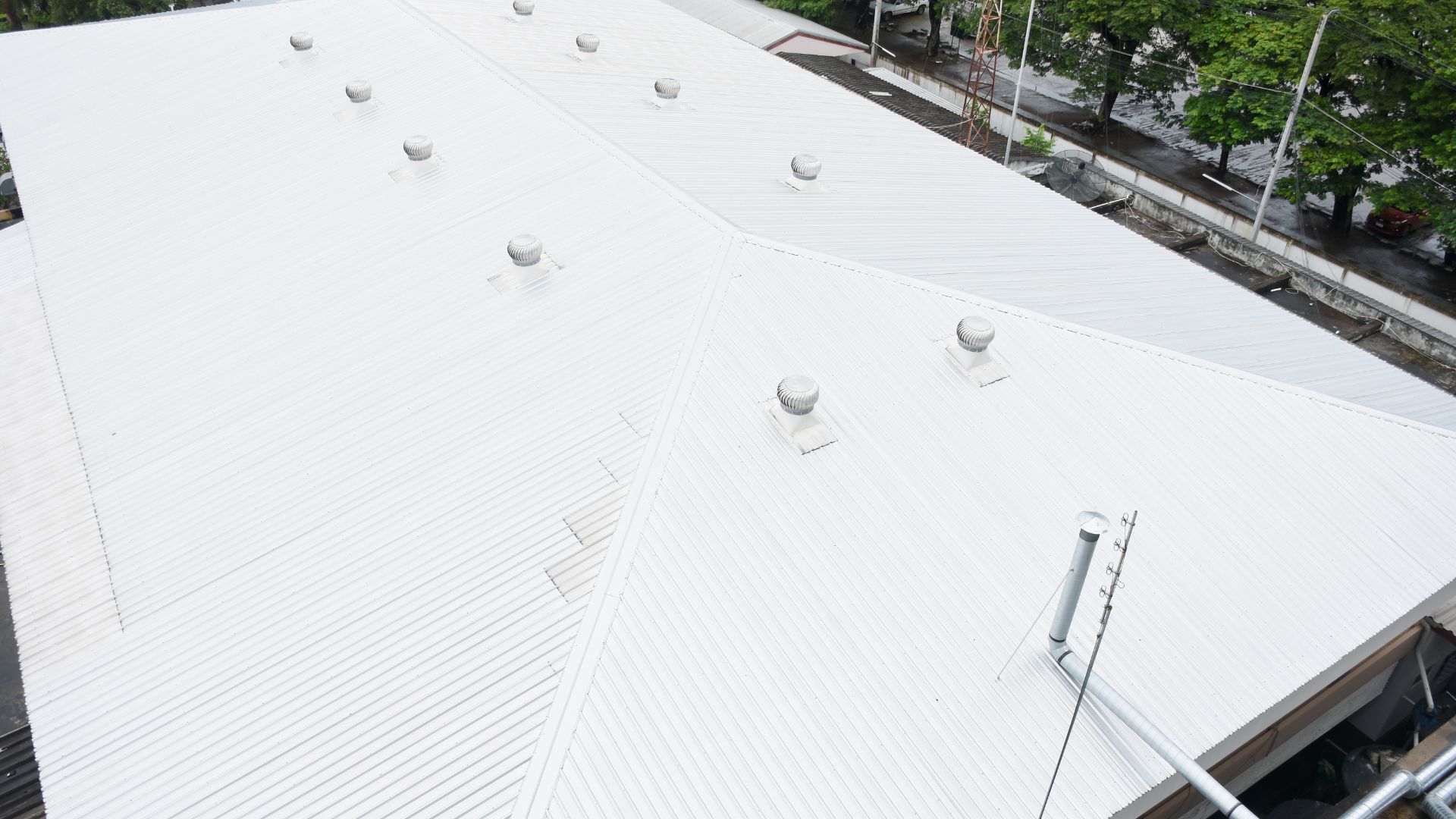
How to choose a commercial roofing system: rank what your business needs most from the roof (lowest energy use, fewest leaks, least disruption, lowest cost over its life), find out what the existing roof and structure allow, apply California’s rules for your building, and then compare complete systems and their installers on life-cycle cost rather than first price. The steps below take you through it in that order. To have your building assessed, call NEMA Roofing at 866-631-3366.
Step 1: Decide what matters most for your business
Every building has to keep water out; after that, priorities differ. A retail space may care about appearance from the street, a warehouse about insulation and a big, simple roof area, a lab about never having a leak over its equipment. Pick your top two priorities, because each one points to different choices:
| If your top priority is | It points toward |
|---|---|
| Lower cooling costs | A reflective surface (white single-ply or a rated cool coating) plus insulation to the energy code |
| No leaks over critical space | Redundant layers (multi-ply modified bitumen or built-up), a high-density cover board, fewer penetrations |
| Heavy rooftop traffic | A reinforced or thicker membrane, a cover board and walkway pads to every unit |
| Staying open during the work | A recover or a coating where the existing roof qualifies; no open flame near combustible materials |
| Lowest cost over the roof’s life | A full replacement with added insulation, even when a recover is cheaper today |
| Solar now or later | A membrane and attachment method the array can be mounted on, planned before the roof goes on |
Step 2: Find out what the existing roof allows
The current roof decides if a new roof can go over it or the old one must come off, and that changes both cost and disruption. Before choosing a system, get:
- A moisture survey. The California Building Code does not allow a recover over a water-soaked or deteriorated roof. Infrared or capacitance scans find wet areas, and core cuts confirm them.
- A layer count. A recover is not allowed where two or more roof layers are already in place.
- A look at clearances. New insulation raises the roof surface; the U.S. Department of Defense roofing criteria (UFC 3-110-03) point out that ducts, units and wall flashings may then need raising, and suggest a reinforced coating to extend the old roof’s life where that would be too costly or disruptive for now.
Step 3: Check the structure and the slope
Weight and slope rule out some systems before price does. Ballasted roofs and heavy multi-ply assemblies need a structure that can carry them; a light metal building may not. On slope, new membrane, built-up and foam roofs need a quarter inch of fall per foot under the California Building Code, while a replacement or recover over an existing low-slope roof may keep a flatter slope if the roof has positive drainage. If water ponds today, add tapered insulation or crickets to the scope, whichever system you pick.
Step 4: Apply the rules for your building and address
- Cool roof. Section 141.0(b)2B of the 2025 Energy Code (Title 24, Part 6) is triggered on a nonresidential low-slope roof by replacing, recovering or recoating the smaller of half the roof or 2,000 square feet. The new surface then has to reach 0.63 aged solar reflectance and 0.75 thermal emittance, or an SRI of 75. A better-insulated roof may use a lower reflectance, and area under building-integrated solar and roofs weighing 25 pounds per square foot or more are exempt.
- Insulation. The same trigger requires the replaced or recovered area to be insulated to the code’s level, with exceptions such as a recover that adds R-10 above the deck.
- Fire rating. In a fire hazard severity zone, check the Class A requirement for the assembly, not only the top layer.
- Permit. The city or county building department where the building sits sets what needs a permit; ask your contractor to confirm it for the address.
Step 5: Compare complete systems on life-cycle cost
A proposal that names only a membrane is not comparable with one that names the whole assembly. Ask each bidder for the deck repairs, insulation type and thickness, cover board, membrane and its thickness, attachment method, flashing and edge metal, and the manufacturer warranty the system qualifies for. Then weigh the first price against how long the roof will last: the federal roofing criteria caution that a recover is unlikely to last as long as a tear-off and replacement, and that access, slope build-up and raising equipment drive replacement cost. For how the main materials compare, read commercial roofing materials: pros, cons and best uses, and for system choices by type of business, the best commercial roofing systems for each kind of business.
Step 6: Choose the company as carefully as the system
The best commercial roofing company in California for your project is one that is licensed, insured and authorized for the system it proposes. Check the license on the Contractors State License Board site (roofing is the C-39 classification; the board requires every C-39 roofing contractor to carry workers’ compensation insurance, whether or not it has employees), ask for proof of liability coverage, and ask which manufacturer warranties the contractor can register. NEMA Roofing’s license, CSLB #1083283, carries both the C-39 Roofing and B General Building classifications, and the company is a Polyglass Preferred Contractor, a GAF Master Elite contractor and an Owens Corning Preferred Contractor.
Step 7: Plan the upkeep before you sign
Whatever system you choose, it only performs if it is looked after: inspections at least twice a year and after major storms, drains kept clear and rooftop traffic kept on walkways. Our guide to commercial roof performance factors covers what keeps a new roof working for its full life.
Get a system recommendation for your building
With five locations in Santa Barbara, Oxnard, Woodland Hills, Tarzana and Downey, NEMA Roofing assesses and installs commercial roofs throughout Santa Barbara, Ventura, Los Angeles, Riverside and San Bernardino counties; see San Bernardino County or all our service areas. Learn more about our commercial roofing services, or call 866-631-3366 to start with a roof survey.




