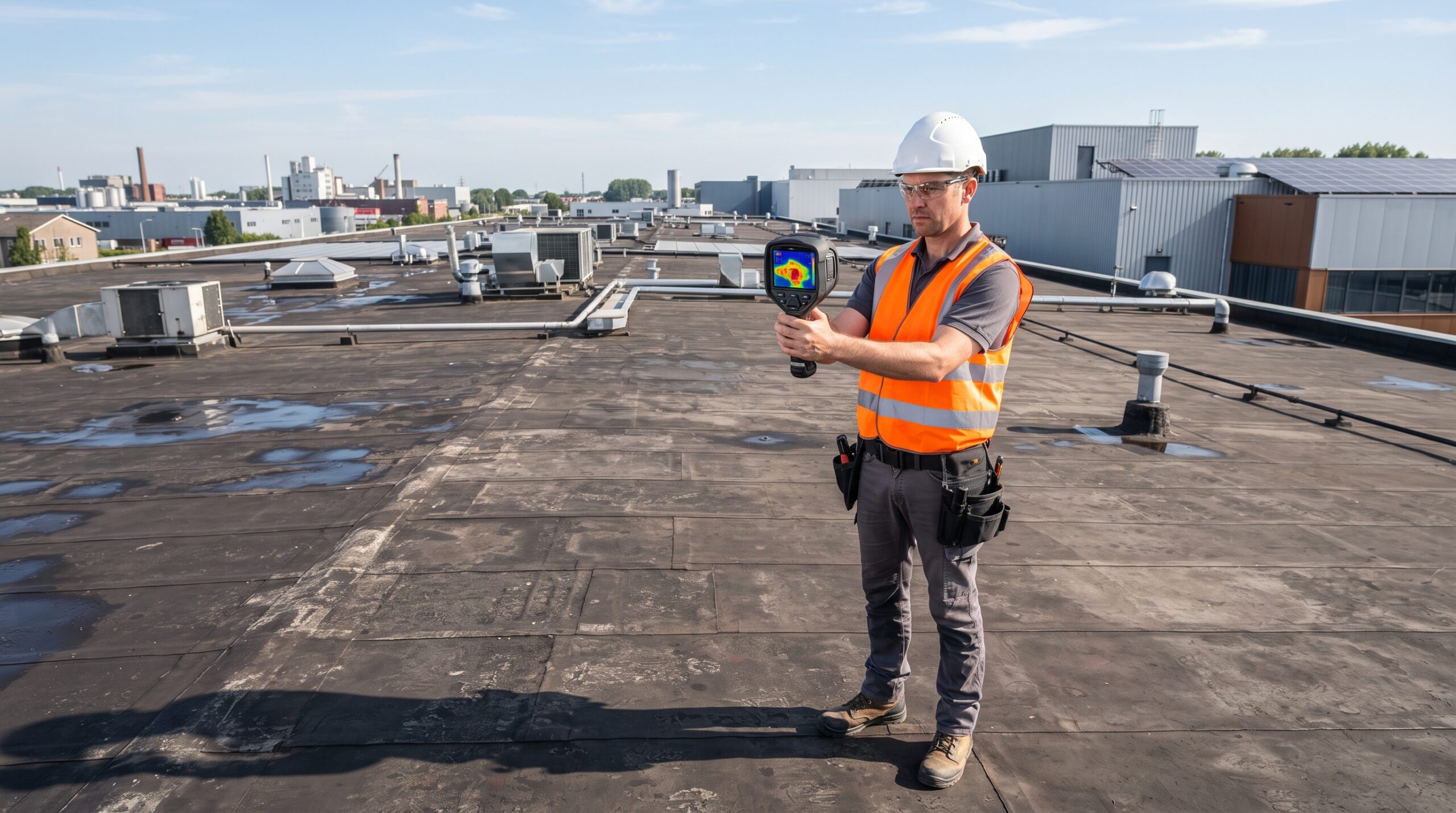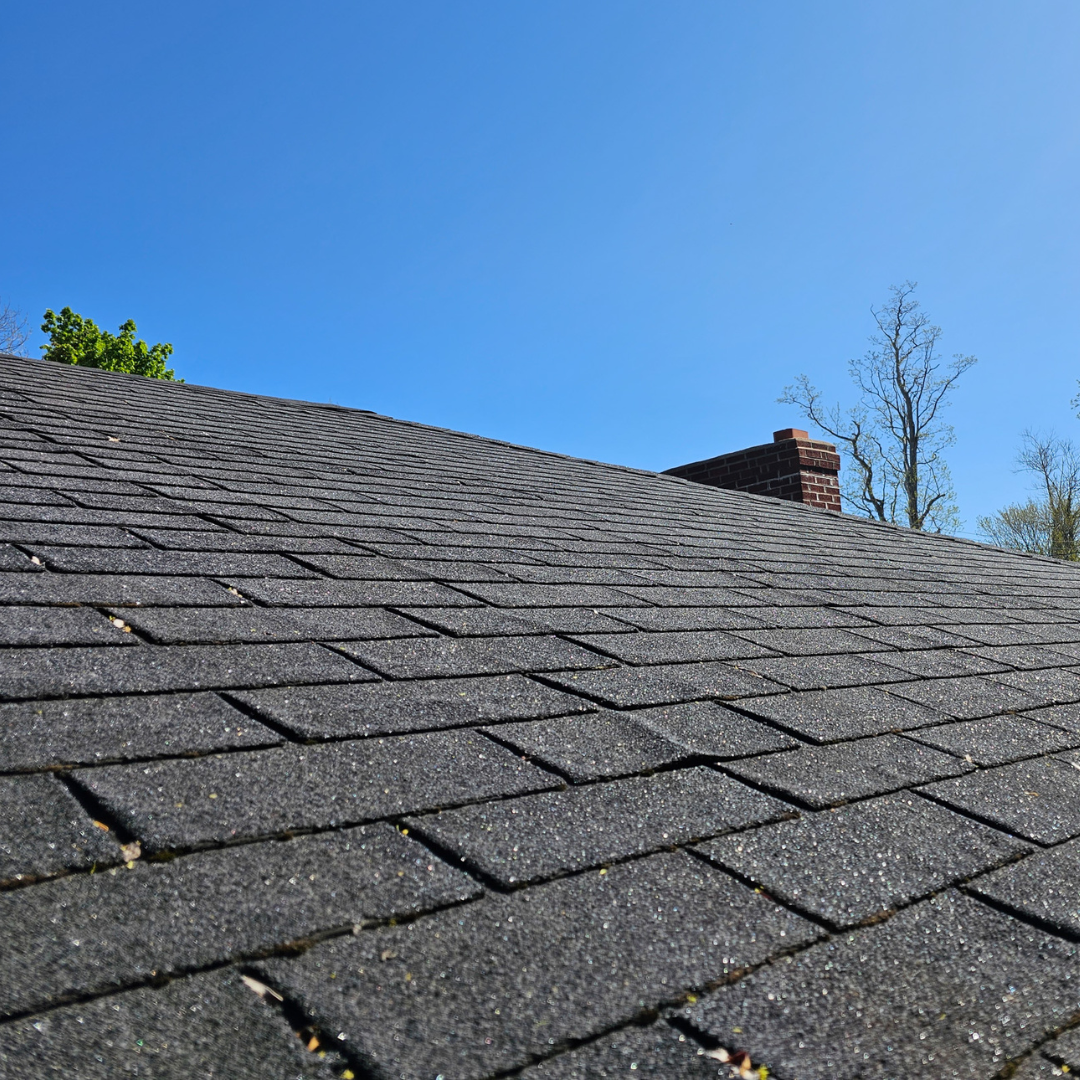
The best commercial roofing materials for severe weather depend on the hazard: fully adhered PVC, TPO or thick EPDM and tested standing seam metal for wind; multi-ply modified bitumen and gravel-surfaced built-up roofing for hail and foot traffic; reflective membranes for heat; a Class A assembly where wildfire is a risk. The installation details matter as much as the material. For a roof assessment, call NEMA Roofing at 866-631-3366.
Which material holds up to which kind of weather?
| Hazard | Materials that hold up | Details that decide it |
|---|---|---|
| High wind | Fully adhered single-ply (PVC, TPO, EPDM); modified bitumen; standing seam metal | An assembly tested for uplift, secured perimeter and corners, tested edge metal |
| Heavy rain | Any sound membrane; multi-ply systems add redundancy | Slope to drains, clear drains, overflow drains or scuppers, tight flashings |
| Hail | Gravel-surfaced BUR or modified bitumen; polyester-reinforced modified bitumen; thick fully adhered EPDM | A high-density cover board under the membrane |
| Extreme heat and sun | White PVC or TPO; reflective cap sheets or coatings; gravel surfacing | Rated reflectance, intact surfacing, ventilation around rooftop equipment |
| Wildfire | Class A rated assemblies (many membranes, metal, tile) | The whole assembly, deck and underlayment included, must carry the Class A listing |
| Salt air and humidity | Membranes; aluminum or suitably coated metal | Corrosion-resistant fasteners and flashing, no dissimilar metals in contact |
Wind: what keeps a commercial roof on?
Wind uplift is strongest at a roof’s edges and corners, so the membrane is only as strong as its attachment and its edge metal. Under the 2025 California Building Code, built-up, modified bitumen, single-ply and metal panel systems on a solid deck must be tested for wind resistance (FM 4474, UL 580 or UL 1897, section 1504.4.1), and metal edge systems on low-slope roofs must be designed for wind and tested to ANSI/SPRI ES-1 (section 1504.6).
- Fully adhered beats mechanically fastened for storm exposure. The U.S. Department of Defense roofing criteria (UFC 3-110-03) recommend only fully adhered EPDM in their most severe environmental exposure classes and especially in hurricane and typhoon areas, and call full adhesion the preferred method because the sheet cannot billow.
- Gravel needs parapets. The code requires parapets on aggregate-surfaced roofs (section 1504.8), and the DoD criteria do not permit aggregate surfacing where the basic wind speed is 100 mph or greater.
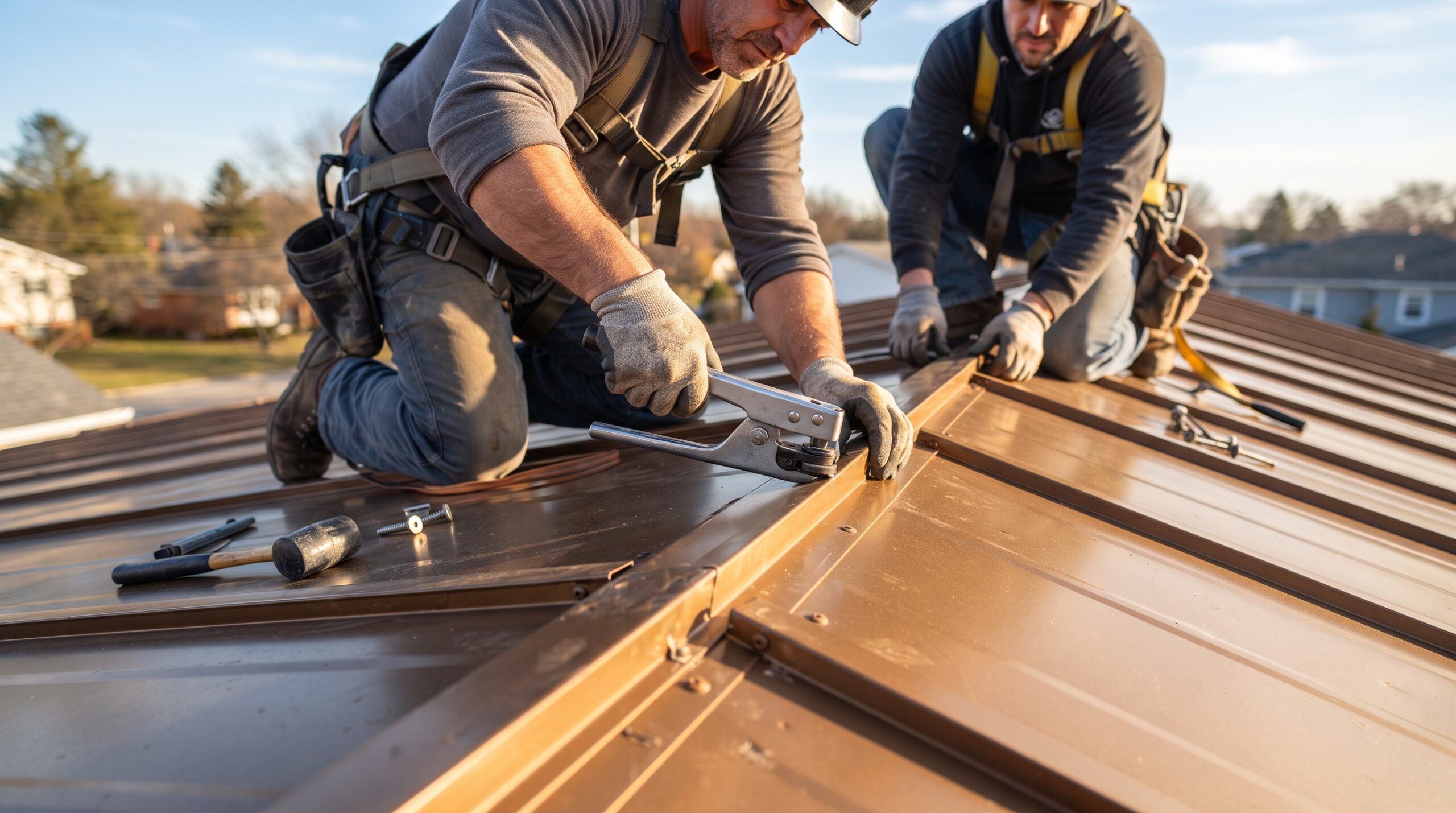
- Standing seam metal resists wind when the panel, clip type and clip spacing match an assembly tested to ASTM E1592; a panel installed with wider clip spacing than it was tested at is not the same roof.
Heavy rain: why drainage matters more than the membrane
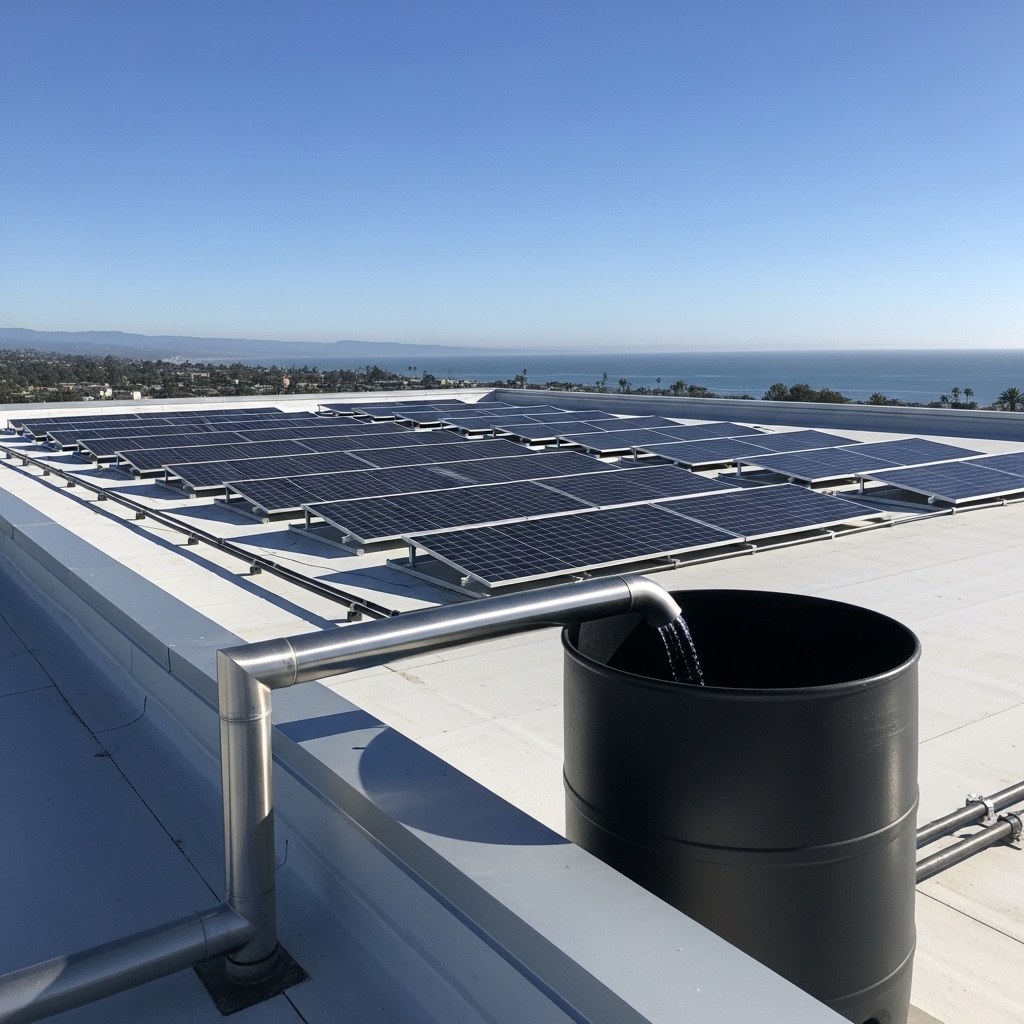
Heavy rain finds the weak points of a low-slope roof: clogged drains, low spots where water stands, and flashings that have opened at walls and curbs. The California Building Code requires a minimum slope of one-quarter inch per foot for most built-up, modified bitumen and single-ply roofs, and secondary (emergency overflow) drains or scuppers wherever parapets could trap water if the primary drains back up (section 1502.2). Before the rainy season, clear drains, scuppers and gutters and check the flashing seams. Our guide to commercial roof drainage covers the fixes.
Hail and impact: which surfaces take a hit?
The DoD criteria list the roof covers shown to perform well where hail reaches about two inches: gravel-surfaced built-up roofing, gravel-surfaced modified bitumen, fully adhered 90 mil EPDM, and polyester-reinforced modified bitumen with granule or coated smooth surfacing. They add that hail-resistant assemblies use a thicker membrane over a high-density cover board. The same logic protects a roof from dropped tools and service traffic, which is why the code also requires low-slope coverings to pass impact or foot-traffic testing (section 1504.7).
Extreme heat: what works on a high-heat facility?
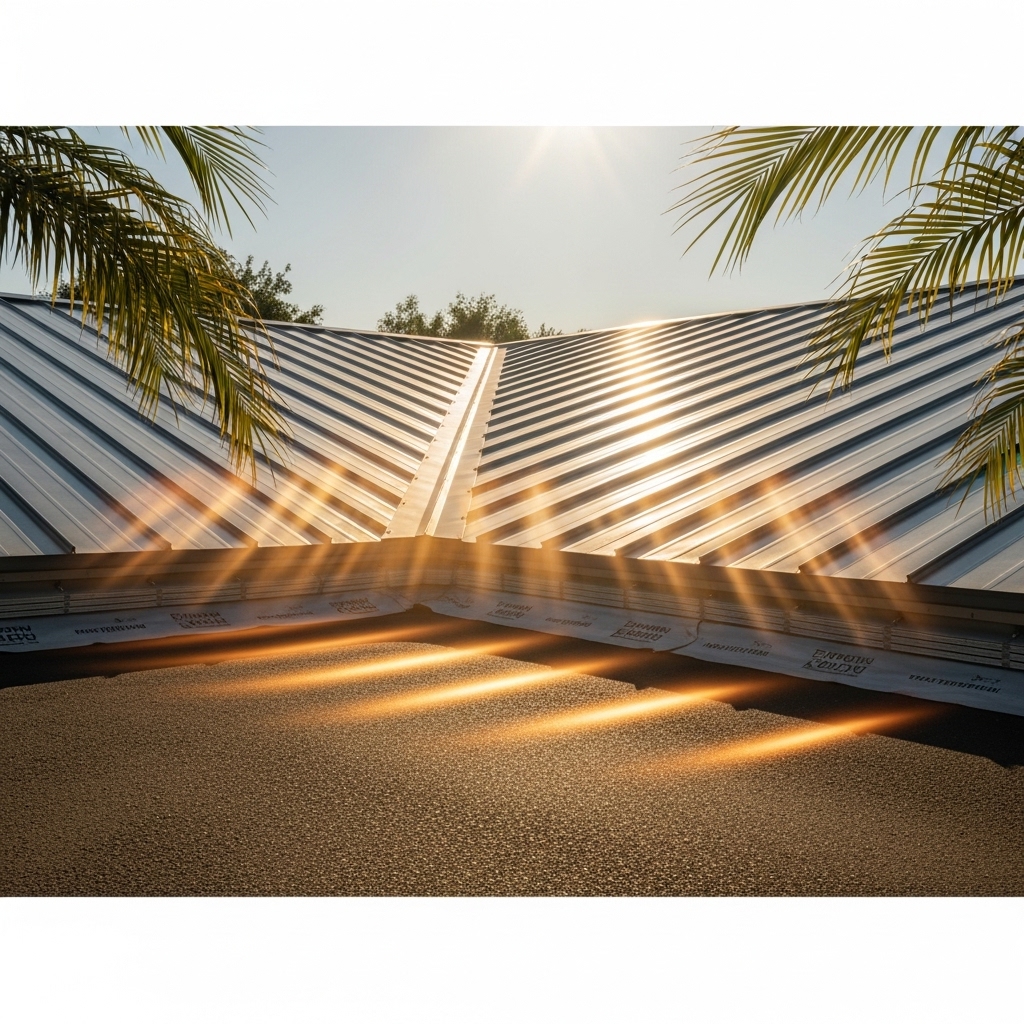
Sun and heat age a roof from the top down. A white or reflective surface stays cooler, and on a commercial low-slope reroof in California the state’s cool-roof values already push the choice toward reflective PVC, TPO, cap sheets or rated coatings. Polymer-modified bitumen resists softening better than plain asphalt, and gravel keeps built-up membranes cooler. On buildings with ovens, kilns or process exhaust on the roof, choose a membrane rated for the heat and any grease or chemical discharge around those vents; EPDM, for example, is not resistant to grease and oil.
Wildfire: what rating does a commercial roof need?
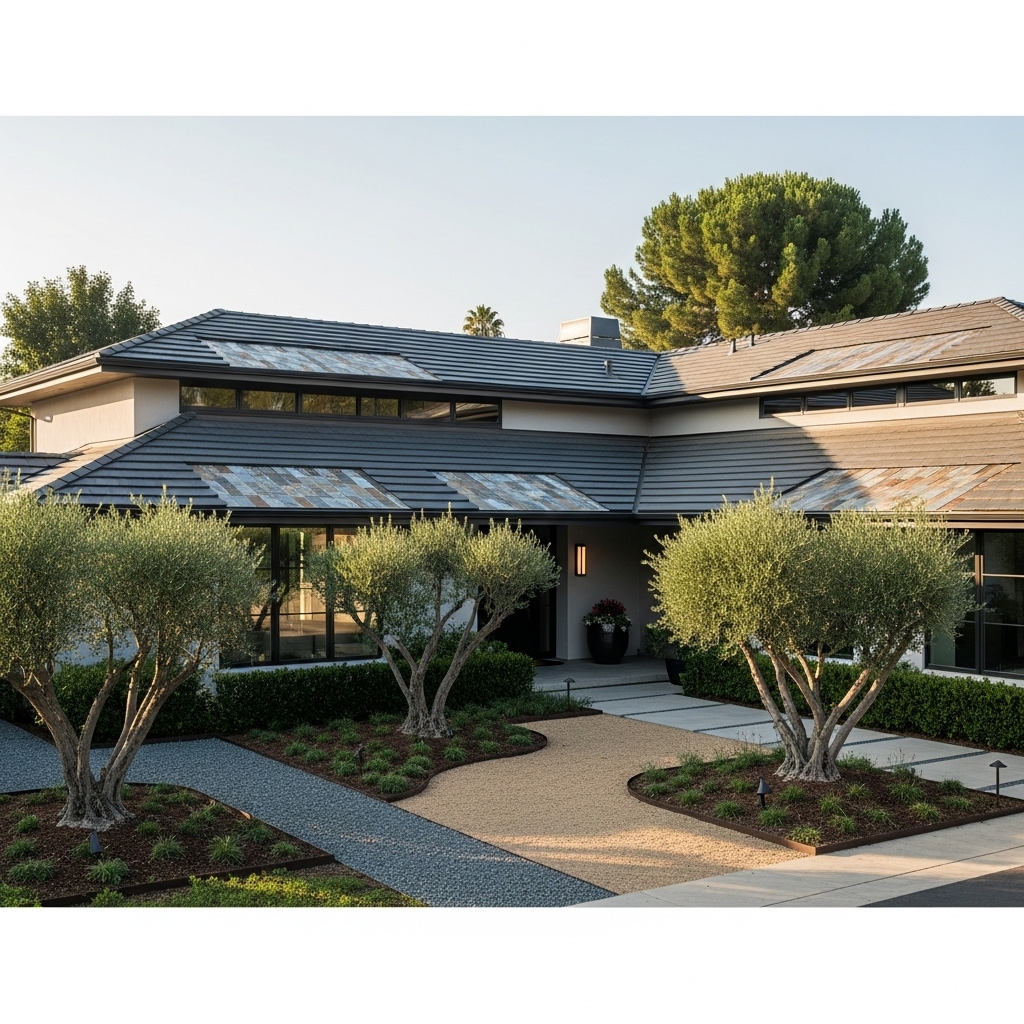
California classifies roof assemblies as Class A, B or C under ASTM E108 or UL 790 (Building Code section 1505.1), and in the Fire Hazard Severity Zones covered by the code’s wildfire chapter (Chapter 7A), roof coverings must be Class A; check your address on the CAL FIRE hazard map. The rating belongs to the tested assembly, so confirm the membrane, cover board, insulation and deck combination is listed as Class A, not just the top sheet.
What are the best commercial metal roofing systems for harsh weather?
Standing seam systems with concealed clips outperform exposed-fastener panels in storms because the weather surface has few holes. The DoD criteria distinguish hydrostatic systems, sealed at seams, laps and valleys to resist water like a membrane, from hydrokinetic systems that rely on slope to shed water; low slopes need the sealed type. Near the ocean, they note that aluminum-zinc coated steel does not perform as well in direct salt spray and that aluminum may be the better choice, at a higher cost. For panel options, see our metal roofing service.
What should you ask a contractor about weather performance?
- Which tested assembly is this (wind test, fire class, impact rating), and does the installation match it?
- How is the membrane attached, and how are the perimeter and corners secured?
- Is there a cover board, and what is the membrane thickness?
- Where does the water go, and are there overflow drains or scuppers?
- What does the manufacturer warranty exclude for wind and storm damage?
If a storm has already damaged your roof, our guide to commercial roofing insurance claims explains the documentation to collect. NEMA Roofing’s crews work out of five locations, Santa Barbara, Oxnard, Woodland Hills, Tarzana and Downey, and serve every city in Santa Barbara, Ventura, Los Angeles, Riverside and San Bernardino counties (see our service areas); our commercial roofing team handles storm repair, recover and replacement. Call 866-631-3366 to have your roof checked before the next storm season.