
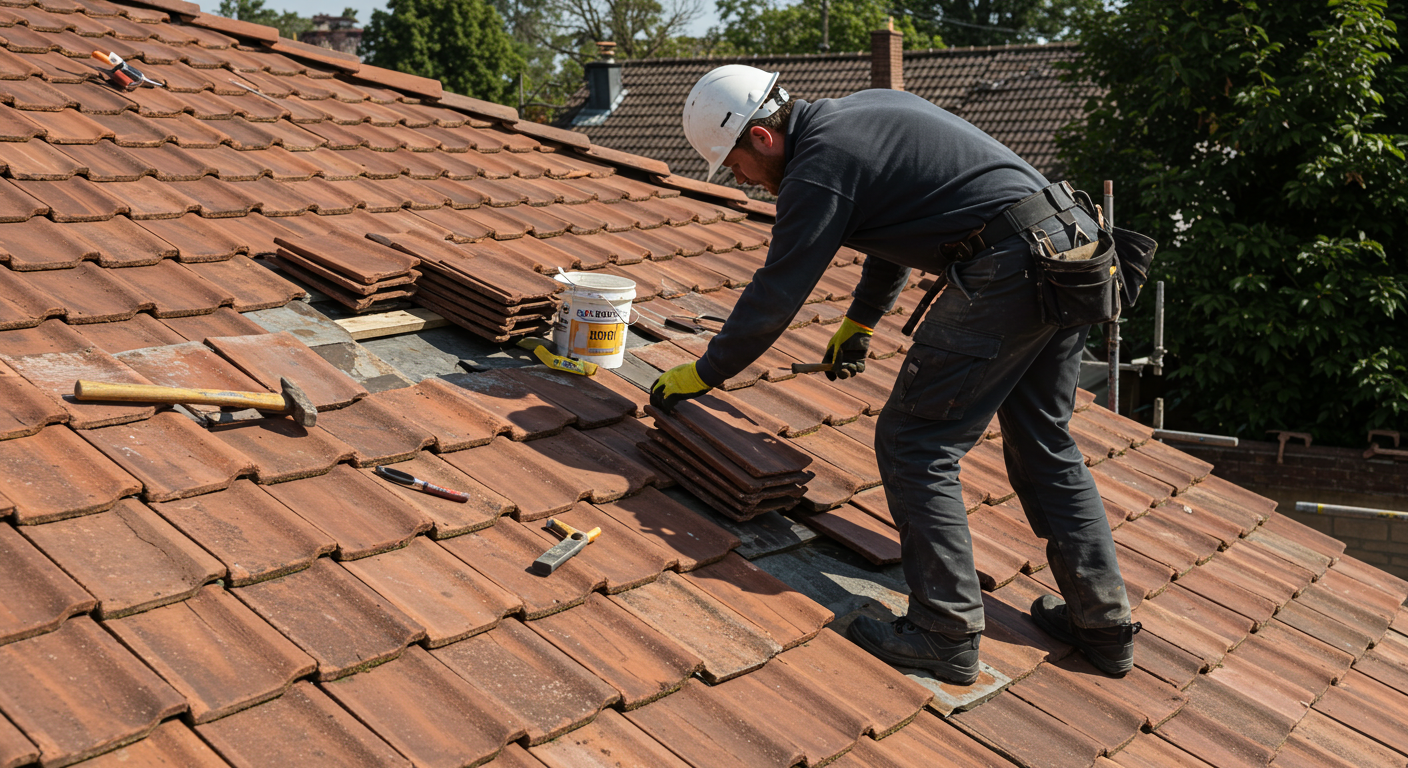
Roof tiles maintenance comes down to five jobs: keep valleys, gutters and the channels between tiles clear; replace cracked or slipped tiles promptly; watch the flashing and the mortar at hips and ridges; keep foot traffic off the tiles; and have the underlayment and fasteners inspected once a year before the rains. Most of the watching can be done from the ground. The work on the roof belongs to someone who knows where to step. To book a tile roof inspection or repair, call NEMA Roofing at 866-631-3366.
A tile roof maintenance calendar
| When | What to do | Who |
|---|---|---|
| Once a year, before the rainy season | Inspection of tiles, flashing, ridge and hip mortar, underlayment at the eaves and valleys | Roofer |
| Each fall and after storms | Clear leaves from gutters, valleys and tile channels | Roofer, or homeowner from a ladder at the gutter |
| After strong wind | Look for broken, shifted or missing tiles from the ground; check the attic after the next rain | Homeowner, then roofer if anything shows |
| After other trades work on the roof | Check for tiles cracked by solar, HVAC, antenna or painting crews | Roofer |
| Whenever a ceiling stain appears | Find the leak before the next rain; the tiles may look fine while the layer under them has failed | Roofer |
Wind deserves its own line: the Tile Roofing Industry Alliance, the tile makers’ trade group, notes that tiles broken in high wind are typically hit by flying debris rather than lifted by the wind, so look for impact cracks and pieces in the yard.
What you can check without climbing up
- From the ground, with binoculars: tiles out of line, gaps in a course, cracked or missing pieces, mortar missing at hip and ridge caps.
- At the gutters: broken tile fragments or heavy grit in the gutter, which point to damage above.
- At walls, chimneys and skylights: rusted, bent or lifted flashing, or fresh sealant that someone has been using as a fix.
- In the attic after rain: damp spots or stains on the underside of the roof deck.
For a fuller list that covers other roof types too, use the roofing inspection checklist.
How to clean roof tiles without breaking them
Tile needs less cleaning than most roofs. The industry group describes glazed or matte clay tile as essentially maintenance-free and concrete tile as very low maintenance, adding that professional low-intensity pressure washing can be done if you want it. A few rules keep cleaning from causing damage:
- Leave white bloom on concrete tile alone. That chalky film is efflorescence, a temporary deposit from the cement that does not harm the tile and usually washes away with rain.
- Keep pressure low and spray down the slope, never up under the tile laps.
- Walk as little as possible. Most manufacturers do not warrant tiles broken by foot traffic. When someone must walk, the guidance is to step on the lower 3 inches of each tile, where the tile below supports it, with feet parallel to the ridge, and to stay off hips and valleys where cut tiles break easily.
- Treat moss or algae in shaded spots with a cleaner the tile manufacturer approves rather than scraping.
Cracked, chipped or slipped tiles: repair or replace?
A broken tile lets water and sun reach the underlayment, so it should not wait for the next rain. The industry group’s technical brief on chipped tile gives practical thresholds:
- A crack across the face in either direction: replace the tile.
- A broken corner longer than 3 inches, the usual overlap between tiles: replace it.
- A smaller chip at the cover-lock corner with the broken piece on hand: it can be bonded back with an adhesive made for roof tile.
Replacement tiles must interlock and sit flat with the old ones. If your profile is no longer made, a roofer can borrow tiles from a less visible part of the roof and put new ones there. Small repairs often need no permit: in Oxnard, for example, roof repairs under 40 square feet that stay within the roof covering need no city permit, while any repair that reaches the underlayment or the structure needs one.
Keeping embers and debris out in fire zones
In fire hazard areas, the 2025 California Wildland-Urban Interface Code, in force since January 2026, sets rules for tile roofs over wood decks in those areas that double as a maintenance list: bird stops at the eaves where the profile fits, to keep debris out of the open ends of the tiles, and hip and ridge caps set in mortar to keep embers out. Gutters must have a way to stop leaves from collecting. Check each year that the bird stops are still in place, the ridge mortar is whole and the gutter guards are clear.
When maintenance stops being enough
Maintenance keeps tiles in place and water moving, but it cannot renew the underlayment. Leaks with intact tiles, brittle underlayment at the eaves or damage in many places mean the roof needs its tiles lifted and reset over new underlayment. Our guide to how long a tile roof lasts explains that job, and common tile roof problems covers the repairs one by one.
Tile roof upkeep from NEMA Roofing
With five locations (Santa Barbara, Oxnard, Woodland Hills, Tarzana and Downey), NEMA Roofing maintains tile roofs in every part of Santa Barbara, Ventura, Los Angeles, Riverside and San Bernardino counties, from the coast inland to San Bernardino County. Our tile roofing service handles repairs and resets. For a yearly tile roof check, call 866-631-3366.




