
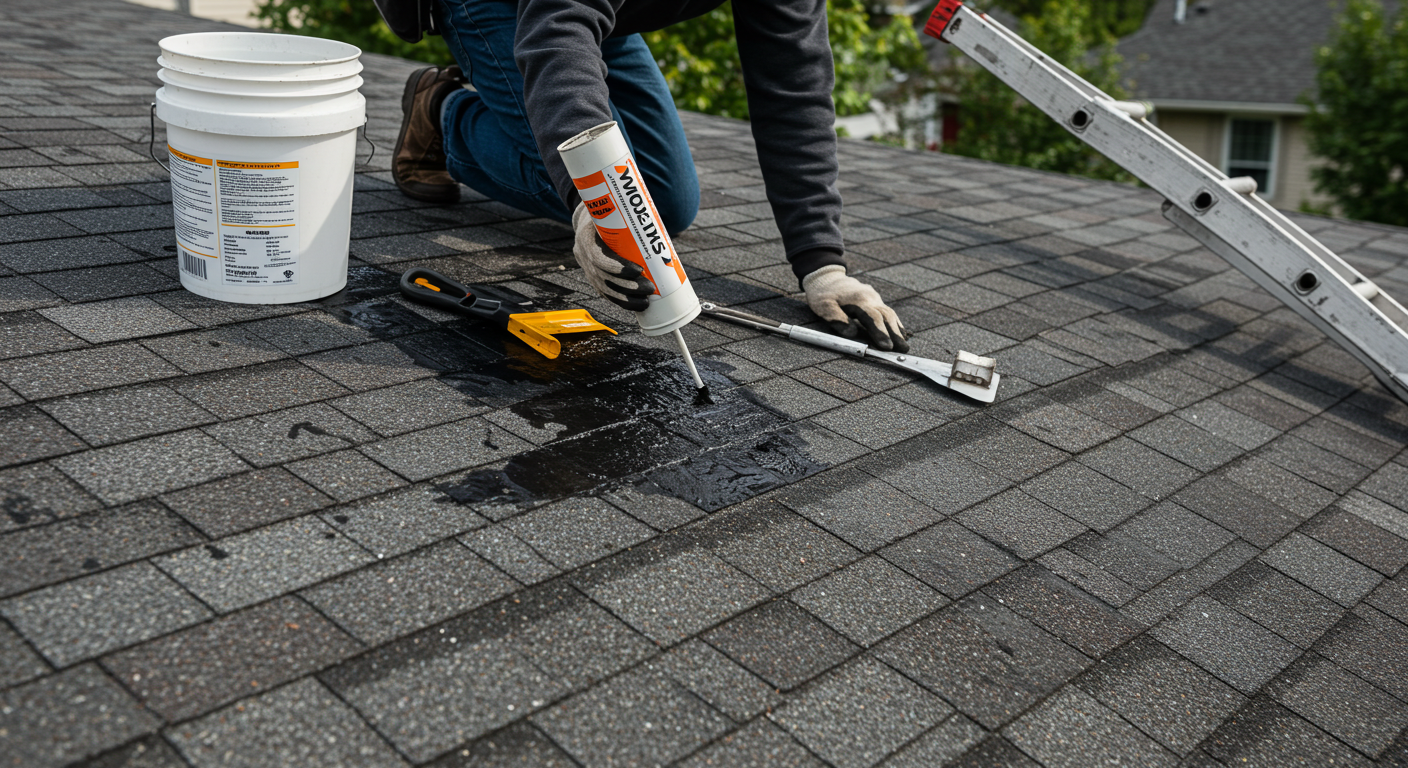
Roof leak detection means tracing water back from the stain to the point where it gets past the roof, which is often several feet uphill: through the attic first, then on the roof at flashing, vents, valleys and seams, and if needed with a controlled water test, one area at a time. A leak repair service that finds the entry point fixes it once; one that seals the spot above the stain often misses it. For leak detection and repair, call NEMA Roofing at 866-631-3366.
Why the stain is rarely under the hole
Water that gets through the roof covering usually meets the underlayment or the roof boards first and runs downhill along them, or along a rafter, until it finds a nail, a seam or a gap in the insulation to drop through. A stain near an outside wall can start at a vent higher up the slope; a drip in the middle of a room can start at a chimney. That is why patching the shingles directly above a stain so often fails, and why tracing comes before any repair.
What you can check before the roofer arrives
- Note the timing. Does it leak in every rain, only in heavy rain, only when wind drives rain from one direction, or on dry days? The pattern narrows the cause (see the table below).
- Look in the attic while it rains or right after, if you can reach it safely and step only on framing. Follow wet wood, water trails and stained insulation uphill toward the highest wet point.
- Mark it. Push a thin wire or a nail up through the wettest spot of the roof boards if the roofer agrees, or photograph the spot next to a rafter you can count from a wall. Either one lets the roofer find the same place from above.
- Protect the room. Move belongings, catch drips, and if a ceiling bulges with water, keep people out from under it.
Stay off the roof itself, especially when it is wet.
Common leak points and how they show up
| Entry point | Typical pattern inside | What the roofer checks |
|---|---|---|
| Pipe boots and roof vents | Stain on the ceiling below or downhill of a bathroom or kitchen vent, in any steady rain | Cracked rubber collar, lifted or missing shingles around the vent, loose fasteners |
| Chimney and wall flashing | Stain beside the chimney or along an upstairs wall, worse in wind-driven rain | Step flashing and counterflashing, cracked mortar joints, flashing held only by sealant |
| Skylights | Drips at the skylight frame or on the ceiling next to it | Flashing kit and curb, not only the glazing seal |
| Valleys | Stain where two roof slopes meet, worst in heavy rain | Debris dams, worn or cracked valley metal, shingles or tiles cut too short |
| Eaves and gutters | Stains at the top of outside walls, peeling paint on the soffit | Overflowing or clogged gutters, missing drip edge, rotted fascia |
| Broken or slipped tiles | A leak far from any penetration on a tile roof | The underlayment under the tiles, which does the waterproofing, plus the tiles themselves |
| Flat roof seams and drains | Stains in the middle of a room under a flat section, after water stands on the roof | Open seams, blisters, ponding, clogged drains and scuppers |
How a roofer tests for the source
When the attic trace and a close look at the roof do not settle it, a controlled water test does:
- One person runs a garden hose on a single area of the roof, starting at the lowest suspect point, while another watches inside.
- Each area gets several minutes of water before the hose moves up the slope. Starting high would wet everything below it and hide which spot let water in.
- The test stops the moment water appears inside, and the last area wetted is the entry point.
It is slow on purpose. A test that floods the whole roof at once proves there is a leak, which you already knew, and nothing about where. On flat roofs the method differs; see how a flat roof leak is traced.
When the water is not coming through the roof
Some leaks look like roof leaks and are not. If a drip shows up on a dry day or the stain grows with no rain, suspect:
- condensation in a poorly ventilated attic, which wets the underside of the roof boards and drips on cool mornings;
- an air conditioner’s condensate line or drain pan in the attic;
- a plumbing line or a bathroom fan duct that ends in the attic instead of outside;
- a window, wall or stucco crack letting rain in below the roof line.
A good leak inspection rules these out before anyone quotes a roof repair.
What the repair looks like once the source is found
- Temporary protection if the permanent repair cannot happen right away: a tarp or temporary cover fastened to shed water off the roof.
- The fix at the entry point: a new pipe boot, new step flashing or counterflashing, a rebuilt valley, replaced shingles or tiles over new underlayment, or a patched and re-sealed membrane seam.
- Repair of what the water reached: soft roof boards replaced, wet insulation removed so the attic can dry.
- A check that it worked: the repaired area is water-tested again, or checked in the attic after the next rain, and debris is cleaned up.
A repair built only on sealant can stop a drip for a season; the lasting fix replaces the failed part. For the step-by-step of a full repair visit, see the roof repair process.
Why the source matters more than the speed
Wet roof boards, insulation and drywall do not dry on their own inside a closed attic, and the longer water keeps coming in, the more of them need replacing: a leak left through a rainy season can mean mold, sagging ceilings and wiring exposed to water. A fast visit helps only if it finds the right spot. Ask any leak repair service how it will trace the source, and whether its estimate names the entry point and the part being replaced.
Leak detection near you
NEMA Roofing traces and repairs roof leaks throughout Santa Barbara, Ventura County, Los Angeles, Riverside and San Bernardino counties, with crews working from five Google-verified locations in Santa Barbara, Oxnard, Woodland Hills, Tarzana and Downey. Our roof repair service starts with finding the source. Call 866-631-3366 to book a leak inspection.




