A skilled roofer is skilled in a specific roof system: nailing and flashing shingles, setting and walking tile, fastening and seaming metal, or welding and detailing a flat commercial membrane are different trades, each with its own code minimums and manufacturer instructions. For a home or a business, the right roofer is the one who works on your system routinely and can explain how. To talk about your roof, call NEMA Roofing at 866-631-3366.
Which skills does each roof system need?
The California Residential Code (chapter 9) sets the minimum slope for each covering, and the manufacturer’s instructions set the rest. The table shows where each system is used and where a roofer’s skill shows.
| Roof system | Typical use | Code minimum slope | Where skill shows |
|---|---|---|---|
| Asphalt shingles | Homes | 2 in 12, with double underlayment up to 4 in 12 | Nail placement per the maker’s pattern, drip edge at eaves and rakes, step and valley flashing |
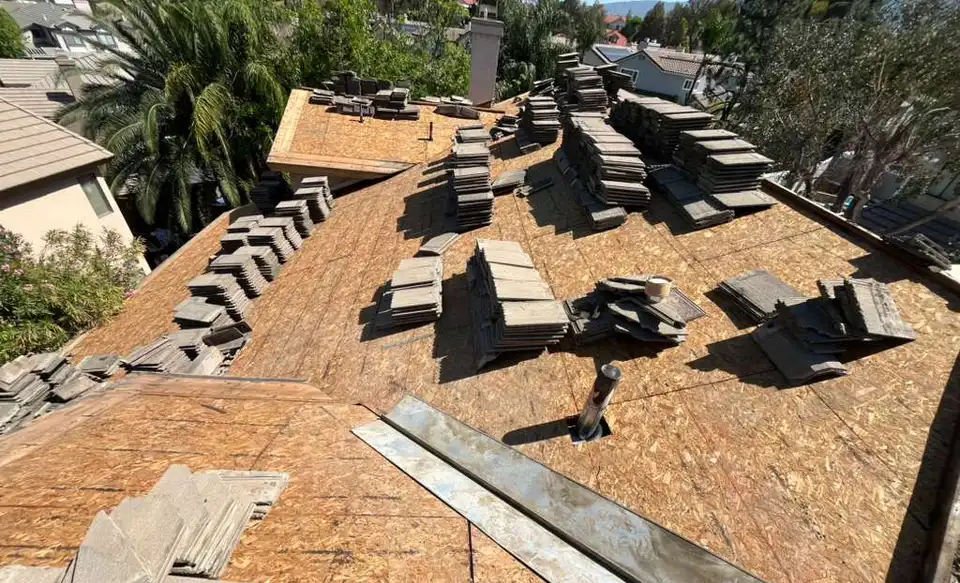
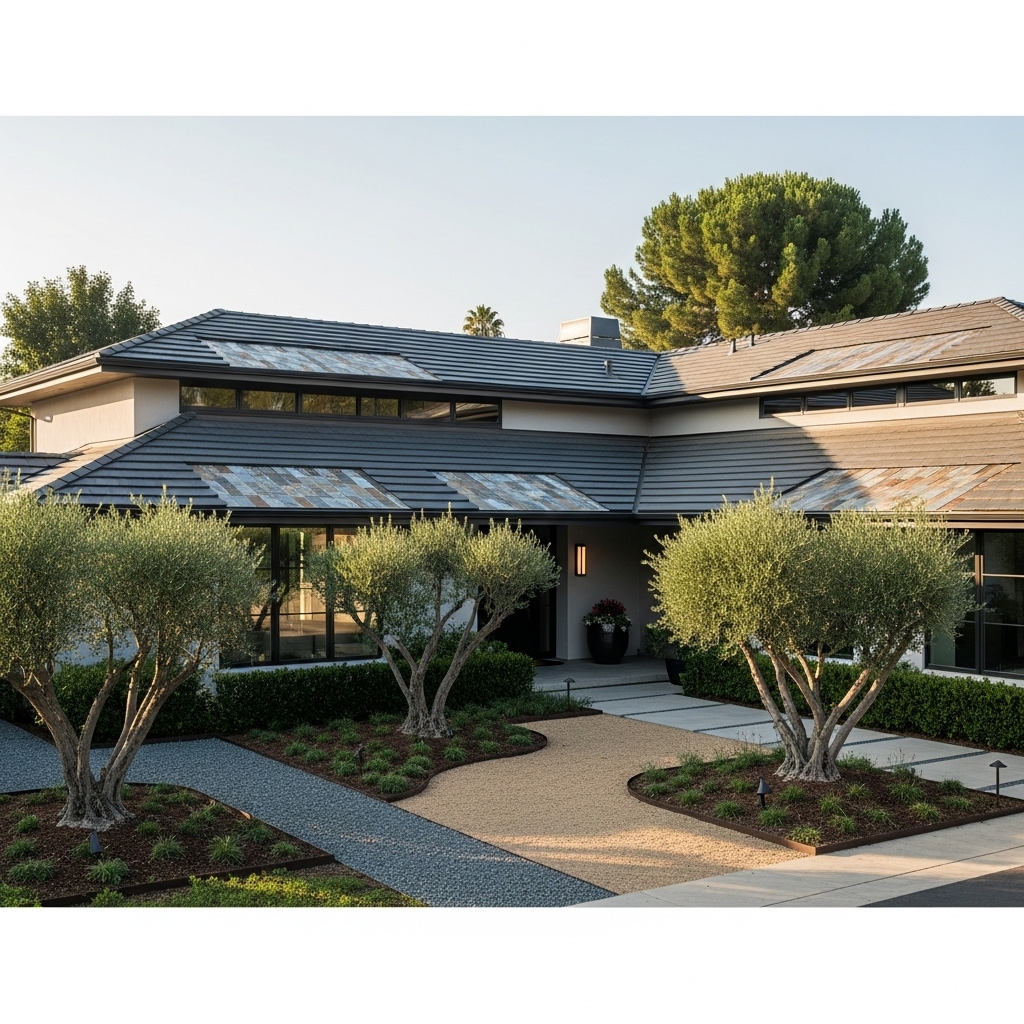
| Clay or concrete tile | Homes | 2½ in 12, with double underlayment up to 4 in 12 | Underlayment and battens, tiles that interlock and sit flat, fastening for wind, walking without breaking tiles |
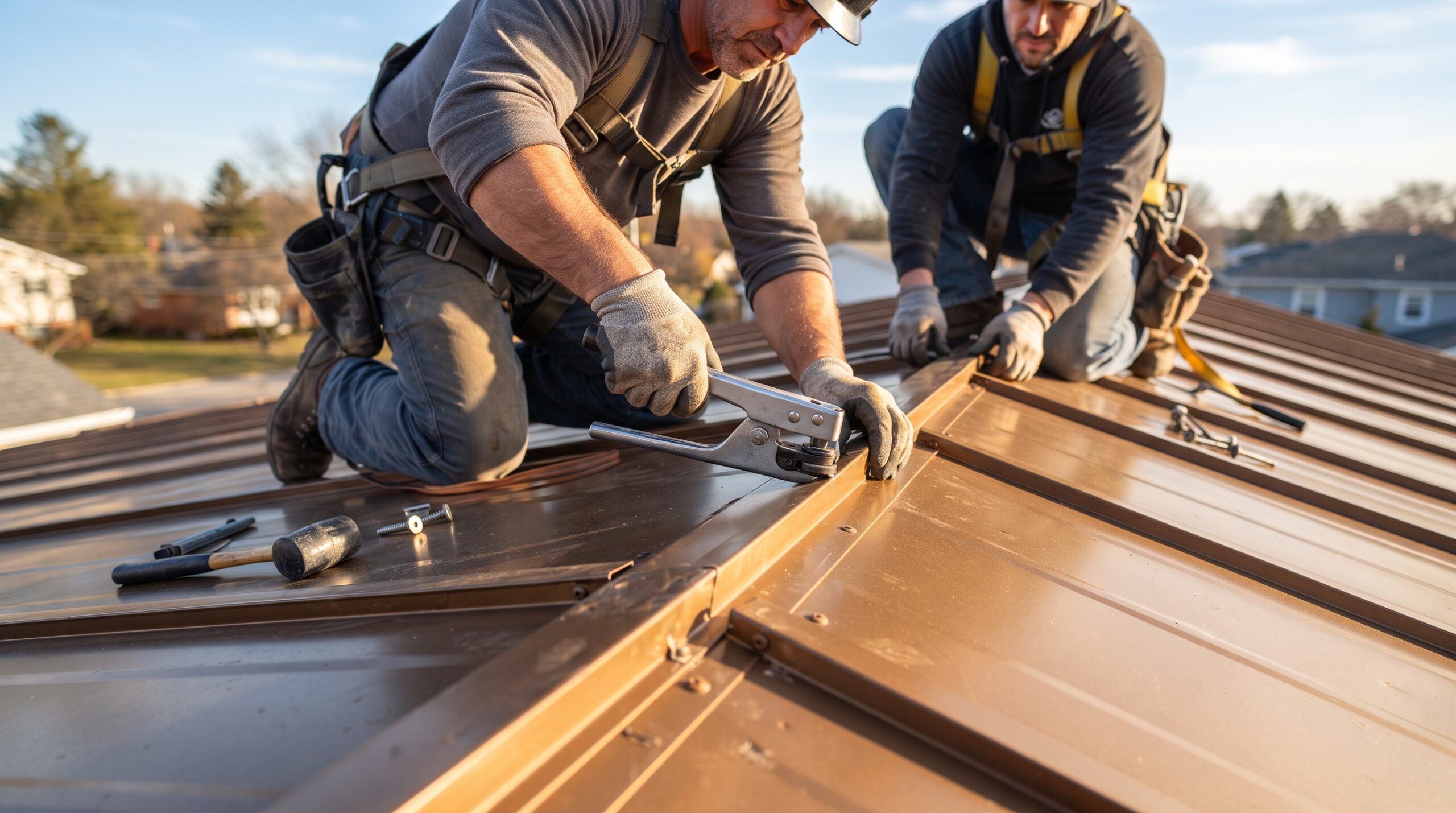
| Metal panels | Homes and commercial buildings | 3 in 12 for lapped seams without sealant; 1/2 in 12 with lap sealant | Fastener choice and seating, seams and laps, trim that lets panels move with heat |
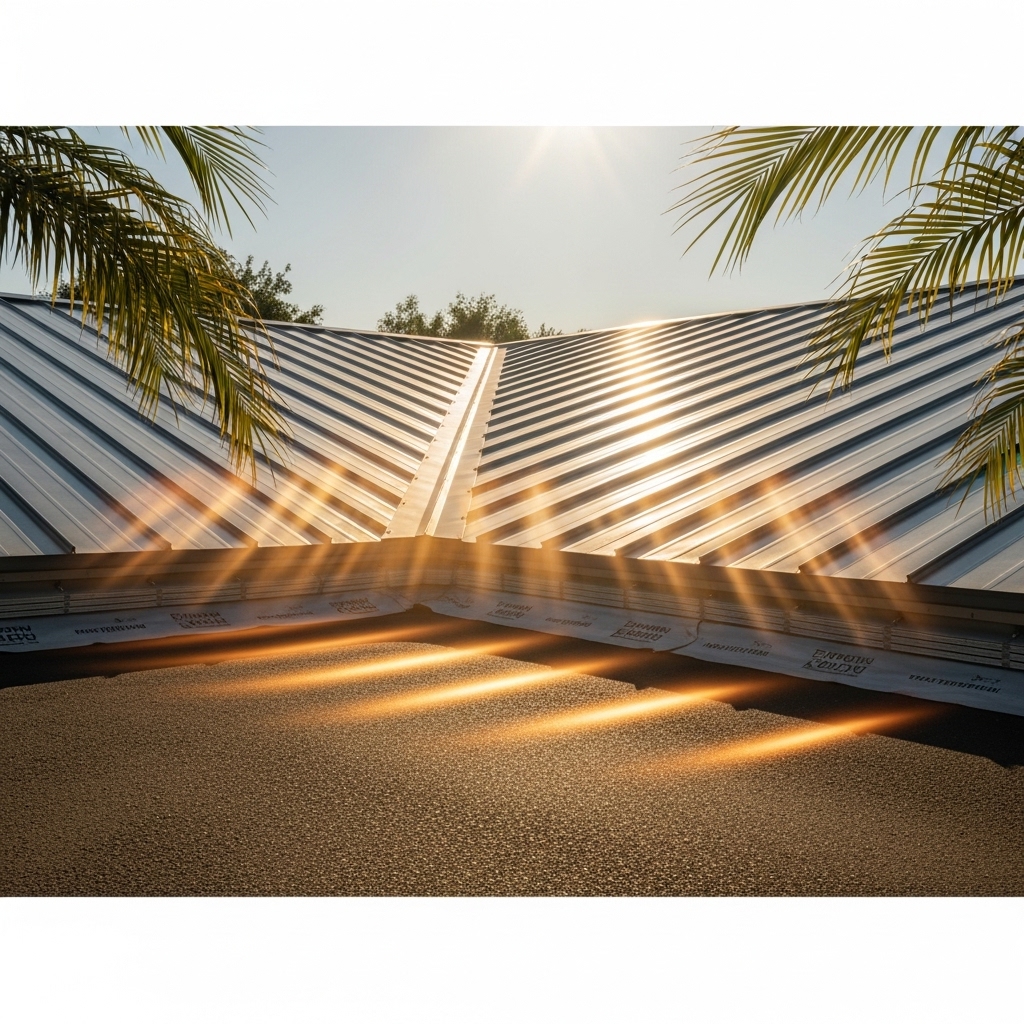
| Single-ply membrane (TPO, PVC) | Commercial, some home additions | 1/4 in 12 design slope for drainage | Heat-welded seams, flashing at curbs, parapets and drains |
| Modified bitumen, built-up | Commercial, flat home roofs | 1/4 in 12 design slope | Laps, base and cap sheet sequence, edge and penetration details |
| Spray foam, liquid-applied coatings | Commercial | 1/4 in 12 design slope | Surface preparation, thickness, weather timing |
Pitched home roofs: shingles and tile
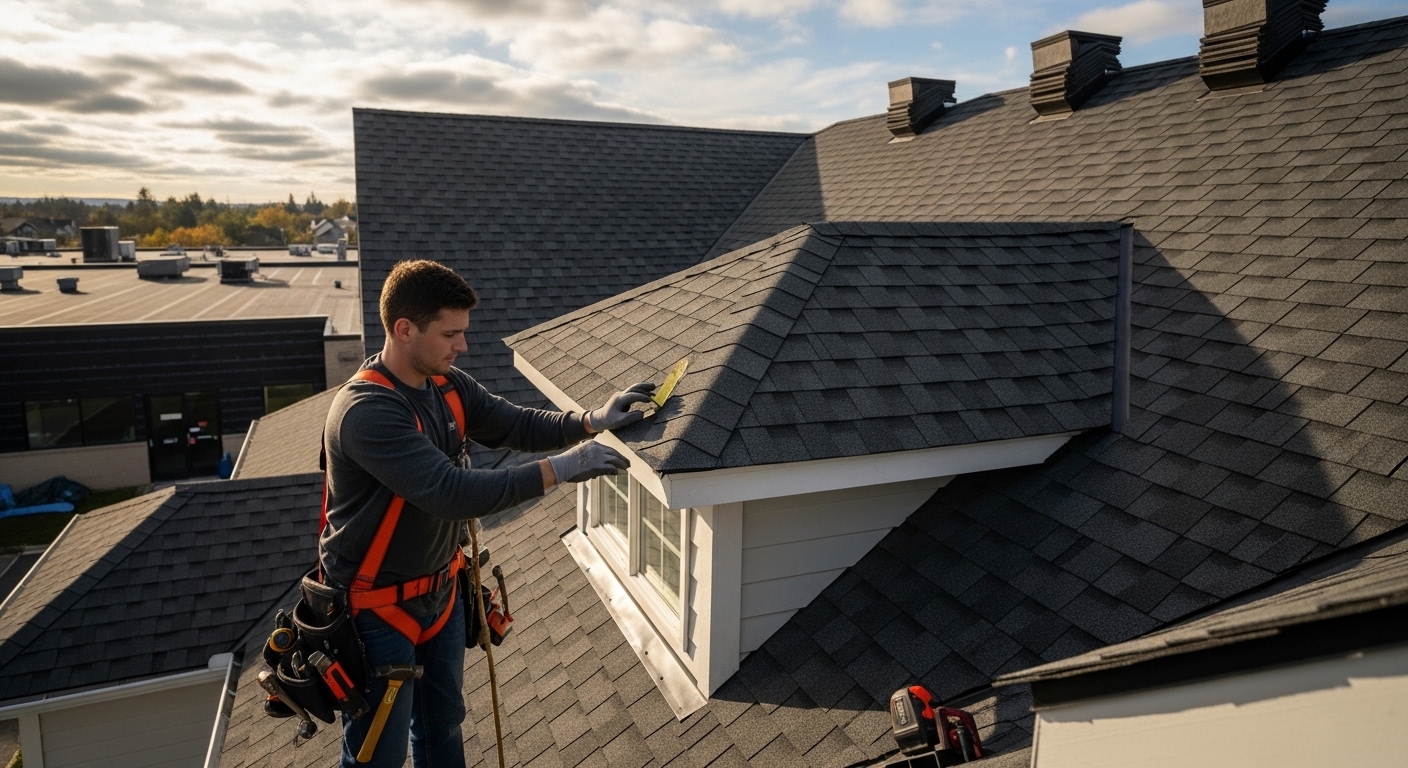
On a shingle roof, workmanship problems usually show up in three places: nails set too high, too low or overdriven; missing or short drip edge (the code requires it at the eaves and rake edges, overlapped and fastened); and flashing at walls, chimneys and valleys that was reused or sealed with caulk instead of replaced. A skilled roofer follows the shingle maker’s nailing pattern exactly, because the manufacturer’s warranty depends on it.
Tile takes a different skill set. The tile sheds water, but the underlayment beneath does the waterproofing, so the work starts there. Tiles have to interlock and sit flat to stay put in wind. Walking on tile is its own skill: the Tile Roofing Industry Alliance notes that most manufacturers do not warrant breakage from foot traffic, and it recommends stepping on the bottom three inches of each tile, where the tile below supports it. A roofer who breaks tiles on the way to a repair creates the next leak.
Metal roofs on homes and commercial buildings
Metal is used on both houses and commercial buildings, and the skill is the same: panels expand and contract with heat, so fasteners, clips and trim have to allow movement without opening laps. Exposed-fastener panels depend on each screw being seated so its sealing washer compresses without being crushed; standing seam depends on clean seams and correct clips. Lapped panels on a low slope need sealant in the laps, which the code ties to slope. For metal specifically, see our metal roofing service.
Flat commercial roofs: membranes, edges and drainage
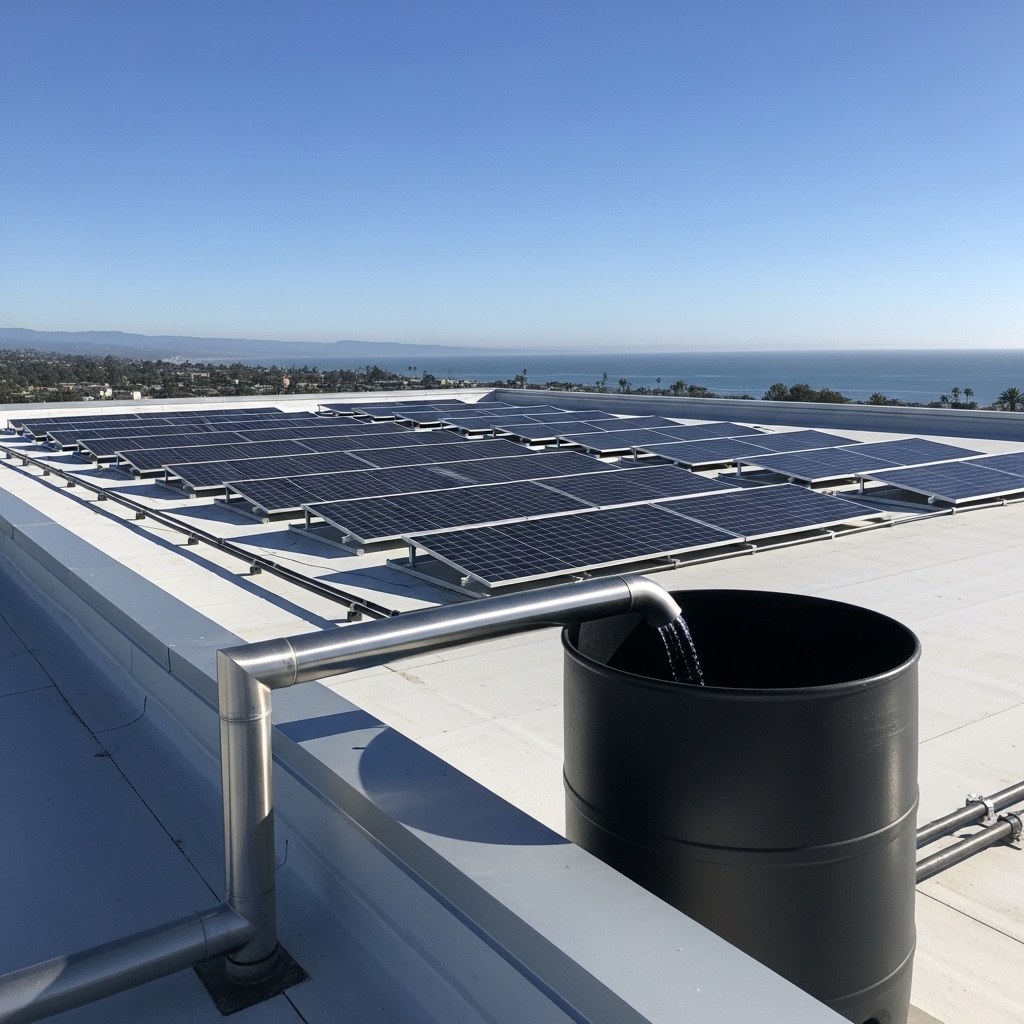
Commercial roofs fall under the California Building Code (chapter 15) rather than the residential code, and most are low-slope membranes. The skills that matter there:
- Seams. Single-ply seams are heat-welded, and a skilled crew probes each seam before calling the job done.
- Edges. The building code requires metal edge systems on built-up, modified bitumen and single-ply low-slope roofs to be designed and installed for wind loads.
- Drainage. A design slope of at least 1/4 in 12 toward drains and scuppers; ponding water shortens a membrane’s life.
- Rooftop equipment. HVAC curbs, conduit and solar mounts all need flashing that the membrane manufacturer accepts.
- Leak finding. On a large membrane roof, leaks can be located with electrical conductance methods, described in ASTM standard guide D7877, instead of cutting test holes.
How installation and scheduling differ between a house and a business is covered in roofing installation for homes and commercial buildings; for business roofs, see our commercial roofing service.
How can you tell if a roofer has the skill for your roof?
- Name your roof system and ask how often the crew installs or repairs it.
- Ask which manufacturer’s instructions they follow and whether the job will be registered for that manufacturer’s warranty.
- For tile, ask how the crew moves on the roof without breaking tiles, and where replacement tiles will come from.
- For a membrane, ask how seams are tested and how the edge metal is attached.
- For metal, ask which fasteners and clips they use and how the panels are allowed to move.
- Ask to see a recent job on the same system, whether a house or a commercial building.
A roofer who answers in specifics (the product, the step, the reason) has done the work. Vague answers about “quality” and “experience” say nothing about your roof.
Residential and commercial roofing with NEMA Roofing
NEMA Roofing works on shingle, tile, metal and flat roofs for homes and businesses. The manufacturers’ own directories list it in three programs: GAF (Master Elite, with a President’s Club award), Owens Corning (Preferred Contractor) and Polyglass (Preferred Contractor). Its state license is CSLB #1083283. Homes and commercial buildings anywhere in Los Angeles, Ventura, Santa Barbara, Riverside and San Bernardino counties are covered from our six locations in Downey, Tarzana, Woodland Hills, Oxnard, Santa Barbara and San Bernardino. Our roofing contractor services page explains how a first visit works. To have a skilled roofer look at your home or building, call NEMA Roofing at 866-631-3366.