
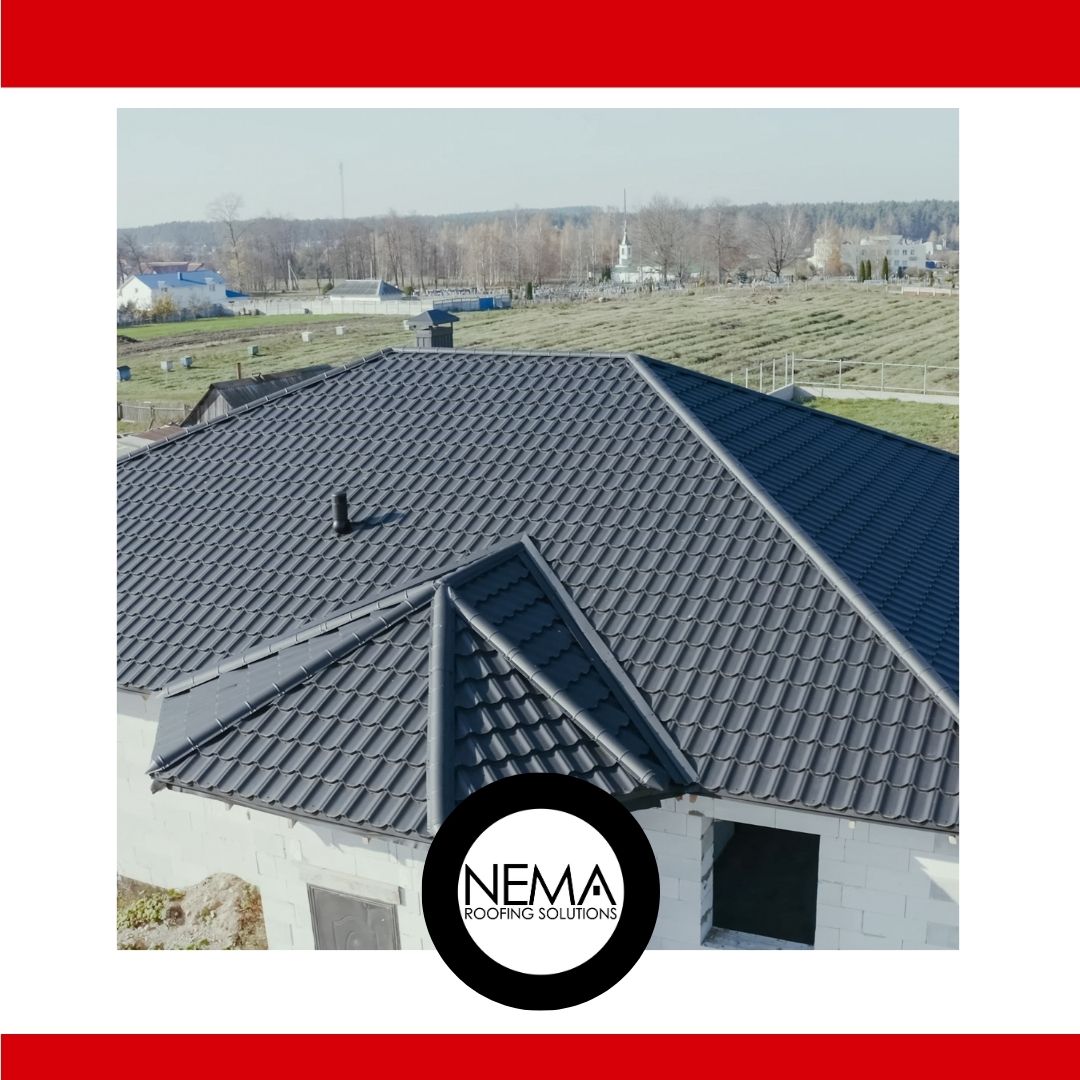
Cool roofing can help beat the heat by reflecting sunlight that a dark roof would soak up, so the attic and top-floor rooms stay cooler through a heat wave, homes without air conditioning reach lower peak indoor temperatures, and homes with it run the system less during the most expensive afternoon hours. The effect is largest on the hottest days. To prepare your roof before the next heat wave, call NEMA Roofing at 866-631-3366.
What happens to a house on a 100-degree day?
Heat builds on a roof through the day. By late morning a dark roof is already far hotter than the air, by mid-afternoon the attic is at its hottest, and after sunset the stored heat keeps flowing down into the rooms below. That is why upstairs bedrooms often feel worst at bedtime, hours after the outdoor peak.
A cool roof changes the start of that cycle. It reflects more sunlight and sheds the heat it absorbs, so less heat is stored in the roof and attic, and less of it is left to release in the evening. During a string of hot days, when the house never fully cools overnight, that difference adds up.
How much cooler can a cool roof keep your home?
Public research gives a realistic range. In research the U.S. EPA cites, homes without air conditioning peaked 2.2 to 5.9°F cooler indoors under a cool roof, and air-conditioned homes saw peak cooling demand fall by 11 to 27 percent. Results vary with insulation, attic ventilation, where the ducts run and how reflective the roof still is after years of weather.
A few degrees matter most at the extremes: during the hottest afternoon of a heat wave, or during a power outage, when the building itself is the only cooling a household has.
How do cool roofs help in heat waves beyond your own home?
- Health. The Cool Roof Rating Council notes that lower indoor and outdoor temperatures help prevent heat illness and heat-related deaths during heat waves, especially for people without air conditioning.
- The power grid. Because cool roofs cut air-conditioning use at the hottest time of day, when electricity demand peaks, they ease strain on the grid and help avoid the shortages that lead to blackouts and brownouts.
- The neighborhood. Many cool roofs together lower outdoor air temperatures. The EPA cites a United Kingdom study estimating that cool roofs across a city could offset 18 percent of the heat-related deaths linked to the heat island effect.
Why the savings land on the most expensive hours
Air conditioners work hardest in the late afternoon, which is also when time-of-use electricity rates are highest. A cool roof trims the load at exactly those hours, so on a time-of-use plan each kilowatt-hour saved is worth more than an average one. Across a season, the Cool Roof Rating Council reports an average cut of 7 to 15 percent in cooling costs, and reduced strain may also help the air conditioner last longer.
Where are hot days most common in our service area?
The difference between the coast and inland valleys is sharp. Federal climate normals (NOAA, 1991 to 2020) show roughly:
- Ojai: about 76 days a year at 90°F or above, and about 16 at 100°F or above.
- Van Nuys, in the San Fernando Valley: about 77 days at 90°F or above, and about 15 at 100°F or above.
- Camarillo Airport: about 9 days at 90°F or above.
- Oxnard: about 2 days at 90°F or above.
Homes a short drive inland from the coast face many times as many hot days, and that is where a cool roof does the most work. For desert areas with even more, read cool roofing for hot climates.
How to get your home ready before the next heat wave
- Check attic ventilation. Open soffit vents and working roof or ridge vents let trapped heat escape.
- Look at attic insulation and ducts. Thin insulation and leaky ducts in a hot attic undo much of what the air conditioner does.
- Plan the roof. If the roof is near the end of its life, choose a rated cool product when it is replaced; a roof replacement is the simplest time to switch.
- Treat flat sections first. Low-slope roofs over family rooms and additions can take a reflective membrane or coating, and they often cover the hottest rooms.
- Keep roof work off the hottest afternoons. Roof surfaces are too hot then for safe work and for many materials to be handled well.
For how the heat moves through the attic and ducts, see cool roofing for home comfort.
Cool roofs from a contractor near you
We offer cool roofing in reflective shingles, coated metal and tile for pitched roofs, and in membranes and coatings for flat roofs. With five Google-verified locations in Oxnard, Santa Barbara, Tarzana, Woodland Hills and Downey, NEMA Roofing covers every part of Ventura, Santa Barbara, Los Angeles, San Bernardino and Riverside counties, from the coast to the hottest inland valleys (see the Ventura County service area). Read more on our cool roofing service page or call 866-631-3366.




