
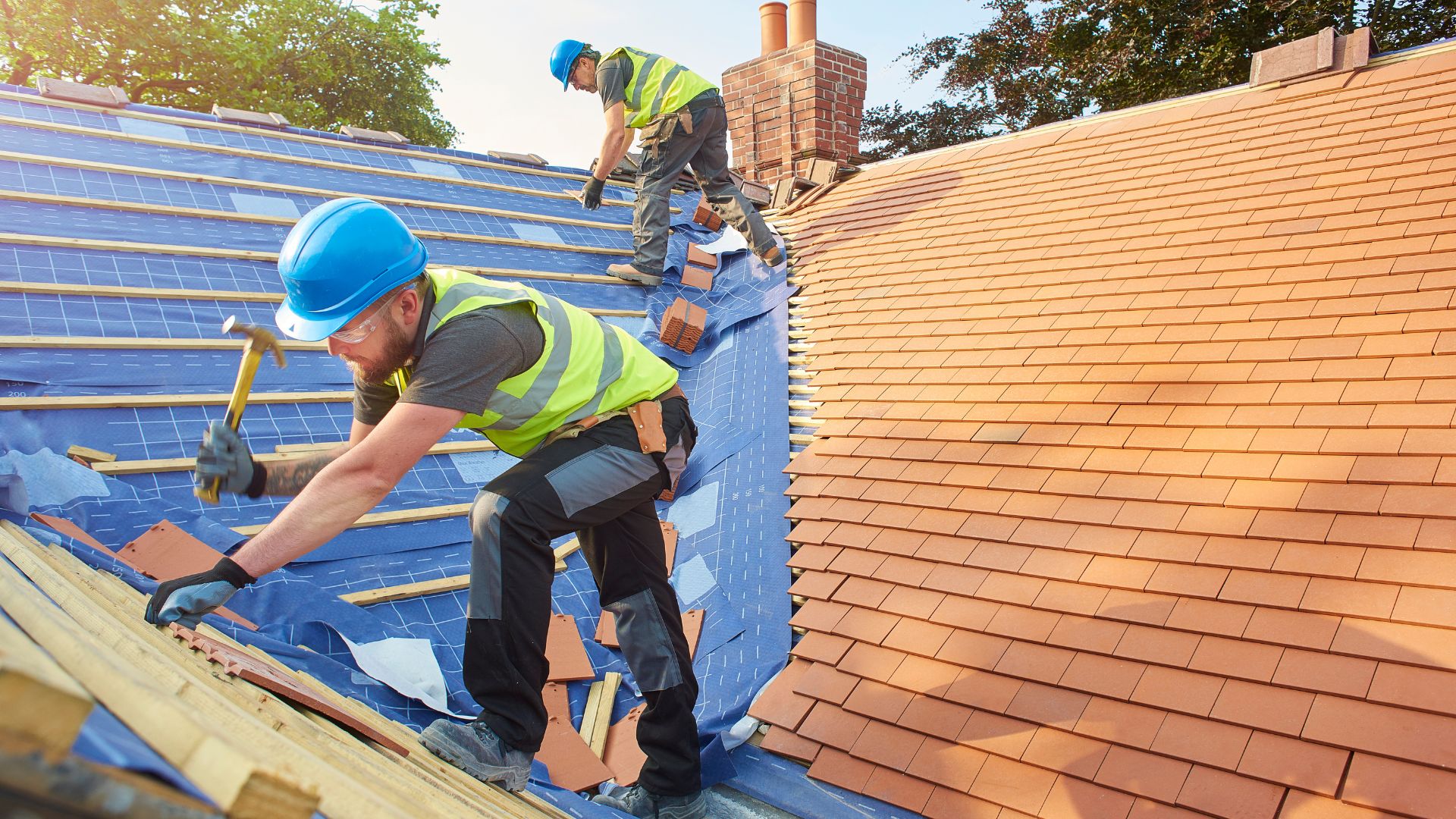
You need a roofing company when water gets inside the house, when part of the roof covering is missing or broken, when the roofline sags, or when the attic shows damp insulation, daylight or mold. A few of these call for help the same day; the rest can wait for a scheduled inspection. To reach a roofer, call NEMA Roofing at 866-631-3366.
Which signs mean you should call a roofer today?
- Water dripping through a ceiling or light fixture. Turn off that circuit at the panel if water is near wiring, and call an electrician as well as a roofer.
- A sagging ridge, dip in the roofline or a ceiling that bulges. These point to wet or broken framing or decking. Keep people out of the room below and stay off the roof.
- Storm damage that exposes the wood deck, such as a patch of shingles torn away or a row of tiles blown loose.
- A fallen tree limb on the roof. Punctures are often hidden under the branch.
For these, ask for emergency roof repair: the first visit stops the water, and the permanent fix follows once the roof is dry.
Signs that call for an inspection soon
These do not flood a room tomorrow, but each one lets water or heat do damage that grows with every season.
| Sign | What it usually means | Where to look |
|---|---|---|
| Brown ring on a ceiling that grows after rain | A slow leak, often at flashing or a vent pipe boot | Ceilings under chimneys, skylights and valleys |
| Curled, cracked or missing shingles | Aged or wind-damaged shingles that no longer shed water | South and west slopes, which take the most sun |
| Granules piling up in gutters or at downspouts | Asphalt shingles losing their protective surface | Gutter outlets after a rain |
| Cracked or slipped tiles | Broken tile exposing the underlayment beneath | Ridges, hips and areas people walk on for solar or satellite work |
| Rust streaks or backed-out screws on a metal roof | Failing fastener washers or scratched coating | Panel laps and trim at the eaves |
| Water standing on a flat roof days after rain | Low spots or blocked drains that wear the membrane | Around drains and scuppers |
| Daylight or damp insulation in the attic | A gap in the roof or condensation from poor ventilation | The attic, with the lights off, on a sunny day |
A roof inspection sorts these into repair items and items to watch, and tells you whether the roof as a whole has years left.
Is it the roof, or something else?
Not every water stain is a roof problem. Before you book a roofer, rule out the usual look-alikes:
- Air conditioner condensate. A stain under an attic air handler that appears on hot, dry days is usually a clogged drain line or pan, a job for an HVAC technician.
- Plumbing. A stain under a bathroom that shows up in dry weather points to a supply or drain line. A stain that shows up only in rain points back to the roof, often the rubber boot around the plumbing vent.
- Windows and walls. Water at the top of a window frame during wind-driven rain can come from the window or the wall above it, not the roof.
- Bathroom fans. A fan that vents into the attic instead of through the roof leaves damp spots on the ceiling around it.
Streaks, moss and mold: which ones matter?
Dark streaks on shingles are usually algae. They look bad but rarely cause leaks on their own; they should be cleaned gently, never with a pressure washer, which strips the granules. Moss is different: it holds water against the roof and lifts shingle edges, so it should come off and the cause (shade, debris) be dealt with. Mold on the attic side of the roof deck means moisture is getting in or not getting out, from a leak or poor ventilation, and needs a roofer to find the source.
Can a roof raise your energy bills?
Sometimes, but the covering is rarely the whole story. Summer bills climb when the attic runs hot: thin or wet insulation, blocked soffit or ridge vents, or a dark roof in full sun. A roofer checks the ventilation and the condition of the insulation during an inspection; if the roof is due for replacement anyway, a lighter cool-rated product and better attic ventilation can be part of the new roof.
What to do until the roofer arrives
- Catch the water with buckets and move furniture, rugs and electronics out of the way.
- Photograph the stain, the drip and any outside damage you can see from the ground; your insurer may ask for them.
- Stay off the roof. Wet tile, metal and shingles are slippery, and damaged decking can give way.
- Write down when the leak shows up (every rain, only in wind, only on hot days). It helps the roofer find the entry point faster.
How to tell a reliable roofing company fast
A roofing contractor in California should hold a state license with the C-39 roofing classification, which you can look up on the Contractors State License Board website, and the state board requires every active C-39 license to carry workers’ compensation insurance. Ask for a written estimate that names the materials and scope. For a longer checklist, read how to choose the best roofing company near me.
NEMA Roofing (CSLB license #1083283, C-39 and B) works from five locations, in Santa Barbara, Oxnard, Woodland Hills, Tarzana and Downey, and takes calls from anywhere in Santa Barbara, Ventura, Los Angeles, Riverside and San Bernardino counties; the Ventura County service area page lists the towns there. For the full list of what we handle, see our roofing contractor near me page, or call 866-631-3366 to have a roofer look at the sign you found.




