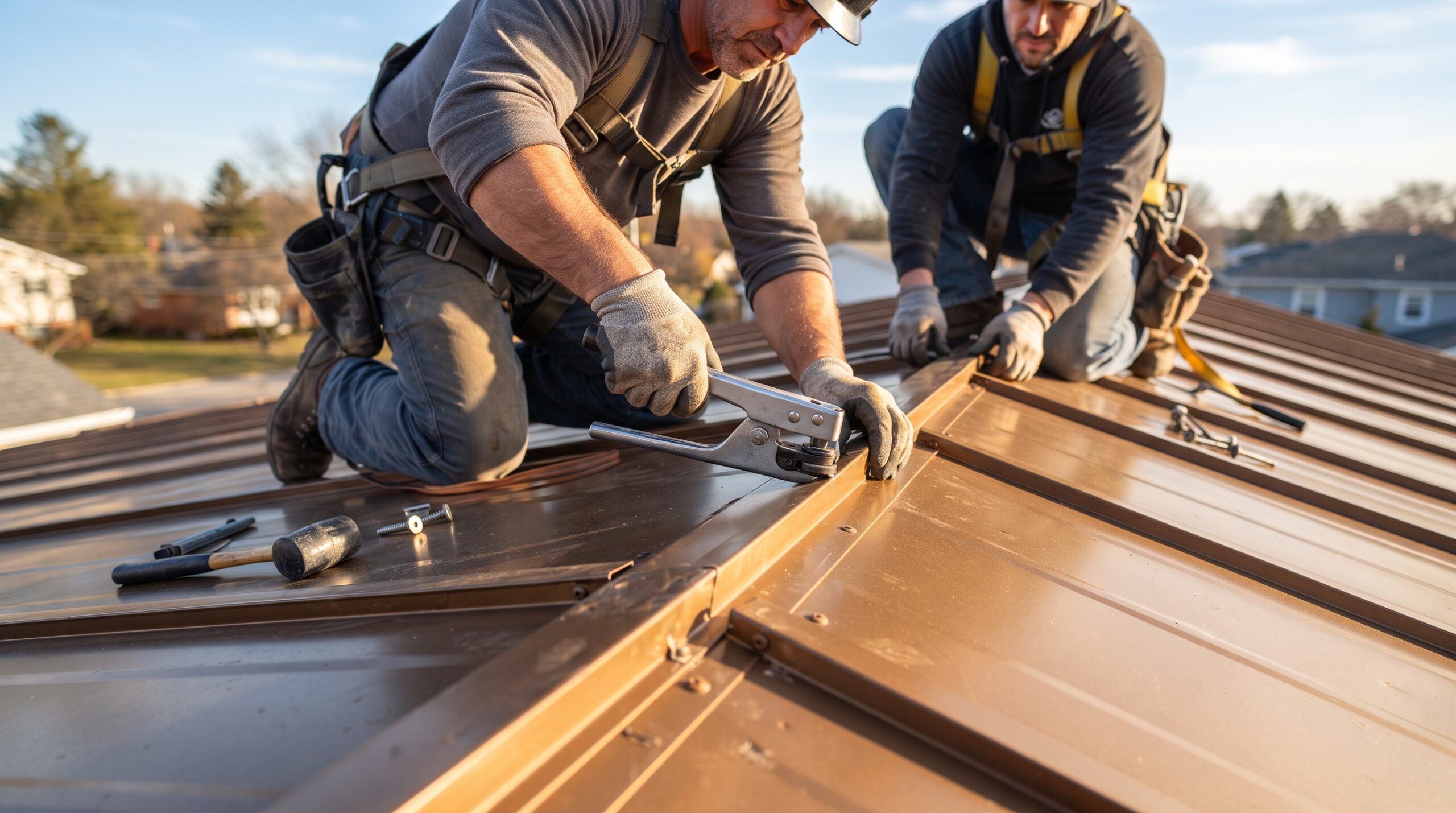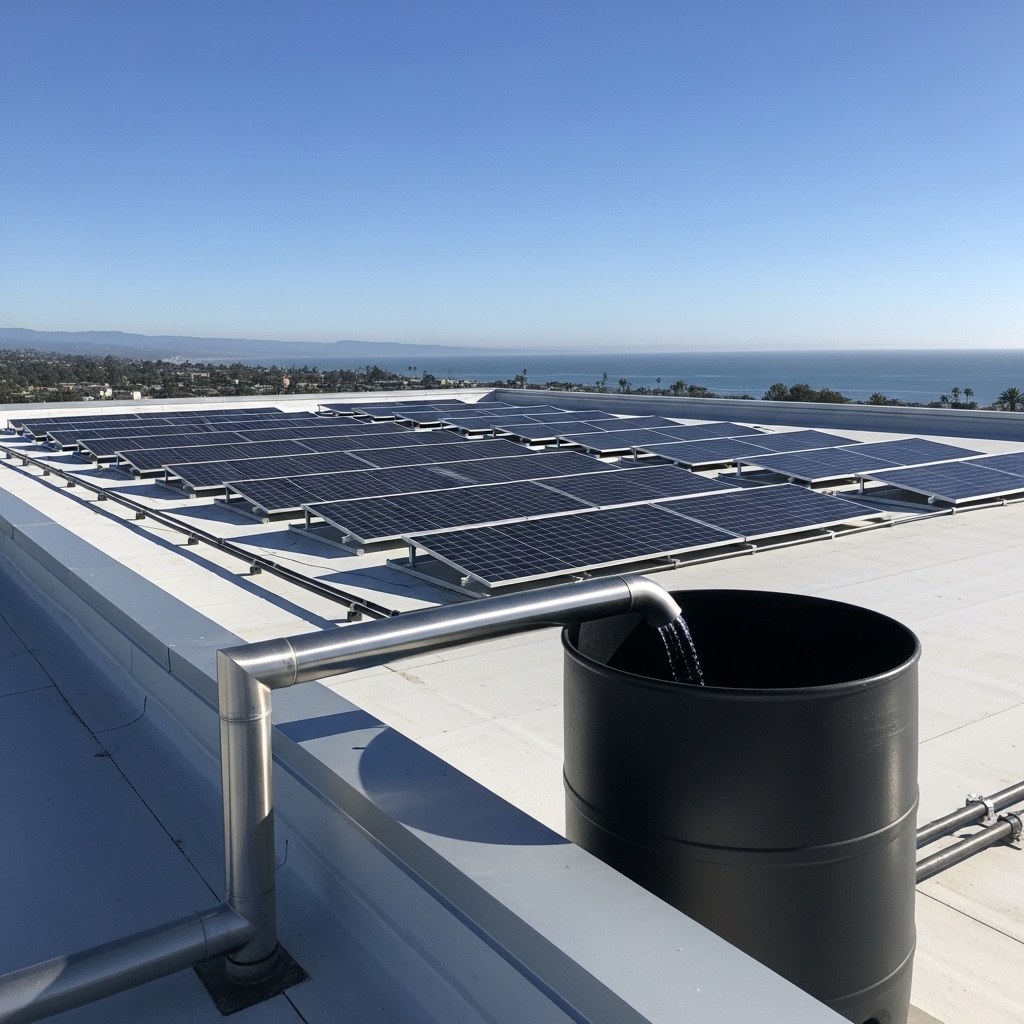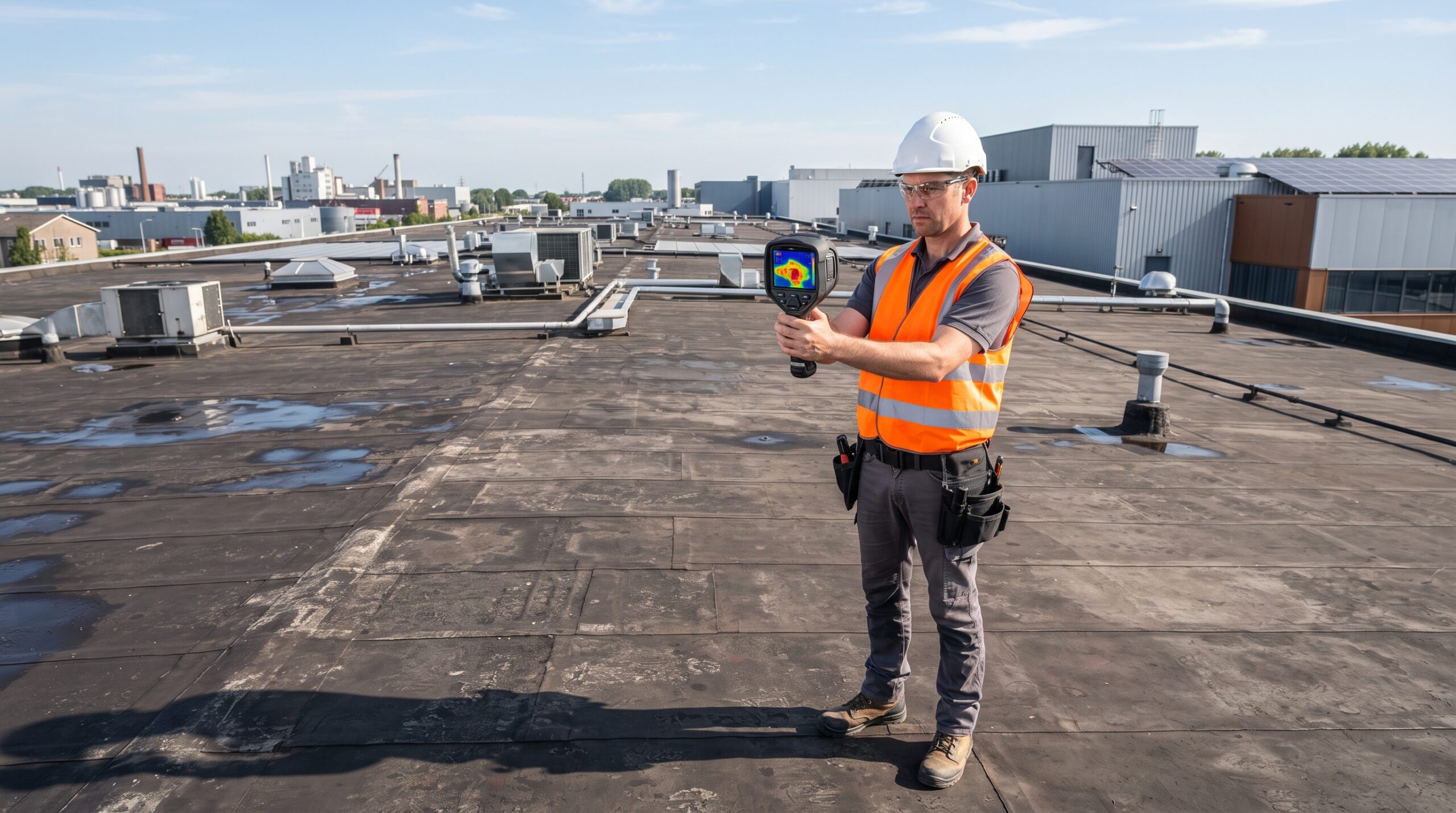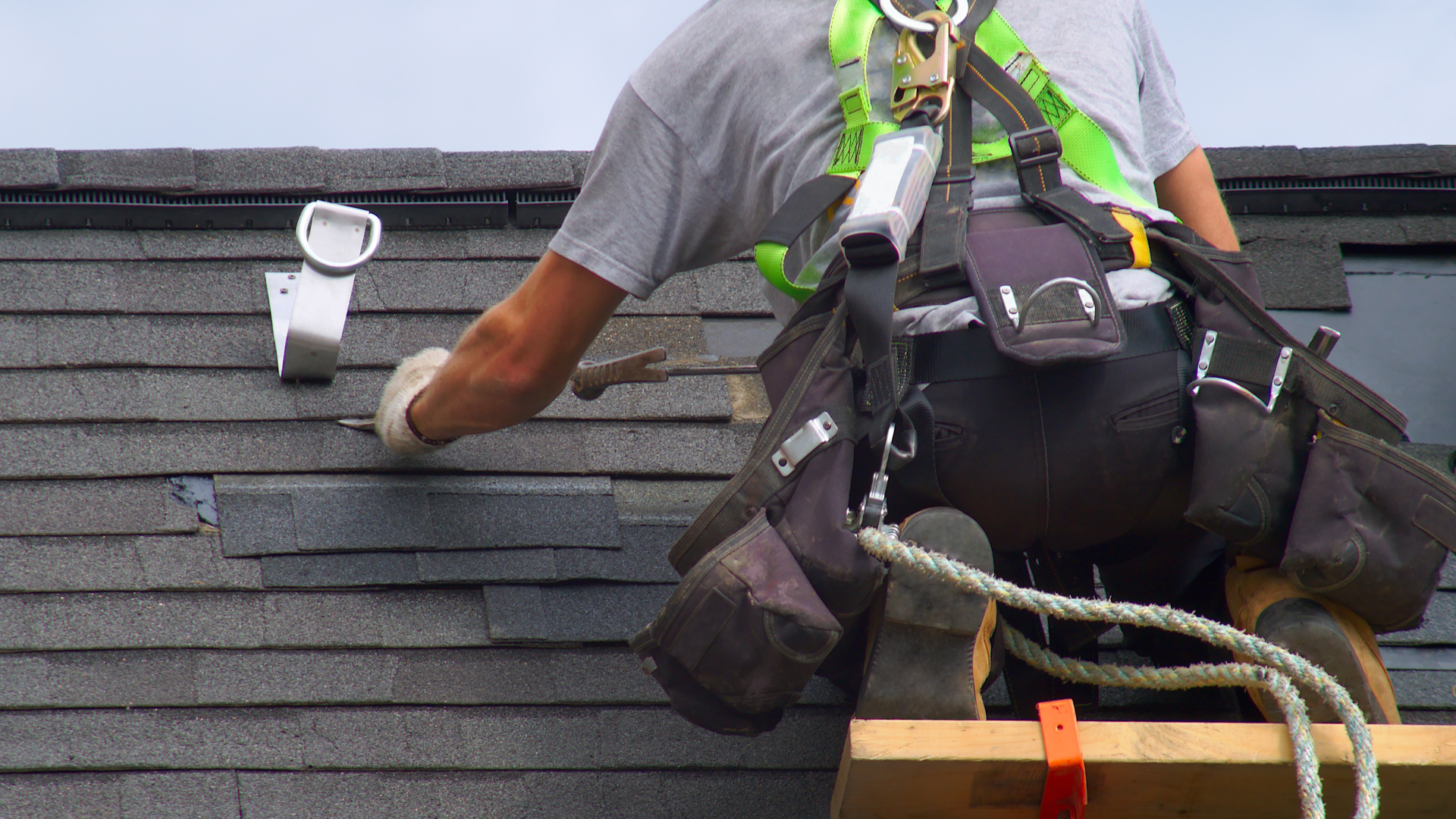
Roofing company vs handyman comes down to the size of the job and the law: in California, anyone who is not a licensed contractor may only take work that is small, needs no building permit and stays under a dollar limit set by state law. A leak repair that goes past the surface, or any reroof, belongs with a licensed roofing company. To talk through your job, call NEMA Roofing at 866-631-3366.
What California allows a handyman to do on a roof
California’s contractor law has a narrow exemption for minor work (Business and Professions Code section 7048). Unlicensed work is allowed only when all of these hold:
- the whole job, labor and materials together, stays under the dollar limit in section 7048;
- the work needs no building permit;
- the job is not one piece of a larger project, and was not split into smaller contracts to stay under the limit;
- the person does not advertise as a contractor and does not bring other workers to do or help with the job.
Most roofing fails at least one of these. A reroof needs a permit in the cities we have checked (the City of Los Angeles through its Department of Building and Safety, and the City of Carpinteria, for example), and Carpinteria requires one for any repair that reaches the underlayment or the structure beneath the roof covering. Roof work also tends to grow once the old material comes off.
Roofing company vs handyman at a glance
| Question | Licensed roofing company | Unlicensed handyman |
|---|---|---|
| Which jobs, legally | Any roofing work, including permitted reroofs | Only minor work under the section 7048 limits, with no permit needed |
| License you can check | Yes, on the Contractors State License Board site (C-39 Roofing or B General Building) | No state record to check |
| Workers’ compensation | Required for every active C-39 roofing license, with or without employees, and shown on the license record | Often none; if a worker is injured on your property without coverage, the state board warns you could be financially liable |
| License bond | Required for every licensed contractor | None |
| Written contract | Required by state law for most home improvement jobs, with a right to cancel and a cap on the down payment | Whatever the two of you agree |
| Permit and inspection | Pulled by the contractor and signed off by the city or county | Not available for exempt work; a job that needs a permit is outside the exemption |
| Manufacturer’s enhanced warranty | Available through certified contractors | Not available |
Benefits of hiring a roofing company for anything past a small fix
- A diagnosis, not only a patch. Leaks rarely start above the stain. A roofer traces water to the flashing, boot or seam that failed, so the fix addresses the cause.
- Protection if someone gets hurt. Roof work is fall-risk work. A licensed roofing contractor’s workers’ compensation covers the crew; with an uninsured helper, the cost of an injury can land on you.
- Work done to code. California’s residential code sets rules a handyman may not know, such as when a new layer may not go over an old one (2025 CRC section R908.4: not over a water-soaked or deteriorated roof, over two existing layers, or over slate, clay or cement tile) and when rusted or damaged flashing must be replaced rather than reused.
- A warranty that means something. Some manufacturer warranties can only be registered by certified installers. GAF’s Golden Pledge, for example, is available only through GAF Master Elite contractors and adds GAF-backed coverage for the installation workmanship.
- Somewhere to turn if it goes wrong. A licensed contractor answers to the state board, carries a license bond and signs a contract that California law shapes. With an unlicensed worker, your options are far thinner.
When a handyman or doing it yourself is reasonable
Not every roof chore needs a roofer. Clearing leaves from gutters and downspouts, rehanging a loose downspout, or trimming a branch that brushes the roof are small jobs you or a handyman can do, as long as nobody takes risks on a ladder or a steep slope. California also lets you work on your own home yourself (Business and Professions Code section 7044); the permit and inspection rules still apply, and anyone else who works on the job is covered by that exemption only as your own employee paid wages. The line to watch is the one in section 7048: once a job needs a permit, gets bigger than a small repair, or means walking on tile or a steep roof, it is roofing work.
For a job you are unsure about, our roofing inspection checklist shows what you can safely check from the ground and the attic first.
How to check the roofer you hire
- Look the license number up on the Contractors State License Board site and confirm it is active, in the name on the bid, with the C-39 or B classification.
- Check that workers’ compensation shows on the license record.
- Get a written contract that lists the scope, the permit and the payment schedule.
- Ask which warranty you get and who registers it.
For a fuller list, read questions to ask a roofing company, and for the stages of a job see what to expect from a roofing company.
Hiring NEMA Roofing
NEMA Roofing is a licensed roofing (C-39) and general building (B) contractor, CSLB license #1083283, with its bond and workers’ compensation on file with the state board. We work from five locations (Santa Barbara, Oxnard, Woodland Hills, Tarzana and Downey), so a crew is close to jobs anywhere in Santa Barbara, Ventura, Los Angeles, Riverside and San Bernardino counties. See our roofing contractor services, or call 866-631-3366 and describe the job.