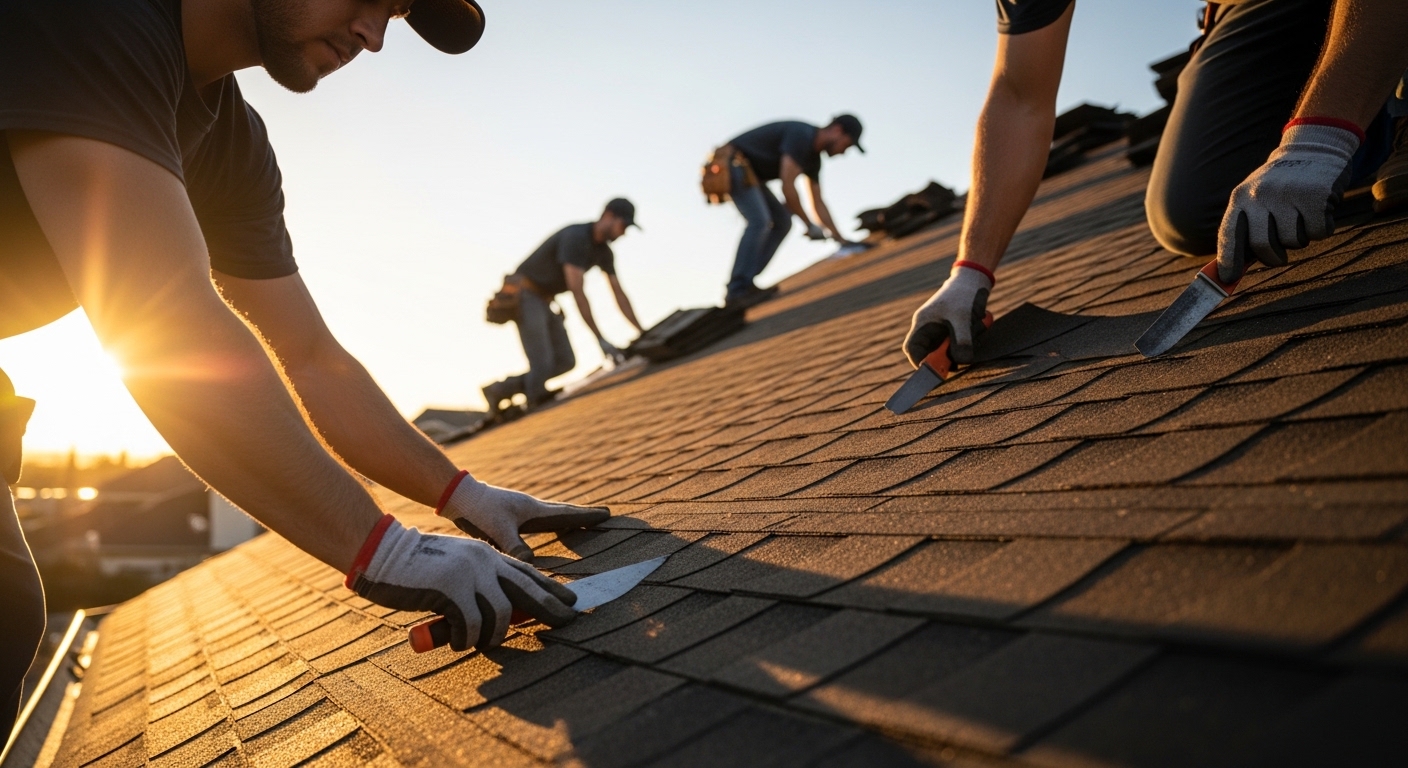
The main types of roofing services are inspection, repair, maintenance, emergency protection, roof replacement and new roof installation, with specialist work for flat, tile, metal and cool roofs on top. They differ in scope: some fix one spot, others rebuild the whole roof down to the deck. Which one lasts depends on whether it treats the cause. To talk through your roof, call NEMA Roofing at 866-631-3366.
The six types of roofing services side by side
A useful way to sort roofing work is by how much of the roof it touches and what you should hold in your hand when the crew leaves. The paperwork is how you tell a lasting service from a quick visit.
| Service | Scope | What you should receive |
|---|---|---|
| Inspection | The whole roof, looked at, nothing changed | A written report with photos, each problem located and ranked by urgency |
| Repair | One area or one failed part | A note of the cause found, the parts replaced and photos before and after |
| Maintenance | The whole roof, small corrective work | A dated list of what was cleared, resealed or replaced, and what to watch |
| Emergency protection | The area letting water in, temporary | Photos of the damage and the temporary cover, plus the plan for the permanent repair |
| Replacement (reroof) | The whole covering, usually down to the deck | A signed contract, the building permit and its final inspection, and the warranty papers |
| New installation | A roof on new construction or an addition | The same as a replacement, matched to the building plans |
Inspection: the service that decides the others
An inspection changes nothing on the roof, yet it decides if you need a repair, maintenance or a new roof. A thorough one covers the covering, every flashing joint at walls, chimneys, vents and skylights, the gutters and drainage, and the attic underside, where stains and daylight show problems the top hides. The report is the part you keep: it lets you compare the next inspection against this one and get like-for-like prices for the work it lists. Our roofing inspection checklist shows what you can check yourself first.
Repair and maintenance: fixing a fault versus preventing one
A repair answers a specific failure: a leak, a lifted section after wind, a cracked tile, a torn seam on a flat roof. The test of a good repair is that it names the cause. Water usually enters uphill of the ceiling stain, often at flashing, so a repair that only patches the spot above the stain tends to come back.
Maintenance is scheduled work on a roof that is not leaking yet: clearing valleys, gutters and drains, checking and resealing exposed fasteners and sealant joints, replacing a cracked vent boot, trimming branches that rub the roof. It targets the parts that fail first. Book it before the rainy season, so anything found can be fixed while the roof is dry.
Emergency service: stop the water first, repair second
When water is coming in during a storm, the first job is temporary: a secured tarp or membrane over the opening so the inside stops getting wet. A permanent repair on a wet roof rarely holds, so it is done once the surface dries and the cause can be traced. Ask for photos of the damage before it is covered; your insurer will want them. Our emergency roof repair service explains how that first visit works.
Replacement and new installation: rebuilding the system
A replacement is the only service that renews every layer: the deck where it is soft, the underlayment that does most of the waterproofing, the flashing, the ventilation and the covering you see. California’s residential code (2025 CRC section R908) sets the rules. A new covering may not go over the old one when the existing roof is water-soaked or deteriorated, when it already has two or more layers, or when it is slate, clay or cement tile. Flashing that is rusted or damaged has to be replaced, not reused.
A reroof generally needs a building permit, and the permit brings a city or county inspector to check the work. The City of Los Angeles (through its Department of Building and Safety) and the City of Carpinteria both require one, for example. The final inspection on that permit is your proof the roof met code. For the full process, see our roof replacement service.
Specialist services by roof type
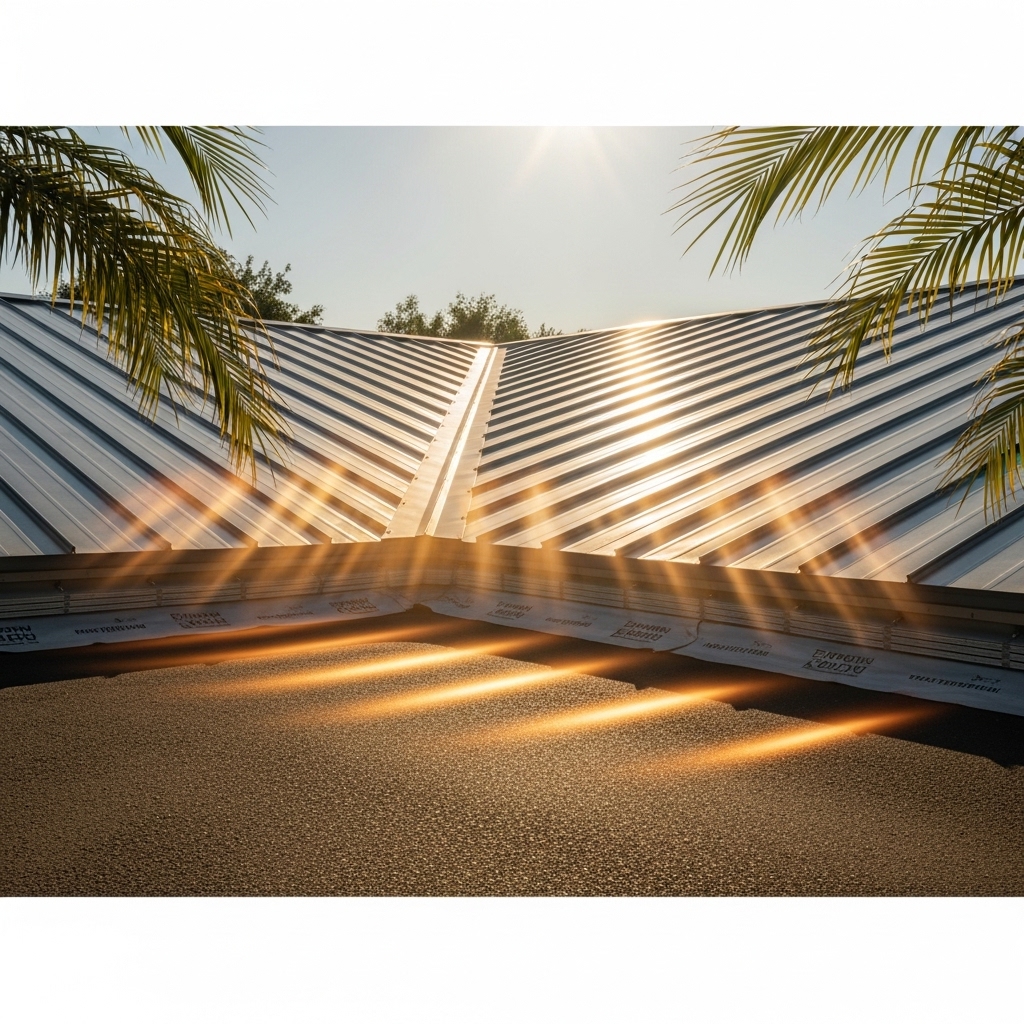
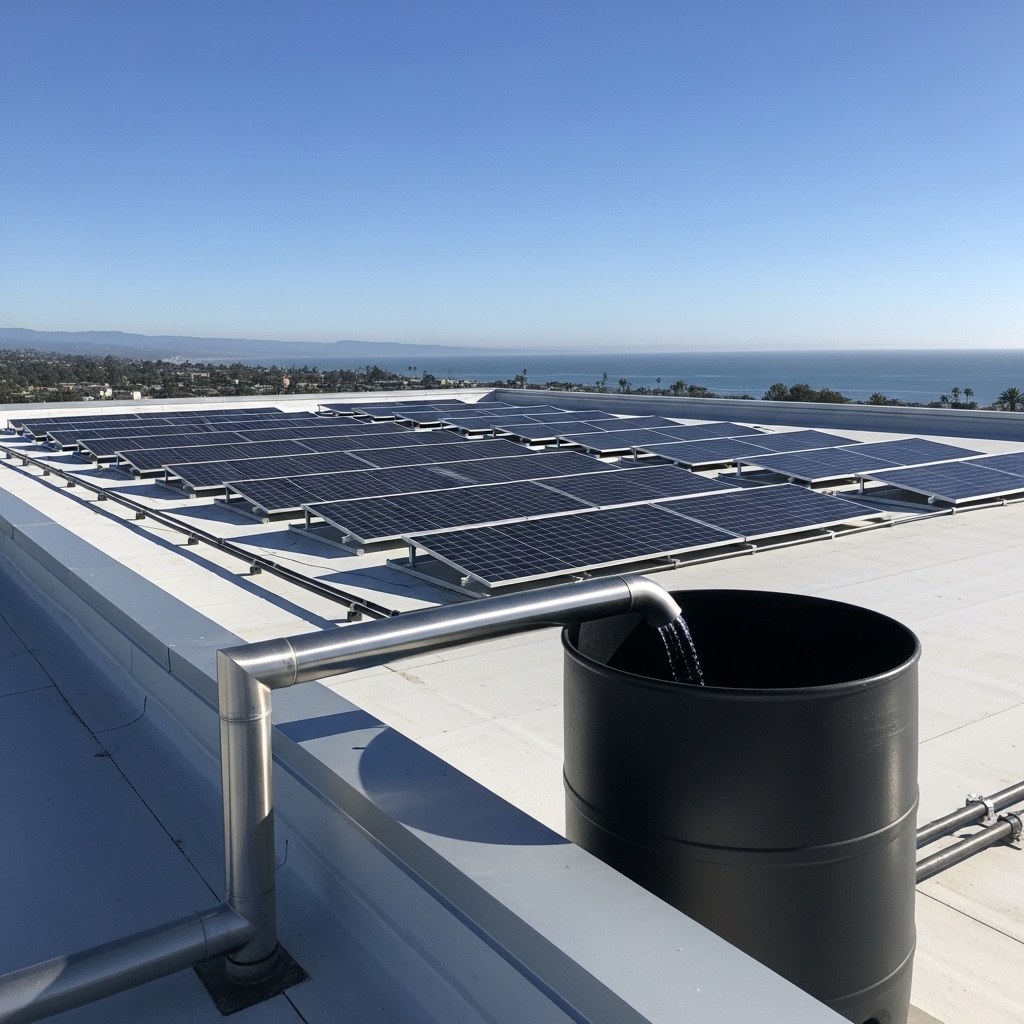
- Flat and low-slope roofs: membrane repair, seam work, coatings and drain clearing. Ponding water and open seams are the usual faults.
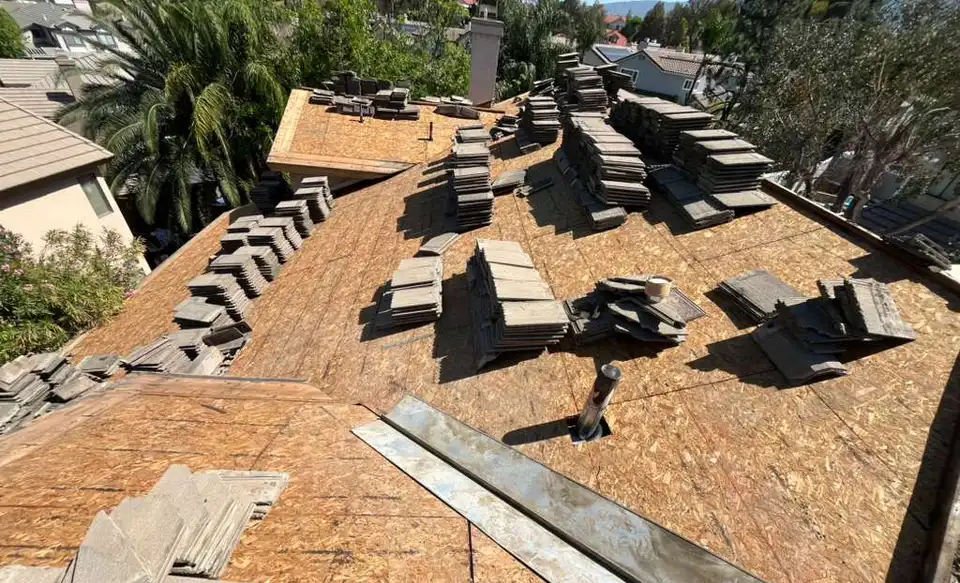
- Tile roofs: the tiles shed most of the water, but the underlayment beneath does the waterproofing and wears out first, so tile work often means lifting the tiles, renewing the underlayment and relaying the sound ones.
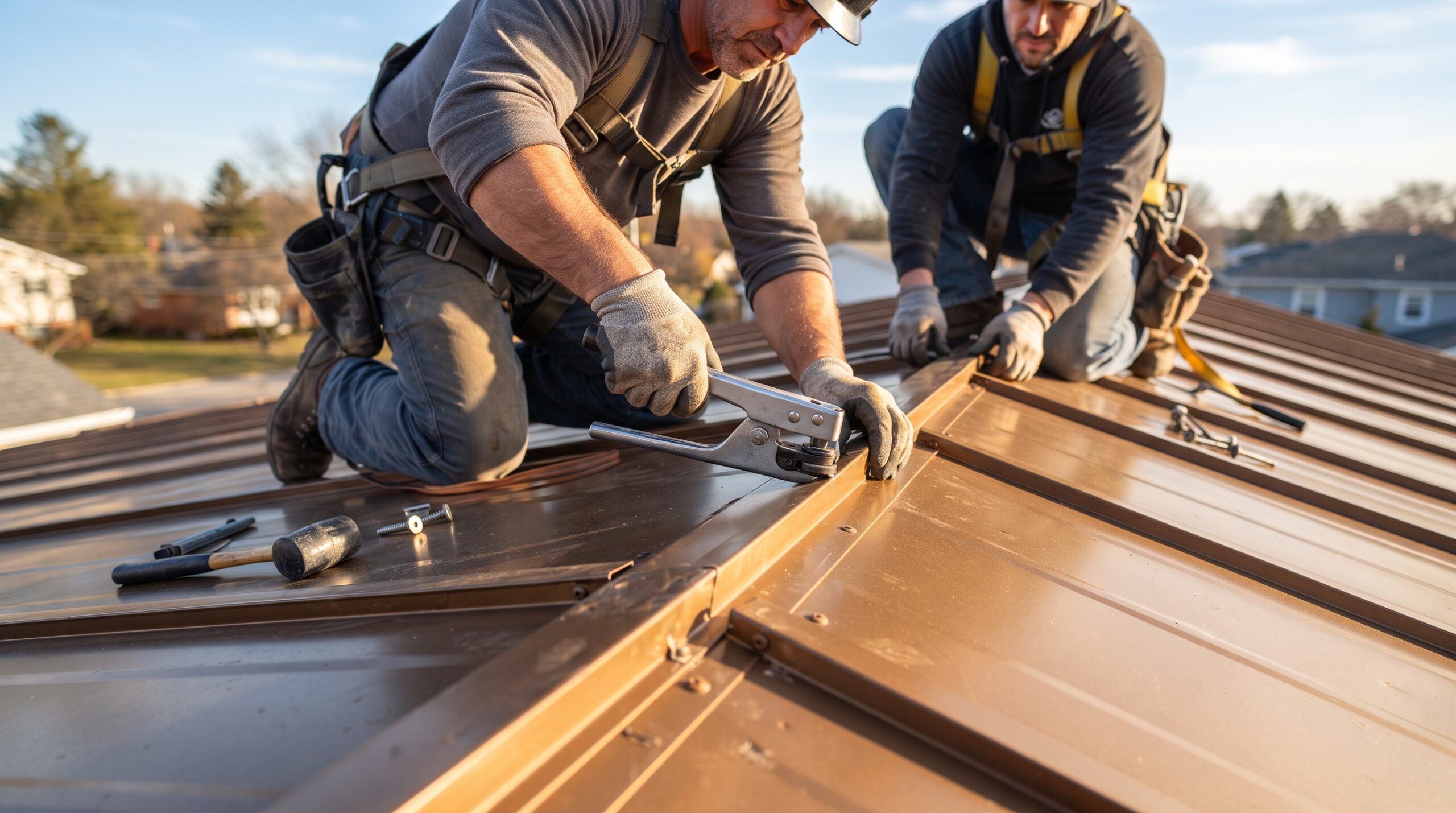
- Metal roofs: fastener and washer replacement, seam and trim resealing, and treating rust at cut edges.
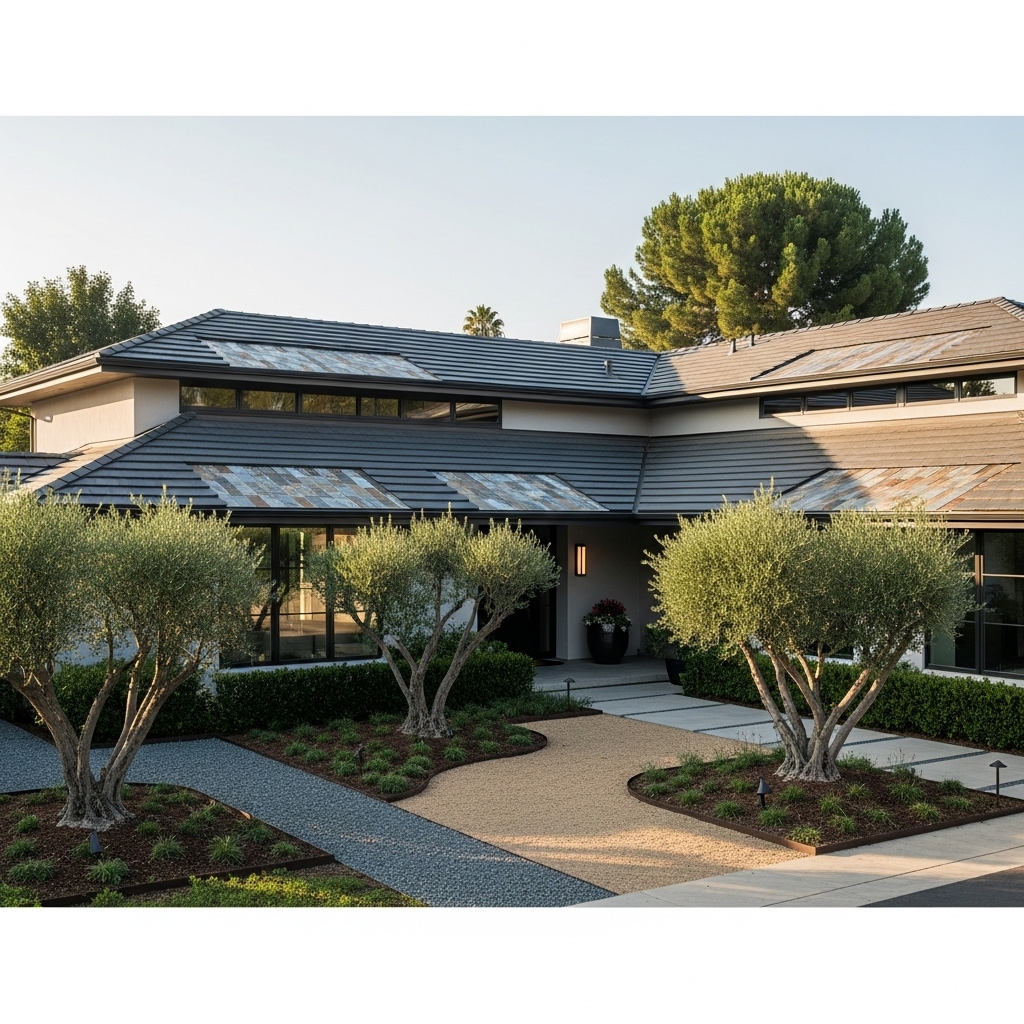
- Cool roofs: reflective coverings and coatings that keep the roof surface cooler in sun, which California’s energy code requires on many reroofs.
What makes any roofing service last
Four things separate roof work that holds for years from work that brings the crew back after the next storm:
- The cause is found, rather than only the symptom. The paperwork should say why the roof failed, not only what was replaced.
- Flashing is treated as part of the job. Most leaks start at joints, so a new covering with old flashing is only partly new.
- Materials match. A repair in the same material, installed the same way as the roof around it, ages with that roof.
- The work is on record. A permit final for a reroof, and manufacturer warranty registration where it applies. As a GAF Master Elite contractor, NEMA can register GAF’s enhanced warranties, including the Golden Pledge, which adds GAF-backed coverage for installation workmanship.
Roofing services from NEMA Roofing
NEMA Roofing offers every service above, for homes and businesses, through six locations in Santa Barbara, Oxnard, Woodland Hills, Tarzana, Downey and San Bernardino. Those teams cover Santa Barbara, Ventura, Los Angeles, Riverside and San Bernardino counties in full; see the towns we serve. Our roofing contractor page lists each service. Call 866-631-3366 and tell us what you are seeing; we will start with the service that answers it.