A roof leak is an emergency when water is coming in now, or will with the next rain, and can reach wiring, a ceiling that is starting to sag, or an opening in the roof itself. A dry stain that has not changed, or one cracked tile with no rain in the forecast, can usually be booked as a normal repair. When you are unsure, describe what you see to a roofer and let them triage it: NEMA Roofing, 866-631-3366.
Emergency, this week, or next inspection?
Sort what you see by how fast it can get worse:
| What you see | How urgent | Why |
|---|---|---|
| Water dripping or running inside during rain | Emergency | Every hour adds wet insulation, drywall and framing |
| A ceiling that bulges, sags or feels heavy | Emergency | Soaked drywall can give way under the water it holds |
| Water at a light fixture, fan, outlet or panel | Emergency | Electrical hazard; switch that circuit off at the breaker |
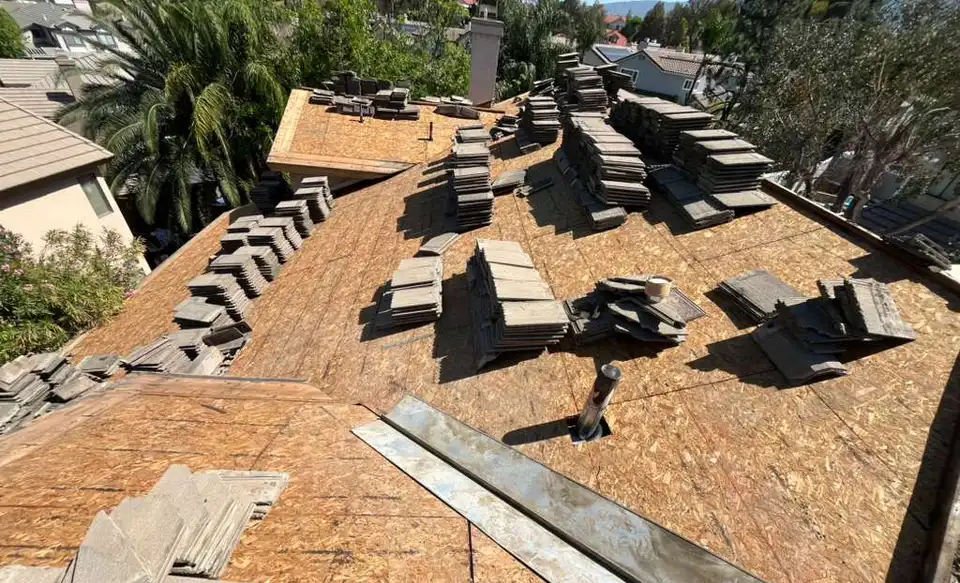
| A section of roof torn open by wind or a falling limb | Emergency before the next rain | The deck and underlayment are exposed to weather |
| Daylight through the roof boards in the attic | Urgent if rain is forecast, otherwise this week | An opening that size lets water straight in |
| A stain that grows a little after each storm, no drip | This week | A slow leak is rotting something out of sight |
| A few missing shingles or cracked tiles, dry forecast | Book a repair soon | Harmless in dry weather, a leak in the first storm |
| An old stain that has stayed the same size and is dry | Next inspection | Possibly a leak that was already fixed; confirm from the attic |
Anything in the first four rows also makes the house less safe to be in; roof leak safety hazards covers what to do about each one.
Why does the forecast change the answer?
In Southern California a roof problem found in summer and the same problem found in winter are different levels of urgency, because the rain arrives in a short season. The NOAA 1991-2020 normals for the Pierce College station in Woodland Hills show 3.73 inches in January and 4.62 inches in February, against 0.04 in July, 0.00 in August and 0.09 in September. A cracked tile noticed in August can be booked calmly. The same crack in January, with a storm two days out, needs covering first and fixing second.
Wind matters as well as rain. Damage from a dry windstorm can sit unnoticed until the first storm finds it, which is why a look at the roof after strong wind is worth doing even when nothing is dripping.
What makes a small leak more urgent?
- Where it lands. A leak above wiring, an attic furnace, ducts or a stored-goods area does more damage than one over an empty closet.
- The roof type. On a flat roof, water that gets under the membrane spreads sideways before it shows. On tile, a broken tile exposes the underlayment, which does the real sealing.
- The roof’s age. An old roof that starts leaking in one place often has other weak points; a tarp in one spot may not be enough.
- A repeat. A leak that returns after a repair means the source was missed, and the hidden damage is older than it looks.
- Nobody home. A leak in a vacant house or rental runs for days before anyone sees it.
What should you tell the roofer when you call?
- Where the water shows (room, ceiling or wall, near what) and when it started.
- Whether it drips in any rain or only in wind-driven rain from one direction.
- The roof type and roughly how old it is, if you know.
- Whether you can safely see into the attic above the spot.
- Photos from inside and from the ground.
- Whether anything is already covering the damage, and whether you plan an insurance claim.
With that, the roofer can tell you whether it needs a crew now or a scheduled visit, and what to bring. If it is the ceiling that worries you most, emergency ceiling repair after a roof leak explains the order of repairs.
Can the repair wait until the rain stops?
The permanent repair usually has to. New underlayment, flashing and roof coverings go on a dry roof, and walking a wet roof is dangerous. What cannot wait is keeping water out: a tarp or temporary seal can go on between storms, and the lasting repair follows once the roof dries. In an emergency, the first visit and the real fix are often two separate trips.
Emergency help across five counties
With six locations, in Santa Barbara, Oxnard, Woodland Hills, Tarzana, Downey and San Bernardino, NEMA Roofing reaches roof emergencies anywhere in Ventura, Santa Barbara, Los Angeles, Riverside and San Bernardino counties; for local permit notes and towns, see roofing in Ventura County or all service areas. For how an emergency visit runs, read our emergency roof repair service page, or call 866-631-3366 and describe what you see.