Metal roof maintenance on a Tarzana home comes down to two planned checks a year (one in fall before the rains, one in spring after them), a quick look after strong wind, and four habits: keep valleys, gutters and eave closures clear of debris, rinse gently instead of scrubbing, watch exposed fasteners and sealant, and keep other metals from touching or draining onto the panels. Anything that needs walking on the panels is a job for a roofer. To book a metal roof check, call NEMA Roofing at 818-528-6412.
When should a Tarzana metal roof be checked?
Tarzana’s weather sets the calendar. NOAA’s 1991 to 2020 climate normals for the Woodland Hills Pierce College station, about 2 km from Tarzana, show about 16.4 inches of rain a year, and roughly 13.7 of those inches fall from December through March. Summers are long and hot: August averages a high of 97.4 F, and the station logs about 115 days a year at or above 90 F.
- October or November, before the rains: clear the leaves and dust that built up over the dry months from gutters, downspouts and valleys, and look at sealant and flashing after a summer of heat.
- March or April, after the rains: look for water stains on ceilings and in the attic, rust at cut panel edges and screw heads, and trim or gutters that shifted during storms.
- After a strong wind: from the ground, look for lifted ridge caps, rake or eave trim, and branches or debris lodged in valleys.
What can a homeowner do, and what should be left alone?
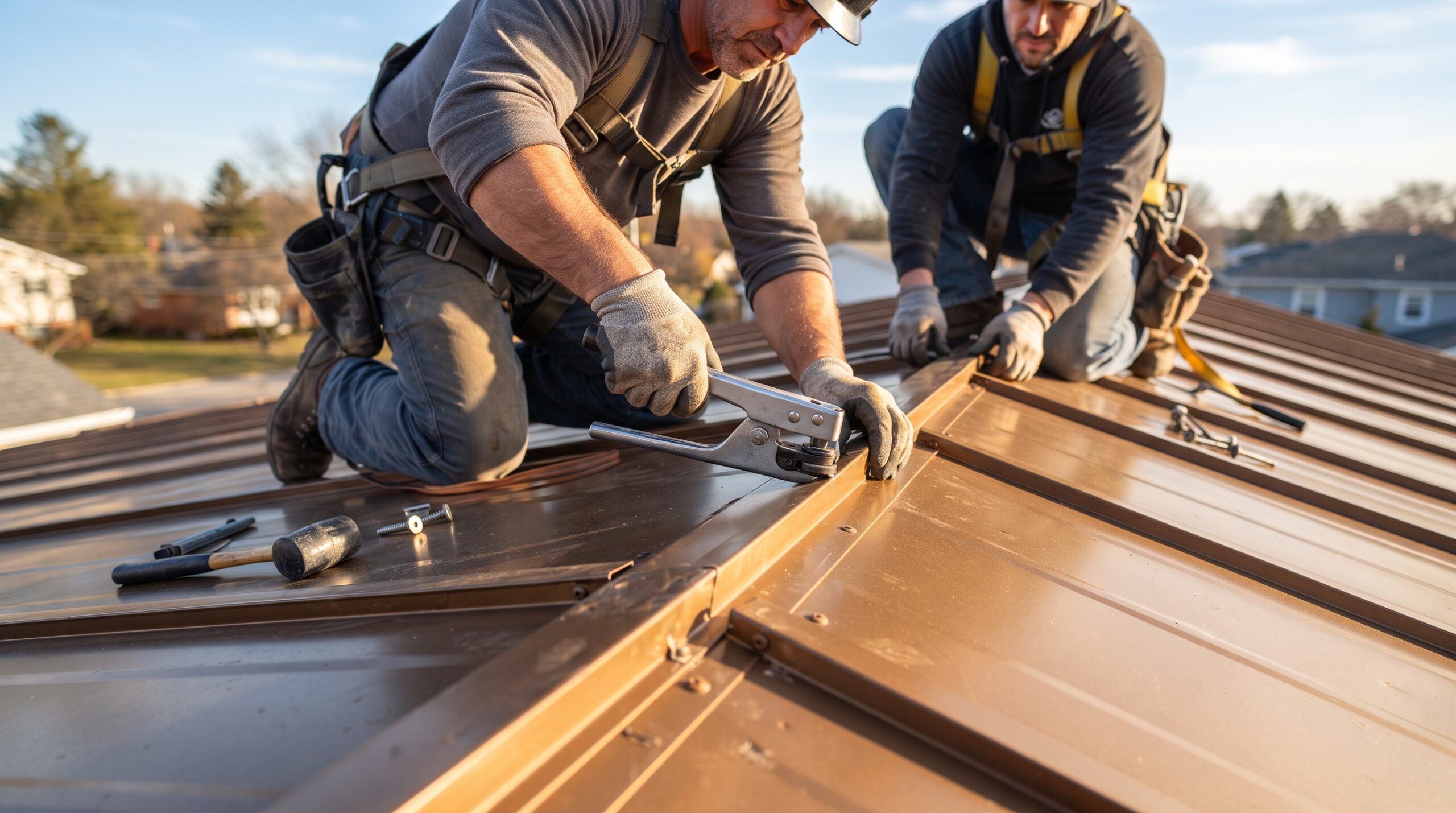
Most metal roof maintenance happens from the ground, a ladder at the gutter line, or the attic.
- Clean gutters and downspouts from a ladder and confirm they are still firmly attached.
- Trim branches back so they do not rub the finish or drop leaves into valleys.
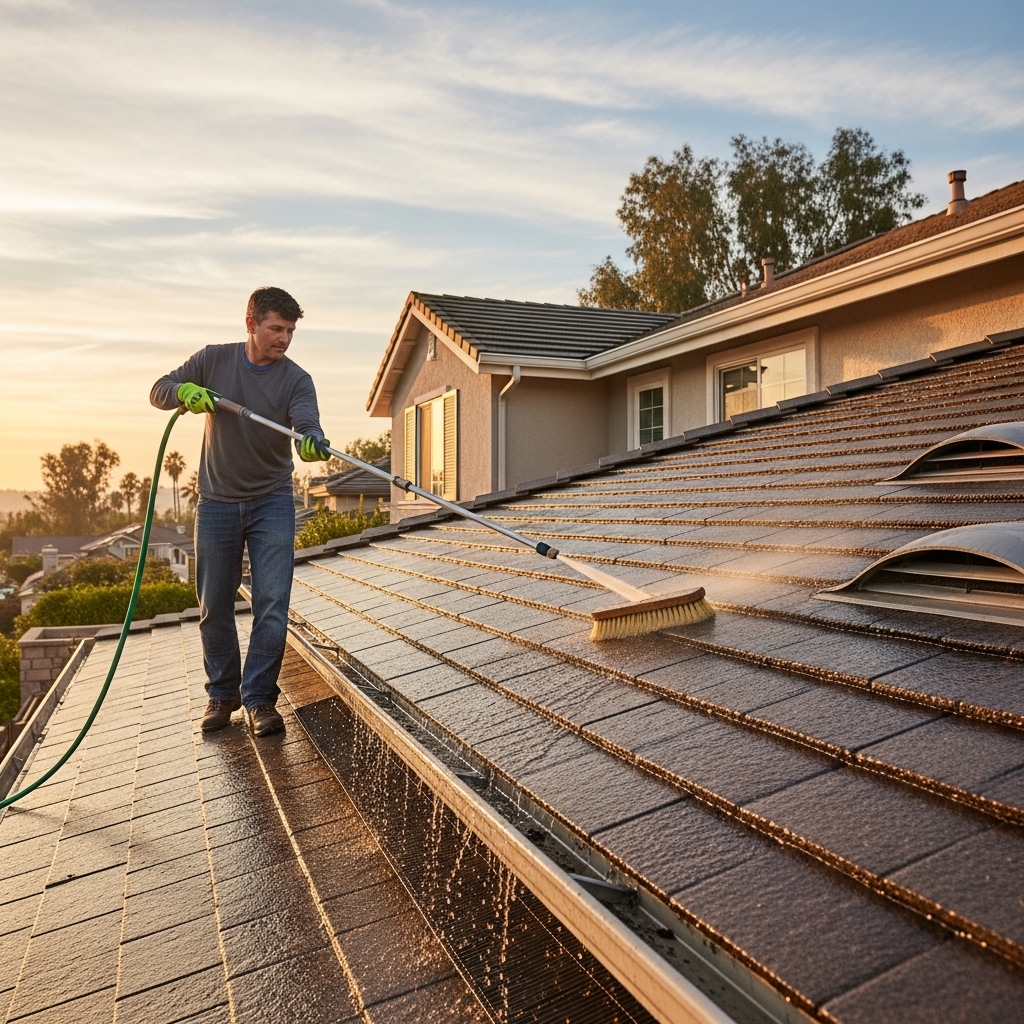
- Rinse dust, pollen, bird droppings and sap with a garden hose and low pressure, working from the ridge down so water follows the laps instead of being driven under them.
- Use only a mild cleaner the panel maker approves for stubborn spots, and a soft cloth or brush.
- In the attic, look for damp insulation, stains on the underside of the deck, and daylight at penetrations.
Leave these alone: pressure washers and abrasive pads (they strip paint and, on stone-coated steel, loosen the granules), walking on the panels (a misplaced step dents or creases a flat panel), and new sealant smeared over joints that are designed to slide as the metal moves.
How does maintenance differ by metal roof type?
| Roof type | What to watch | Why |
|---|---|---|
| Standing seam (concealed clips) | Seams that look pulled apart or twisted, ridge and eave trim, sealant at penetrations | The clips let each panel slide as it heats and cools; anything that pins a panel in place stresses the seam |
| Exposed-fastener panels (ribbed or corrugated) | Screws that have backed out, cracked or flattened rubber washers, rust around screw heads | Every screw goes through the weathering surface; its washer is the seal and it ages in sun and heat |
| Stone-coated steel (shingle, shake or tile look) | Bare spots where granules have worn off, loose or lifted pieces at hips and ridges | The granule coat protects the steel beneath; abrasion and foot traffic wear it away |
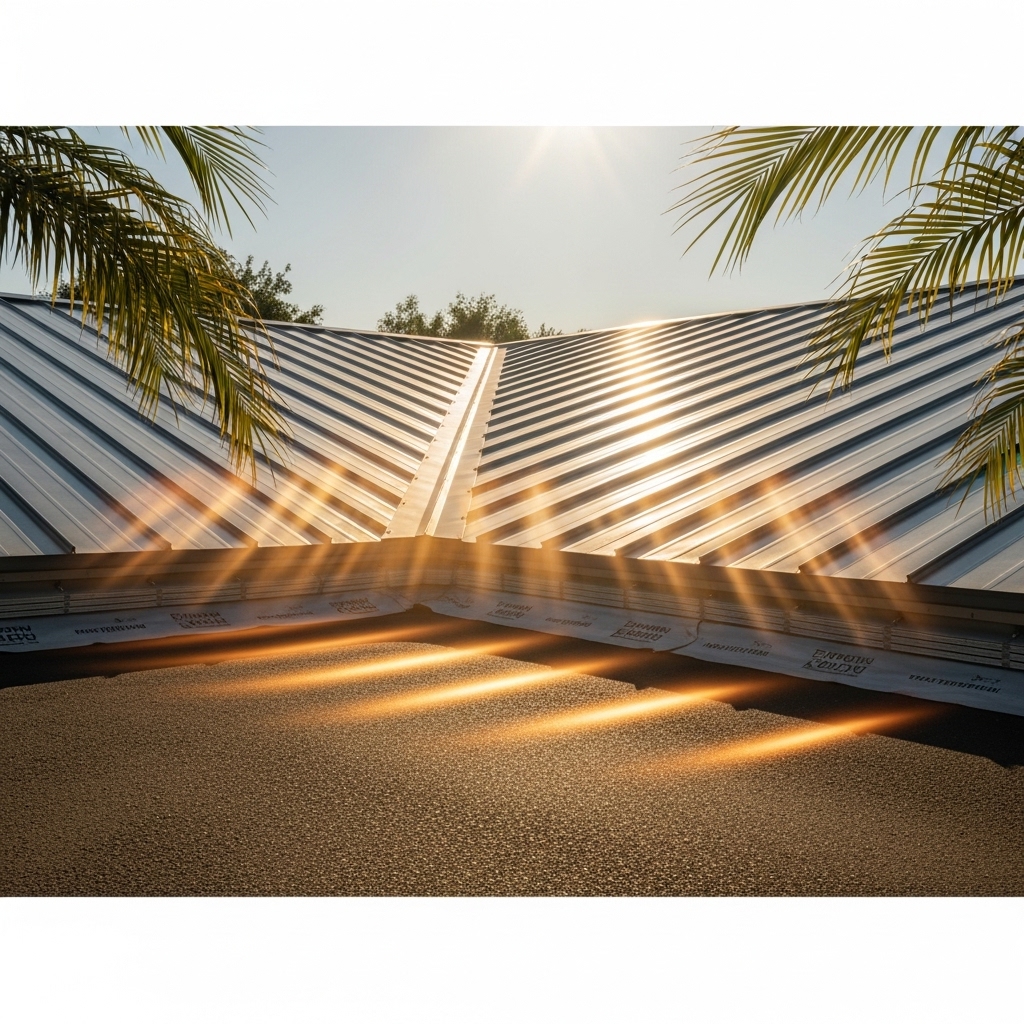
Heat drives most of this. At the Pierce College station an average August day swings from 60.8 F at night to 97.4 F in the afternoon, and the panel surface in full sun gets hotter than the air, so a metal roof in Tarzana expands and contracts every day of summer. A tick or pop as the roof warms can be normal; a loud, repeated bang from one area is worth a roofer’s look, because it can mean a panel is fastened too tightly to move.
What fire-zone checks matter in Tarzana?
Part of ZIP code 91356 falls inside a Very High Fire Hazard Severity Zone on the City of Los Angeles fire zone map, so check your own address on the city’s map. Metal does not burn, but embers can still reach dry leaves trapped under or beside it.
- Keep valleys and gutters free of leaf piles through the dry season. California’s 2025 Wildland-Urban Interface Code, in effect since January 1, 2026, requires gutters on the buildings it covers to have an approved means of keeping leaves and debris out.
- Check the eave closures (bird stops) and ridge closures. On profiles that leave a gap between the metal and the deck, the same code calls for bird stops at the eaves to keep debris out; a missing or crushed closure lets leaves and embers in.
- Know the reroof rule: in the Very High zones, the Los Angeles Department of Building and Safety (LADBS) requires a Class A roof covering, and under the 2025 code a roof that is replaced, or 50 percent or more replaced within 12 months, must meet the Class A requirement for new construction. Over a wood deck, a metal roof earns its Class A rating as a tested assembly (panel, underlayment and deck together), so keep the product records.
When do rust, scratches or sealant need a roofer?
Surface scratches that have not reached bare metal can wait for the next planned check. Call a roofer for rust at cut edges, seams or screw heads, sealant that has cracked or pulled away at a pipe boot, skylight or wall, a dent that holds water, or a stain inside. The U.S. Department of Defense roofing criteria (UFC 3-110-03) are a useful yardstick for what a proper repair looks like: exposed fastener washers of EPDM rubber, non-curing butyl sealant hidden inside joints and polyurethane where sealant is exposed, and trim or accessories made from the same sheet and factory finish as the roof.
What about solar panels, satellite dishes and copper lines?
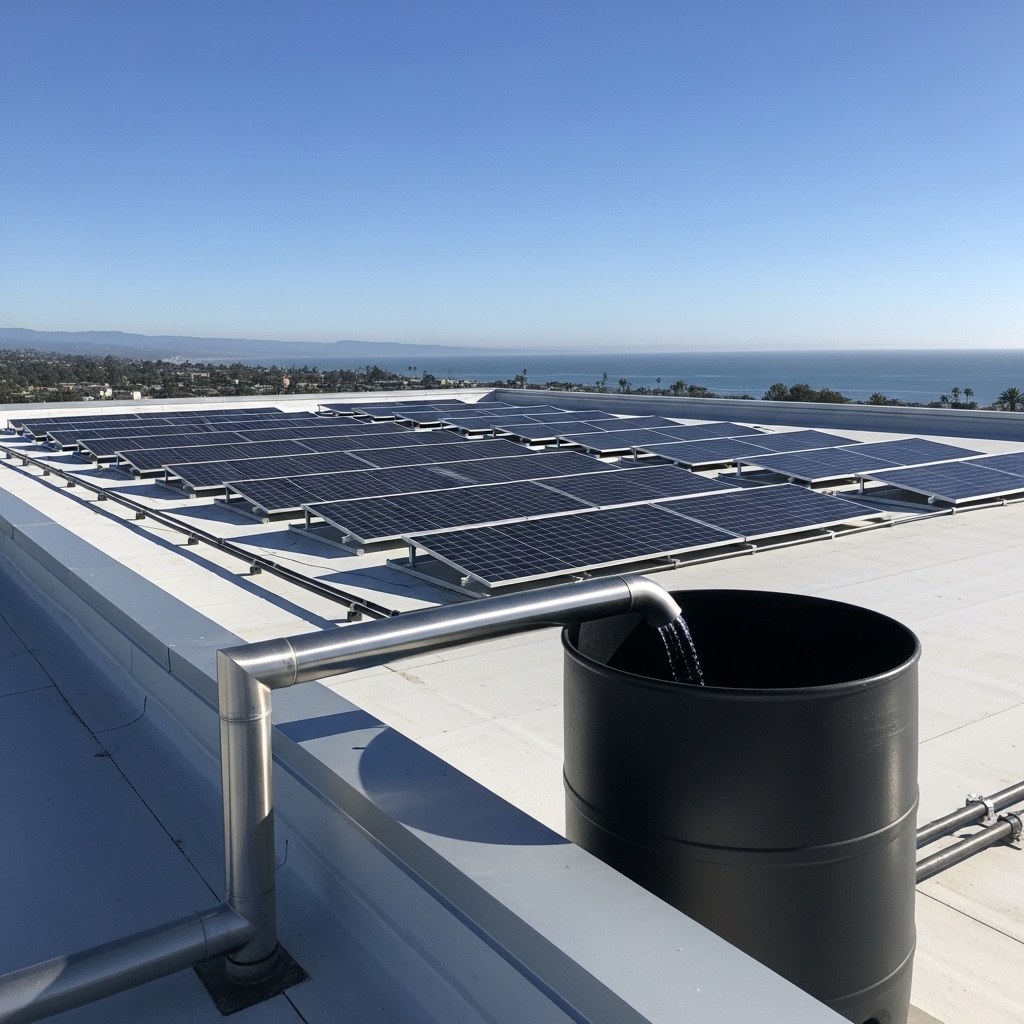
The same criteria call for mounting equipment on standing seam roofs with non-penetrating seam clamps, so the panels are not drilled, and for avoiding contact between dissimilar metals. In practice that means checking that solar clamps are still tight and the wiring is tied off so it cannot rub the finish in the wind, that no copper pipe, wire or flashing drains onto steel panels, and that anything new on the roof is attached by someone who knows the panel system. Plan roof and solar service for the same visit, so neither crew undoes the other’s work.
Why keep a simple roof record?
Write down the install date, the panel maker, profile and color, and the paint and panel warranty papers, then add a dated photo from each side of the house at every check. Warranty claims and repairs go faster when the roofer can match the exact product, and a set of photos makes slow changes (a trim that keeps lifting, a stain that grows) easy to spot. Our roof inspection checklist lists what to photograph from the ground and the attic.
Professional metal roof maintenance in Tarzana
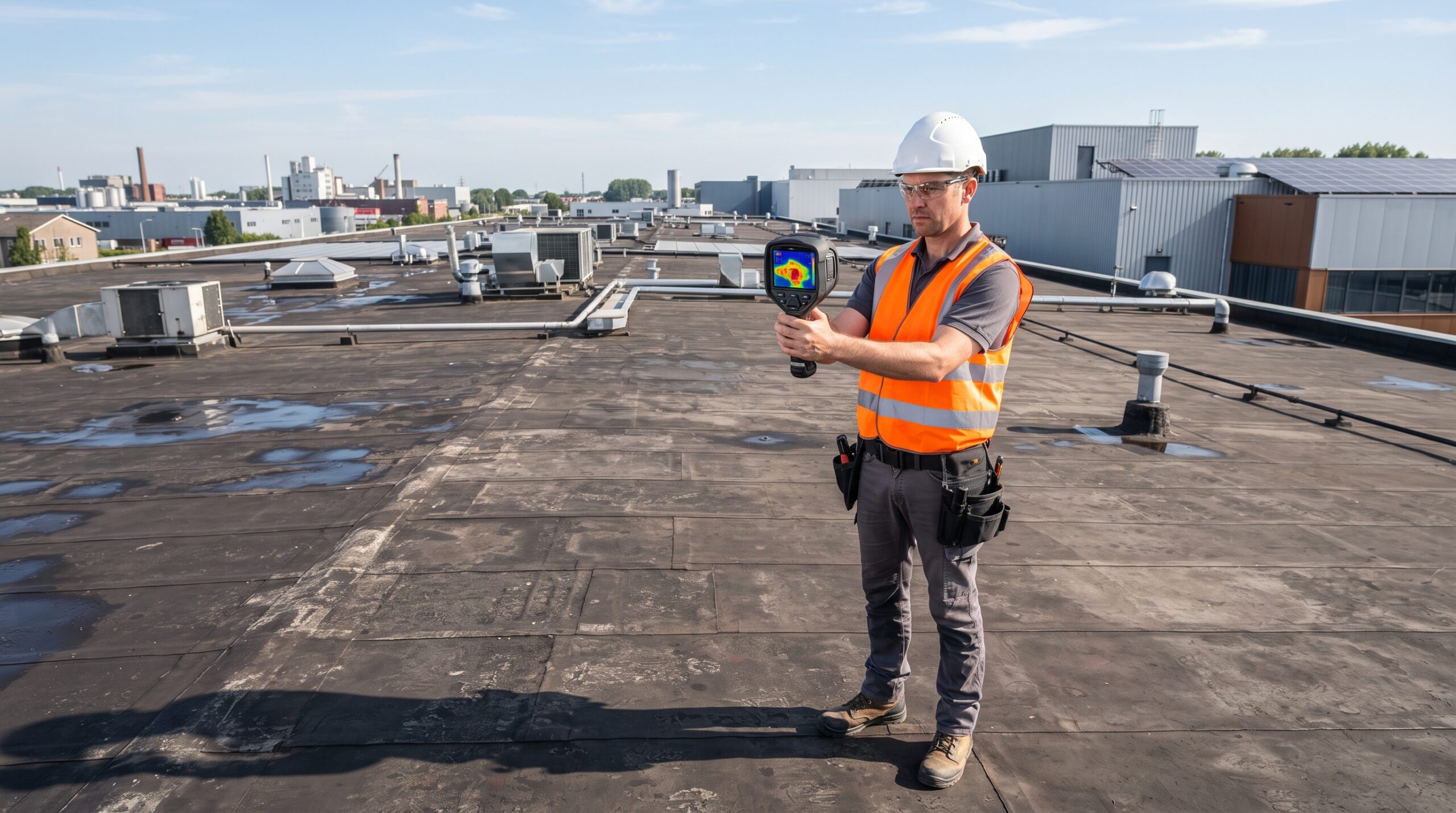
A roofer’s visit covers what the ground check cannot: fastener torque, seam and clip condition, flashing at walls and chimneys, sealant renewal and the underlayment around penetrations. Tarzana is one of NEMA Roofing’s five locations, with Santa Barbara, Oxnard, Woodland Hills and Downey, and our crews service metal roofs throughout Los Angeles, Ventura, Santa Barbara, Riverside and San Bernardino counties (see all service areas and our Tarzana roofing page). Read more about our metal roofing service and roof maintenance plans, or call 818-528-6412 to schedule a metal roof check.