
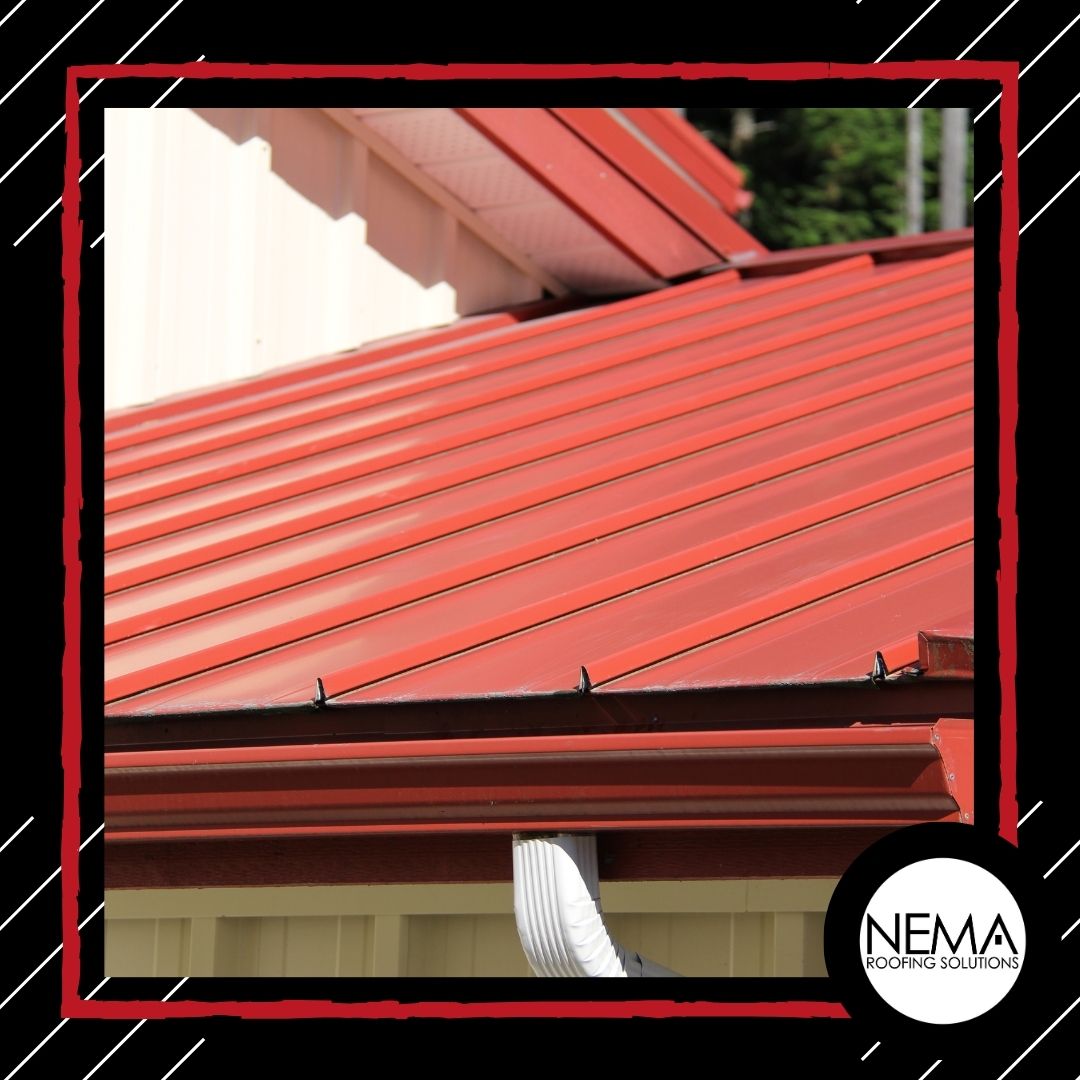
Solar panels on a metal roof work best when the roof is a standing seam system: the racking clamps onto the raised seams, so the panels go up without drilling through the metal, and a well-built metal roof can stay in place for the life of the solar array instead of forcing a remove-and-reinstall halfway through. Exposed-fastener panels and metal shingles take solar too, with sealed or product-specific mounts. The planning between roofer and solar installer is what makes it last. To plan a metal roof with solar, call NEMA Roofing at 866-631-3366.
How do solar panels attach to each kind of metal roof?
The mounting method depends on the roof profile, and it is the main reason metal and solar are often paired.
| Metal roof type | How the solar racking attaches | What to watch |
|---|---|---|
| Standing seam (concealed clips, raised seams) | Clamps grip the seams; no holes through the panels | Seam spacing sets where rails can land; clamps must be the type made for that seam shape |
| Ribbed or corrugated (exposed fasteners) | Brackets fasten through the panel into the structure, each one sealed | Every bracket is a new penetration, so the sealing detail and fastener placement matter |
| Metal shingles, shake or tile-look panels | Mounts designed for that product, flashed into the courses | Use mounts the roofing maker approves so the roof warranty is not put at risk |
The U.S. Department of Defense roofing criteria, written for roofs that must last, call for everything mounted on a standing seam roof to be attached with non-penetrating seam clamps, so the weathering surface is never breached. The same rule covers conduit, condensate lines and satellite dishes, not only the panels.
Why should the roof outlast the solar system?
A rooftop array is removed and reinstalled if the roof under it has to be replaced. That is extra labor, a gap in power production and a new set of roof penetrations or clamp positions. The same federal criteria advise checking that an existing roof has at least 10 years of service life left before a solar system goes on it; if it does not, the roof is replaced first and designed together with the solar system.
This is where “built to last” becomes practical. A metal roof whose coating, fasteners and flashing are specified for your location is a base you do not have to touch for a long time, which is the point of putting panels on it. If your current roof is near the end of its life and solar is on your list, replacing the roof first is usually the cleaner order.
What should the roofer and the solar installer agree on first?
Most solar-related roof problems come from two trades working without a shared plan. Before anything is mounted, settle these points in writing:
- Structure. Confirm the roof framing can carry the added load of the array and racking.
- Layout. Match the rail positions to the seam spacing (standing seam) or to the framing below (exposed-fastener panels).
- Attachment hardware. Clamps or brackets compatible with the panel profile and its metal; dissimilar metals in contact corrode where they meet.
- Wiring runs. Conduit carried on seam clamps or approved supports, never screwed through the panel flats; copper lines jacketed so copper-laden runoff does not stain or corrode the roof.
- Drainage. Rails and conduit placed so water still flows off the roof and nothing dams against a seam.
- Roof protection. Rules for walking and staging on the metal during installation to avoid dents and scratched finish.
- Warranty. Written confirmation from the roofing side that the attachment method keeps the roof and finish warranties intact.
Does solar change the fire rating or the cool roof rule?
Two California rules apply to solar on any roof, metal included:
- Fire classification. The 2025 California Building Code (Section 1505.9) requires rooftop-mounted solar panel systems to be tested, listed and identified with a fire classification under UL 2703, and installed according to that listing. In a fire hazard zone, the roof covering itself must also carry the rating the zone requires.
- Cool roof. In the climate zones where California’s energy code sets reflectance values for a reroof, the roof area under ordinary rack-mounted panels is not exempt. Only area covered by building-integrated solar panels (products that form the roof covering) is exempt. So the finish color under a rack-mounted array still has to meet the rule where it applies.
What order should a metal roof and solar project follow?
- Have the existing roof inspected and decide whether it should be replaced before solar goes on.
- Choose the metal profile with the mounting method in mind; standing seam if you want no holes in the roof.
- Share the planned array layout with the roofer so seams, framing and penetrations line up with it.
- Install the metal roof, including the flashing at every vent and wall.
- Have the solar installer mount the racking with the agreed clamps or brackets.
- Keep the product data sheets, clamp specifications and warranty papers together for future service.
Planning a solar-ready metal roof with NEMA Roofing
We install standing seam systems in aluminum and galvanized steel, and we plan the roof around the solar array when one is coming. For the profiles and their trade-offs, read about standing seam metal roofing options, how smart metal roofing for modern homes handles finishes and fire zones, and how a metal roof compares with a shingle roof. NEMA Roofing works from five Google-verified locations (Santa Barbara, Oxnard, Woodland Hills, Tarzana and Downey) and covers all of Santa Barbara, Ventura, Los Angeles, Riverside and San Bernardino counties; find your town on our service areas page. See our metal roofing service, or call 866-631-3366 to plan the roof before the panels.




