Understanding Roof Replacement Economics in Tarzana
In Tarzana, the sun is both a friend and a test of durability. Our neighborhood sits on the south-facing slope of the Valley, where long stretches of dry heat bake rooftops through summer and early fall, and the occasional Santa Ana event sends gusts across the hills above Ventura Boulevard. When you start asking about roof replacement cost and pricing here, you are really asking about how a roof will stand up to this specific environment, and how all the moving parts of a project come together to protect your home. From the tree-lined cul-de-sacs west of Reseda to the foothill properties near Mulholland, the details of access, slope, materials, and code compliance in Los Angeles County shape the conversation in ways that are different from other parts of the state.
If you are just beginning to gather information, it helps to talk through the process with a local team that knows the microclimates, the permitting, and the best materials for our heat and seasonal winds. A trusted partner can explain how preparation, ventilation, and long-term performance intersect with your goals for curb appeal and longevity. Early on, it is worth exploring a professional perspective on roof replacement so you can frame the right questions and make confident choices that fit your home in Tarzana.
What Really Drives the Numbers Behind the Scenes
When homeowners say “cost,” they are usually thinking about a single figure. In practice, the final picture emerges from several interconnected factors. Roof size and complexity are two of the most visible drivers. A single-story ranch with a low pitch along Clark Street will have a different scope than a multi-level home up in the hills with intersecting gables, dormers, and skylights. Each plane, valley, and penetration adds to the choreography of installation. Complexity doesn’t just mean more material; it also means more time spent on detail work, from woven valleys to step flashing around chimneys and vertical walls.
Tear-off conditions are another important consideration in Tarzana, where aging asphalt shingles and older tiles can hide stories beneath them. On a hot day, older materials become brittle, and careful removal matters for both safety and substrate integrity. The deck—usually plywood in our area—must be inspected for signs of delamination, dry rot, or previous patchwork. Repairing or replacing compromised sections ensures the new roofing system has a healthy foundation, which is critical for a long service life under Valley heat.
Underlayment selection is a subtler choice that carries outsized impact here. With the temperature swings we see, high-temperature rated synthetic underlayments are common solutions for sloped roofs. They resist heat better than traditional felt, hold fasteners more securely, and manage expansion and contraction with less wrinkling. In flat or low-slope sections, the conversation may turn to modified bitumen or other membrane systems, and the transitions between those membranes and adjacent sloped sections must be detailed thoughtfully to avoid pooling water at seams and eaves.
Ventilation is often the unsung hero of longevity in the San Fernando Valley. Hot attics cook shingles from the underside and create comfort issues inside. A balanced system of intake at the eaves and exhaust at the ridge or through low-profile vents can reduce attic temperatures, support shingle warranties, and improve energy performance. The right solution depends on the home’s architecture, soffit construction, and whether there’s a continuous ridge line to work with. For homes with vaulted ceilings that limit attic space, specialized venting strategies help move air without compromising the look of the roof.
Local Codes, Inspections, and Community Considerations
Los Angeles County and the City of Los Angeles require that roofing work meet current building code standards. In Tarzana, that means addressing wildfire exposure with Class A roofing assemblies and ensuring proper clearances where roofs meet exterior walls and chimneys. Many neighborhoods include mature trees—oaks and sycamores that shed leaves and drop debris across rooftops. Evaluating leaf load and adding protective details like enhanced valley flashings or gutter screens can reduce maintenance and keep water moving efficiently during our occasional winter storms.
Permitting is straightforward when you work with a contractor who knows which documents inspectors expect to see. That typically includes product approvals for underlayments and shingles or tiles, ventilation calculations, and manufacturer documentation for specialized components like cool roof products that help reflect heat. Speaking of cool roofs, many Tarzana homeowners appreciate the comfort benefits of higher reflectivity. Lighter colors and cool-rated materials reduce heat absorption during long summer afternoons, which can make a noticeable difference inside the home without changing the neighborhood’s visual character.
Material Choices Through a Tarzana Lens
Asphalt shingles remain a favorite across the Valley because they blend well with both ranch-style and contemporary homes, offer robust impact and fire performance, and are available in cool roof options. For those who love the Spanish Revival aesthetic, clay and concrete tile provide timeless texture and excellent fire resistance, but they require careful attention to weight and substrate preparation. In hillside areas with panoramic views, standing seam metal or high-definition composite shingles may be chosen for durability and crisp lines. Each material comes with its own installation cadence, accessory requirements, and manufacturer guidance.
What matters most is selecting a system that harmonizes with Tarzana’s climate and your home’s structure. For example, tiles that are too heavy for an original deck and rafter system may require engineered reinforcement. Conversely, choosing a lighter system over a previously heavy one can change how a roof handles wind uplift, so attachment patterns and edge details must be adjusted accordingly. Thoughtful specification about drip edges, starter courses, hip and ridge assemblies, and flashing metals—aluminum or galvanized steel with appropriate coatings—keeps the entire system resilient over the long haul.
Access, Safety, and the Flow of a Project
In many Tarzana streets, parking is tight and driveways can be steep or narrow. Staging materials and placing disposal bins in a way that respects neighbors and preserves landscaping is part of a well-run job. On hillside lots, lift equipment or extended carry distances may be necessary. These logistics affect how crews sequence tear-off and installation, and how they control debris so your property stays tidy. Good crews protect stucco walls, outdoor kitchens, and pool areas with coverings, and communicate daily so you always know what to expect the next morning.
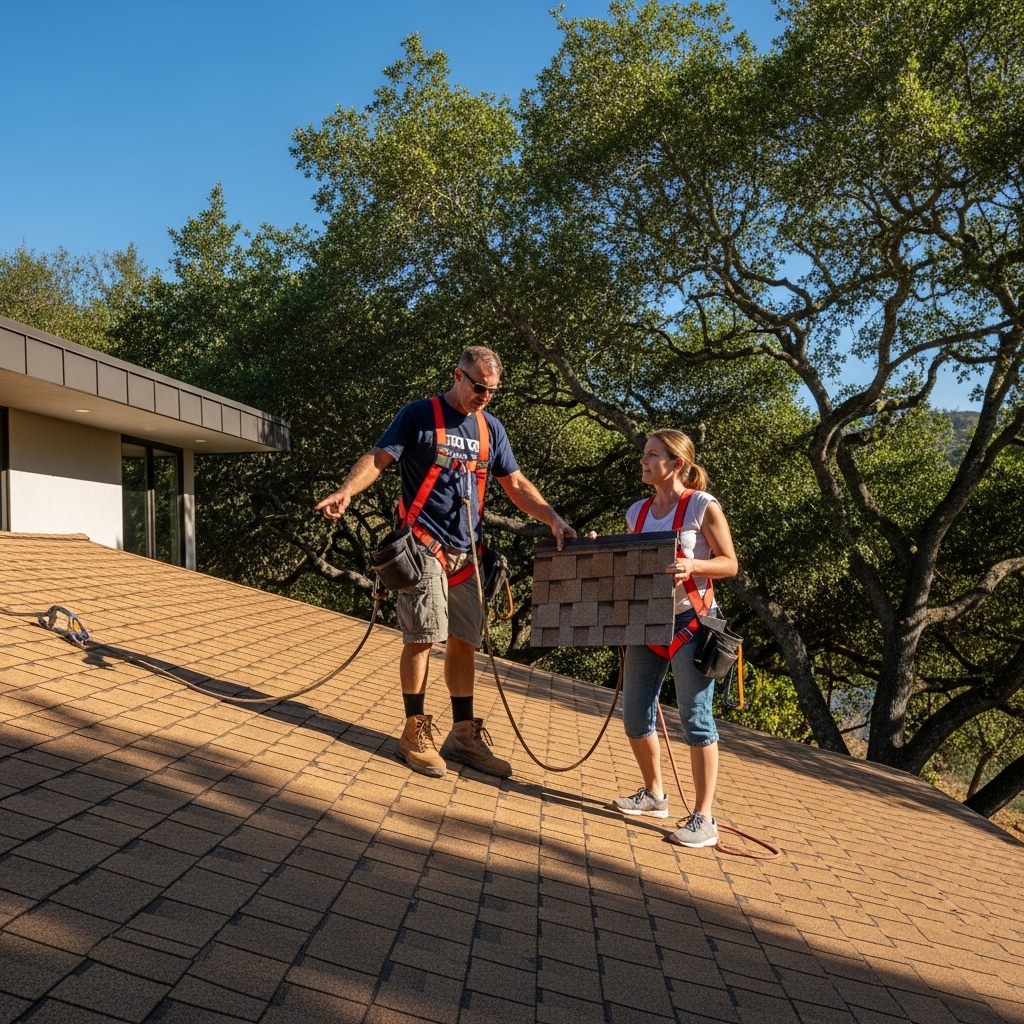
Safety is non-negotiable on our pitched roofs, especially as afternoon winds pick up. Harnesses, anchors, and walkway pads are standard gear, and experienced crews move with a rhythm that respects both the roof and the people working on it. When you see tarps laid carefully, magnet sweeps done at the end of each day, and gutters cleared before final cleanup, you can feel the professionalism in the small moments—details that often set apart the best teams in our community.
Planning for Longevity, Not Just Day-One Appearance
Roofing reveals its true quality in the second summer and beyond. In Tarzana’s heat, adhesives flow, seals cure, and ventilation patterns either help or hinder the system. Choosing upgraded components like high-temp underlayment at eaves and valleys, corrosion-resistant fasteners, and enhanced hip and ridge systems adds quiet strength that pays dividends over time. Flashings should be formed and fastened so that expansion and contraction do not create stress points. For skylights and solar penetrations, dedicated flashing kits and secondary seals help keep water out when the first big winter storm arrives after months of warm weather.
Homeowners sometimes ask whether they should time their project for a particular season. While mild weather can make work more comfortable, the key is scheduling with a crew that manages heat and weather forecasting well, protecting open roof sections and ensuring materials are installed within manufacturer guidelines for temperature and exposure. In practice, that means methodical daily planning and covering strategies, not waiting for the “perfect” week that may never appear on the calendar.
Comparing Proposals With Confidence
Even without discussing numbers, you can compare proposals by the clarity of scope and the fit for your home. Look for specific descriptions of tear-off, deck inspection, replacement criteria, underlayment type, flashing metals and thicknesses, ventilation design, and accessory items such as pipe boots and attic screens. Photos from the attic and roof, taken during inspection, help ground the recommendations in your home’s real conditions. If your property has a mix of slopes and flat sections, make sure the transitions are addressed explicitly. If you are in a high-debris zone under trees, ask about valley styles that handle leaves better and about maintenance suggestions after completion.
Communication style counts as much as technical detail. The best local contractors invite questions, walk you through samples, and explain how they will protect your driveway, plants, and interiors during the work. They address what happens if hidden conditions appear and how decisions will be made in the moment. That proactive clarity gives you peace of mind, and it is often the difference between a job that feels stressful and one that feels smooth.
The Value of Local Knowledge
Tarzana’s mix of older and newer homes means roofing crews see a wide range of construction methods. Whether your house has thick stucco parapets, original tongue-and-groove deck boards under an overlay, or a modern truss system with radiant barrier sheathing, a local eye identifies the best path to a robust roof. Familiarity with neighborhood HOAs, typical inspection preferences, and common skylight models in our area accelerates decision-making and reduces surprises. That local knowledge shows up in results—tight lines at ridges, clean valleys, and roofs that simply look like they belong on the block.
Because of our warm climate, energy considerations also enter the conversation in ways that may not be obvious at first. Cool-rated shingles, light-colored tiles, and reflective membranes on low-slope sections can trim heat gain. Proper insulation and air sealing in the attic complement the roof work and bring additional comfort, even if they sit outside the roofing contract itself. Coordinating these elements while the roof is open provides efficiencies and reduces future disruptions.
When Guidance Matters Most
Homeowners often feel overwhelmed at the beginning, and that is normal. You do not have to be a roofing expert to make an excellent decision for your home. The key is to partner with professionals who translate technical options into practical choices aligned with your goals. Whether you want the quiet sophistication of a cool-rated architectural shingle or the classic look of S-profile tiles, the right team will show you how each path supports your home’s structure and your lifestyle.
As you evaluate options and timing, a mid-project check-in is wise. Take a moment to revisit your goals for appearance, durability, and maintenance. Confirm that the ventilation plan, flashing selections, and accessory details still match your priorities. And if you want a concise overview of how designers and installers think about whole-system performance, consider discussing your project in the context of full-scope roofing replacement so you can weigh trade-offs with confidence.
Q&A: Tarzana Homeowners’ Most Common Questions
How long does a typical roof replacement take in Tarzana?
Most single-family homes here are completed within a few days once work begins, but schedule depends on roof complexity, weather windows, and the discovery of any hidden issues during tear-off. Crews prioritize safe, watertight staging each day, so even multi-day projects are protected overnight. Communication about daily milestones helps you plan around noise and driveway access.
Do I need to leave the house during a roof replacement?
You do not need to leave, but many homeowners choose to plan errands during the noisiest parts of the day. Pets may be more comfortable in a quiet area of the home or with a neighbor. Good crews notify you of particularly loud phases, like tear-off or sheathing repairs, so you can schedule accordingly.
Can new roofing improve interior comfort in Tarzana’s heat?
Yes. Balanced attic ventilation, cool roof materials, and lighter color selections can reduce heat gain. When paired with proper attic insulation and air sealing, the difference on hot afternoons can be significant, especially in rooms directly under the roof plane. Your contractor can walk you through options that fit your home’s architecture and neighborhood guidelines.
Is re-roofing over existing shingles allowed?
Local code and manufacturer guidelines govern whether overlay is permitted. In many Tarzana homes, a full tear-off is recommended so the deck can be inspected and the roofing assembly can meet current standards for ventilation and wildfire resistance. A thorough inspection provides the best answer for your specific home.
What should I look for in a proposal besides the materials list?
Clarity of scope is essential. Look for details about deck condition thresholds, flashing metals and thickness, underlayment type, ventilation design, valley style, and how penetrations like skylights and vents will be treated. Ask for photos from inspection to connect recommendations to observed conditions. This transparency helps you compare proposals fairly.
How will crews protect my property during the project?
Expect driveway and landscape protection, magnet sweeps for nails, and careful debris control. Crews should outline where materials and bins will sit, how they will protect stucco, windows, and pool areas, and how daily cleanup will be handled. A thoughtful site plan is a sign of professionalism and respect for your home and neighbors.
Will the new roof be ready for future solar?
If you plan to add solar, discuss it up front. Your contractor can coordinate flashing readiness, conduit pathways, and appropriate attachment zones to preserve the integrity of the new roof when panels are installed later. Planning ahead reduces penetrations and avoids rework.
How often should I maintain my roof after replacement?
Visual checks after windy events, seasonal gutter cleaning, and removing leaves from valleys help keep the system performing. An annual inspection, especially after the first year, is a smart habit in Tarzana where heat, wind, and trees all play a role. Maintenance is minimal when details are built well from the start, but a little attention goes a long way.
Ready to Talk About Your Tarzana Roof?
If you are considering a new roof and want guidance tailored to your block, your architecture, and our Valley climate, let’s talk. We can walk your property, inspect the attic, and map a plan that balances longevity, comfort, and curb appeal. Start the conversation with local experts who handle the whole picture of roof replacement services so your home is protected beautifully for the years ahead.